

Key Takeaways
- Late rent payments: Rent payment grace periods are nine days for standard and month-to-month leases and four days for week-to-week leases. If a tenant still hasn’t paid rent after the grace period, landlords can either charge a late fee or deliver a written three-day notice to quit.
- Required disclosures: Landlords must disclose lead-based paint hazards, bed bugs, fire sprinkler systems, and whether the unit is in a common interest community.
- Security deposits: The maximum amount a landlord can charge for a security deposit is two months’ rent for renters ages 62 and under and one month’s rent for renters over the age of 62.
- Transparent pricing: Connecticut landlords are now required to advertise the total cost of their rental in a listing, including the base rent and nonoptional fees.
- Fair housing protections: Connecticut’s fair housing laws extend protected classes to include ancestry, gender identity or expression, marital status, status as a veteran, lawful source of income, status as a victim of sexual assault, and status as a victim of human trafficking.
Connecticut landlords navigate a complex network of rental laws designed to protect both tenants and property managers. From state-mandated disclosures to evolving fair housing rules and transparent pricing regulations, staying compliant isn’t optional. This guide breaks down the most important landlord-tenant laws in Connecticut, including recent legal updates for 2025, to help you manage your property with confidence and avoid costly legal missteps.
Table of Contents
- Overview of Rental Laws in Connecticut
- What’s New in 2025: Recent Legal Updates in Connecticut
- Compliance Tips for Landlords
- Ensure Compliance with Apartments.com
- FAQs
Overview of Rental Laws in Connecticut
Rent control and rent stabilization
Connecticut law does not limit how much landlords can increase rent, but rent increases must not be excessive (CGS § 7-148c) or retaliatory (CGS § 47a-20). Municipalities with over 25,000 residents have fair rent commissions that investigate tenant complaints about excessive rent increases (CGS § 7-148b).
Eviction procedures
In Connecticut, rent is considered late nine days past the due date for standard and month-to-month leases and four days past the dude date for week-to-week leases (CGS § 47a-15a). If a tenant still has not paid rent after the grace period, landlords must provide tenants with a written three-day notice to quit (CGS § 47a-23).
For other lease violations like damage to the unit or having an unauthorized pet, landlords must provide a written 15-day notice to quit or comply. If a tenant does not remedy the lease violation within 15 days of receiving the notice, the landlord can proceed with filing an eviction (CGS § 47a-15).
Lease agreement rules
Here are a few things Connecticut landlords must disclose in the lease agreement:
- Lead-based paint: Landlords must disclose lead-based paint in properties built before 1978 (40 CFR § 745-107).
- Bed bugs: Landlords must disclose if the unit for lease or any adjoining unit is currently infested with bed bugs. Upon request, landlords must disclose when the unit was last inspected for bed bugs (CGS § 47a-7a).
- Fire sprinkler system: Landlords must disclose whether the property has a fire sprinkler system and when it was last inspected (CGS § 47a-3f).
- Common interest community: Landlords must disclose if the unit is located in a common interest community (CGS § 47a-3e).
According to CGS §§ 47a-4, 47a-4a, and 47a-4c, a lease agreement cannot:
- Require tenants to waive their legal rights and protections
- Free the landlord of their legal responsibilities
- Allow the landlord to evict the tenant without a court order
- Require tenants to pay more than 15% of the landlord’s attorney fees
- Require tenants to pay a late rent fee within the nine-day or four-day grace period required by Connecticut law
- Allow landlords to collect rent when they have not upheld their legal responsibilities
- List electronic transfer as the only form of payment
Security deposits
According to CGS §§ 47a-21, landlords can charge up to two months’ rent for renters age 62 and under and up to one month’s rent for renters over the age of 62. Upon move-out, landlords are required to provide a written list of damages for which a security deposit is being withheld. Landlords can only use the security deposit to pay for damages or injury due to the tenant’s failure to meet the lease obligations, like unpaid rent, unpaid utility bills owed to the landlord, or property damage.
The security deposit must be placed in an escrow account for the duration of the renter’s tenancy, and landlords must provide tenants with a written notice listing the financial institution at which their security deposit is being held. Landlords must return the security deposit within 21 days of the lease ending or 15 days after receiving the tenant’s forwarding address in writing, whichever is later. If the landlord returns all or some of the security deposit, they must also return any accrued interest. Tenants are not entitled to the interest accrued during months they didn’t pay rent.
Late fees
According to CGS § 47a-15a, rent is considered late after nine days past the due date. For week-to-week leases, rent is considered late after four days past the due date. A landlord can only charge a late fee after the nine-day or four-day grace period.
Landlords can charge late fees of a maximum of $5 per day (up to $50) or 5% of the total rent due, whichever is smaller.
Fair Housing compliance
The Fair Housing Act lists the following as protected classes:
- Race or color
- Religion
- Sex
- National origin
- Familial status
- Disability
Connecticut’s antidiscriminatory laws extend housing protections to include the following classes:
- Ancestry
- Gender identity or expression
- Marital status
- Status as a veteran
- Lawful source of income
- Status as a victim of sexual assault (new)
- Status as a victim of human trafficking (new)
Landlords cannot discriminate against the protected classes listed federal, state, or local laws by denying rental applications, imposing discriminatory lease terms, indicating a preference for or against a protected class, falsely stating that the property is unavailable for rent, or generally limiting rental choices.
Maintenance and habitability requirements
As outlined in CGS § 47a-7, landlords are responsible for keeping a unit and all common areas clean and in working order. This includes:
- Complying with housing codes
- Making necessary repairs
- Keeping facilities and appliances (e.g., electrical, plumbing, heating, A/C, etc.) in safe working order
- Providing receptacles for trash and arranging for trash removal
- Supplying running water and hot water
According to CGS § 47a-13, tenants have a few options if a landlord’s negligence causes a lack of essential services like heat or running water. When the landlord fails to supply an essential service, the tenant can give the landlord written notice of the breach and specify their choice of the following remedies:
- Independently arrange for the service until the landlord fixes the service and deduct the cost from the rent
- Arrange for substitute housing until the landlord fixes the service if the landlord doesn’t fix the service within 48 hours
Note that if this is the second time within six months that a landlord’s negligence has caused a lack of the same service, the tenant can arrange for substitute housing immediately instead of waiting 48 hours.
Landlords cannot shut off essential services, even if a tenant isn’t paying rent. If a landlord knowingly shuts off essential services like heat, electricity, or running water, the tenant can end the lease and recover either two months’ rent or double the damages, whichever is greater. If a tenant doesn’t pay rent after the rent grace period, the landlord can either charge a late fee or deliver a written three-day notice to quit.
What’s New in 2025: Recent Legal Updates in Connecticut
Accounting transparency
PA 25-146 § 3(d) requires landlords to provide tenants with accounting information about their unit, upon request, showing charges, payments, and balances for the property. This went into effect on July 1.
Price transparency
PA 25-44 § 9 requires landlords to advertise the total cost of their rental, including both the base rent and all nonoptional fees. This went into effect on Oct. 1, 2025.
Protection for sexual assault and human trafficking survivors
Effective Oct. 1, PA 25-139 makes survivors of sexual assault and human trafficking protected classes under Connecticut’s Commission on Human Rights and Opportunities antidiscriminatory laws.
As described in section 3, this law amends CGS § 46a-64c to extend antidiscriminatory protections to survivors of sexual assault and human trafficking.
Compliance Tips for Landlords
Update lease templates
Make sure your lease agreements reflect all applicable state-required disclosures, including lead-based paint, fire sprinkler systems, and whether the unit is part of a common interest community.
Adjust fee structures
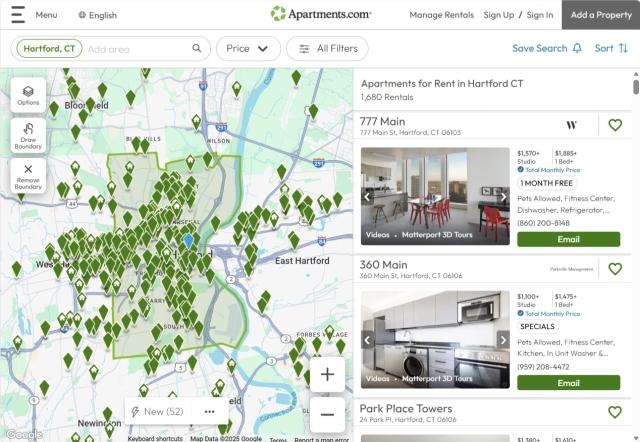
Edit your rental listing to include all required monthly fees. On Apartments.com, Connecticut listings that include nonoptional fees will have a “Total Monthly Price” badge, signaling to renters that the price they see is what they’ll pay.
Train staff on fair housing expansions
If you work with staff, educate your colleagues and employees on the expanded list of protected classes in Connecticut to prevent unintentional discrimination and ensure proper handling of applications.
Document procedures for legal compliance
Keep detailed records of rent increases, notices to quit, repairs, and communications with tenants to demonstrate compliance with Connecticut General Statutes in case of disputes. When you communicate with tenants on Rental Manager Messages, you can archive old conversations to make sure you never lose important information.
Ensure Compliance with Apartments.com
Managing legal responsibilities as a landlord can be challenging, especially with so many other priorities on your plate. From screening tenants to collecting rent, staying compliant and organized is no small task. However, it’s much easier to stay on top of everything when you have the right tools.
Apartments.com can help. Our Rental Tools suite simplifies the rental process while ensuring compliance at every step. From creating property listings and drafting state-compliant lease agreements to handling maintenance requests and tracking your expenses, streamline your workflow while ensuring every action is compliant with federal and state laws.
This article is for informational purposes only and does not constitute legal, financial, or professional advice. For guidance specific to your situation, you should consult a qualified attorney or other relevant professional.
FAQs
Is rent control in effect in Connecticut?
No, Connecticut does not have rent control laws. However, Connecticut law prohibits landlords from increasing rent in excess or in response to a tenant’s good faith behaviors like filing a complaint or reporting a housing violation.
What’s the legal process for evicting a tenant in Connecticut?
For nonpayment of rent, landlords must provide a written three-day notice to quit after the rent payment grace period. For other lease violations, landlords must provide a written 15-day notice to quit or comply, after which they can file an eviction if the tenant doesn’t fix the violation.
Does Connecticut require landlords to disclose all rental fees upfront?
Yes, Connecticut law requires landlords to advertise the total price of their rental in a listing, including the base rent and all nonoptional fees.
What is the maximum security deposit allowed in Connecticut?
In Connecticut, the maximum security deposit allowed is two months’ rent for renters age 62 and under and one month’s rent for renters over the age of 62.


