

Renters design their lives around their commute. About 50 percent of respondents said they were only looking for places close to work, according to a Q4 2025 Apartments.com survey. Shorter commutes support a healthy work-life balance and give renters more time to do what they love.
Still, commute times can vary widely depending on where you live. In the cities with the longest commutes, travel times can stretch much longer than the national average commute time of 27.2 minutes. A large portion, 40 percent, of the nation has a travel time of under 20 minutes, showing that you can have a short commute time. To take back your day, here are the cities with the shortest commutes in 2026:
|
City |
Short Commute Percentage |
Long Commute Percentage |
Mean Travel Time to Work |
Average Rent |
|
Sioux Falls, SD |
65% |
4% |
17.1 minutes |
$983/month |
|
Lubbock, TX |
75% |
5% |
17.5 minutes |
$784/month |
|
Wichita, KS |
64% |
3% |
17.3 minutes |
$843/month |
|
Anchorage, AK |
63% |
5% |
18.1 minutes |
$1,332/month |
|
Lincoln, NE |
62% |
6% |
19.2 minutes |
$1,090/month |
Methodology
All commute data comes from the U.S. Census Bureau. To identify the cities with the shortest commutes, we analyzed the 100 largest U.S. cities by population and focused on residents age 16 and older who did not work from home. We looked at both mean travel time and the share of commuters with a short commute, defined as under 20 minutes, and ranked cities based on those two factors.
Rent data is from CoStar Group’s April 2026 reports.
Sioux Falls, SD
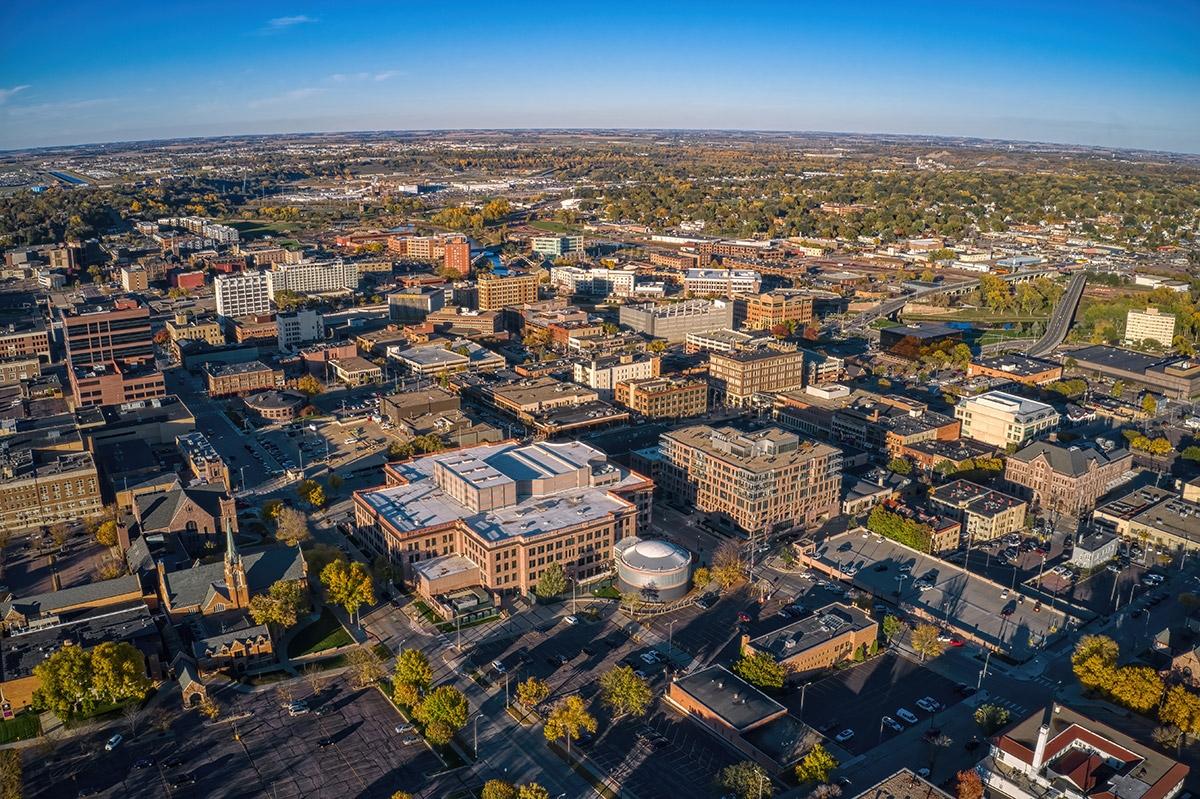
- Average rent in Sioux Falls: $983/month
- Short commute percentage: 65%
- Long commute percentage: 4%
- Mean travel time to work: 17.1 minutes
Commuting in Sioux Falls
Sioux Falls is a fast-growing city in the Upper Midwest that has become an attractive (and affordable) location for renters. But that doesn’t mean you’ll have to sacrifice your commute in order to live here. The mean travel time is just 17.1 minutes, and 65 percent of residents get to work in under 20 minutes. Long commutes are uncommon, with only 4 percent of workers traveling more than 45 minutes.
Driving is still the dominant mode of transportation, with 87 percent of commuters traveling by car. Even though public transit is limited in Sioux Falls, commute times are still short largely due to the compactness of the city, the lower population, as well as the nine percent of people who work from home. The city strategically plans and invests in the region’s transportation network to facilitate less congestion, better access, and higher connectivity so that the city’s growth doesn’t overwhelm the streets.
Economy in Sioux Falls
Sioux Falls has built one of the most diverse economies in the Upper Midwest, built on banking, healthcare, food processing, manufacturing, and regional trade. The city first stood out as an agricultural powerhouse, but over time it expanded into a financial and healthcare hub. However, it still keeps strong ties to the food production and logistics networks that support the northern Plains.
Large employers in finance and healthcare continue to drive job growth, including Wells Fargo, Citibank, Sanford Health, and Avera Health. Industrial employers add stability through manufacturing, processing, and distribution. This diversity, strong infrastructure, investment, and direct interstate access have helped Sioux Falls build a resilient economy with steady job opportunities across multiple industries.
Lubbock, TX
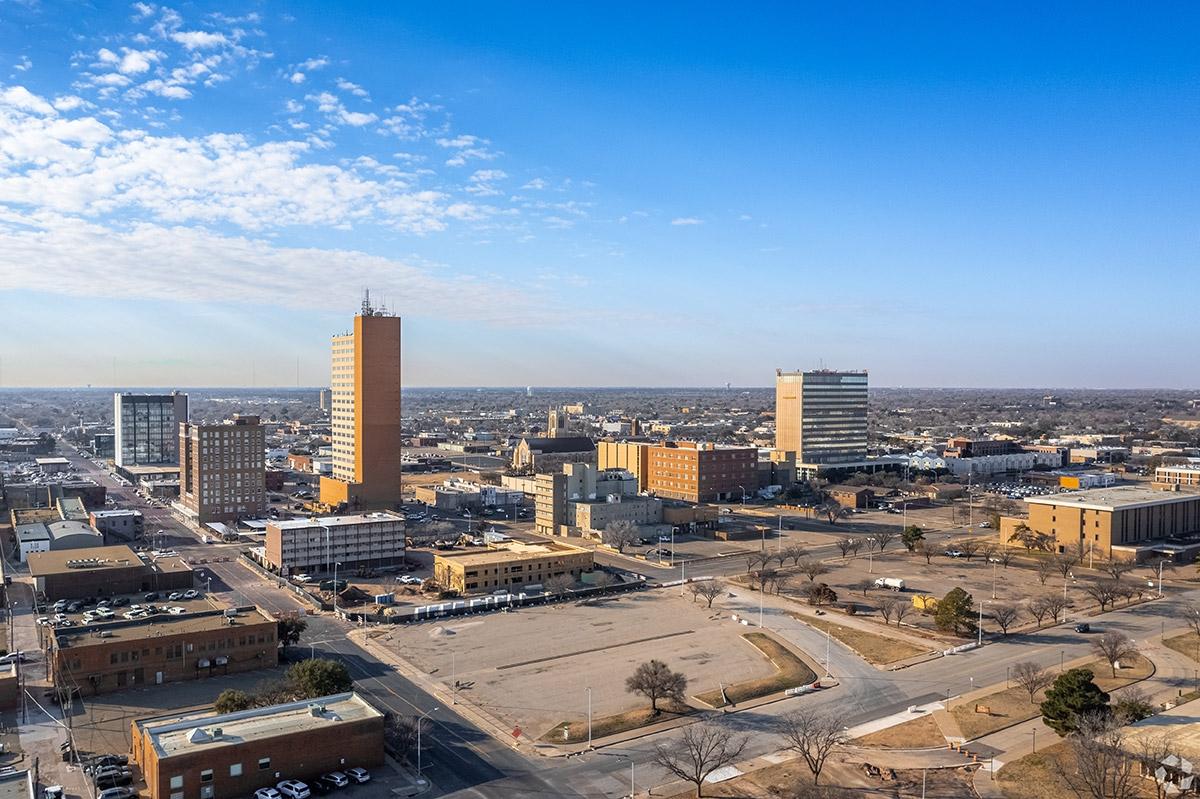
- Average rent in Lubbock: $874/month
- Short commute percentage: 75%
- Long commute percentage: 5%
- Mean travel time to work: 17.5 minutes
Commuting in Lubbock
Renters enjoy the luxury of living and working just minutes apart in Lubbock. The low-density and sprawling size of the city keeps the congestion levels low. With a mean commute time of 17.5 minutes, three-quarters of residents get to work in under 20 minutes. Only five percent of workers travel more than 45 minutes, showing the simplicity and speed of commuting in the city, especially from the best neighborhoods in Lubbock.
Traffic never comes to a standstill, but roads do get busy as driving is by far the most common way to get around, since 87 percent of commuters travel by car. Since 10 percent of residents carpool, this lessens the number of cars on the roads. Public transit is available through Citibus, but residents prefer the directness of driving. Though the city being spread out is beneficial and keeps commutes short, it does mean a more car-centric city as residents have to travel longer distances. That means walking and biking are often less convenient, or even longer, than driving.
Since most people are commuting to key hubs, like Texas Tech University and Downtown Lubbock, commuters travel on major roads that are designed to deal with traffic. Most renters also live close to where they work, thanks to the low density of the city, so they are traveling relatively short distances, meaning that local congestion may happen but commutes still stay short.
Economy in Lubbock
Lubbock’s economy anchors the northern region of West Texas. While agriculture has been the backbone for decades, a growing service sector has diversified the economy. Both education and healthcare have expanded; major medical centers and hospitals have become large employers, like Texas Tech University Health Sciences Center, Covenant Health System, and University Medical Center. The overall economy and many industries, particularly the education sector, are bolstered by Texas Tech University, which brings jobs, research, funding, and innovation to the city.
Wichita, KS
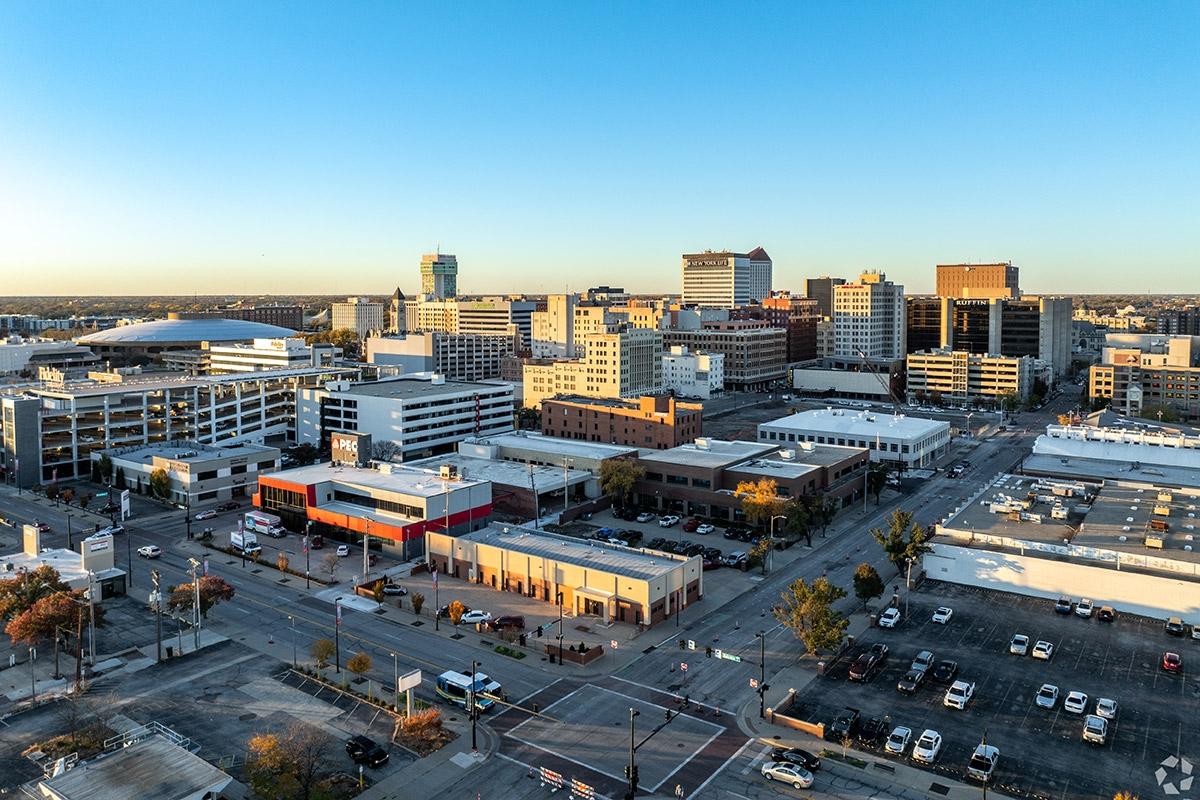
- Average rent in Wichita: $843/month
- Short commute percentage: 64%
- Long commute percentage: 3%
- Mean travel time to work: 17.3 minutes
Commuting in Wichita
As the most populous city in Kansas, Wichita has positioned itself as the city where big-city amenities, affordable neighborhoods, and convenience intersect. While the city is sizable enough to have major employers and urban perks, it’s not so large that congestion becomes a problem or getting across town takes forever, no matter which neighborhood you choose.
This balance shows up in commutes as the mean travel time is 17.3 minutes, with 64 percent of people having a commute under 20 minutes. Only three percent have a commute of 45+ minutes. A contributing factor is that Wichita acts as a regional employment center, where residents travel across the region to neighboring industrial parks and smaller towns. As a result, 20 percent of the population reports working outside of Wichita, their place of residence. Because residents are traveling across the region rather than to one concentrated core, traffic is spread more evenly across the road network.
Given the nature of where jobs are located, most commuters drive, with 89 percent using a vehicle. Since jobs are bundled into employment hubs, carpooling is more common than in other cities, with 11 percent of workers sharing rides.
Economy in Wichita
Wichita’s economy consists of a mix of aviation, manufacturing, healthcare, and professional services. Often called the “Air Capital of the World,” the city has long been a center for aircraft production, engineering, and aerospace investment. While that legacy continues to play a major role in the economy, other industries have grown as well. A broad manufacturing base, a growing healthcare sector, and a steady presence of small businesses and local employers balance out the city.
Anchorage, AK
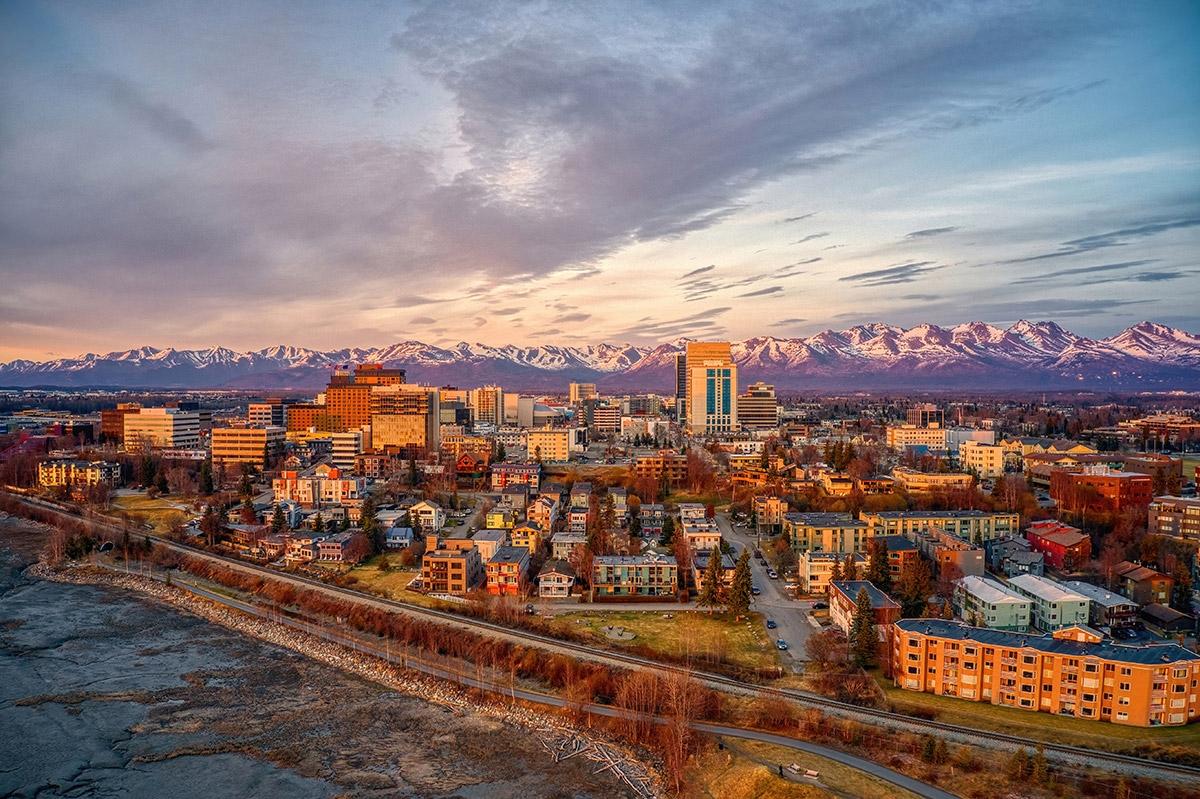
- Average rent in Anchorage: $1,332/month
- Short commute percentage: 63%
- Long commute percentage: 5%
- Mean travel time to work: 18.1 minutes
Commuting in Anchorage
Anchorage is Alaska’s most populous city and covers a vast geographic area that includes communities, such as Eagle River and Chugiak, and wilderness, as found in Chugach State Park. Most of the population is concentrated in the main urban area where the Cook Inlet splits into the Knik and Turnagain Arm, which keeps commutes short at a mean travel time of 18.1 minutes.
The compactness of the city portion means that 63 percent of the population have a commute of under 20 minutes. Anchorage may look massive on a map, but the part people live in is much smaller, so residents aren’t traveling across an enormous, heavily-congested city. Even though Anchorage is a mid-sized metro, its more moderate population compared to other big cities helps keep traffic manageable.
While Anchorage is investing in walking and biking infrastructure, the city remains largely car dependent as 84 percent drive to work. The weather also plays a part in how residents get around, as winter conditions can make commuting without a vehicle more difficult. In better weather, a small share of residents do walk, with 3 percent commuting on foot. Public transit through People Mover builds out the bus network, but bus travel is much more stop-and-go compared to driving and can take longer in a city with little congestion like Anchorage.
Economy in Anchorage
Anchorage serves as the state’s main center for transportation, commerce, and government services, largely due to its location. Additional industries such as healthcare, military activity, oil and gas support services, and retail also play major roles in local employment. Because Anchorage connects Alaska’s remote communities with national and international markets, much of the state’s business activity passes through the city.
Lincoln, NE
- Average rent in Lincoln: $1,090/month
- Short commute percentage: 62%
- Long commute percentage: 6%
- Mean travel time to work: 19.2 minutes
Commuting in Lincoln
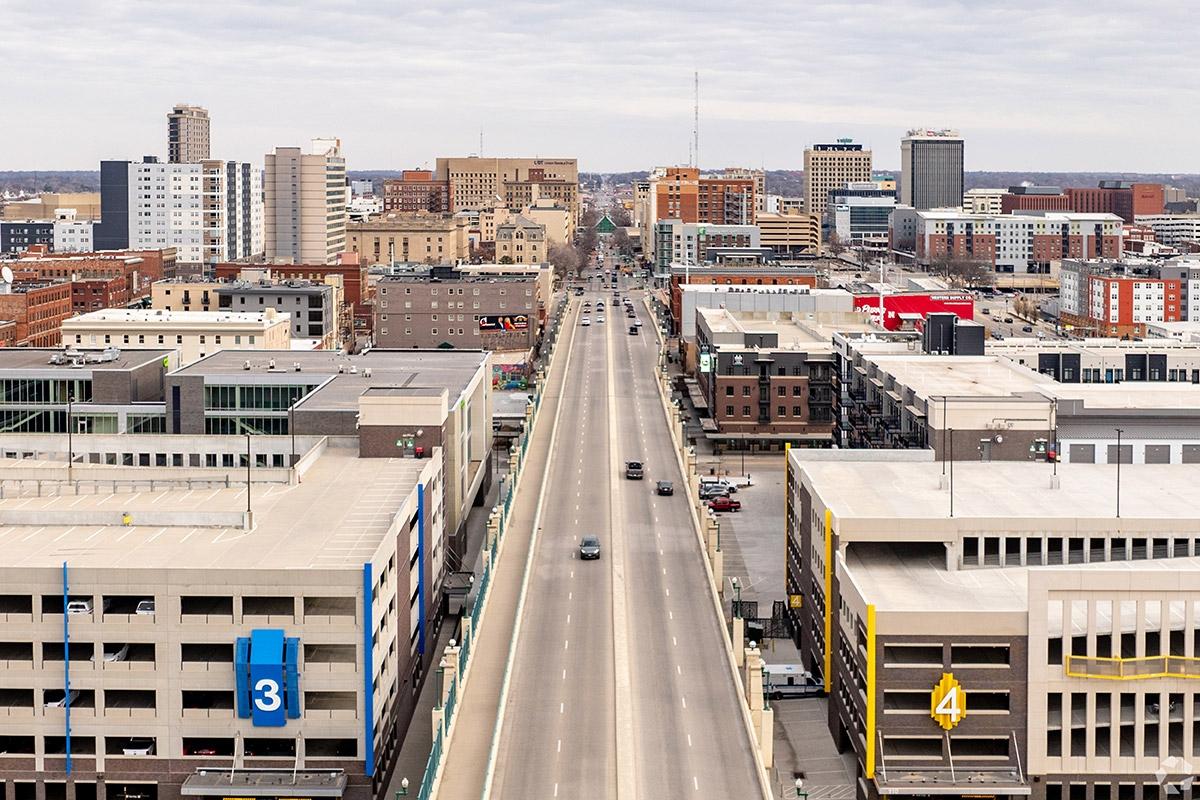
Lincoln may be a large city that covers 103.9 square miles, but its grid-like layout and direct, diagonal routes between major parts means navigation is simple. Since residents have multiple ways to get around the city, most residents have short commutes, with 62 percent having a travel time of under 20 minutes. A mean travel time of 19.2 minutes is largely due to the connectivity of the transportation network that links the best neighborhoods and employment centers.
The size of the city means cars are the easiest way to travel, with 83 percent commuting via vehicle, but a decently sized remote workforce also helps manage traffic. About 10 percent of residents work from home, the largest portion out of all the cities on this list. Though a small percentage, Lincoln has the highest percentage of residents who walk to work at four percent, as well.
While most cities only have a tiny portion of residents that travel outside the city for work, Lincoln stands out as a city where most residents both live and work locally. Only nine percent of workers commute outside the city. Its manageable size and affordable neighborhoods make living inside the city just as convenient as the suburbs.
Economy in Lincoln
Lincoln has a resilient economy built on a mix of public- and private-sector employers. As Nebraska’s capital and home to the University of Nebraska–Lincoln, the city benefits from steady public-sector employment in government, education, and healthcare. Private-sector industries such as insurance and manufacturing further strengthen the local economy, with major employers including Ameritas and Kawasaki.
50 Cities with the Shortest Commutes
|
Rank |
City |
Short Commute Percentage |
Long Commute Percentage |
Mean Travel Time to Work |
Average Rent |
|
1 |
65% |
4% |
17.1 minutes |
$983/month |
|
|
2 |
75% |
5% |
17.5 minutes |
$784/month |
|
|
3 |
64% |
3% |
17.3 minutes |
$843/month |
|
|
4 |
63% |
5% |
18.1 minutes |
$1,332/month |
|
|
5 |
62% |
6% |
19.2 minutes |
$1,090/month |
|
|
6 |
58% |
6% |
19.7 minutes |
$907/month |
|
|
7 |
56% |
5% |
19.2 minutes |
$1,235/month |
|
|
8 |
58% |
7% |
19.6 minutes |
$1,429/month |
|
|
9 |
57% |
6% |
20 minutes |
$1,492/month |
|
|
10 |
55% |
7% |
20 minutes |
$819/month |
|
|
11 |
53% |
5% |
20 minutes |
$1,108/month |
|
|
12 |
56% |
8% |
20.7 minutes |
$1,492/month |
|
|
13 |
52% |
6% |
20.6 minutes |
$1,286/month |
|
|
14 |
52% |
8% |
21.3 minutes |
$1,094/month |
|
|
15 |
50% |
6% |
20.7 minutes |
$1,511/month |
|
|
16 |
51% |
6% |
21.5 minutes |
$1,006/month |
|
|
17 |
54% |
9% |
21.9 minutes |
$1,146/month |
|
|
18 |
49% |
8% |
21.2 minutes |
$1,013/month |
|
|
19 |
49% |
6% |
21.3 minutes |
$1,386/month |
|
|
20 |
49% |
7% |
21.7 minutes |
$1,367/month |
|
|
21 |
50% |
8% |
21.8 minutes |
$999/month |
|
|
22 |
47% |
7% |
21.4 minutes |
$1,138/month |
|
|
23 |
48% |
9% |
21.7 minutes |
$989/month |
|
|
24 |
50% |
8% |
22.6 minutes |
$1,429/month |
|
|
25 |
50% |
8% |
22.9 minutes |
$1,237/month |
|
|
26 |
48% |
8% |
22.5 minutes |
$1,199/month |
|
|
27 |
45% |
7% |
22.2 minutes |
$1,164/month |
|
|
28 |
44% |
6% |
21.4 minutes |
$1,041/month |
|
|
29 |
46% |
8% |
22.8 minutes |
$1,406/month |
|
|
30 |
44% |
7% |
21.8 minutes |
$1,244/month |
|
|
31 |
46% |
9% |
22.8 minutes |
$1,739/month |
|
|
32 |
45% |
9% |
22.2 minutes |
$1,273/month |
|
|
33 |
44% |
6% |
21.9 minutes |
$924/month |
|
|
34 |
45% |
7% |
22.6 minutes |
$1,373/month |
|
|
35 |
45% |
8% |
23.1 minutes |
$1,161/month |
|
|
36 |
45% |
8% |
22.9 minutes |
$1,113/month |
|
|
37 |
45% |
8% |
23.6 minutes |
$1,149/month |
|
|
38 |
45% |
9% |
23.3 minutes |
$1,301/month |
|
|
39 |
44% |
9% |
23 minutes |
$1,378/month |
|
|
40 |
43% |
8% |
23.2 minutes |
$1,320/month |
|
|
41 |
45% |
12% |
25.2 minutes |
$1,757/month |
|
|
42 |
41% |
8% |
23.5 minutes |
$971/month |
|
|
43 |
42% |
11% |
24.2 minutes |
$1,385/month |
|
|
44 |
41% |
8% |
23.7 minutes |
$1,126/month |
|
|
45 |
41% |
9% |
23.8 minutes |
$1,304/month |
|
|
46 |
42% |
11% |
24.4 minutes |
$1,422/month |
|
|
47 |
38% |
10% |
24 minutes |
$2,390/month |
|
|
48 |
42% |
14% |
25.7 minutes |
$2,923/month |
|
|
49 |
42% |
12% |
25.3 minutes |
$1,567/month |
|
|
50 |
40% |
11% |
24.8 minutes |
$1,595/month |
Cut the Guesswork from Your Daily Commute
Apartment hunting isn’t just about the apartment itself. It’s also about how long it takes to get where you need to go. With the commute tool on Apartments.com, renters can map drive times and explore nearby transit options before they sign a lease.
Simply choose “Options” then check “Search by Commute Time” under “Travel Time.” You can set your desired transportation method and ideal commute time, so you know exactly how far you’ll be living from work. Apartments.com is here to help you focus on apartments that work for your schedule from the start of your search.
FAQs
What is considered a short commute?
What is considered a short commute can vary, but under 20 minutes is a common threshold.
Which state has the shortest commute to work?
North Dakota has the shortest commute to work with an average of 17.5 minutes.
How long do most Americans commute?
The average commute for Americans is 27.2 minutes, according to U.S. Census Bureau data.


