
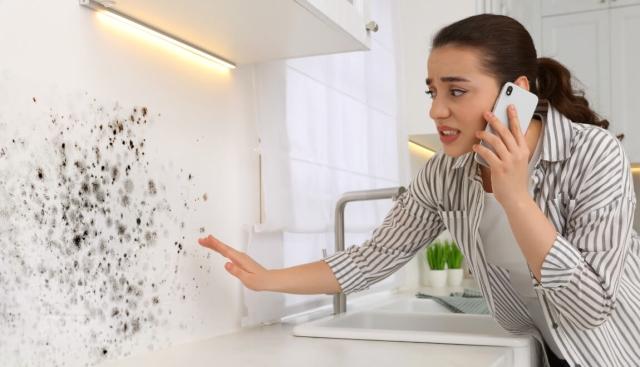
Encountering mold in your rental property can be a gray area of responsibility. While you need to ensure your space is still safe and habitable for your renters, it might be unclear whether mold remediation falls on you or your tenants.
Mold can result from tenant neglect, landlord neglect, or a combination of both. But regardless of who’s responsible, it’s important to address mold issues quickly and efficiently. Otherwise, you could endure lasting property damage or health concerns for both you and your tenants. Luckily, we’re here to help if you find yourself in a sticky, or should we say moldy, situation.
In this article, we’ll explore the best ways to handle mold in a rental property by addressing the following:
- An overview of mold in rental properties, including types of mold, landlord obligations, and insurance coverage
- Recommended steps to take when a tenant reports mold
- Clarifying tenant vs. landlord responsibilities regarding mold issues
- Tips on how to prevent mold growth in your rental
What to Know About Mold in Rental Properties
Before we explore ways to address mold in your rental, let’s start with the basics. What is mold? Where does it come from? Is mold a common issue for landlords? These are all important questions to ask before investing in a rental property, as mold can be a costly and time-consuming problem if you’re not prepared. Below, we’ll provide the answers you’ll need to confidently handle mold in your rental property:
Where does mold come from?
Mold is a naturally growing fungus that typically forms from poor ventilation or excess moisture in a home. This can be caused by various factors, such as leaks, floods, or abnormally high humidity levels. When growing indoors, mold typically forms on surfaces like walls, ceilings, floors, or any area with poor air circulation.
There are several types of mold that can form in a home, with some being more harmful than others. For example, one of the most common types, Aspergillus, is relatively harmless to the average person. However, other types such as Stachybotrys chartarum, commonly referred to as black mold, can be more dangerous and cause respiratory issues if left unchecked.
What is a landlord responsible for regarding mold?
As we mentioned above, landlords must provide a safe and habitable space for their tenants. This poses the question, can mold make a house uninhabitable? And who’s responsible for treating the mold to restore habitability? Well, that really depends on the severity of the mold and your state’s landlord-tenant laws.
Depending on where you live, your state may have guidelines in place when it comes to handling mold in your rental property. For example, states like Virginia, Massachusetts, Vermont, California, Colorado, and the District of Columbia instruct landlords to prevent and address mold or dampness conditions in their property. However, living somewhere without a clear mandate doesn’t necessarily mean you’re off the hook. If the mold is considered a dangerous hazard stemmed from landlord neglect, such as ignored maintenance repairs, you will be responsible for restoring your space’s safety and habitability.
Another obligation you must uphold is disclosure. Many states require landlords to disclose mold issues if their property has endured persistent outbreaks. This is especially important when renting to new tenants, as they have the right to know about mold history before they sign a lease. Failure to disclose this information could result in legal action, so be sure to stay informed and upfront with renters.
Does landlord insurance cover mold?
Landlord insurance can provide mold protection, but not always. Depending on your policy, mold coverage could be standard or offered as an add-on. In many cases, landlord insurance policies won’t cover mold growth but will offer some sort of protection if mold is caused by an event like a pipe burst or water leak.
Unfortunately, many insurers deny mold coverage if the issue stems from a constructional defect, normal wear and tear, corrosion, neglected maintenance, or poor repairs. With that in mind, it’s important to stay on top of property maintenance to minimize mold risk. For example, if you notice your roof needs replacing, don’t wait until it leaks to start the job. Otherwise, your insurer may deny your claim, citing that the mold resulted from deferred maintenance.
What Should I Do if a Tenant Reports Mold in My Rental Property?
Now that we’ve covered the basics, it’s time to discuss what to do when your tenant reports mold in your rental. This situation is not fun for anyone involved. However, when handled properly, it can serve as a learning lesson for both you and your tenants on how to prevent mold in the future. Read below as we outline the steps to take when a tenant reports mold in your rental property.
Respond promptly
It's important to respond promptly to any maintenance request, especially if it involves mold. As mentioned earlier, certain types of mold can pose serious health risks to inhabitants if left unchecked. Unfortunately, there’s a chance this dangerous mold forms out of sight, like behind a wall or in a vent, meaning it could’ve spread for weeks before being discovered. The sooner you respond to the problem, the sooner you can assess how serious it is and the proper course of action.
Inspect the property
Part of your prompt response should include inspecting the property. Upon receiving a mold complaint, you’ll need to identify the source and extent of the issue. Whether it be from a leaky pipe or poor ventilation, quickly find the root of the problem so you can move forward.
Sometimes, mold may not visible when conducting an inspection. In this case, you should still test for mold, either with professional assistance or with an at-home test kit. Mold tests will indicate whether mold is present, even if there’s no visible growth. This is important for proper documentation and determining the appropriate steps to address the issue.
Take necessary action
Once you’ve identified the mold’s root cause, it’s time to take action. If the mold is a result of tenant neglect, such as property damage or poor cleaning habits, then it may fall on them to resolve the issue. Otherwise, you’ll be liable for remediation. Either way, it’s in your best interest to help improve the situation to prevent future mold issues. After all, mold tends to worsen when left unaddressed, and it's your property that's at stake.
Even if the problem is just a few colonies, you’ll need to neutralize the mold to keep it from spreading. For smaller infestations, start by cleaning the affected area with soap and water. If you’re dealing with bathroom tile and grout, you can use stronger chemicals like bleach. For walls, mix one part bleach with three parts water, apply to the wall with either a damp sponge or spray bottle, and then let it sit for 10 minutes. Larger mold problems are best left to the professionals, especially when the mold is a side effect of structural issues that have created excess moisture.
Enlist a professional
When dealing with severe mold outbreaks, it’s best to hire a professional mold remediation service. Rather than tackling the issue on your own, receiving professional help will more effectively resolve the issue and decrease the chances of a mold resurgence. While it is an additional expense, hiring a professional guarantees a comprehensive solution that will give you and your tenants peace of mind. Not to mention, it shows tenants that you take their health and safety seriously.
Document the situation
It’s important to document everything when dealing with mold in your rental. This will not only protect you if legal issues arise, but it will also highlight your commitment to restoring your property’s safety and habitability. Not to mention, it will be helpful when tracking expenses related to mold remediation and potential insurance claims.
Start by taking detailed notes about the initial mold complaint, including the date you received the report, the mold’s location, and any visible extent of the problem. When inspecting the property, take photos or videos of the affected areas. Then, take note of any actions taken, whether that be at-home remediation or professional help. You should also track all communications with your tenant regarding the issue. This will be important documentation should they file a legal report.
Who Is Responsible for Mold in a Rental Property?
Determining fault can be tricky when it comes to mold in a rental property. In some cases, the tenant may be liable. While in others, it may fall on you. A lot of times, it’s a joint effort between both parties. For example, say mold is growing on bathroom walls and floors due to poor ventilation. In this case, the tenants could’ve prevented the issue by leaving doors and windows open near the area. However, the landlord could’ve also done their part by installing a bathroom exhaust fan upon move-in. In this case, you could make the argument that both parties played a part.
To avoid disputes on tenant vs. landlord responsibility, it’s important to include a mold clause in your lease agreement. This will serve as a reference point for both parties if mold becomes an issue during the lease. Here’s a good example of a mold clause:
The resident understands that preventing mold growth requires the avoidance of excessive moisture buildup. They agree to promptly remove any visible moisture accumulation and to immediately report to the Owner any signs of excess moisture, mold, or mildew within the home. Furthermore, the resident commits to informing the Owner about any evidence of water leaks, inadequate ventilation, or mold that cannot be eliminated through standard cleaning.
How Can I Prevent Mold in My Rental Property?
Instead of waiting for mold to take you by surprise, why not try to avoid it altogether? Mold is a headache-inducing issue for tenants and landlords alike, and unfortunately, it’s more common than you’d think. However, you can easily prevent unwanted mold outbreaks by prioritizing the following:
Maintain property maintenance
As we mentioned throughout this article, mold can stem from neglected repairs and long-standing structural issues. This is why it’s extremely important to keep up with property maintenance. Whether it be fixing leaks, regularly replacing air filters, or repairing roof damage, staying on top of property maintenance will decrease the chance of mold growth.
Apartments.com simplifies property maintenance with our online maintenance management tools. When you utilize our platform, you can easily track maintenance requests, schedule repairs, and communicate with tenants about other related issues. With these capabilities, you can keep your maintenance on track and take a preventative approach toward mold remediation.
Make property upgrades
Making property upgrades can be a great for mold prevention and structural longevity. Though they might not be glamorous renovations, practical upgrades like weather stripping around doors or installing dehumidifiers can prevent unwanted moisture buildup and mold growth. These home improvements will not only make your space safer and more livable, but they will also raise your property value in the long run.
Educate tenants
Upon moving in, mold might not be on your tenant’s radar. However, it’s important that they know the risks of indoor mold growth and ways they can prevent it in your property. Early in their lease, make sure to communicate with tenants about mold prevention. This could include advice on cleaning practices, cooking/baking habits, and maintenance reporting. You could also provide additional resources, such as guidelines from the Environmental Protection Agency, to further educate them on mold prevention.
Master Property Management with Apartments.com
Mold can cause some serious headaches for both tenants and landlords. But unfortunately, it’s a common issue that can arise at any time in any type of rental property. From this article, you learned that mold is manageable and preventable, but only if both landlord and tenants do their part.
As you deal with the ups and downs of property management (mold being a major down), let Apartments.com help you along the way. With our valuable suite of Rental Tools, you can improve your property management practices, save time, and maintain tenant satisfaction.
This article was originally published on June 7, 2021, by Jacob Margle.


