

Affordability pressures have become increasingly important for renters, especially Gen Z and student renters. The rising costs of living, education, and housing affect this renter segment more than others. In fact, the Apartments.com Q2 2026 Renter Survey found that 45 percent of student renters’ main source for paying rent was financial aid.
The National Center for Education Statistics (NCES) found that in the 2023-2024 school year, 85.1 percent of first-year students received some form of financial aid. The NCES also found that 25,670,468 students were enrolled in a postsecondary institution (schools that provide learning beyond high school) during the 2023-2024 school year.
College enrollment remains high, but student renters are facing increased tuition, rent, and living costs. As a result, many renters are using financial aid, roommates, and rent concessions to pay their monthly rent.
Key Takeaways
- 45% of student renters stated that their main source for paying rent was financial aid.
- Public four-year in-state tuition rose by 2.9% from 2025 to 2026.
- Since 1995, the average published tuition and fees at a public four-year school increased from $5,940 to $11,950.
- The amount of federal aid a full-time undergraduate student received grew by 78% from the 2004-2005 ($6,780) school year to the 2024-2025 school year ($12,080).
- The college cities with the highest tuition costs and rent increases in the 2025-2026 school year were Storrs, State College, New Brunswick, Minneapolis, and Amherst.
- 79% of student renters stated that their biggest deal breaker when searching for a place to rent is a rental that is out of their budget.
The Real Costs of College Tuition

While it’s no surprise that college is expensive, students and parents alike can be shocked at the cost they see when tuition is tallied. In 2025, the College Board announced that the total estimated Cost of Attendance (COA) for a student living on campus at a public in-state four-year institution was $30,990.
Financial aid, grants, and scholarships are meant to help lower-income families and students earn a degree, but the real cost of university attendance is, in many cases, more than the aid offered.
Tuition is only one part of the cost of attendance
The total COA released by the College Board includes more than tuition. It also includes room and board, books and supplies, and other expenses. The College Board found that since 1995, the average published tuition and fees at public four-year schools rose from $5,940 to $11,950.
The College Board found that the price of in-state tuition at public four-year schools rose by 2.9 percent from 2025 to 2026. While financial aid continues to become more common among undergraduate students, typical student wages and income have not kept pace with rising tuition costs.
What financial aid covers for college students
The NCES reported that in the 2023-2024 school year, 2,213,974 full-time, first-year students received financial aid and the average grant or scholarship from federal, state or institutional sources was $13,783.
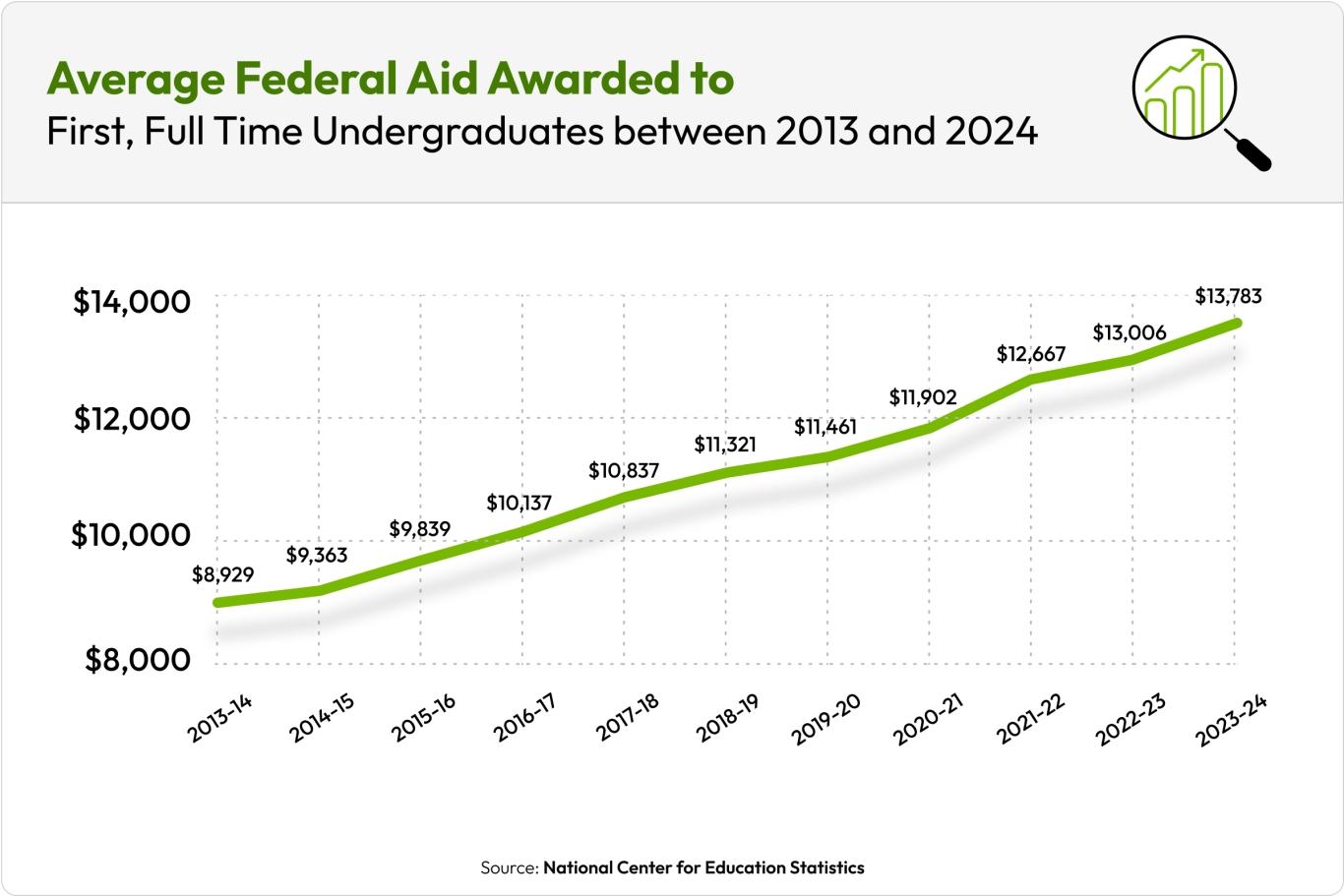
When comparing the average scholarship amount ($13,783) to the average cost of attendance ($30,990) at an in-state public four-year institution, a significant funding gap remains.
The college affordability verdict
After analysis, the National College Attainment Network found that only 35 percent of public four-year colleges met affordability standards, based on NCAN’s affordability metrics. These metrics include:
- Total price
- Emergency expenses
- Federal/grant aid
- Student loans
- Federal work study
- Expected family contribution
- Summer wages
Although tuition costs continue to rise, enrollment numbers are still increasing, and the number of students attending a postsecondary institution grows larger year over year.
Student Renters Navigating a Tough Rental Market
The growing concern around affordability is affecting every industry. From groceries to education to the housing market, the cost of living continues to increase while wages and income stay relatively the same.
Student renters are entering a tough rental market with the least amount of leverage- a limited or fixed income and a lack of rental or credit history, among other factors. Rental market challenges are not only affecting renters on a national and city-wide scale, but they are also impacting student renters and off-campus markets.
Renters are cost-burdened and affordable supply is slowing
The National Low Income Housing Coalition (NLHIC) reported in its 2026 The Gap Report that almost half of U.S. renter households are cost burdened. Nearly 1 in 2 renters nationally are stretched, and with student renters approaching this same rental market with a limited income, the affordability problem becomes even more prevalent.
The NLIHC reported that between 2015 and 2022 the share of newly completed apartments with rents falling below $1,050/month declined by two-thirds to just 7 percent, while the share of completed apartments renting for more than $2,050/month or more doubled to 37 percent.
Income and cost of living increases are just one side of the problem, while supply for affordable housing is another.
Campus housing markets see higher rents and less construction
The PwC Emerging Trends in Real Estate report analyzes different sectors of the housing market and forecasts trends for the year ahead. In their Student Housing Outlook, PwC found that among the RP 175 universities analyzed, average rents rose by six percent in 2024. In addition, apartment construction for these universities declined by 42 percent in 2025.
Supply is already tight in campus markets, and construction rollbacks mean there may be a shortage of off-campus housing for student renters in the coming years.
How Student Renters are Adapting to Affordability Pressures

Although financial aid concerns and rent increases continue to impact student renters, these renters are making tradeoffs to afford housing and cost of living expenses. The Apartments.com Q2 survey found that 42 percent of student renters live with roommates or housemates. This is just one way student renters are becoming more resourceful and adapting to rising living costs.
Affordability is a student renters’ top concern, and the way they search for an apartment and what is most important to them in a rental reinforces this belief.
Survey data shows what student renters want most in a rental
The Apartments.com Q2 student renter survey found that 32 percent of the student renters surveyed stated they were searching for a new rental because they needed affordable rent. When asked what their biggest deal breaker would be in a rental property, 79 percent of student renters said that a rental outside of their budget was their top deal breaker.
Student renters are becoming more aware of the money they spend on rent and how that can affect their financial future. With a growing student debt problem and an increased cost of living, student renters are prioritizing affordability, location, and total monthly costs when deciding where to live.
How Do Student Renters Use Financial Aid to Pay Rent?
The Free Application for Federal Student Aid (FAFSA) is an online application used to determine whether a student is eligible for federal financial support. Federal student loans can be used to pay for housing; however, the amount allotted for depends on the school’s COA and whether the student lives on or off campus.
Financial aid disbursement: living on campus vs. off campus
If a student lives on campus, tuition, fees, and room and board costs will usually be deducted from their financial aid award package, and the remaining balance will be disbursed after deductions. If a student lives off campus, the school will deduct tuition costs and added fees from the award, then disburse the remaining amount to the student, which can then be used for rent.
The difference is students who live off campus must budget their financial aid disbursement according to their monthly rent payments. Off-campus students must also factor groceries, furniture, and other living expenses or apartment costs into their budget.
Student borrowing has become common
Applying for federal financial aid has become common practice among college students. In fact, in March 2026 the U.S. Department of Education stated that more than 10 million FAFSA forms had been successfully completed for the 2026-2027 school year.
The NCES reported that 27.8 percent of undergraduate students received federal student loans in the 2023-2024 school year. Financial aid has traditionally been viewed as a financial resource for tuition costs; however, with rising housing and living costs, students depend on this aid to help pay for college and living expenses.
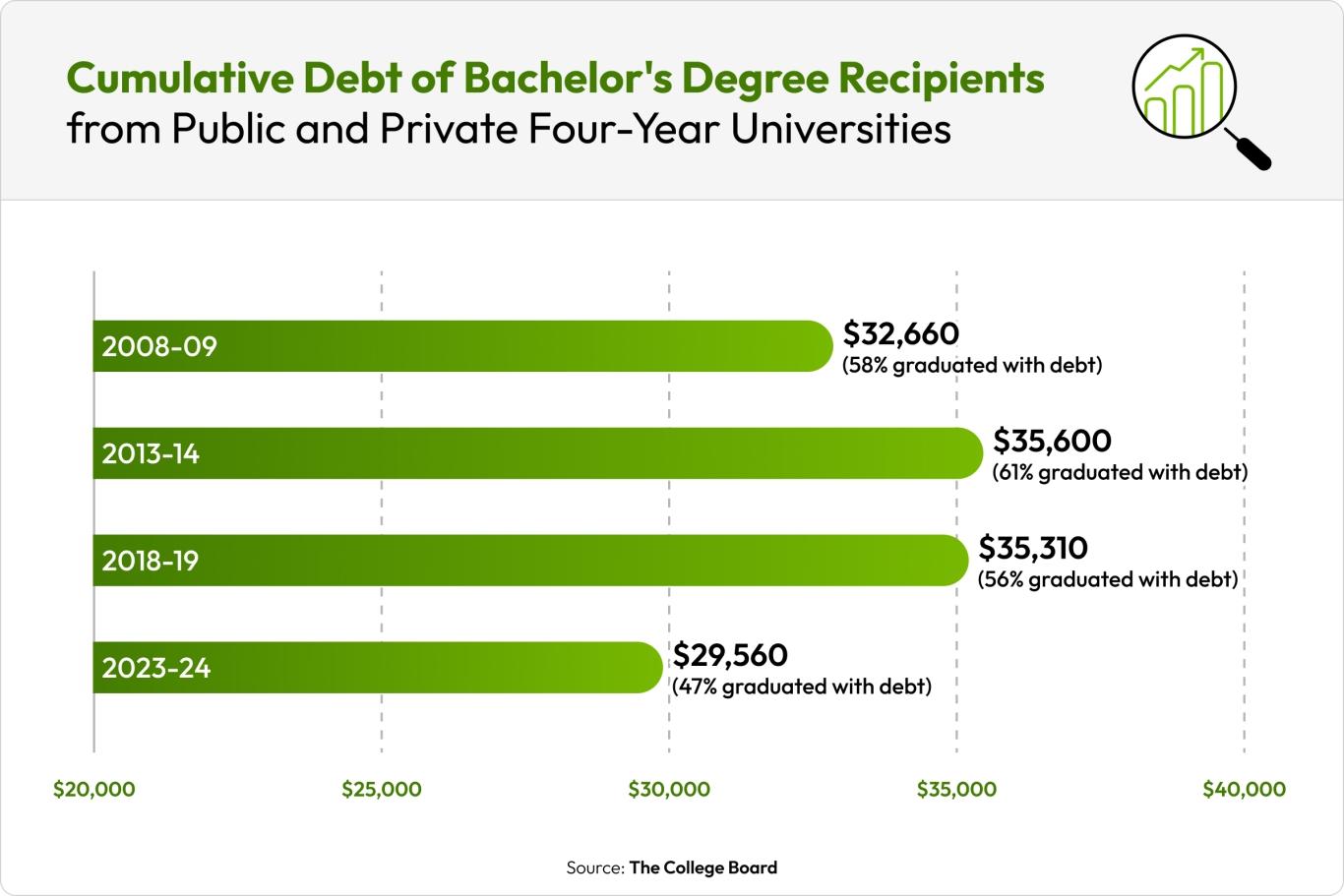
The consequences of relying on financial aid are already noticeable among college graduates. The College Board found that among 2023-2024 bachelor’s degree recipients, 47 percent graduated with debt averaging $29,560. Although the average amount of debt students are graduating with is decreasing, almost half of college graduates in the 2023-2024 school year graduated with debt, reinforcing the dependence on financial aid.
What Student Renters Actually Search For

Affordability pressures have caused student renters to become more deliberate when searching for their next rental. For example, the Apartments.com survey found that when searching for a rental, 64 percent of student renters look for a rental near school, a 9 percent overall increase from the general renter population. This data suggests that the location of a rental is a number one priority for student renters during their apartment search.
In addition, 88 percent of student renters stated that they want to see the total monthly price on a rental listing during their apartment search. The total monthly rent is the base rent plus any additional fees, security deposits, etc. Student renters are becoming aware of the importance of budgeting their income, and rental properties that provide this information promote transparency and trust with renters.
PwC reported in its Student Housing Outlook that in 2024, 36.2 percent of student housing units offered some kind of rent concession. Apartments.com found that in the first half of 2026, 41.2 percent of multifamily properties nationwide were offering a rent concession, a 9.9 percentage point increase from 2025. With housing costs and living expenses rising, rent concessions are one way properties can appeal to Gen Z and student renters.
College Cities with the Highest Tuition Costs and Rent Increases
The College Board reported that several flagship universities have seen higher tuition costs in the past five years. In addition, some of the cities where these universities are located are seeing steep rent increases that make it more difficult for student renters to balance both school and living costs. These five college cities are seeing the highest rent increases and higher tuition costs.
Storrs, Connecticut- University of Connecticut
- Average Monthly Rent in Storrs- $2,280/month
- Average One-Bedroom Size in Storrs- 601 sq. ft.
- Average Rent Increase- 8.2%
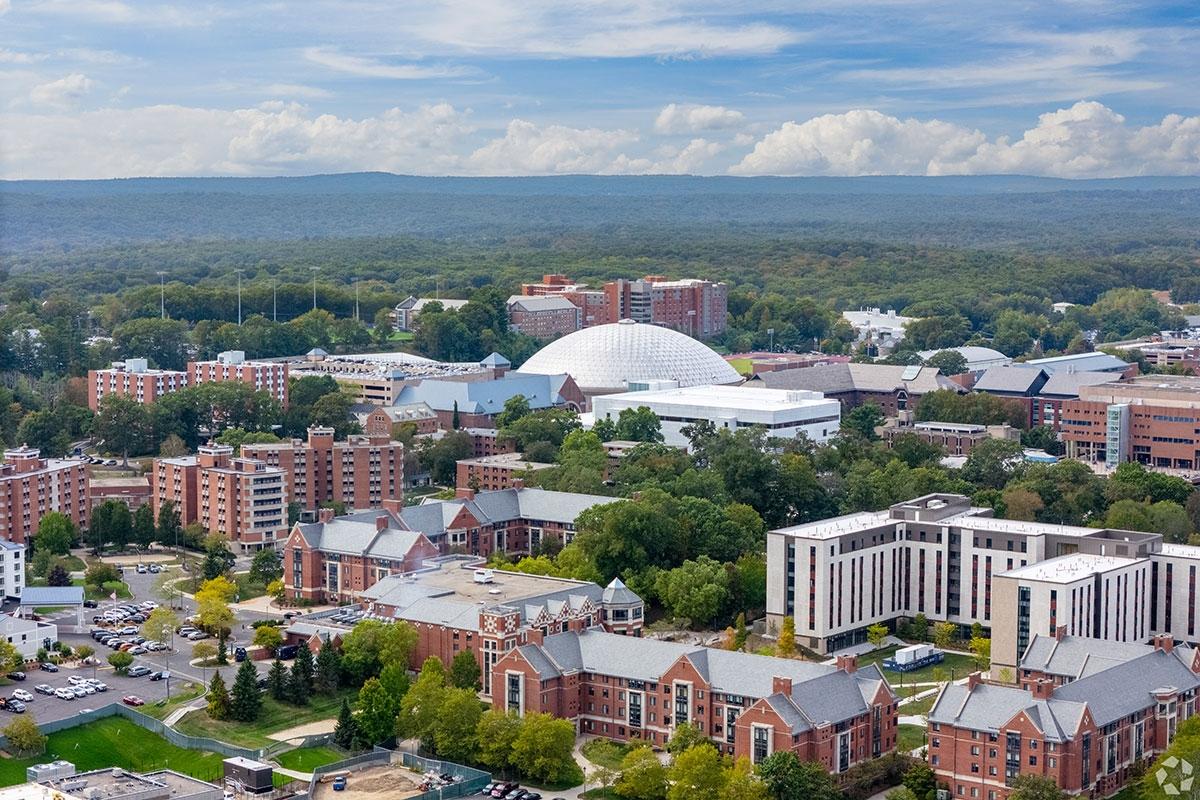
Storrs, Connecticut is home to the University of Connecticut. The College Board reported that in the 2025-2026 school year, the cost of in-state tuition and fees at the University of Connecticut was $21,330. The average monthly rent in Storrs has increased by 8.2 percent in the last year. High in-state tuition costs coupled with rising rent make Storrs one of the most expensive cities for college students to live in.
State College, Pennsylvania- Penn State University
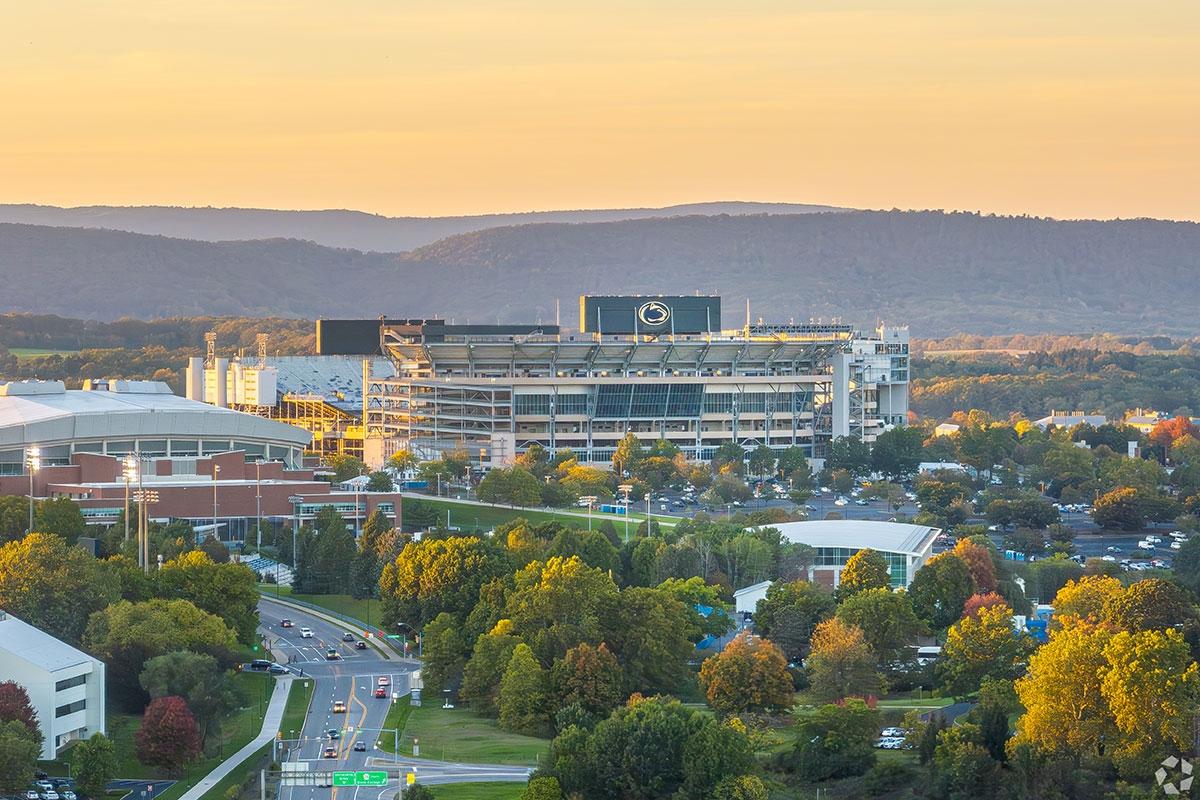
- Average Monthly Rent in State College- $1,381/month
- Average One-Bedroom Size in State College- 665 sq. ft.
- Average Rent Increase- 6.5%
Penn State University is located in State College, Pennsylvania and boasts one of the most college-oriented towns in the country. While the average monthly rent in State College is low, the city has seen significant rent increases over the past year. The College Board stated that the in-state tuition at Penn State is $21,080, one of the more expensive public university options for in-state students.
New Brunswick, New Jersey- Rutgers University
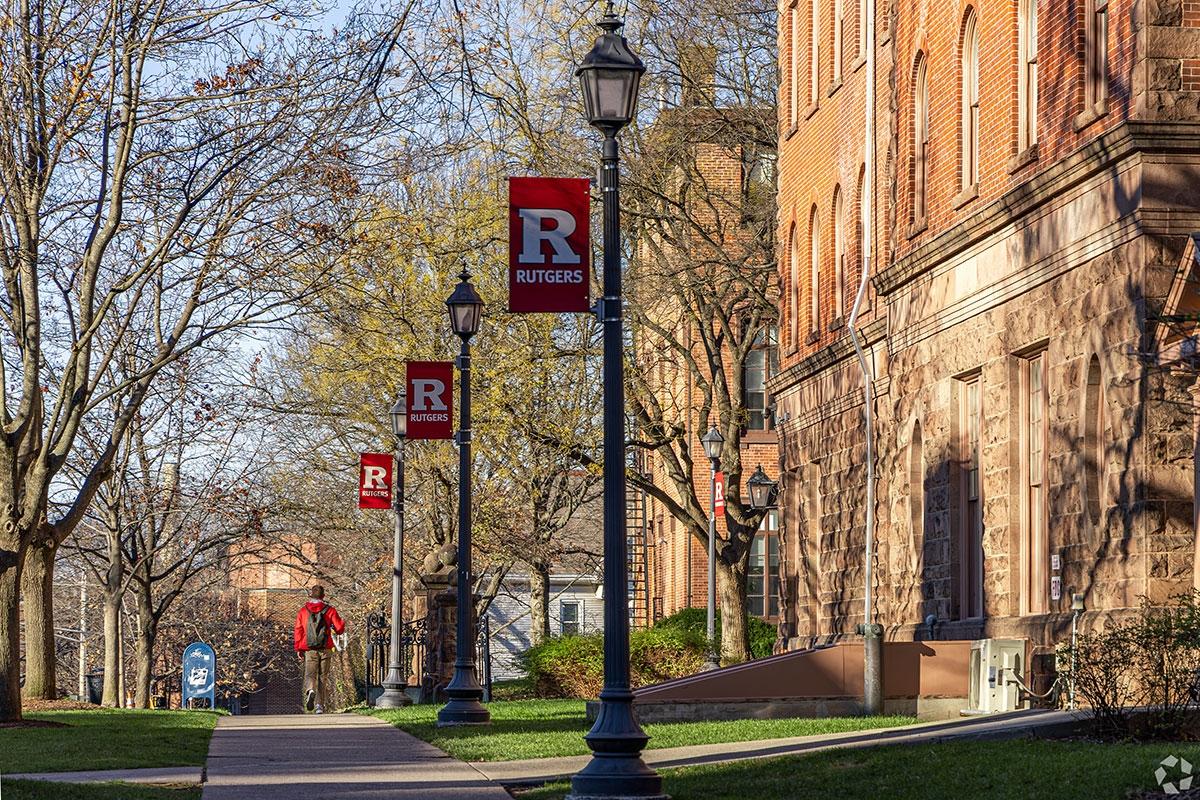
- Average Monthly Rent in New Brunswick- $2,227/month
- Average One-Bedroom Size in New Brunswick- 730 sq. ft.
- Average Rent Increase- 2.3%
New Brunswick has one of the highest average monthly rents among these college cities, at 35 percent above the national average rent. Rutgers University had the third highest in-state tuition at $20,050, including added fees and charges. New Brunswick offers a diverse lifestyle, but rising rents and high tuition costs can make it difficult for students.
Minneapolis, Minnesota- University of Minnesota

- Average Monthly Rent in Minneapolis- $1,421/month
- Average One-Bedroom Size in Minneapolis- 663 sq. ft.
- Average Rent Increase- 2.1%
Minneapolis is home to the University of Minnesota Twin Cities. The average monthly rent in Minneapolis is lower than the national average, but the city has seen rent increase over the past year, averaging approximately $30 per month. The cost of tuition for an in-state student at the University of Minnesota is $19,174.
Amherst, Massachusetts- University of Massachusetts
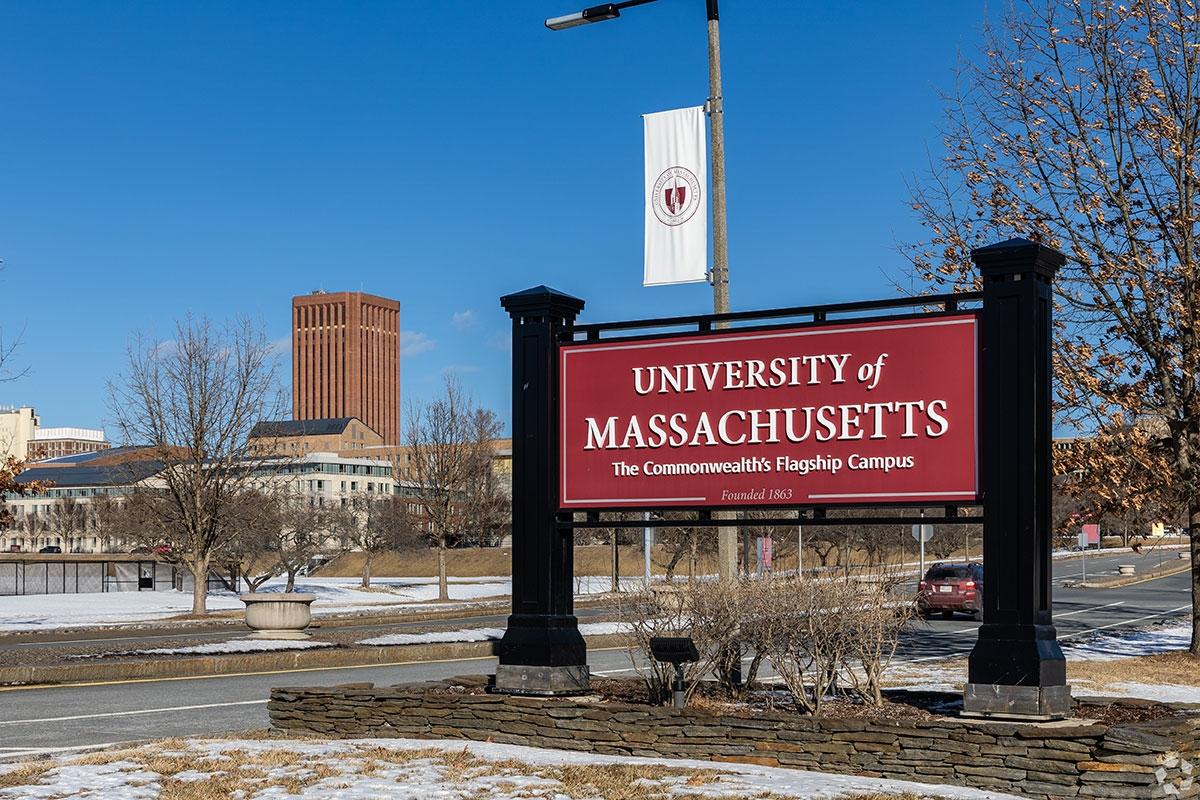
- Average Monthly Rent in Amherst- $1,845/month
- Average One-Bedroom Size in Amherst- 552 sq. ft.
- Average Rent Increase- 2%
The University of Massachusetts-Amherst is located in the college town of Amherst. The average monthly rent in Amherst is 12 percent higher than the national average, and tuition costs students $19,212. While the tuition costs are among the lowest on this list, rent increases coupled with the cost of living in Amherst can make it difficult for students to afford to live in this city.
Ways Student Renters Can Stretch Their Housing Budget
Although housing costs and the monthly average rent continue to increase, there are actionable steps student renters can take to manage these costs while staying within budget.
Four steps student renters can take to stretch their budget are:
- Renting with a roommate or housemate- Apartments.com found that 42 percent of student renters are already renting with a roommate or housemate, suggesting that splitting rent is one of the most adopted financial strategies among these renters.
- Asking about rent concessions before signing a lease- PwC and Apartments.com found that rent concessions are increasing in popularity, so student renters may be able to find deals on off-campus housing and apartments.
- Searching by proximity, not just price- Although price is the top consideration for renters, it’s important to consider whether an apartment closer to school could reduce other costs, such as transportation, and whether those savings outweigh a higher monthly rent.
- Starting your apartment search early- With apartment construction declining, it’s important for student renters to start their off-campus apartment search early, as available units tend to fill quickly, especially in college-dominated areas.
Enrollment numbers are still on the rise and continue to grow year over year, suggesting that students will continue to pursue higher education and find ways to make it more affordable.
Methodology
Data surrounding undergraduate tuition costs, financial aid statistics, and college affordability were sourced from the National Center for Education Statistics, the National College Attainment Network, and the College Board. Affordability and rent trend data from the National Low Income Housing Coalition combined with PwC’s Student Housing Outlook and Apartments.com Q2 survey data were used to analyze how student renters are adapting to rising costs and addressing affordability concerns. Rent trends data is sourced from the Apartments.com Rent Trends pages.
Find Student Housing on Apartments.com
Student renters searching for off-campus housing near their university can start their apartment search on Apartments.com. With Apartments.com AI, renters can search how they speak. Simply navigate to the Apartments.com home page and select “Apartments.com AI” to begin your search.
For example, “Look for off-campus student housing near the University of Minnesota with one bedroom, an in-unit washer and dryer, and a monthly rent of $2,000 or less.” Apartments.com AI will show apartments that match your search criteria.
Start your off-campus apartment search on Apartments.com today!
FAQs
Can student renters use financial aid to pay rent?
Yes, students can generally use financial aid to pay for housing costs included in their school’s cost of attendance. If tuition and fees are paid first, any remaining aid is disbursed to the student and can be used for housing costs.
Can students use financial aid to pay for off-campus housing?
FAFSA determines eligibility for federal financial aid, and that aid may be used for off-campus housing. Students living off campus usually receive remaining funds after tuition and fees are deducted.
How do students receive financial aid money for rent?
Financial aid is usually sent to the school first, where tuition, fees, and other charges are deducted from the aid award. If money remains after deductions, the school refunds the amount to the student, which can then be used for rent and other living expenses.


