
Tax season can be a stressful time for landlords. From filling out forms to tracking down expense receipts and meeting deadlines, there's a lot to manage. But there's a solution that can help simplify the process: Apartments.com. With Rental Tools, your finances stay organized year-round and tax documents are sent to you, so tax prep is fast and easy.
Key Takeaways
- Apartments.com helps landlords prepare for tax season by keeping rental finances organized year-round with built-in expense tracking tools and by delivering 1099K forms directly to landlords.
- A 1099-K form reports total gross payments received through third-party platforms or payment cards.
- After receiving a 1099‑K, landlords should review the form for accuracy, compare it against their own income records, and then use the information to file their taxes.
How Apartments.com Simplifies Tax Season for Landlords
Taxes require consistent organization of your financial documents, in addition to those from third-party sources. To help lighten the load, Apartments.com simplifies finance tracking, expense management, and access to tax documents.
Apartments.com and expense tracking
Apartments.com allows you to leverage technology when managing rental transactions. The expense tracking tool helps summarize rental expenses by property and tax category. From there, you can easily export them to CSV or PDF formats, making tax filing far less time-consuming.
Apartments.com and 1099-K forms
If you collect rent payments through Apartments.com, you will get a 1099-K form for your filing purposes. You can get a physical copy or go paperless and opt into 1099-K e-delivery. Electronic delivery makes filing taxes quicker and easier as you can instantly view, download, print, and get email alerts when documents are available.
What Is a 1099-K Form?
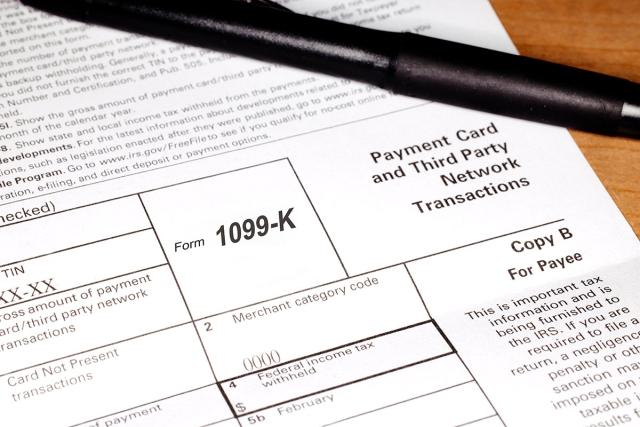
The 1099-K form, or Payment Card and Third-Party Network Transactions, is a document that reports income from payment settlement entities. According to the IRS, you may receive a 1099-K if you:
- Sold goods or provided services
- Received payment through an online marketplace or payment application
- Total payments and transaction volume exceeded the reporting threshold
- Or you accepted payment by payment card for any amount
In short, landlords who receive rent payments through third-party settlement organizations (TPSOs) may get a 1099-K from the platform. If you accept payments through multiple platforms, you could receive more than one 1099-K.
What is on a 1099-K form?
This form reports the gross amount of all reportable payment transactions. In simpler terms, it shows how much money you've received from your rental properties in a year. Apartments.com is required to report all payments received, including rent, bills, and move-in costs. Keep this document as part of your tax records and use it when preparing to file your taxes.
Reporting thresholds
1099-K forms are sent to any landlord who has received payments through a TPSO, but there is a reporting threshold. At the federal level, TPSOs must report if the total gross payment exceeded $20,000 and 200 transactions in a year. This same threshold applies for any payment apps or online marketplaces.
However, states may have lower thresholds, which means you might get a 1099-K even if you didn’t meet the minimum. TPSOs are allowed to send a 1099-K form at their own discretion, even if they are not required to.
There is no threshold amount for direct payments that happen via a payment card transaction, which are credit cards, debit cards, or stored-value cards. So, if your renters pay by card, regardless of the amount, you should get a 1099-K form from your payment card processor.
What Do I Do After I Receive a 1099-K Form?
After you get a 1099-K form, it's important to understand what it means and how to handle it.
Review your form
The first thing you should do is review your 1099-K form. Verify all the information is accurate, including your taxpayer identification number and the gross payment amount. If there is an issue with your 1099-K form, you will need to request a correction.
Compare it to your records
Gather your records from the past tax year and confirm they align with the reported amounts. This is also a good opportunity to check for deductible expenses.
Report your income
Use the reported amount of income on your 1099-K form, along with other applicable tax forms and any payments received by cash, check, or card, to calculate your total income. Depending on your situation, you typically report this income on Schedule E or Schedule C.
Pay any owed taxes
You may or may not have to pay any taxes. If you do, take care of it in a timely manner to avoid any problems or penalties.
Filing Taxes for Landlords
After you receive your 1099-K, you need to file your taxes and report any rental income. As a landlord or property owner, you typically report your rental income and any additional expenses using a Schedule E (Form 1040). This form requires details about your property, including total rental income and deductible expenses.
If you’re unsure about how to file your taxes, check out the tips and guides from the IRS on taxes and rental properties or hire a tax professional. They can provide personalized advice and assistance to ensure accurate reporting and compliance with tax regulations.
Tips for Staying Organized and Ensuring Accurate Record-Keeping
For landlords, maintaining meticulous records throughout the year is paramount to a smooth tax filing process. Incorporating some simple strategies can save you a significant amount of time and stress during tax season.
Use digital tools for record-keeping
Digital records and financial management is more efficient and easier to access compared to relying on paper files. Apartments.com centralizes financial activity and makes it easy to search, sort, and download with the expense tracking tool.
Create a filing system
Whether you choose to use a digital system, a physical file cabinet, or both, having a dedicated filing system is crucial. Organize your documents by year and category (e.g., income, repairs, utilities). Clearly label each file for easy retrieval.
Document every transaction
Keep detailed records of every rental transaction, including rent payments, security deposits, and maintenance expenses. This will help you accurately report your income and deductions when filing taxes.
Stay up-to-date on tax laws
Tax laws and regulations are constantly evolving, so it's important to stay informed. Consider consulting with a real estate accountant to ensure you're aware of any changes that may impact your tax filing. Also check your state’s government website for any tax laws and reporting thresholds.
A Smarter Way to Handle Your Taxes with Apartments.com
Tax season is already stressful enough, but it becomes a mad rush when your records and documents live in too many places. Apartments.com keeps your financial activity in one organized place and delivers essential tax documents, so you aren’t scrambling as the time approaches.
The above information is in no way intended to be a substitute for qualified legal advice. Please conduct your own research and comply with all your state and local laws. If you need tax advice, please contact a tax professional or real estate lawyer in your area.
This article was originally published on February 8, 2024 by Helen Ann Wells.
FAQs
What is depreciation?
Depreciation is a tax deduction that allows landlords to recover the cost of a rental property over time by deducting a portion of the property’s value each year for wear and tear. It can reduce taxable rental income, though limits apply, and depreciation recapture may be owed when the property is sold.
Why is rental property accounting important for landlords?
Rental property accounting helps landlords track income, expenses, and overall property performance so finances stay organized and accurate throughout the year. Accurate records improve cash-flow visibility, support deductions, simplify tax filing, and provide documentation if questions arise later.


