Background Image

Rego Park, NY Area Guide

Avg Rent

$2,301

Population

48,565

Renter Mix

60% Rent

Live where nothing is too far from home

Public Transportation Subway Great Schools

Rego Park sits in the heart of Queens, a dense, walkable square mile where Eastern European delis, Korean grocery stores, and Persian bakeries share the same block — a mix that reflects the neighborhood's genuinely international character. Anchored by the Queens Center Mall and Queens Place Mall along Queens Boulevard, the area draws steady foot traffic and offers everyday conveniences within easy reach. Nearby Forest Hills and Elmhurst expand the options for dining and green space, and Manhattan is accessible in under 30 minutes via the M and R subway lines at the 63rd Drive and Woodhaven Boulevard stations.

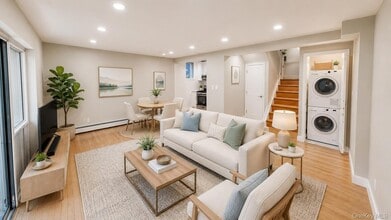
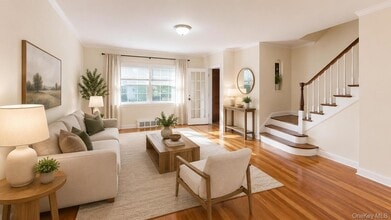
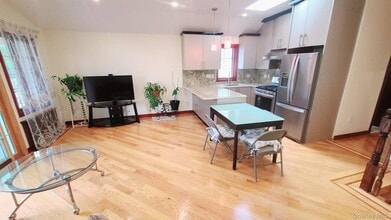
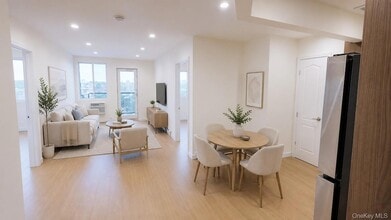
The housing stock leans heavily toward mid-rise and high-rise apartment communities, many built during the postwar boom that gave the neighborhood its name — Rego Park is a contraction of Real Good Park, the title used by the Real Estate Associates development company that built the area in the 1920s and 1930s. Renters will find a range of floor plans from studios to spacious three-bedrooms, with co-op conversions sitting alongside newer rental buildings. The neighborhood's central Queens location, relative affordability compared to Manhattan, and strong transit access make it a practical and grounded place to call home.

Explore the City

Demographics

Median Household Income

$75,276

Average: $98,685

Education

21,251

Residents Have a Degree

Job Market

25,183

Workers Employed

Age Distribution
Get a sense of this area's population profile.

Median Age

45 Years

Largest Age Group

35-44 Years

Approximately 14% of Residents

Under 20

20%

Over 65

24%
Housing Distribution

Rego Park has more renters than homeowners.

Renters
60%
Non-Renters
40%

Education Distribution

Review this city's overall education levels.

Bachelor's or Higher
40%
Other Education
60%

Rent Trends

As of July 2026, the average apartment rent in Rego Park, NY is $1,953 for a studio, $2,301 for one bedroom, $3,073 for two bedrooms, and $3,158 for three bedrooms. Apartment rent in Rego Park has increased by 0.8% in the past year.

Property Type
Average Rent
Average Sq Ft
Apartment
$2,301/month
629 Sq Ft
House
$4,916/month
730 Sq Ft
Condo
$2,745/month
722 Sq Ft
See Rental Market Trends in Rego Park, NY

Learn More About Rego Park

Getting Around

Exceptionally Walkable

Walkability

100 / 100

Exceptional Public Transit

Transit

90 / 100

Fairly Drivable

Drivability

50 / 100

Moderately Bikeable

Bikeability

60 / 100

Points of Interest

Top Apartments in Rego Park

Houses for Rent in Rego Park

Living in Rego Park

History

-

Rego Park traces its name back to the 1920s, when the Real Good Construction Company purchased farmland and began transforming it into a planned residential development. The neighborhood got its start with several hundred modest single-family homes marketed to working-class buyers, though the postwar decades brought a wave of mid-rise and high-rise apartment construction that now defines much of the streetscape. The name itself is a shortened version of Real Good Park, the development's original branding.

The area grew as a destination for immigrants throughout the 20th century, particularly Russian Jewish families fleeing persecution in the early 1900s, followed by waves of newcomers from Eastern Europe, Asia, and the Middle East. Today, renters encounter this layered history in the neighborhood's architecture and street life—brick apartment towers from the 1950s and 1960s stand alongside older residential blocks, while storefronts along Queens Boulevard reflect decades of cultural shifts. Russell Sage Playground and Lost Battalion Playground both carry names tied to local history, serving as gathering spots in a densely built neighborhood shaped by continuous reinvention.

Restaurants

-

Queens Boulevard is the spine of Rego Park's dining scene, lined with restaurants reflecting the neighborhood's layered immigrant history. Russian and Bukharan Jewish cuisine is especially prominent here, with Uzbek-influenced dishes like plov, samsa, and kebabs appearing on menus throughout the area. Turkish, Mediterranean, Chinese, Japanese, and Peruvian cooking round out a dining landscape that spans continents within just a few blocks. Kosher options are plentiful, making Rego Park one of the stronger destinations in Queens for diners observing Jewish dietary laws. The overall tone is casual and unpretentious, with many family-run spots that have served the community for decades.

Transportation

-

Rego Park is one of the more transit-accessible neighborhoods in Queens, making car ownership entirely optional for most residents. The R train runs along Queens Boulevard, with the 63rd Drive–Rego Center and Woodhaven Boulevard stations serving the neighborhood directly, offering a roughly 30-minute ride into Midtown Manhattan. Several MTA bus lines run through the area as well, and the Long Island Rail Road is accessible nearby for those commuting further into Long Island or into Penn Station. For drivers, the Queens–Midtown Expressway (I-495), the Long Island Expressway, and the Queens Boulevard corridor connect the neighborhood to the broader metro region, though rush-hour congestion on Queens Boulevard is a daily reality. The area around Queens Boulevard is quite walkable, with shops, groceries, and restaurants concentrated along the corridor. Bike lanes exist in parts of the neighborhood, and while cycling is feasible, riders should expect heavy traffic on the main thoroughfares.

Parks

-

Rego Park's green spaces are modest but well-used. Russell Sage Playground serves as the neighborhood's central outdoor hub, offering basketball courts, handball courts, fitness equipment, and a well-equipped playground area. Lost Battalion Playground provides additional open green space for residents seeking a quieter spot nearby. Just beyond the neighborhood's borders, Elmhurst Park offers room to let dogs run and kids play. The standout destination for Rego Park residents is Flushing Meadows Corona Park, a short drive or subway ride away. One of New York City's largest parks, it encompasses a zoo, botanical garden, open meadows, and recreational facilities, along with historical structures remaining from its time as a World's Fair site.

Cost

-

Rego Park sits within one of the most expensive rental markets in the country, with Queens overall carrying a cost of living roughly 54 percent above the national average, driven largely by housing costs. In Rego Park itself, studios average around $1,931 per month, one-bedrooms around $2,282, and two-bedrooms around $3,030, with larger units climbing higher. Rents here tend to fall below those in adjacent Forest Hills, where one-bedrooms average closer to $2,570, making Rego Park a relatively more accessible entry point into this part of Queens. The neighborhood is composed primarily of mid-rise apartment buildings and co-ops, with limited single-family housing options, which shapes a rental market that skews toward multi-unit residential inventory.

Shopping

-

Rego Park's retail life centers on Queens Boulevard, where a stretch of large shopping centers brings together a practical mix of everyday chain stores and big-box retailers. Shoppers can stock up on groceries, household goods, clothing, and more without leaving the neighborhood. The area lacks a dedicated farmers market of its own, but neighboring Jackson Heights and Forest Hills both host outdoor Sunday markets within easy reach, offering fresh produce, local goods, and a more relaxed browsing experience. For residents who want something beyond the standard chain lineup, smaller boutiques are scattered throughout the area and nearby Forest Hills, adding a more personal dimension to the local retail scene.

Search Nearby Rentals

Methodology

† Our analysis of utilities, groceries, transportation, healthcare, home prices, and other goods and services is sourced from the Cost of Living Index, a respected benchmark published by the Council for Community and Economic Research (C2ER) that provides a thorough overview of living expenses across different regions.

Rent data is provided by CoStar Group’s Market Trend reports. As the industry leader in commercial real estate information, analytics, and news, CoStar conducts extensive research to produce and maintain a comprehensive database of commercial real estate information. We combine this data with public record to provide the most up-to-date rental information available.

Consumer goods, services, and home prices are sourced from the Cost of Living Index published by the Council for Community and Economic Research (C2ER). The data on this page is updated quarterly. It was last published in June 2026.

Demographic information comes from Neustar and combines detailed address data with U.S. Census and American Community Survey statistics to produce reliable local estimates.