Median Age
50 Years
Largest Age Group
65-74 Years
Approximately 16% of Residents
Under 20
19%
Over 65
30%



Avg Rent
$2,041
Population
7,177
Renter Mix
42% Rent
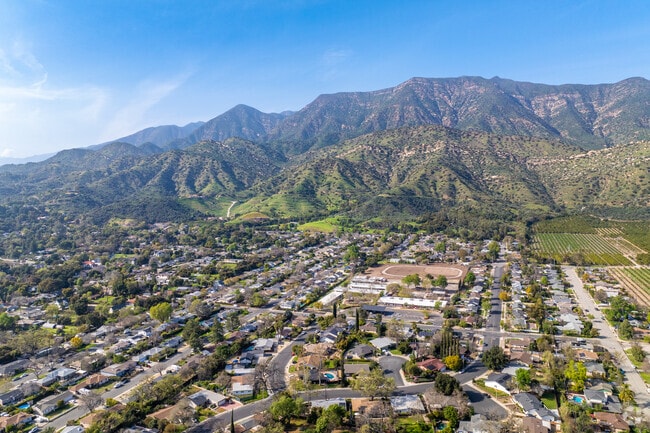
Tucked into a small mountain valley in Ventura County, Ojai operates by its own rules. A local ordinance bans chain stores outright, leaving the streetscape to independent galleries, organic cafes, and artisan boutiques. Roughly 14 miles east of Ventura and about 75 miles northwest of Los Angeles, the city covers just 5 square miles at the foot of the Topa Topa Mountains, with Los Padres National Forest forming a dramatic green border to the north. Daily life revolves around farmers' markets, trailheads, and a walkable downtown along Ojai Avenue where most errands are easy to handle on foot.
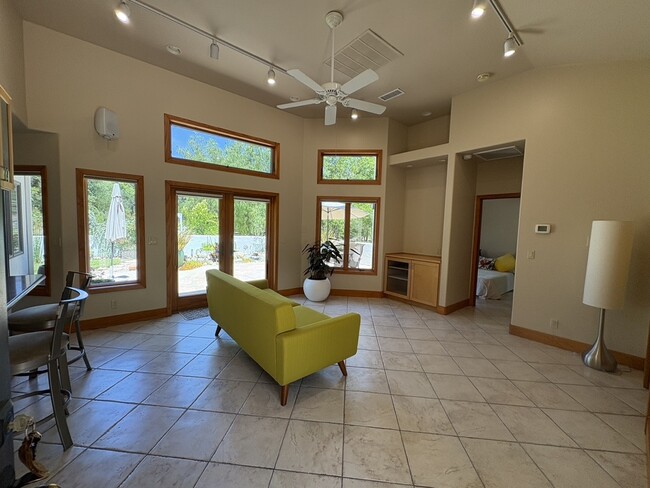
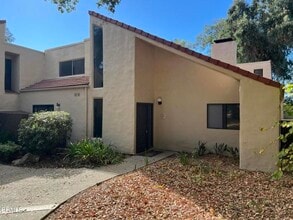
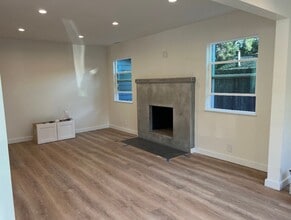
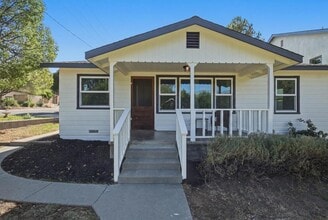
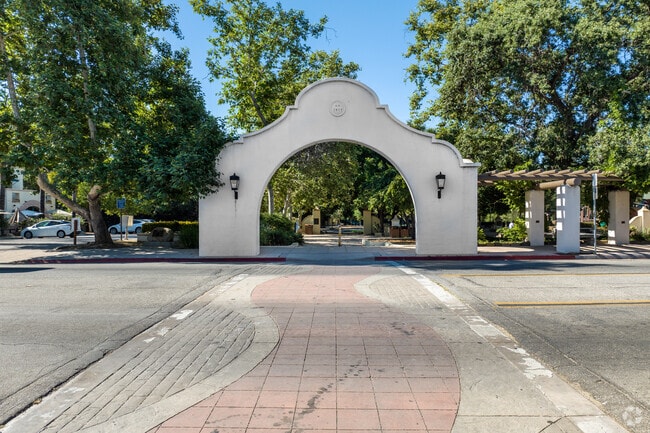
Rental options lean toward smaller-scale apartment communities, garden-style apartments, condos, and single-family homes that match the city's low-density, small-town character. Architecture along the main corridor draws from Spanish Colonial Revival traditions, with arcade-style storefronts and preserved early 20th-century facades giving downtown a cohesive, village-scale feel.
Ojai's identity as an arts and wellness destination stretches back to the early 1900s, when artists and writers first began settling in the valley. That creative culture endures today alongside organic agriculture, a weekly certified farmers' market, and one of the region's most recognizable natural phenomena: the "Pink Moment," when the Topa Topa Mountains flush rose-gold at sunrise and sunset.
Ojai has many Southwestern style arches throughout the city.
Ojai lies in an East-West valley also known as the "Valley of the Moon."
"The Arcade" is Ojai's downtown shopping district, known for its locally-owned shops.
The Bike trail in Ojai is almost 10 miles long.
Shelf Road and all of Ojai's hiking and horse trails are enjoyable year-round.
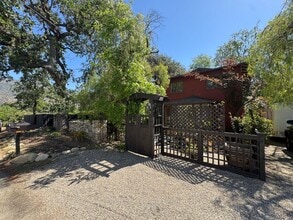
Large lots and lush foliage are common in Ojai's high-desert climate.
Median Household Income
$75,952
Average: $115,136
Education
2,827
Residents Have a Degree
Job Market
3,398
Workers Employed
Median Age
50 Years
Largest Age Group
65-74 Years
Approximately 16% of Residents
Under 20
19%
Over 65
30%
Housing Distribution
Ojai has more homeowners than renters.

Education Distribution
Review this city's overall education levels.

As of September 2026, the average apartment rent in Ojai, CA is $1,221 for a studio, $2,041 for one bedroom, $2,805 for two bedrooms, and $5,884 for three bedrooms. Apartment rent in Ojai has increased by 1.7% in the past year.
Explore how walkable, bikeable, drivable, and transit-friendly Ojai, CA is for everyday living.
Fairly Walkable
Walkability
Limited Public Transit
Transit
Moderately Drivable
Drivability
Moderately Bikeable
Bikeability

Public
Grades K-5
523 Students

Public
Grades K-5
523 Students

Public
Grades K-5
347 Students
Public
Grades K-12
75 Students

Public
Grades K-8
134 Students

Public
Grades 6-8
271 Students

Public
Grades K-12
75 Students
Public
Grades K-8
134 Students
Public
Grades 9-12
576 Students

Public
Grades 9-12
576 Students
Public
Grades K-12
75 Students
 The GreatSchools Rating helps parents compare schools within a state based on a variety of school quality indicators and provides a helpful picture of how effectively each school serves all of its students. Ratings are on a scale of 1 (below average) to 10 (above average) and can include test scores, college readiness, academic progress, advanced courses, equity, discipline and attendance data. We also advise parents to visit schools, consider other information on school performance and programs, and consider family needs as part of the school selection process.
View GreatSchools Rating Methodology
Data provided by
GreatSchools.org
© 2026. All rights reserved.
The GreatSchools Rating helps parents compare schools within a state based on a variety of school quality indicators and provides a helpful picture of how effectively each school serves all of its students. Ratings are on a scale of 1 (below average) to 10 (above average) and can include test scores, college readiness, academic progress, advanced courses, equity, discipline and attendance data. We also advise parents to visit schools, consider other information on school performance and programs, and consider family needs as part of the school selection process.
View GreatSchools Rating Methodology
Data provided by
GreatSchools.org
© 2026. All rights reserved.
† Our analysis of utilities, groceries, transportation, healthcare, home prices, and other goods and services is sourced from the Cost of Living Index, a respected benchmark published by the Council for Community and Economic Research (C2ER) that provides a thorough overview of living expenses across different regions.
Rent data is provided by CoStar Group’s Market Trend reports. As the industry leader in commercial real estate information, analytics, and news, CoStar conducts extensive research to produce and maintain a comprehensive database of commercial real estate information. We combine this data with public record to provide the most up-to-date rental information available.
Consumer goods, services, and home prices are sourced from the Cost of Living Index published by the Council for Community and Economic Research (C2ER). The data on this page is updated quarterly. It was last published in September 2026.
Demographic information comes from Neustar and combines detailed address data with U.S. Census and American Community Survey statistics to produce reliable local estimates.