Median Age
41 Years
Largest Age Group
35-44 Years
Approximately 14% of Residents
Under 20
25%
Over 65
19%
Avg Rent
$1,534
Population
56,759
Renter Mix
26% Rent
Sitting just south of the Twin Cities, Apple Valley is the kind of suburb where you can spend a Saturday morning hiking wooded trails and an afternoon exploring a world-class zoo without ever getting on a highway. The Minnesota Zoo calls this city home, drawing visitors year-round with everything from grizzly bears to live concerts on its outdoor stage. Lebanon Hills Regional Park — the largest in all of Dakota County — offers nearly 2,000 acres of trails, campgrounds, fishing, mountain biking, and cross-country skiing depending on the season.
Daily life here revolves around easy access to the outdoors, a well-established shopping corridor along Cedar Avenue, and a quick commute into Minneapolis or St. Paul via I-35E. Renters will find a solid mix of options, from spacious townhomes and garden-style apartment communities to newer developments with updated finishes and community amenities. Whether you're looking for a cozy studio or a larger multi-bedroom layout, the rental market offers enough variety to suit different needs and lifestyles. Named after Apple Valley, California, this Minnesota city has built an identity all its own — one rooted in green space, accessibility, and a genuine sense of community.
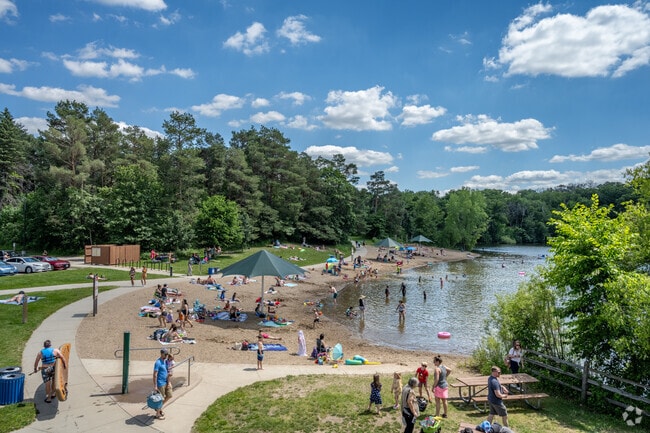
Lebanon Hills Regional Park is a popular beach and recreation area near Apple Valley..
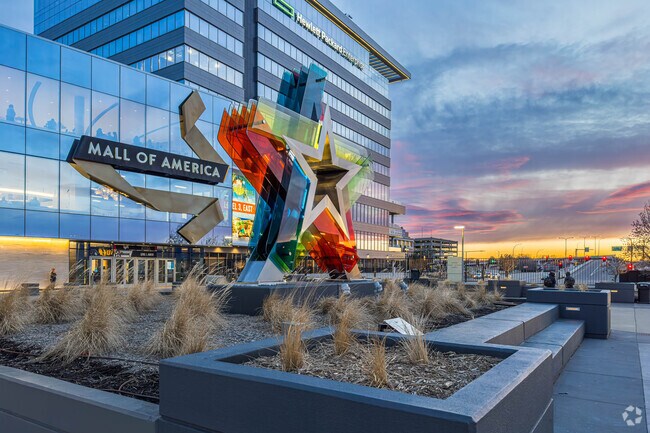
The Mall of America is a giant 4-level mall with hundreds of stores.
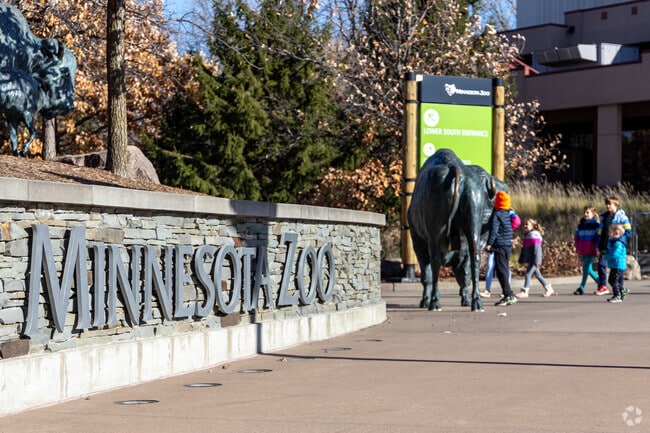
Apple Valley is home to the Minnesota Zoo, featuring thousands of species of animals.
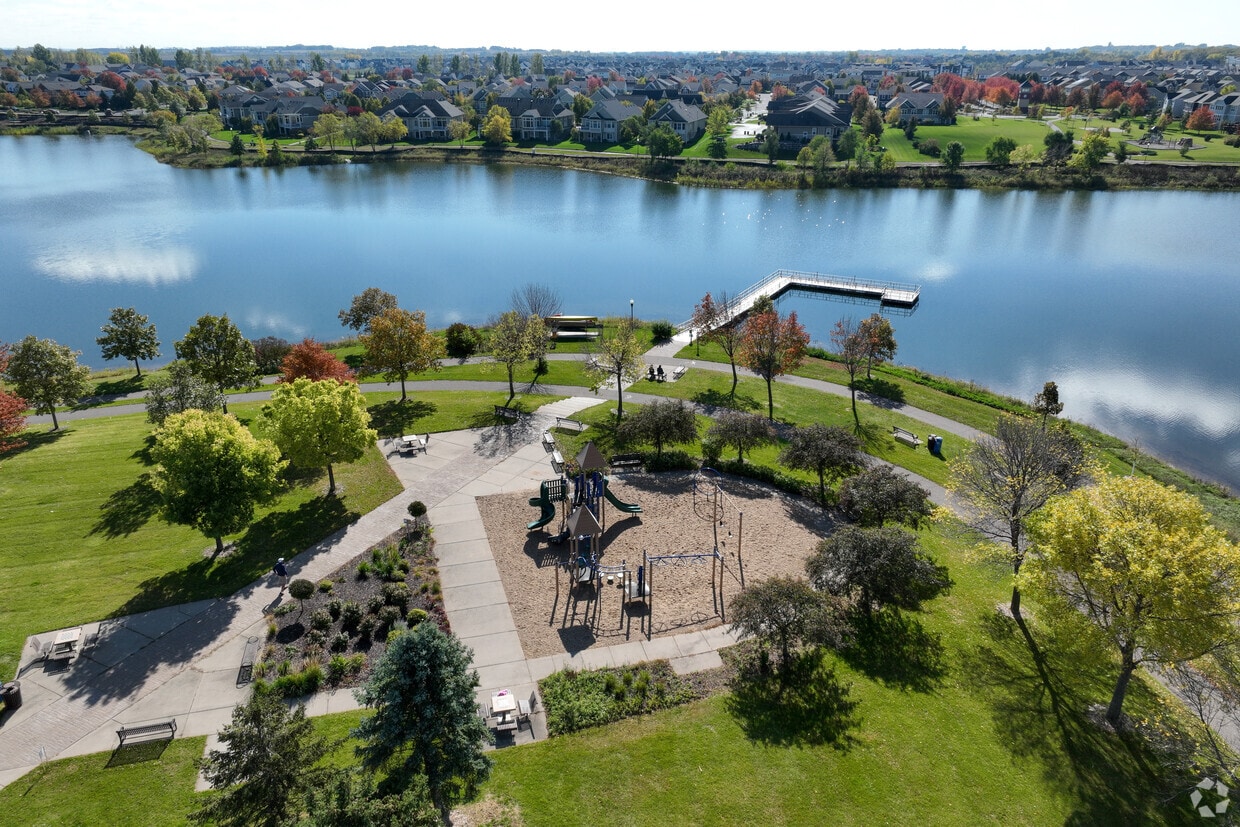
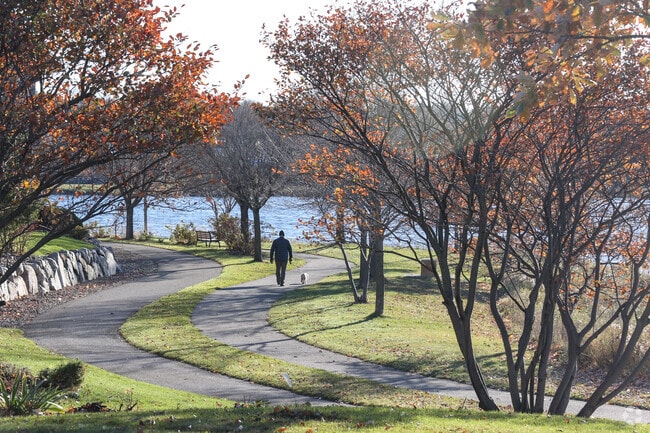
The walking path at Regatta Park extends into the surrounding neighborhood.
Hagemeister Park is a small city park with a playground, ice rink, and baseball field.
Cedar Knolls Park is a small neighborhood park with a playground and tennis courts.
Median Household Income
$94,441
Average: $118,353
Education
20,269
Residents Have a Degree
Job Market
32,354
Workers Employed
Median Age
41 Years
Largest Age Group
35-44 Years
Approximately 14% of Residents
Under 20
25%
Over 65
19%
Housing Distribution
Apple Valley has more homeowners than renters.

Education Distribution
Review this city's overall education levels.

As of September 2026, the average apartment rent in Apple Valley, MN is $1,205 for a studio, $1,531 for one bedroom, $1,835 for two bedrooms, and $2,179 for three bedrooms. Apartment rent in Apple Valley has decreased by -0.7% in the past year.
Explore how walkable, bikeable, drivable, and transit-friendly Apple Valley, MN is for everyday living.
Fairly Walkable
Walkability
Limited Public Transit
Transit
Exceptionally Drivable
Drivability
Moderately Bikeable
Bikeability

Public
Grades PK-5
785 Students

Public
Grades PK-5
785 Students
Public
Grades K-5
717 Students
Public
Grades K-5
717 Students
Diamond Path Elementary School
Public
Grades K-5
686 Students
Public
Grades 6-8
1,088 Students

Public
Grades 6-8
1,228 Students

Public
Grades 6-8
1,090 Students

Public
Grades 6-12
194 Students

Public
Grades K-12
101 Students

Public
Grades 9-12
2,328 Students

School Of Environmental Studies
Public
Grades 9-12
334 Students
Apple Valley Senior High School
Public
Grades 9-12
1,999 Students

Public
Grades 9-12
1,893 Students
Public
Grades 6-12
194 Students
 The GreatSchools Rating helps parents compare schools within a state based on a variety of school quality indicators and provides a helpful picture of how effectively each school serves all of its students. Ratings are on a scale of 1 (below average) to 10 (above average) and can include test scores, college readiness, academic progress, advanced courses, equity, discipline and attendance data. We also advise parents to visit schools, consider other information on school performance and programs, and consider family needs as part of the school selection process.
View GreatSchools Rating Methodology
Data provided by
GreatSchools.org
© 2026. All rights reserved.
The GreatSchools Rating helps parents compare schools within a state based on a variety of school quality indicators and provides a helpful picture of how effectively each school serves all of its students. Ratings are on a scale of 1 (below average) to 10 (above average) and can include test scores, college readiness, academic progress, advanced courses, equity, discipline and attendance data. We also advise parents to visit schools, consider other information on school performance and programs, and consider family needs as part of the school selection process.
View GreatSchools Rating Methodology
Data provided by
GreatSchools.org
© 2026. All rights reserved.
† Our analysis of utilities, groceries, transportation, healthcare, home prices, and other goods and services is sourced from the Cost of Living Index, a respected benchmark published by the Council for Community and Economic Research (C2ER) that provides a thorough overview of living expenses across different regions.
Rent data is provided by CoStar Group’s Market Trend reports. As the industry leader in commercial real estate information, analytics, and news, CoStar conducts extensive research to produce and maintain a comprehensive database of commercial real estate information. We combine this data with public record to provide the most up-to-date rental information available.
Consumer goods, services, and home prices are sourced from the Cost of Living Index published by the Council for Community and Economic Research (C2ER). The data on this page is updated quarterly. It was last published in September 2026.
Demographic information comes from Neustar and combines detailed address data with U.S. Census and American Community Survey statistics to produce reliable local estimates.