

With the rise of remote work, the gig economy, and entrepreneurship, more and more people are turning to home-based businesses. A 2025 U.S. Census Bureau study revealed that 33 million Americans are self-employed individuals or business owners. For landlords, this raises an important question: Should you allow tenants to run a business from home?
Let’s break down the perks and pitfalls so you can figure out what makes sense for you—protecting your investment while attracting great tenants.
Key Takeaways
• 33 million Americans now work for themselves, according to a 2025 U.S. Census Bureau study—highlighting a fast-growing tenant segment seeking flexible, business-friendly rentals.
• Landlords who permit home-based businesses may benefit from reduced turnover, higher rent potential, and a broader pool of responsible applicants, especially in properties with features like high-speed internet and package lockers.
• Allowing in-home businesses without clear rules can lead to legal liability, property wear, and tenant disputes, making insurance, zoning compliance, and detailed lease addendums critical safeguards.
The Changing Face of Home-Based Businesses
A few years ago, the words ”home business” conjured up images of someone selling from-scratch, three-layer cakes, direct-sales cosmetics, or providing private music lessons to students after school. These days, it could mean operating an online store, doing graphic design projects, or taking video calls as a consultant.
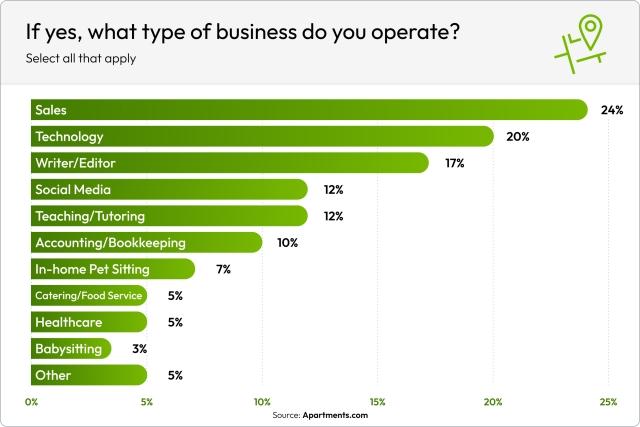
According to Apartments.com’s February 2026 renter survey, those who rent are part of the growing trend of home-based businesses.
Question 1:
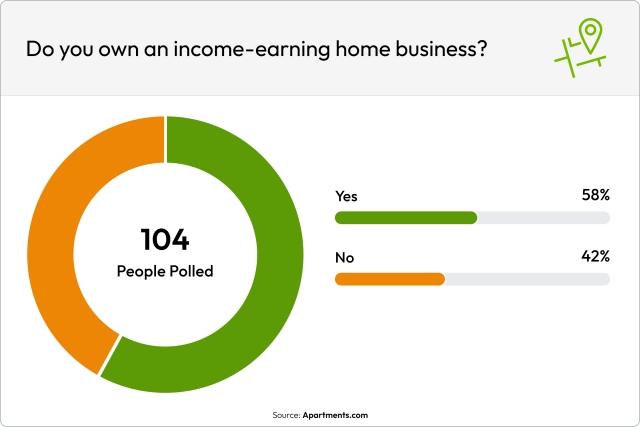
Renters who own a home-based business represent a wide range of job categories.
Question 2:
If you ignore the growing trend of home-based businesses, you could miss out on a whole group of great tenants. On the flip side, saying yes without any ground rules can create some real headaches. It’s important to distinguish between a business that attracts long-term tenants and one that might cause disruptions for you or other residents.
Pros of Allowing Tenants to Operate a Business
Before we jump into the challenges that may come up, let’s talk about why you might actually want to give the green light. Saying yes to certain business activities in your rental could end up putting more money in your pocket.
1. Wider applicant pool
If you put it out there that you’re open to small businesses in your rentals, you’ll open your doors to all kinds of freelancers, entrepreneurs, and independent professionals. This bigger pool of renters means you’re less likely to have empty units sitting around.
2. Reduced turnover
When tenants set up a workspace—maybe it’s a home office or just a little area for their side hustle—they’re more likely to stick around. Moving is a pain, and it also means putting the brakes on their business. So, these tenants often end up renewing their lease, which means you get steady, long-term tenants.
3. Higher rent potential
Depending on your area, being open to small businesses can make your place more appealing—and sometimes that means you can charge a bit more. If you’ve got features like fast internet, package lockers, or extra soundproofing, those perks might let you boost the rent.
4. Responsible tenants
People who run their own businesses are usually organized, responsible with their money, and careful about maintaining their space. If someone depends on their apartment as their workspace, they’re extra motivated to keep things safe, quiet, and tidy.
Cons and Potential Risks for Landlords
Even though there are some appealing upsides, there are also some real risks to watch for. Letting a tenant run a business out of a rental can also create unexpected challenges.
1. Increased wear and tear
If your tenant is a freelance writer, you probably won’t experience any issues. But if your tenant is running something that brings in inventory, involves shipping packages, or has lots of people stopping by, that’s a whole different story.
2. Noise and nuisance complaints
Nothing makes people grumpier than noise coming from their neighbors. If you’ve got a piano teacher giving lessons all day, or someone running machines in their apartment or from the garage, neighbors are bound to get annoyed. Pretty soon, you’ll be fielding complaints and drama.
3. Personal injury liability
If your tenant’s customer trips on the doorstep or someone gets hurt in the home while working, who’s on the hook? Without clear rules and paperwork, you as the landlord could get tangled up in a lawsuit just for owning the place.
Legal Aspects to Consider for Home Businesses
If you’re thinking about letting tenants run a business, you’ll want to review a few key factors.
1. Zoning laws and HOA rules
Check your area for local requirements. Most cities allow what they call a “home occupation,” which basically means quiet, low-key businesses are acceptable, but anything like a full-blown shop or salon usually isn’t. If you’ve got an HOA, don’t forget to look at their rules too—they sometimes have even stricter guidelines about running businesses in the community.
2. Lease agreements
If you're fine with tenants operating a business from home, you’ll need to tweak your lease or add an extra page spelling out the rules. Don’t simply make a verbal agreement—get it in writing. The lease should be clear about what’s allowed and what’s not.
3. Insurance gaps
Don’t just assume your usual insurance has you covered if your tenant starts up a business.
- Renter’s Insurance: Standard policies usually exclude business equipment and liability.
- Landlord insurance: Your own policy likely covers residential use only.
You’ll want to make sure your tenant has the right insurance to operate a business. Require proof of business liability insurance before approving the activity.
Best Practices for Landlords

If you’re thinking about moving forward with allowing your tenant to operate a home business, here are some simple tips to help keep things running smoothly and avoid hassles.
1. Define the "business"
Don’t leave things fuzzy. Spell out exactly which business activities are totally fine and which ones just aren’t going to work (like turning the home into a mini-convenience store). Here are examples:
- Allowed: Coding, writing, virtual consulting, quiet crafting
- Prohibited: Retail sales, manufacturing, auto repair, counseling services with patients on-site
2. Create a specific addendum
A “commercial use of residential lease” addendum lays out all the house rules for running a business in the rental. This puts everyone on the same page right from the get-go and should include:
- The nature of the business
- The tenant’s hours of operation (if relevant)
- Whether business signage is allowed
- If there are any parking restrictions for visitors
- The requirement of business insurance
- Indemnification holding you harmless for a tenant’s business liabilities
3. Require proper insurance
Make sure the tenant provides proof of business liability insurance before you give the green light. Accidents can happen at any time, and you want to be sure there’s coverage in place from the start.
4. Conduct scheduled inspections
Set up a check-in once or twice a year. This allows you to verify the business is following the agreed rules and isn’t causing property issues.
Letting tenants run a business out of your rental property is a balancing act. With the right structure in place, you can attract reliable renters and keep your property competitive in today’s market.
Managing Risks and Setting Clear Expectations for Tenant Businesses
Without clear rules, permitting a home business enterprise can quickly become a source of added risk and frustration. To mitigate this, set specific expectations, require proper coverage, and stay up to date on legal guidelines so tenant-driven entrepreneurship works for—not against—your investment.
Regularly communicate with your tenants to ensure compliance and address any concerns proactively. By fostering a balance between flexibility and accountability, you can create a win-win situation for both yourself and entrepreneurial renters.
Frequently Asked Questions
Can I legally stop a tenant from running a business in my rental?
Standard residential leases typically specify that the property is for residential use only. However, you should check your local laws, as some jurisdictions may protect tenants' rights to perform quiet, non-intrusive work (like remote office work) from home. It is best to consult with a legal professional to draft a lease clause that clearly defines prohibited vs. permitted business activities.
How do I differentiate between a side hustle and a full-on business?
A business might involve storing inventory, manufacturing products, or having customers visit the property. Your lease addendum should focus on the activity (e.g., "no foot traffic," "no manufacturing," "no exterior signage") rather than a job title.
What if a tenant starts a business without notifying me?
Review the lease agreement to confirm if there is, in fact, a violation. If you are certain a tenant has violated the lease, request a meeting with them to address any potential misunderstandings. If the violation persists, issue written notices for your records in case legal consultation becomes necessary.


