Washington
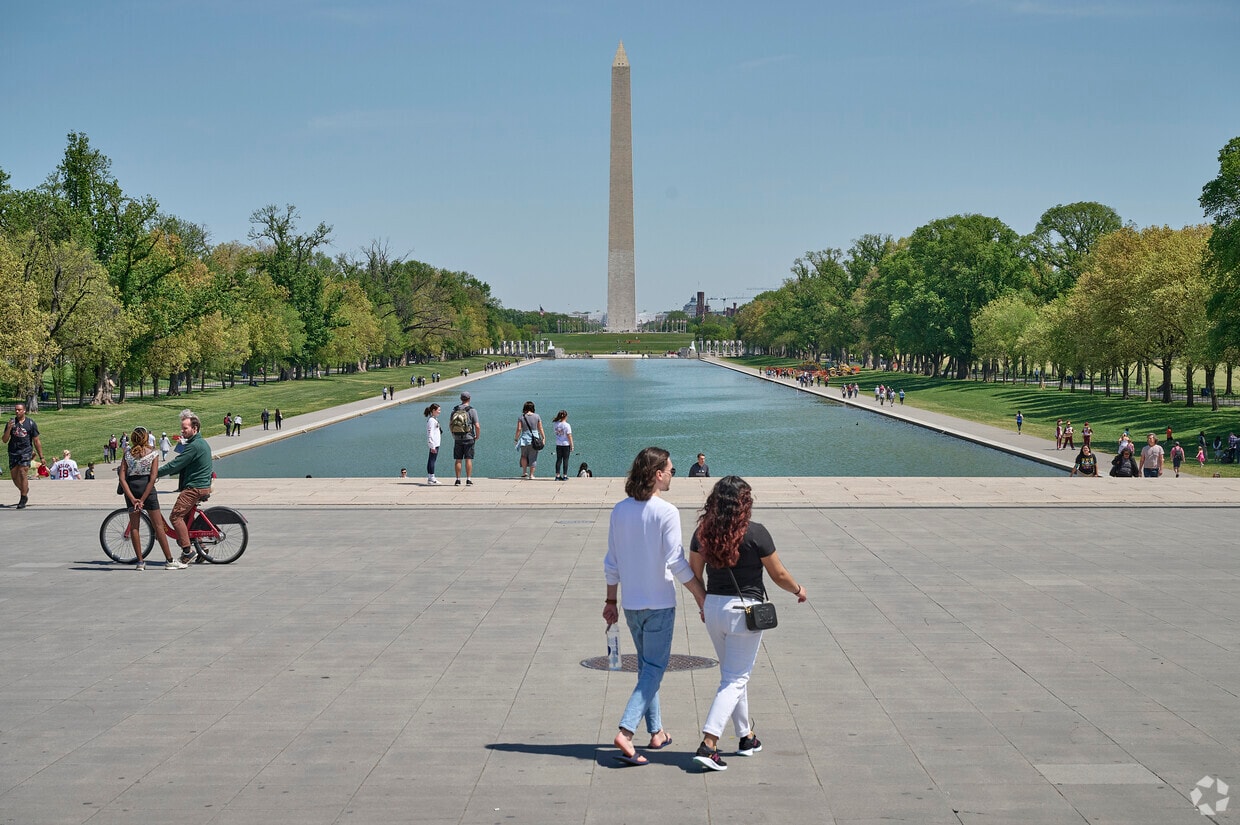
Washington, D.C. is the only American city that functions simultaneously as a seat of federal power and a fully lived-in, working metropolis. Its economy runs on government, law, lobbying, healthcare, and higher education, with major institutions like Georgetown University, George Washington University, and Howard University anchoring a consistent demand for housing across the city's 62 square miles. Neighborhoods range considerably in character: Capitol Hill's historic rowhouses sit close to the Library of Congress and Eastern Market, while NoMa and Navy Yard offer newer high-rise apartment communities near the Anacostia waterfront. Georgetown draws renters who want Federal-style architecture and a walkable street grid, while Dupont Circle and Logan Circle deliver a denser, more energetic atmosphere. The rental market reflects that range, with studio apartments and sleek high-rises downtown giving way to rowhouse conversions and mid-rise apartment communities in residential corridors. The National Cherry Blossom Festival, held each spring, draws more than a million visitors and serves as an annual reminder that the city's public spaces belong as much to residents as to anyone else. Six Metro rail lines and an extensive bus network make car-free living practical for most of the city.
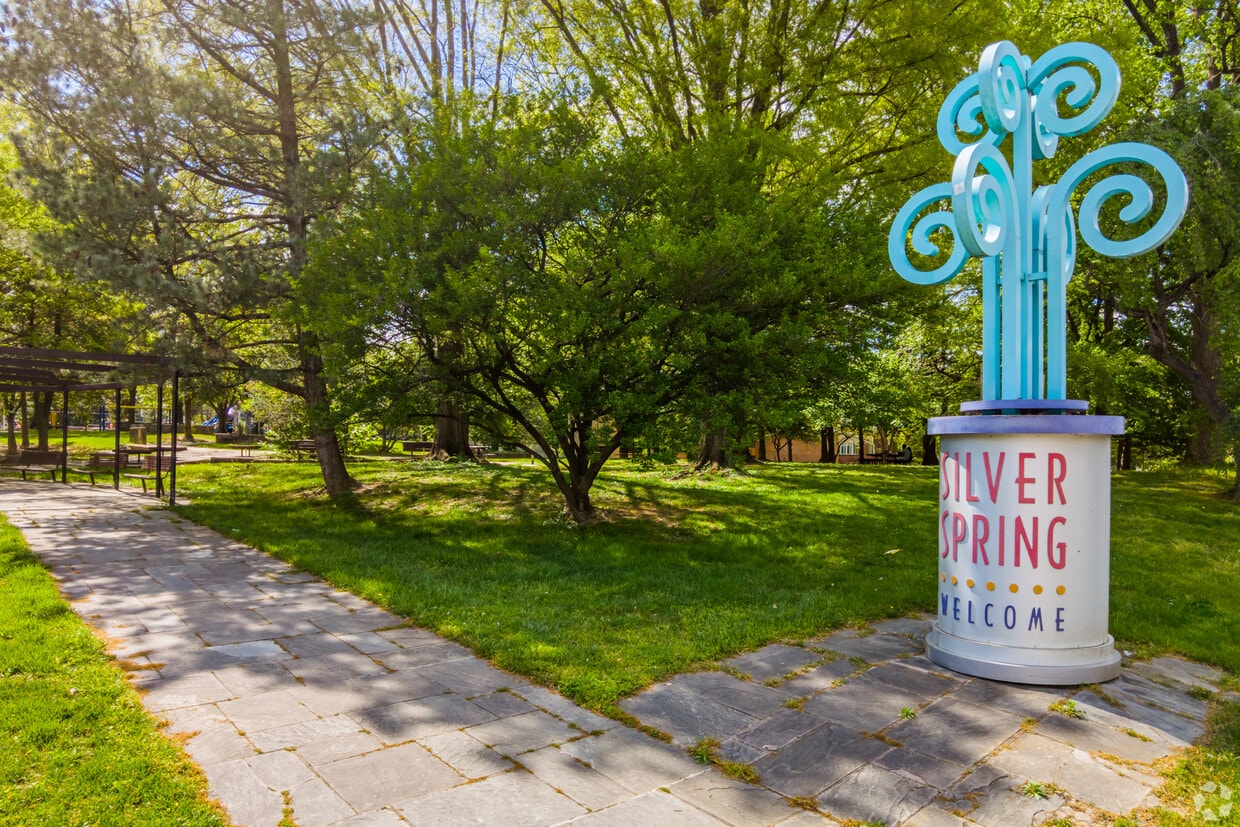
Silver Spring
Silver Spring sits just over the District of Columbia line in Montgomery County, Maryland, occupying a distinct space between full-on city and close-in suburb. As the fifth-most-populous place in Maryland, it draws renters who want genuine proximity to Washington without paying D.C. prices. The National Oceanic and Atmospheric Administration anchors a significant federal presence downtown, and the FDA's White Oak campus to the northeast adds another layer of institutional employment nearby. The Red Line Metro and the Paul S. Sarbanes Transit Center make commuting straightforward without requiring a car. Neighborhoods range considerably in character. Downtown Silver Spring pulses with arts venues like the AFI Silver Theatre and The Fillmore, while Woodside Park offers quieter, tree-lined streets. Forest Glen sits close to its own Metro stop, and South Silver Spring blends converted lofts with newer construction along East-West Highway. The housing stock reflects that variety, from high-rise apartment communities in the urban core to garden-style complexes and townhomes in the surrounding residential pockets. The city traces its name to a mica-flecked spring discovered in 1840, and that layered, unhurried sense of history still shows up in the older neighborhoods that ring downtown.
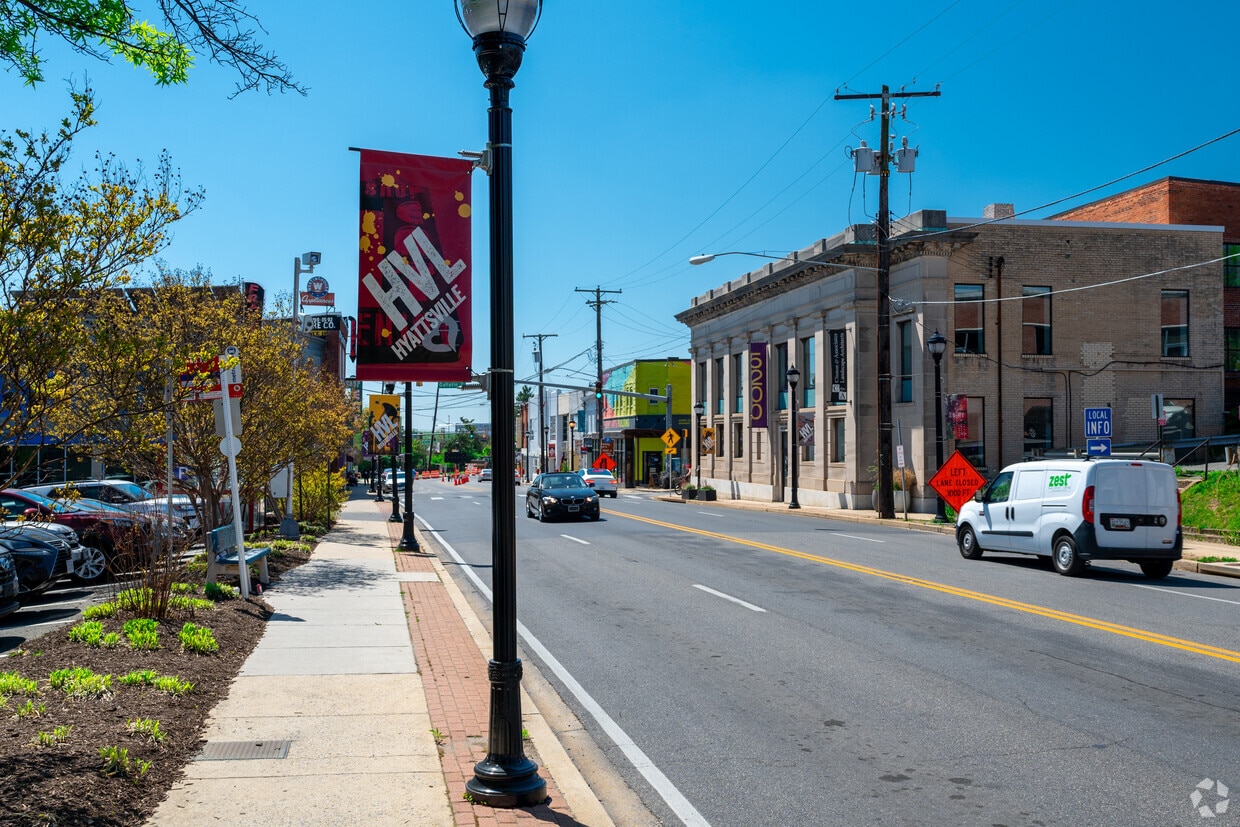
Hyattsville
Hyattsville sits just inside the Capital Beltway in Prince George's County, close enough to Washington, D.C. that two Green Line Metro stations make the commute downtown straightforward. The city covers roughly three square miles, yet packs in a genuine range of character from block to block. The Gateway Arts District draws artists, galleries, and studios to a stretch of Baltimore Avenue anchored by restored historic buildings, while the Victorian and Craftsman streets of the Historic District offer a quieter, tree-lined contrast. On the north end, proximity to the University of Maryland connects the city to a steady academic pulse without overwhelming its residential identity. The housing mix reflects that variety well. Renters can choose from mid-rise apartment communities near the Metro stations, garden-style communities tucked into established neighborhoods, and newer mixed-use buildings steps from galleries and coffee roasters. Townhomes and rowhouses round out the options for those who want more space. The city holds an annual International Festival each fall, celebrating the global character that has long shaped daily life here. With walkable corridors, trail access along the Rhode Island Avenue Trolley Trail, and a compact footprint that keeps most essentials close, Hyattsville offers real urban texture at a scale that rarely feels overwhelming.