Median Age
39 Years
Largest Age Group
20-29 Years
Approximately 14% of Residents
Under 20
25%
Over 65
20%

Avg Rent
$715
Population
63,378
Renter Mix
47% Rent
Living in Youngstown, Ohio combines affordability with a rich industrial heritage. Current rental trends show average apartment rates ranging from $592 for studios to $1,069 for three-bedroom units, with modest annual increases between 2-10% across different unit sizes. The city's housing market remains one of the most affordable in Ohio, with one-bedroom apartments averaging $702 per month, significantly below the state median.
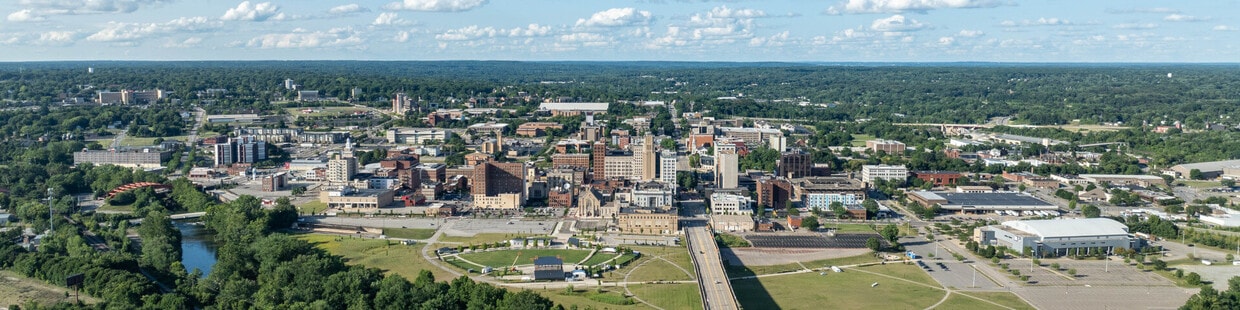
Youngstown's neighborhoods each have their own character, from the architecturally significant Crandall Park-Fifth Avenue Historic District to the residential areas surrounding the city center. Mill Creek Park, spanning 2,600 acres, offers residents hiking trails, gardens, and the preserved Lanterman's Mill. Downtown continues to grow with the Covelli Centre and Youngstown Foundation Amphitheatre hosting concerts and events throughout the year. The area near Youngstown State University features coffee shops, bookstores, and casual dining spots. The Butler Institute of American Art anchors the cultural district, while the Youngstown Historical Center of Industry and Labor preserves the city's manufacturing legacy. The downtown area has evolved to include the Youngstown Business Incubator, supporting new businesses and technology companies.
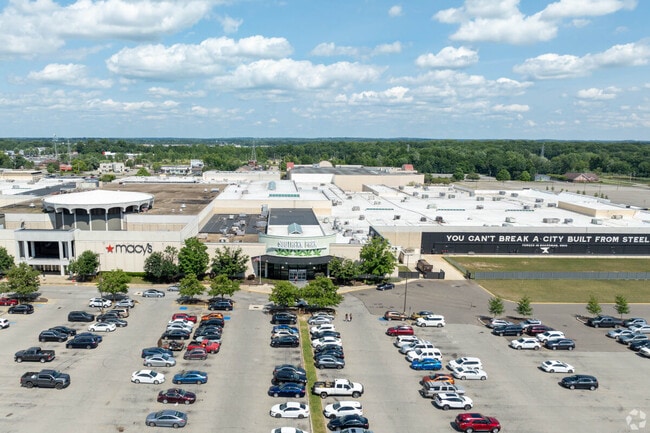
Youngstown residents shop at the Southern Park Mall in Boardman.
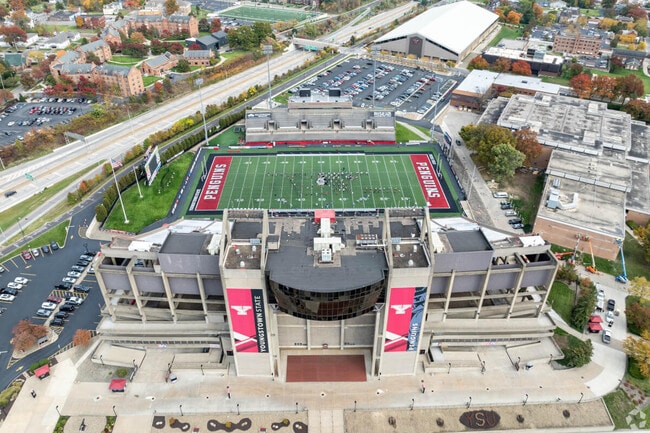
The Youngstown State Penguins football team plays at Stambaugh Stadium in Youngstown, Ohio.
The Butler Institute of American Art in Youngstown, Ohio, features works by American artists.
Median Household Income
$29,410
Average: $41,540
Education
8,699
Residents Have a Degree
Job Market
23,946
Workers Employed
Median Age
39 Years
Largest Age Group
20-29 Years
Approximately 14% of Residents
Under 20
25%
Over 65
20%
Housing Distribution
Youngstown has more homeowners than renters.

Education Distribution
Review this city's overall education levels.

As of September 2026, the average apartment rent in Youngstown, OH is $603 for a studio, $715 for one bedroom, $915 for two bedrooms, and $1,161 for three bedrooms. Apartment rent in Youngstown has increased by 0.6% in the past year.
The cost of living in Youngstown, OH is 8.4% lower than the national average. Generally, housing in Youngstown is 14.7% less expensive than the national average, with rent falling between $603 - $1,161. You can expect to pay 2.3% less for groceries, 8.2% less for utilities, and 1.1% less for transportation.
Compare Cities
Explore how walkable, bikeable, drivable, and transit-friendly Youngstown, OH is for everyday living.
Somewhat Walkable
Walkability
Limited Public Transit
Transit
Exceptionally Drivable
Drivability
Somewhat Bikeable
Bikeability

West Boulevard Elementary School
Public
Grades K-5
424 Students

Austintown Intermediate School
Public
Grades K-5
888 Students

Stadium Drive Elementary School
Public
Grades K-5
378 Students
Public
Grades K-5
810 Students

Robinwood Lane Elementary School
Public
Grades K-5
343 Students
Boardman Glenwood Middle School
Public
Grades 6-8
549 Students
Public
Grades 6-8
980 Students

Horizon Science Academy Youngstown
Public
Grades K-8
429 Students

Public
Grades K-8
364 Students
Public
Grades 6-12
147 Students
Public
Grades 9-12
290 Students
Public
Grades 9-12
995 Students
Public
Grades 9-12
1,226 Students
Public
Grades 6-12
147 Students
Public
Grades 9-12
574 Students

 The GreatSchools Rating helps parents compare schools within a state based on a variety of school quality indicators and provides a helpful picture of how effectively each school serves all of its students. Ratings are on a scale of 1 (below average) to 10 (above average) and can include test scores, college readiness, academic progress, advanced courses, equity, discipline and attendance data. We also advise parents to visit schools, consider other information on school performance and programs, and consider family needs as part of the school selection process.
View GreatSchools Rating Methodology
Data provided by
GreatSchools.org
© 2026. All rights reserved.
The GreatSchools Rating helps parents compare schools within a state based on a variety of school quality indicators and provides a helpful picture of how effectively each school serves all of its students. Ratings are on a scale of 1 (below average) to 10 (above average) and can include test scores, college readiness, academic progress, advanced courses, equity, discipline and attendance data. We also advise parents to visit schools, consider other information on school performance and programs, and consider family needs as part of the school selection process.
View GreatSchools Rating Methodology
Data provided by
GreatSchools.org
© 2026. All rights reserved.
† Our analysis of utilities, groceries, transportation, healthcare, home prices, and other goods and services is sourced from the Cost of Living Index, a respected benchmark published by the Council for Community and Economic Research (C2ER) that provides a thorough overview of living expenses across different regions.
Rent data is provided by CoStar Group’s Market Trend reports. As the industry leader in commercial real estate information, analytics, and news, CoStar conducts extensive research to produce and maintain a comprehensive database of commercial real estate information. We combine this data with public record to provide the most up-to-date rental information available.
Consumer goods, services, and home prices are sourced from the Cost of Living Index published by the Council for Community and Economic Research (C2ER). The data on this page is updated quarterly. It was last published in September 2026.
Demographic information comes from Neustar and combines detailed address data with U.S. Census and American Community Survey statistics to produce reliable local estimates.