Median Age
44 Years
Largest Age Group
10-19 Years
Approximately 14% of Residents
Under 20
25%
Over 65
22%



Avg Rent
$3,777
Population
23,157
Renter Mix
8% Rent
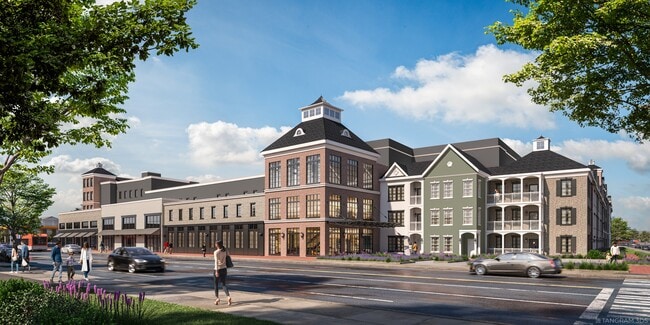
Wide sidewalks, tree-canopied streets, and a walkable downtown make Garden City feel like a well-kept secret on Long Island. Franklin Avenue anchors the village with boutique shops, cozy bakeries, and cafés that have become neighborhood staples. Seventh Street adds dining and evening options, while the Cradle of Aviation Museum and Eisenhower Park offer weekend exploration. Adelphi University sits in the heart of the village, with Hofstra University just east, creating an energetic, campus-adjacent feel.
Getting around is refreshingly easy. The Garden City and Nassau Boulevard LIRR stations put Midtown Manhattan 45 minutes away, while the Meadowbrook, Northern, and Southern State Parkways connect to Long Island without the headache. Founded in 1869 by millionaire Alexander Turney Stewart, the village was designed as a planned community—one of the earliest in the country.
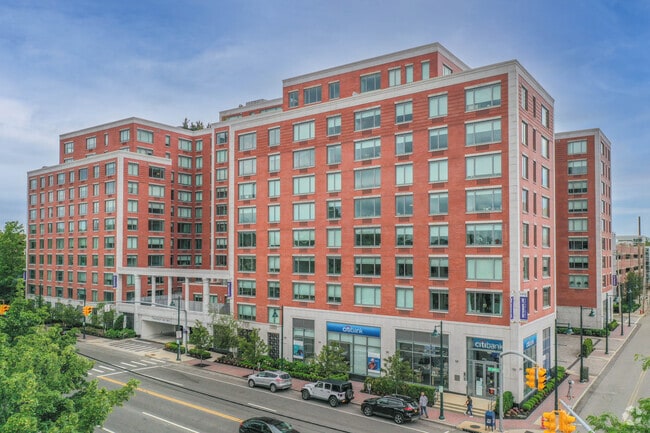
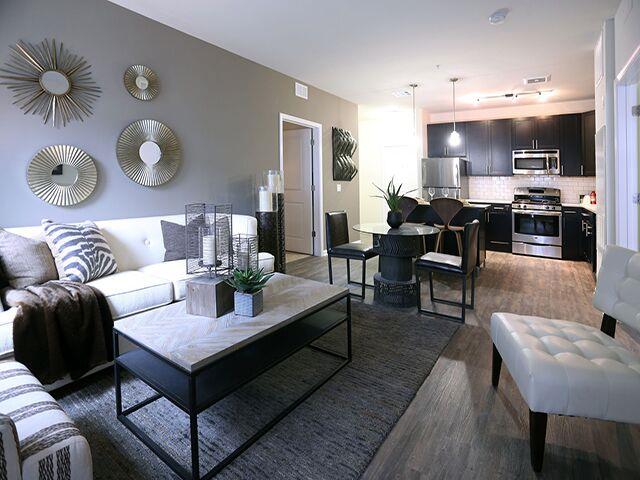
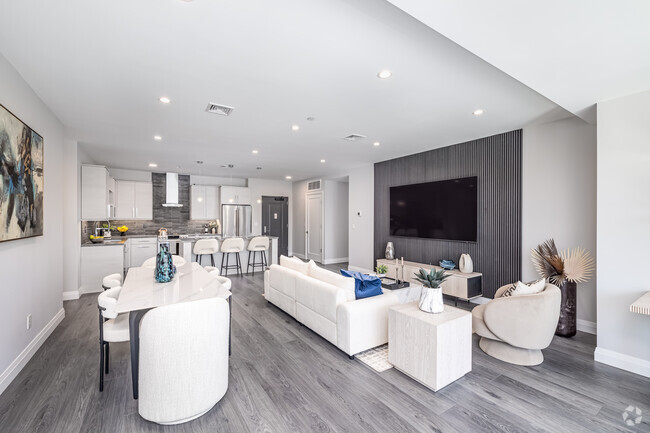
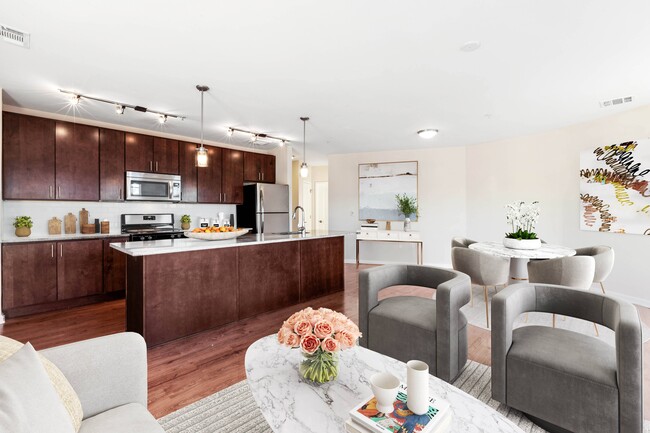
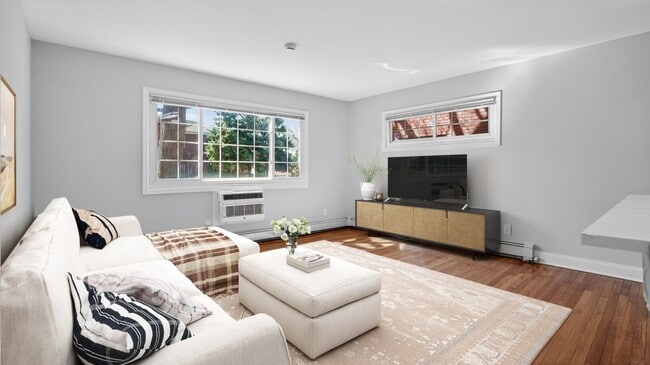
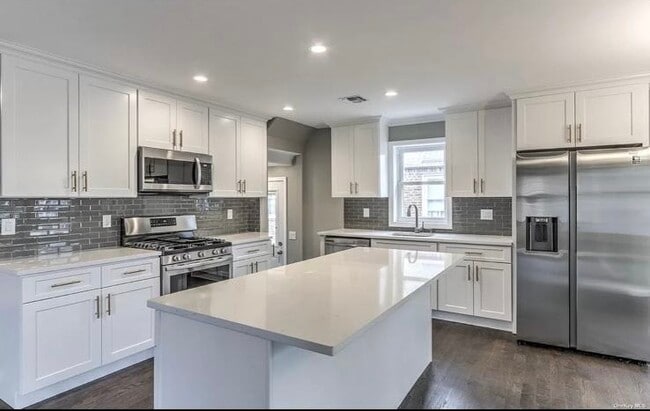
Renters find spacious apartment communities, townhomes, and well-maintained mid-rise buildings throughout the village. Options near LIRR stations and along Stewart Avenue attract those wanting quick commute access without sacrificing a quieter, tree-lined setting.
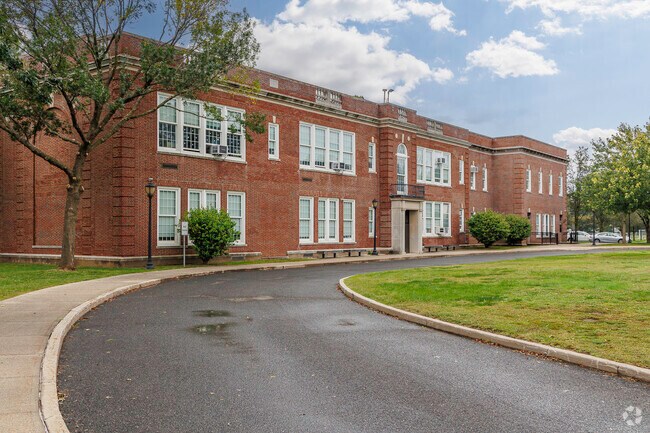
Stratford Avenue School has over 617 students in Garden City.
Get your hair done at Madison Taylor Salon in Garden City.
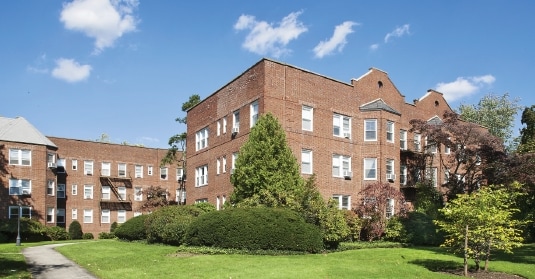
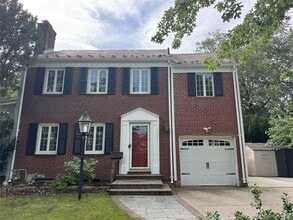
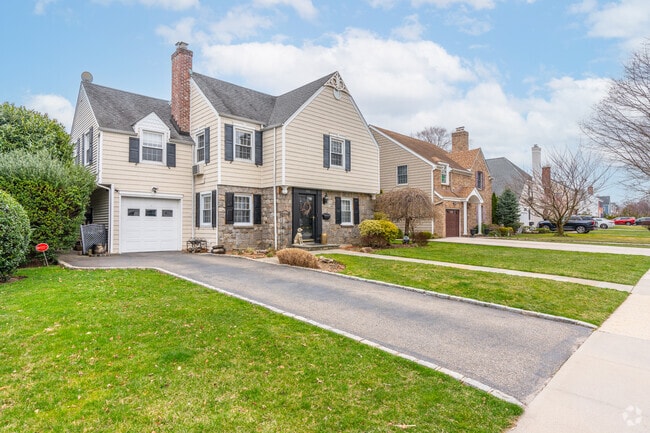
Multi-story colonials and well-manicured lawns adorn the streets of Garden City.
Median Household Income
$194,077
Average: $203,427
Education
12,221
Residents Have a Degree
Job Market
11,360
Workers Employed
Median Age
44 Years
Largest Age Group
10-19 Years
Approximately 14% of Residents
Under 20
25%
Over 65
22%
Housing Distribution
Garden City has more homeowners than renters.

Education Distribution
Review this city's overall education levels.

As of September 2026, the average apartment rent in Garden City, NY is $2,611 for a studio, $3,777 for one bedroom, $5,210 for two bedrooms, and $5,869 for three bedrooms. Apartment rent in Garden City has increased by 3.9% in the past year.
Explore how walkable, bikeable, drivable, and transit-friendly Garden City, NY is for everyday living.
Moderately Walkable
Walkability
Some Public Transit
Transit
Exceptionally Drivable
Drivability
Fairly Bikeable
Bikeability

Public
Grades K-5
638 Students

Public
Grades K-5
624 Students

Public
Grades K-12
1,619 Students

Public
Grades K-5
205 Students
Public
Grades K-5
184 Students
Public
Grades 6-8
1,034 Students
Public
Grades K-12
1,619 Students
Public
Grades 9-12
1,095 Students
Public
Grades K-12
1,619 Students
 The GreatSchools Rating helps parents compare schools within a state based on a variety of school quality indicators and provides a helpful picture of how effectively each school serves all of its students. Ratings are on a scale of 1 (below average) to 10 (above average) and can include test scores, college readiness, academic progress, advanced courses, equity, discipline and attendance data. We also advise parents to visit schools, consider other information on school performance and programs, and consider family needs as part of the school selection process.
View GreatSchools Rating Methodology
Data provided by
GreatSchools.org
© 2026. All rights reserved.
The GreatSchools Rating helps parents compare schools within a state based on a variety of school quality indicators and provides a helpful picture of how effectively each school serves all of its students. Ratings are on a scale of 1 (below average) to 10 (above average) and can include test scores, college readiness, academic progress, advanced courses, equity, discipline and attendance data. We also advise parents to visit schools, consider other information on school performance and programs, and consider family needs as part of the school selection process.
View GreatSchools Rating Methodology
Data provided by
GreatSchools.org
© 2026. All rights reserved.
† Our analysis of utilities, groceries, transportation, healthcare, home prices, and other goods and services is sourced from the Cost of Living Index, a respected benchmark published by the Council for Community and Economic Research (C2ER) that provides a thorough overview of living expenses across different regions.
Rent data is provided by CoStar Group’s Market Trend reports. As the industry leader in commercial real estate information, analytics, and news, CoStar conducts extensive research to produce and maintain a comprehensive database of commercial real estate information. We combine this data with public record to provide the most up-to-date rental information available.
Consumer goods, services, and home prices are sourced from the Cost of Living Index published by the Council for Community and Economic Research (C2ER). The data on this page is updated quarterly. It was last published in September 2026.
Demographic information comes from Neustar and combines detailed address data with U.S. Census and American Community Survey statistics to produce reliable local estimates.