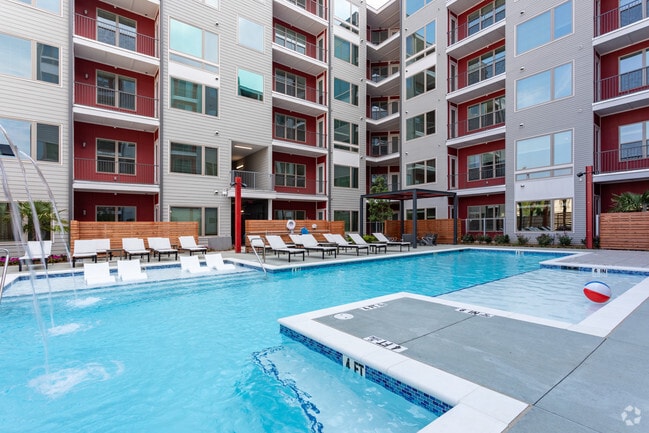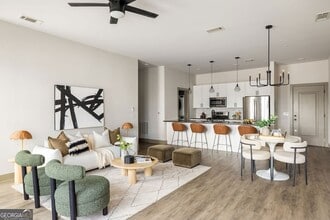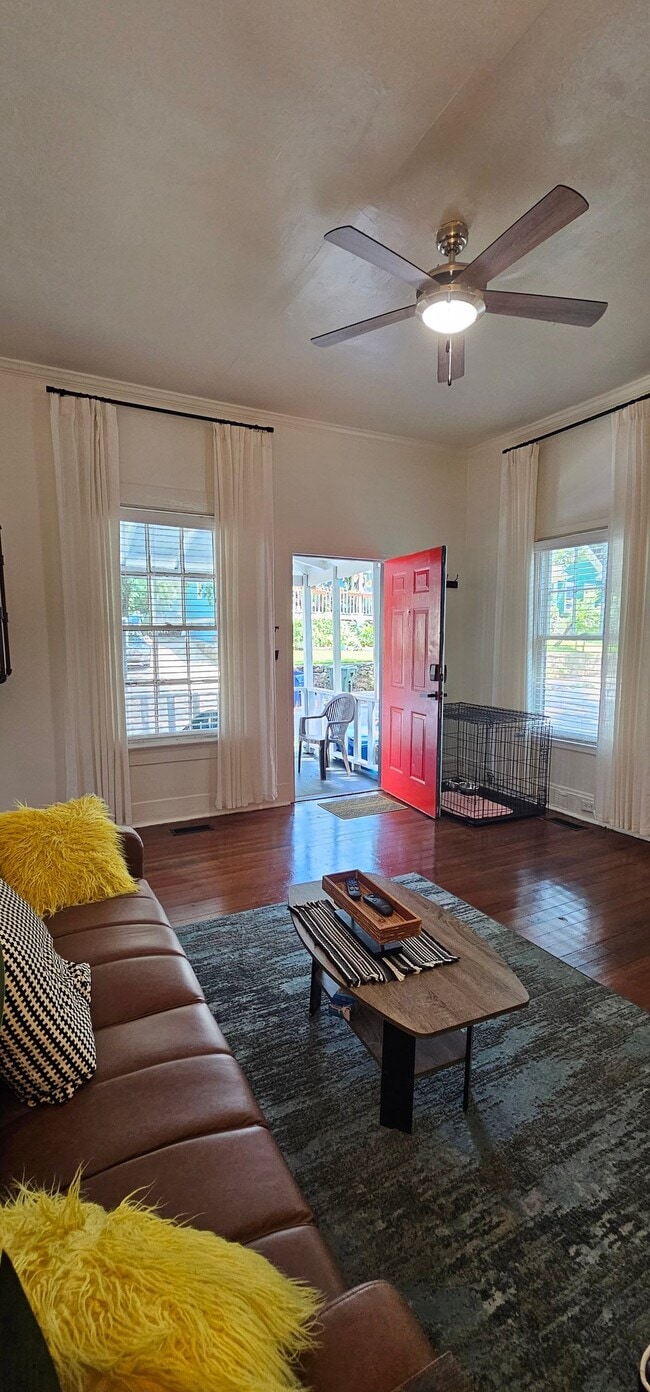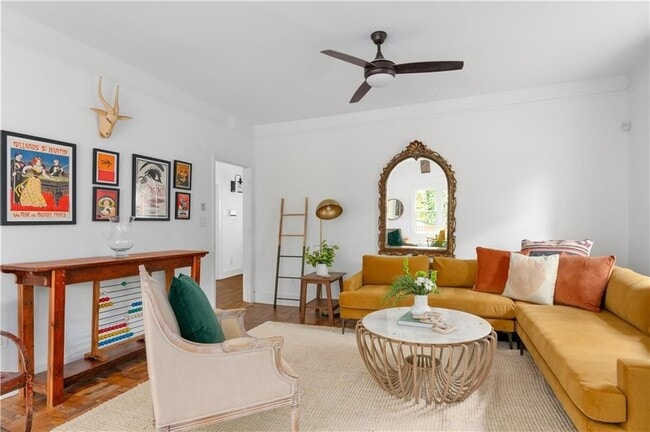
Edge on the Beltline Apartments
670 DeKalb Ave SE,
Atlanta, GA 30312
$1,507 - $4,003
Studio - 3 Beds
Area Guide
Cabbagetown sits on Atlanta's east side, between Grant Park and Inman Park, about a mile and a half east of Downtown. The streets here are narrow, the blocks are short, and the shotgun houses and cottage-style bungalows line up close together in a way that gives the neighborhood a scale you rarely find this close to a major city. Groceries are within a five-minute walk, Carroll Street anchors the local dining and social scene, and the Atlanta BeltLine's Eastside Trail is easily reachable for getting around on foot or by bike.
Renters in Cabbagetown have a few different options. The most distinctive are the converted lofts inside the old Fulton Cotton Mill building on Carroll Street, which offer high ceilings and industrial character. Beyond that, the housing stock leans toward smaller-scale rental homes, garden apartments, and renovated cottages rather than large high-rise apartment communities. Each November, the neighborhood hosts Chomp and Stomp, a chili cook-off and bluegrass festival that draws thousands of visitors to Cabbagetown Park.
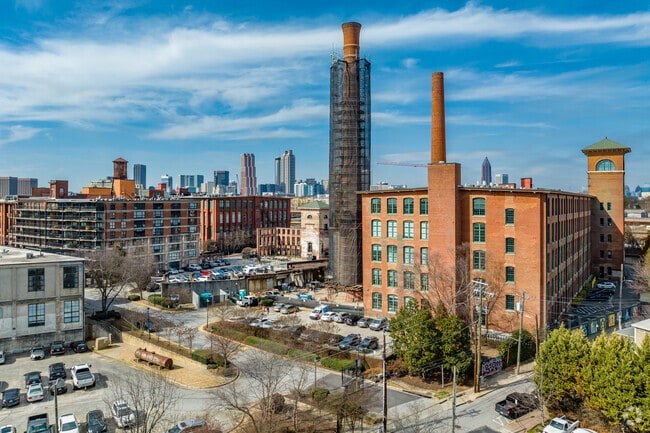
Cabbagetown's history goes back to the Fulton Cotton Mill, which is now residential lofts.
Little's Food Store has some grocery items, plus fresh burgers, hotdogs, and fries.
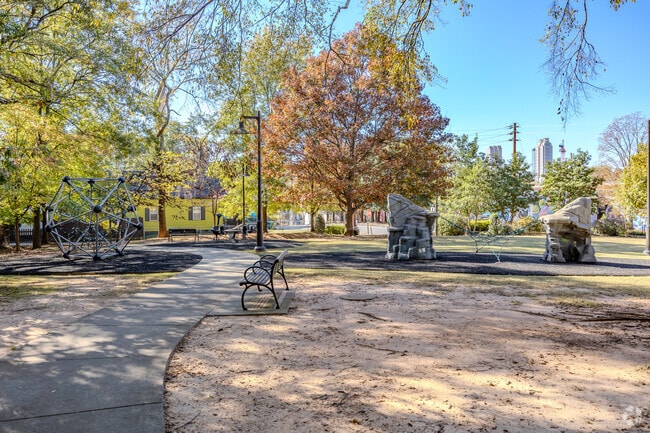
Esther Peachy Lefevre Park is the smaller of the two parks in Cabbagetown.
Cabbagetown Chomp and Stomp is a yearly festival that many attend.
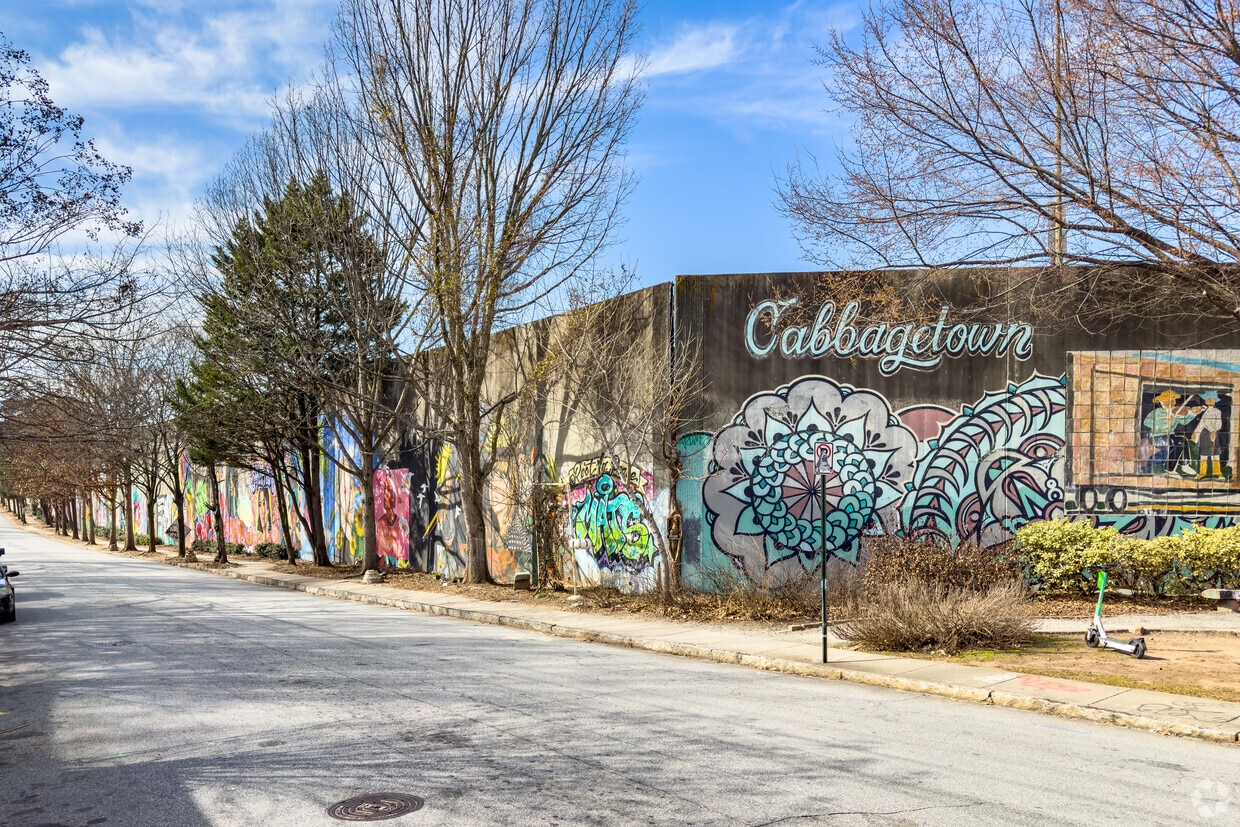
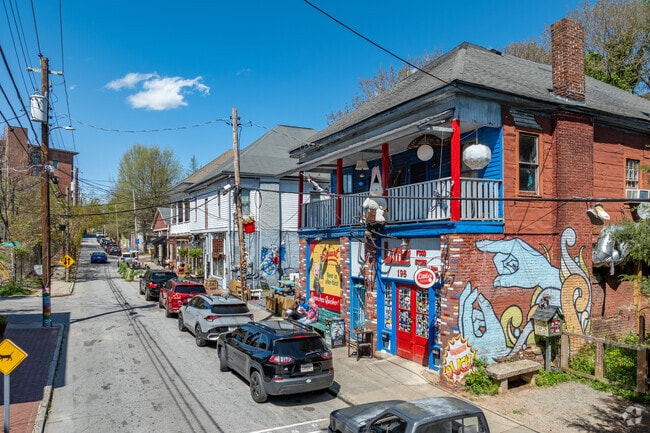
Residents stroll along Wylie Street in Cabbagetown to enjoy murals by local artists.
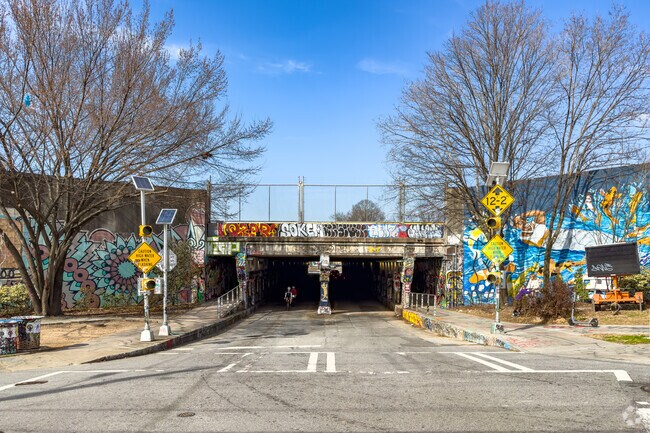
Cabbagetown embraces the street art graffiti.
As of August 2026, the average apartment rent in Cabbagetown is $1,627 for a studio, $2,057 for one bedroom, and $2,231 for two bedrooms. Apartment rent in Cabbagetown has increased by 8.3% in the past year.
Studio
780 sq ft
Average Sq Ft
$1,627/month
Average Rent
1 BR
848 sq ft
Average Sq Ft
$2,057/month
Average Rent
2 BR
1,018 sq ft
Average Sq Ft
$2,231/month
Average Rent
Explore how walkable, bikeable, drivable, and transit-friendly Cabbagetown - Atlanta, GA is for everyday living.
Moderately Walkable
Walkability
Some Public Transit
Transit
Very Drivable
Drivability
Moderately Bikeable
Bikeability
In Cabbagetown - Atlanta, GA, daily errands are quick and hassle-free.
Supermarket Within a 5 Minute Walk
Groceries
Exceptional Restaurant Variety Nearby
Restaurants
Great Café Variety Nearby
Cafes
Great Variety of Shops Nearby
Shopping
Cabbagetown - Atlanta, GA provides ample green space and fitness centers within easy reach.
Very Large Amount of Park Space Nearby
Parks
Good Wellness Amenity Variety Nearby
Wellness
Get a sense of what it’s like to live in Cabbagetown - Atlanta, GA from everyday activity to noise and nightlife.
Vibrant Atmosphere at Times
Vibrancy
Exceptional Nightlife Variety Nearby
Nightlife
Not Noisy
Quiet Score

† Our analysis of utilities, groceries, transportation, healthcare, home prices, and other goods and services is sourced from the Cost of Living Index, a respected benchmark published by the Council for Community and Economic Research (C2ER) that provides a thorough overview of living expenses across different regions.
Rent data is provided by CoStar Group’s Market Trend reports. As the industry leader in commercial real estate information, analytics, and news, CoStar conducts extensive research to produce and maintain a comprehensive database of commercial real estate information. We combine this data with public record to provide the most up-to-date rental information available.
Consumer goods, services, and home prices are sourced from the Cost of Living Index published by the Council for Community and Economic Research (C2ER). The data on this page is updated quarterly. It was last published in June 2026.
Demographic information comes from Neustar and combines detailed address data with U.S. Census and American Community Survey statistics to produce reliable local estimates.