Median Age
31 Years
Largest Age Group
20-29 Years
Approximately 28% of Residents
Under 20
21%
Over 65
14%




Avg Rent
$1,691
Population
118,961
Renter Mix
56% Rent
Ann Arbor is a city where a world-class research university and a thriving technology sector have genuinely shaped the place into something worth paying attention to. The University of Michigan, founded in 1817 and the oldest in the state, anchors both the economy and the cultural pulse of this Washtenaw County seat. Major employers in education, healthcare through Michigan Medicine, and a growing cluster of tech startups give the city a steady, opportunity-driven energy without the sprawl of a large metro.
Neighborhoods here each carry a distinct personality. Kerrytown sits close to a year-round farmers market and preserved historic storefronts. The Old West Side offers streets lined with 19th-century homes, while areas near North Campus draw those connected to research and engineering. Burns Park and South University put residents within easy reach of central campus and everyday conveniences. The city's greenbelt program keeps surrounding land open, reinforcing the "Tree Town" identity Ann Arbor has held for generations.
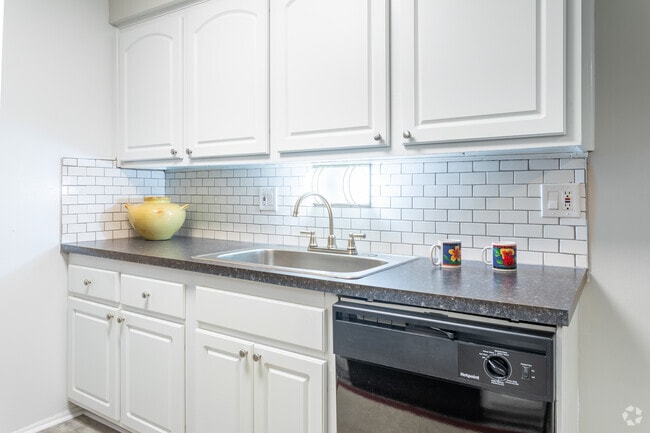
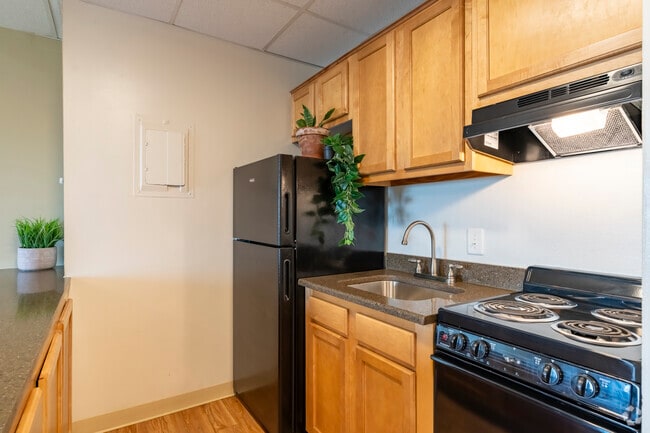
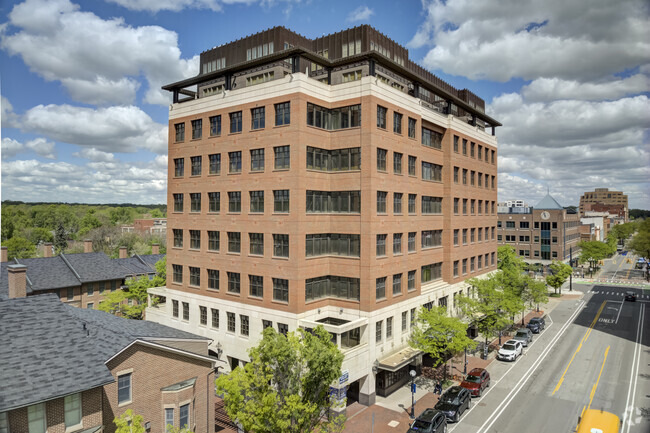
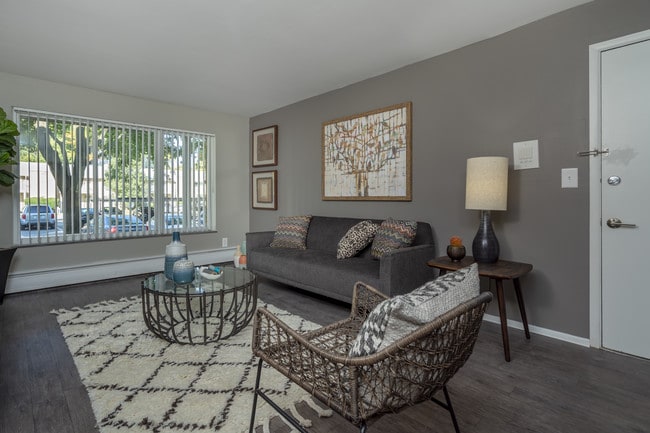
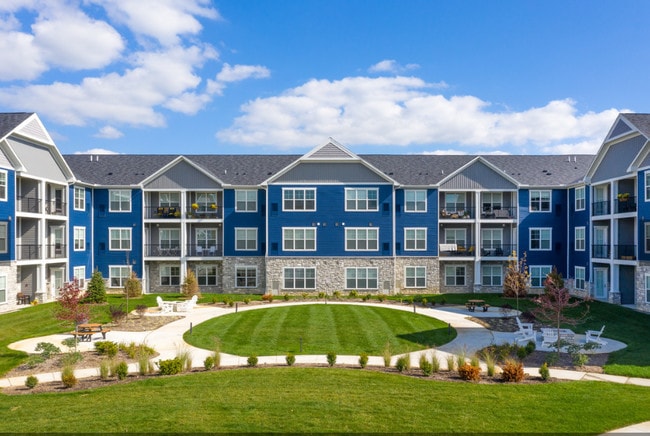
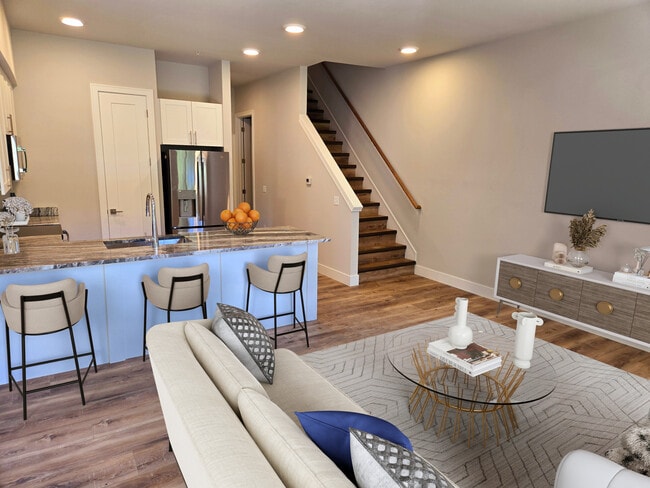
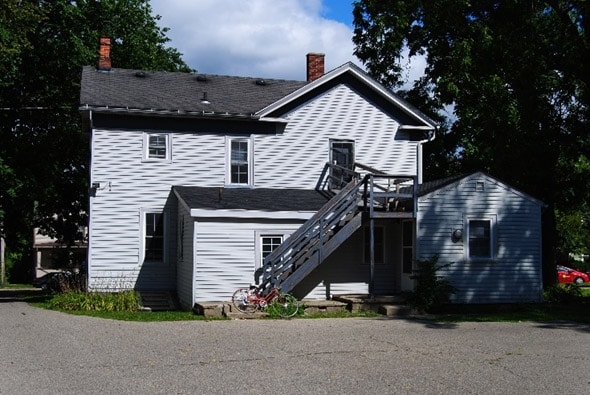
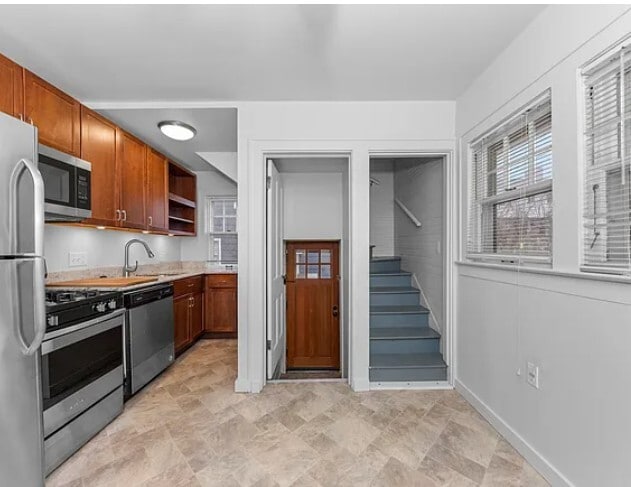
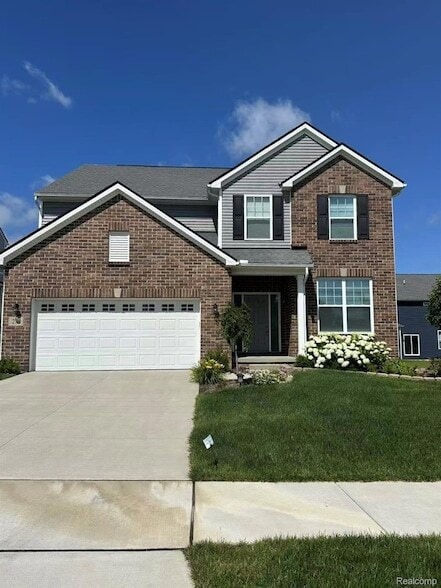
The rental market spans garden-style apartment communities, converted historic houses, high-rise options near downtown, and spacious townhomes further from the core. Each summer, the Ann Arbor Art Fair transforms the city's streets into one of the largest juried art events in the country, reflecting the creative character woven into everyday life here.
The Ann Arbor Art Fair is among the largest in the nation
Fall color in Ann Arbor
Hot air balloon over Ann Arbor
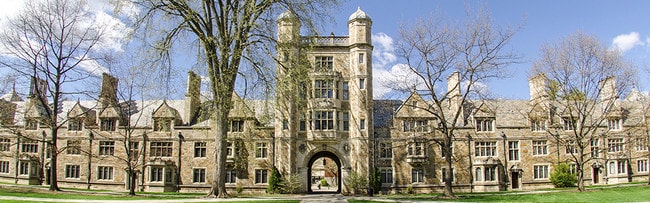
The University of Michigan library
Median Household Income
$73,908
Average: $106,259
Education
64,464
Residents Have a Degree
Job Market
61,163
Workers Employed
Median Age
31 Years
Largest Age Group
20-29 Years
Approximately 28% of Residents
Under 20
21%
Over 65
14%
Housing Distribution
Ann Arbor has more renters than homeowners.

Education Distribution
Review this city's overall education levels.

As of September 2026, the average apartment rent in Ann Arbor, MI is $1,603 for a studio, $1,689 for one bedroom, $1,910 for two bedrooms, and $2,521 for three bedrooms. Apartment rent in Ann Arbor has increased by 0.4% in the past year.
The cost of living in Ann Arbor, MI is 5.5% higher than the national average. Generally, housing in Ann Arbor is 16.8% more expensive than the national average, with rent falling between $1,603 - $2,521. You can expect to pay 10.0% more for groceries, 3.7% less for utilities, and 1.6% less for transportation.
Compare Cities
Explore how walkable, bikeable, drivable, and transit-friendly Ann Arbor, MI is for everyday living.
Exceptionally Walkable
Walkability
Good Public Transit
Transit
Fairly Drivable
Drivability
Very Bikeable
Bikeability

Public
Grades K-8
488 Students

Public
Grades K-5
460 Students
Public
Grades K-5
408 Students
Public
Grades K-5
288 Students
Martin Luther King Elementary School
Public
Grades K-5
533 Students

Public
Grades K-8
488 Students
Public
Grades 6-8
715 Students
Public
Grades 6-8
683 Students
Public
Grades 6-8
615 Students
Public
Grades 6-8
684 Students

Public
Grades 9-12
1,302 Students
Public
Grades 9-12
509 Students
Public
Grades 9-12
1,726 Students
Public
Grades 9-12
1,658 Students
Washtenaw Technical Middle College
Public
Grades 9-12
844 Students
 The GreatSchools Rating helps parents compare schools within a state based on a variety of school quality indicators and provides a helpful picture of how effectively each school serves all of its students. Ratings are on a scale of 1 (below average) to 10 (above average) and can include test scores, college readiness, academic progress, advanced courses, equity, discipline and attendance data. We also advise parents to visit schools, consider other information on school performance and programs, and consider family needs as part of the school selection process.
View GreatSchools Rating Methodology
Data provided by
GreatSchools.org
© 2026. All rights reserved.
The GreatSchools Rating helps parents compare schools within a state based on a variety of school quality indicators and provides a helpful picture of how effectively each school serves all of its students. Ratings are on a scale of 1 (below average) to 10 (above average) and can include test scores, college readiness, academic progress, advanced courses, equity, discipline and attendance data. We also advise parents to visit schools, consider other information on school performance and programs, and consider family needs as part of the school selection process.
View GreatSchools Rating Methodology
Data provided by
GreatSchools.org
© 2026. All rights reserved.
† Our analysis of utilities, groceries, transportation, healthcare, home prices, and other goods and services is sourced from the Cost of Living Index, a respected benchmark published by the Council for Community and Economic Research (C2ER) that provides a thorough overview of living expenses across different regions.
Rent data is provided by CoStar Group’s Market Trend reports. As the industry leader in commercial real estate information, analytics, and news, CoStar conducts extensive research to produce and maintain a comprehensive database of commercial real estate information. We combine this data with public record to provide the most up-to-date rental information available.
Consumer goods, services, and home prices are sourced from the Cost of Living Index published by the Council for Community and Economic Research (C2ER). The data on this page is updated quarterly. It was last published in September 2026.
Demographic information comes from Neustar and combines detailed address data with U.S. Census and American Community Survey statistics to produce reliable local estimates.