Published on
Across Texas, the multifamily market is still feeling the effects of the pandemic-era development boom. Even as the construction pipeline has begun to slow, the sheer volume of recently delivered units continues to keep vacancy elevated and rent growth negative.
The four major multifamily markets in Texas — Austin, San Antonio, Houston, and Dallas-Fort Worth — offer a picture of the challenging conditions facing multifamily owners and operators in the Lone Star State and Sun Belt more broadly. As of mid-2026, here’s where each market stands and what the prospects are for recovery.
What Texas markets have in common
Even as Texas multifamily markets deal with unique conditions, they’re also grappling with many of the same challenges. Several key trends have contributed to the difficulties facing multifamily owners and operators in the Lone Star State:
- High vacancy. Multifamily vacancy remains elevated statewide, ranging from 12 to 16 percent as of the second quarter.
- Negative rent growth. All of Texas’s major multifamily markets continue to see year-over-year declines in asking rent. In the second quarter, annual rent growth ranged from negative 1.1 percent to negative 3.4 percent.
- Aggressive construction pipelines. As occurred elsewhere in the Sun Belt, development boomed during and following the pandemic, with a flurry of new deliveries coming online in recent years.
- Slowdown in immigration. In 2025, Texas saw a 48 percent decline in immigration compared to the previous year. This has contributed to weakening demand in the border state.
- High operating costs. Multifamily owners and operators face high property taxes and other operating expenses. Since Texas has no state income tax, local governments rely heavily on real estate taxes for revenue. Recent storms in the state have also driven up the cost of insurance premiums.
Austin shows early signs of recovery
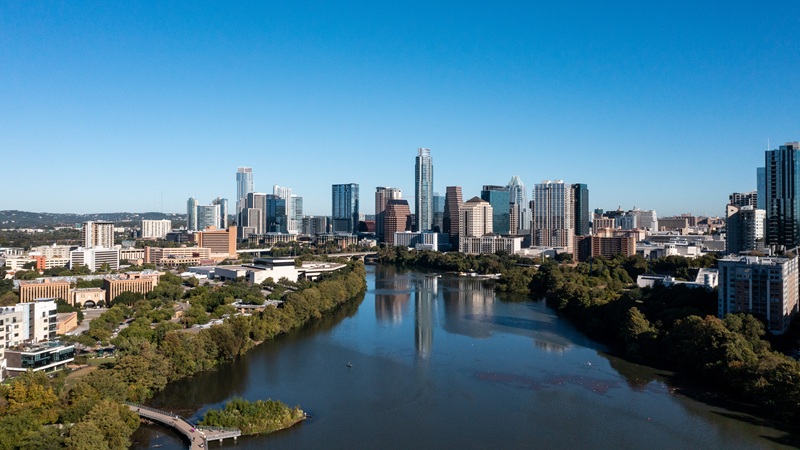
After spending 11 straight quarters at the bottom of the rent growth charts, the Austin multifamily market has begun to show signs of improvement. While rent growth remains negative, the Austin market no longer ranks in last place.
In June, Austin climbed up from the bottom spot, which it had occupied since mid-2023, into the third-from-last place on the chart. This easing — from negative 3.3 percent in May to negative 2.5 percent in June — continued into the following month. In July, Austin posted negative 1.9 percent rent growth, as fellow Texas market San Antonio took last place with negative 3.0 percent.
In recent years, Austin has been the defining example of the Sun Belt supply boom.
As renters and employers flocked to Austin, development kicked into high gear. Relative to its size, the construction pipeline in this market was higher than in any other major multifamily market.
At its peak, nearly 20 percent of Austin’s total inventory was under construction. And as recently as the end of 2024, new deliveries accounted for more than 10 percent of Austin’s total inventory.
Even Austin’s relatively strong demand was insufficient to meet this flood of new supply. Home to major corporations including Dell, Oracle, and Tesla, Austin boasts a business-friendly environment and strong economy that has drawn employers across the health care, technology, and manufacturing sectors.
It remains one of the fastest growing metros in the country, with a young and highly educated population and a population growth rate higher than any other Texas metropolitan area.
These strong fundamentals have helped Austin emerge from the depths of its oversupply woes.
Absorption in Austin has remained strong, even meeting or exceeding the highs seen during the pandemic-era demand boom.
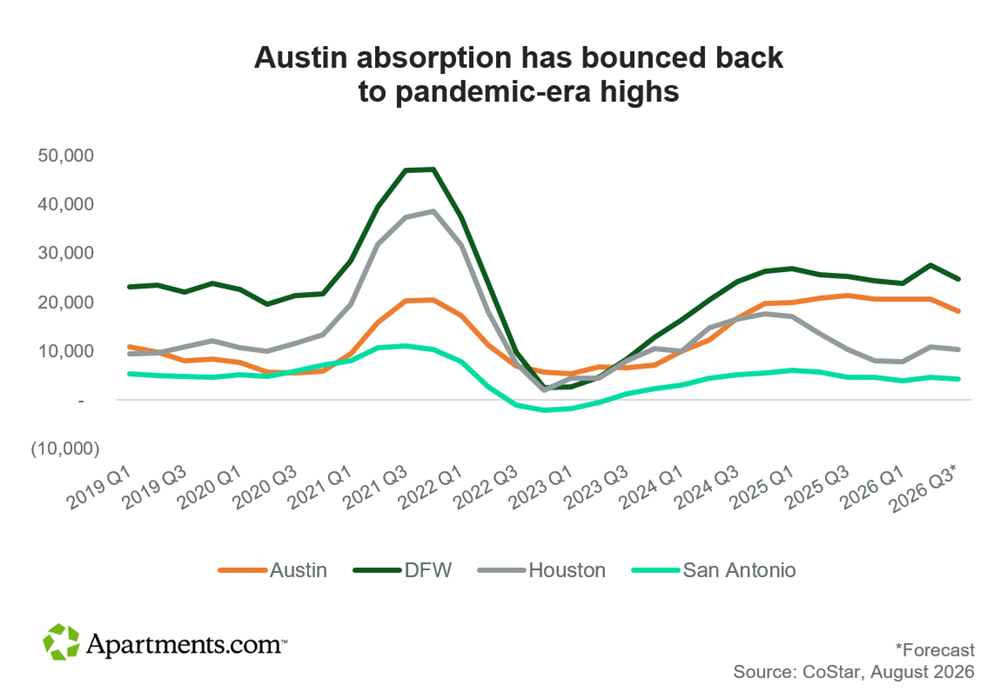
But the climb back to positive rent growth will be gradual. Even as conditions ease, Austin remains near the bottom of rent growth rankings nationally and most recently saw a rent decline of 1.9 percent compared to July of last year.
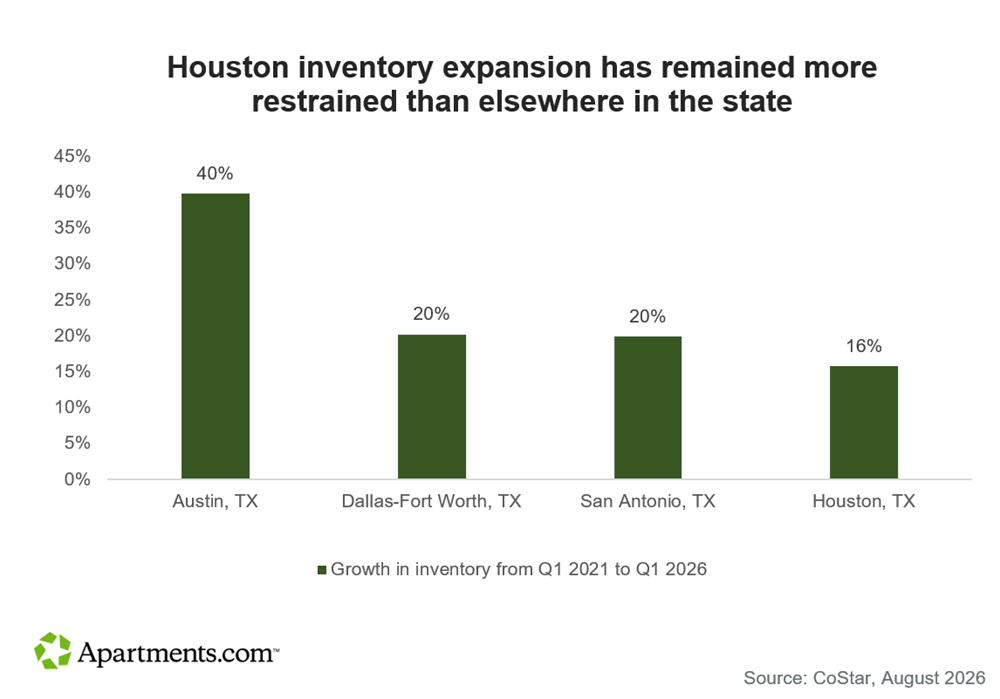
Austin has seen the largest expansion of multifamily inventory in the country, growing 40 percent from 2021 to 2026. No other Texas multifamily market has come close to this level of growth. In Dallas-Fort Worth and San Antonio, which rank 12th and 13th nationally, inventory has expanded by 20 percent, while Houston has seen its inventory grow by 16 percent in the same period.
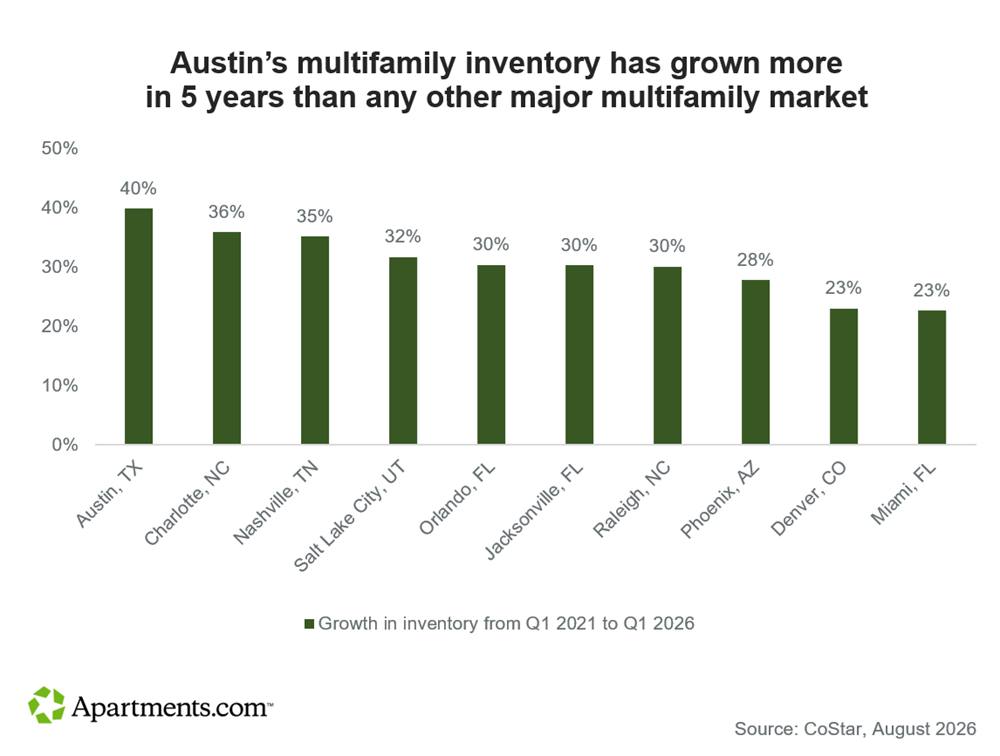
This dramatic expansion means that supply will continue to outstrip demand in Austin, even as conditions ease, but Austin’s robust demand offers light at the end of the tunnel for multifamily owners and operators.
Is San Antonio the new Austin?
As Austin has moved out of last place on the rent growth charts, another Texas market has replaced it: San Antonio. Like Austin and many major markets across the Sun Belt, San Antonio has also seen a flurry of new construction, peaking in late 2024 with nearly 14,000 units delivered.
But while oversupply conditions are part of the story, a closer look reveals San Antonio faces distinctly unique challenges from Austin.
Unlike Austin, where demand has remained strong, merely insufficient to meet record-high supply, San Antonio faces challenges on both fronts.
Demand in the Alamo City has lagged behind the other major Texas markets.
Both absorption totals and absorption as a percentage of inventory have been significantly lower in San Antonio than in other Texas markets, and absorption turned negative during 2022 and 2023.
Multifamily vacancy in San Antonio hit double digits in late 2022 and has only risen since. Since mid-2025, San Antonio has held the highest multifamily vacancy rate nationally. Four of the top 10 high-vacancy markets are in Texas, and all 10 are found in the Sun Belt.
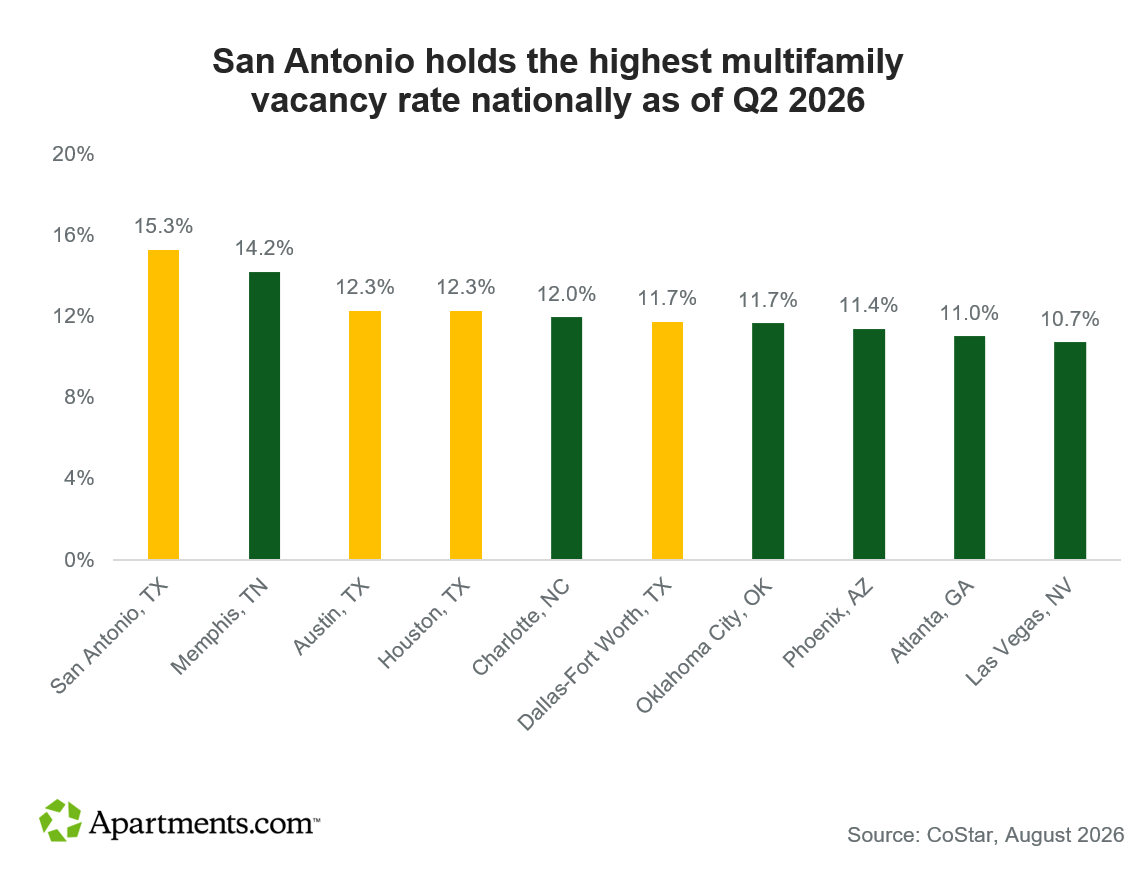
Vacancy in San Antonio was above 15 percent in the second quarter and is projected to remain in the mid-15 percent range through the end of the year.
Though considered a relatively fast-growing metropolitan area nationally, San Antonio has seen slower population growth than other major markets in Texas. A more affordable rental market, San Antonio lags behind other Texas markets in terms of job growth and economic output. Renters in San Antonio typically have lower wages and educational attainment than those in other major Texas cities, and the local economy is heavily based in public sector jobs, as well as health care, tourism, and logistics.
These demand-side factors have made it difficult for San Antonio to see the strong absorption total posted in Austin. The two markets are comparable in size — San Antonio’s population of 2.8 million is just above Austin’s 2.7 million, while San Antonio has only 236,000 units to Austin’s 346,000. But in the second quarter, San Antonio saw only about 22 percent of the absorption seen in Austin and significantly higher vacancy.
As a result, San Antonio’s recovery is expected to be slow. Vacancy will remain elevated, as supply continues to outpace demand.
Dallas-Fort Worth operates on a larger scale but with familiar challenges
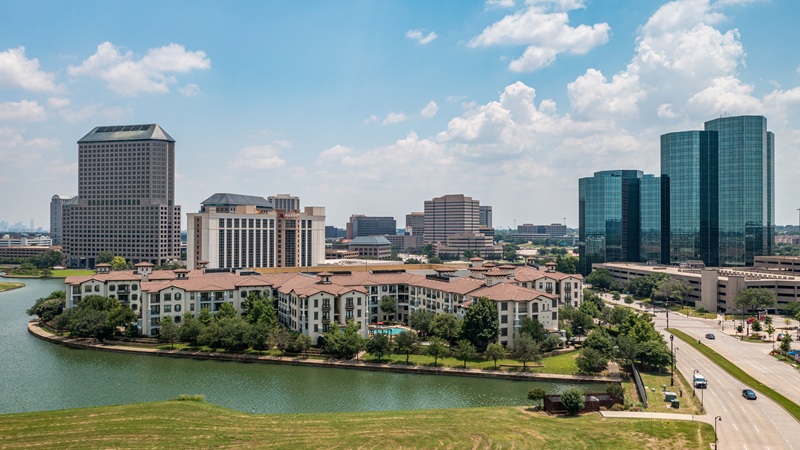
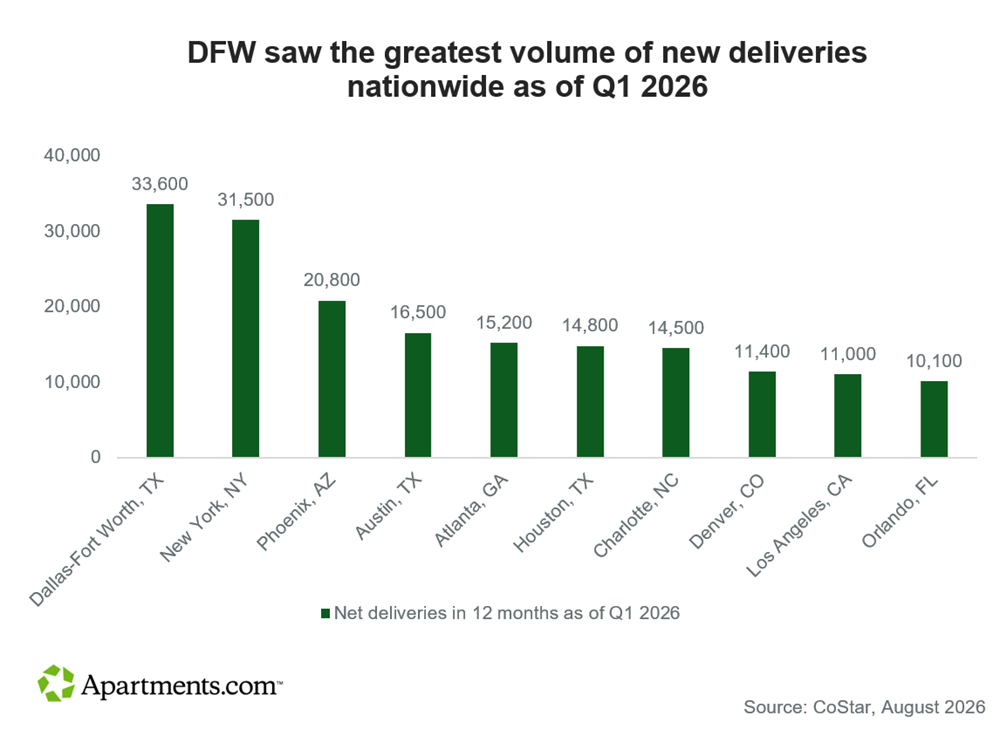
In sheer volume, Dallas-Fort Worth has sustained one of the largest supply pipelines nationwide. As of the first quarter, the DFW metroplex had added nearly 33,600 new units within 12 months — more than any other multifamily market in the country.
With a population of 8.6 million, however, Dallas-Fort Worth also has more capacity to absorb this flood of supply. Since 2024, absorption has averaged 25,000 units per 12 months.
While still insufficient enough to meet the flood of new supply, this robust demand has meant Dallas-Fort Worth has seen smaller rent declines than other Texas markets. In recent months, the DFW market has ranked seventh or eighth from the bottom of rent growth charts — above struggling markets that have included San Antonio, Austin, Denver, Las Vegas, Phoenix, and Tampa.
By year-end, DFW’s multifamily inventory is projected to reach 950,000 units, compared with 754,000 in Houston, 346,000 in Austin and 236,000 in San Antonio. Even as the construction pipeline slows in the years ahead, with annual new deliveries projected to fall to 15,000 units by mid-2027, vacancy will remain elevated.
DFW currently ranks fifth nationally for vacancy, and it’s expected to remain in the top 10 highest-vacancy markets through 2027. Multifamily vacancy is projected to remain above 11 percent throughout next year.
As a result of its high vacancy rate, concession use in Dallas-Fort Worth is also elevated, currently around 60 percent, well above the national average of 40 percent.
Slowing supply additions meet weakening demand in Houston
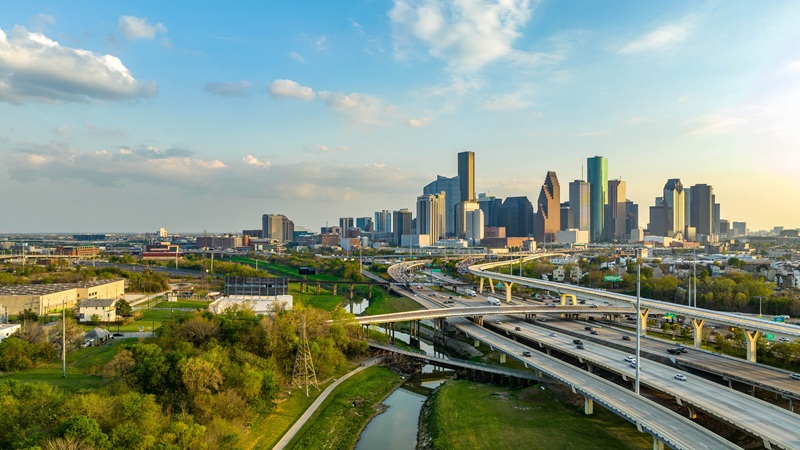
One of the state’s most stable multifamily markets, Houston has benefited from a less active supply pipeline than other Texas metros. New supply additions peaked in early 2024 with over 27,600 net units added in the previous 12 months and have since fallen to over 16,500 net units as of the second quarter of this year.
New supply has arrived at a much more measured pace, with inventory growing 16 percent between Q1 2021 and Q1 2026. That’s well below the 20 percent growth seen in Dallas-Fort Worth and San Antonio over the same period and a fraction of Austin’s 40 percent growth. This slower pace of development has kept Houston far above other Texas markets on the rent growth charts, even as it has remained in negative territory.
But Houston’s more restrained supply pipeline doesn’t tell the full story. Demand in the Houston market has also been muted. Despite its size — Houston is home to a population of 8 million — absorption has remained relatively weak. As of the second quarter of 2026, the Houston multifamily market has absorbed roughly 10,900 units in the last 12 months — well below DFW’s 27,600 units and even below the 20,600 units of absorption in Austin. With 2.6 million, the Austin market has a fraction of Houston’s population.
Economic uncertainty and deportation concerns have contributed to weakening demand, according to CoStar. Compared to the other Texas markets, low- and mid-priced apartments make up a larger share of inventory, with luxury apartments constituting only 41 percent of overall inventory, rather than the majority.
Absorption has also seen a greater slowdown in Houston, driving up vacancy above 12 percent. At the end of 2025, vacancy in Houston was at 12.7 percent, and despite dipping to 12.3 percent in the second quarter of this year, it’s expected to rise back to 12.6 percent by the fourth quarter.
As a result, Houston has ranked among the five highest-vacancy markets since the end of 2025. It’s expected to remain the third-highest vacancy market through the rest of this year and into 2027.
What’s ahead for the multifamily market?
Get a breakdown of the biggest trends shaping the multifamily market at the national level, including the outlook for the quarters ahead. Join CoStar’s Grant Montgomery for the latest analysis. Watch now: