
San Francisco's AI boom has tightened the rental market, with rents skyrocketing and vacancy rates plummeting. As of August 2026, San Francisco was the fourth most expensive city in the U.S. with an average rent of $3,600/month and a vacancy rate of 3.6 percent. It’s not just renters facing challenges, but AI companies as well, with strict regulations and high prices. So, renters and companies have started heading outward to cities with a more favorable environment, like Sacramento, which can still support this AI renaissance.
Sacramento is becoming an extension of Silicon Valley for its connection to the Bay Area, business-friendly environment, and existing infrastructure. Recognizing the potential, renters have followed. Here’s what’s driving the shift, both for renters and AI.
Key Takeaways
- Sacramento is drawing renters and AI companies with its affordability, offering an average rent of $1,579/month and a 6.5 percent vacancy rate, alongside easy Bay Area access via Amtrak's Capitol Corridor and BART.
- AI infrastructure investment is accelerating across the region, from Prime Data Centers' second Sacramento campus to Solidigm's $100+ million R&D expansion in Rancho Cordova to Meta's $50 million investment in a Sacramento State AI center.
- Today's favorable conditions may not last — with supply growth slowing, both occupancy and rents are projected to rise.
Why Sacramento Is Suddenly on Silicon Valley’s Radar
The Bay Area has become one of the most expensive places in the country, not just for renters but for companies and developers as well. They are not just having to contend with pricing, but also other challenges like availability and licensing. So, many have started looking towards cities farther out that still have access to the Bay Area, but have more favorable conditions, like Sacramento.
What makes Sacramento the next logical stop
Sacramento is 90 miles from the Bay Area with Amtrak’s Capitol Corridor line connecting the two, specifically Oakland and San Jose, with BART making connections to San Francisco. Sacramento is well-established with a population of 536,449, but there is space for development, whether it’s apartment communities or AI facilities, and it comes at a much lower price.
Why Sacramento is seeing AI development
Sacramento offers affordable and reliable utilities (provided by the Sacramento Municipal Utility District), fewer regulatory hurdles, a well-positioned location, lower land prices, and fewer natural disasters and extreme weather, especially when compared to San Francisco. All of this has positioned Sacramento as a city where AI companies and facilities can thrive.
Why renters are moving to Sacramento for AI
Sacramento is building upon its strong economic base with the AI investment, attracting renters looking for alternatives to Silicon Valley and the Bay Area, while still having comparable opportunities. AI infrastructure and development investment is accelerating, with companies, data centers, chipmakers, and adjacent tech sectors relocating headquarters, opening offices, and building new facilities nearby.
Two universities act as the backbone of the region, and they share the same focus on AI as the overarching economy. University of California, Davis (UC Davis) is known for its engineering and STEM programs alongside nationally ranked veterinary medicine, agriculture, biology, law, and medical programs, while Sacramento State (Sac State) is well regarded for public policy, criminal justice, chemistry, and business programs, several of which increasingly focus on AI applications.
Both schools are investing in the AI future. Sac State is redeveloping three state-owned buildings on Capitol Mall into a downtown academic and housing district anchored by an AI center, backed by a $50 million initial investment from Meta. UC Davis opened its $1.1 billion Aggie Square innovation district in 2025, adding AI research labs, biomedical engineering facilities, and startup space near its Sacramento health campus.
The Rental Market Is Already Feeling the Ripple
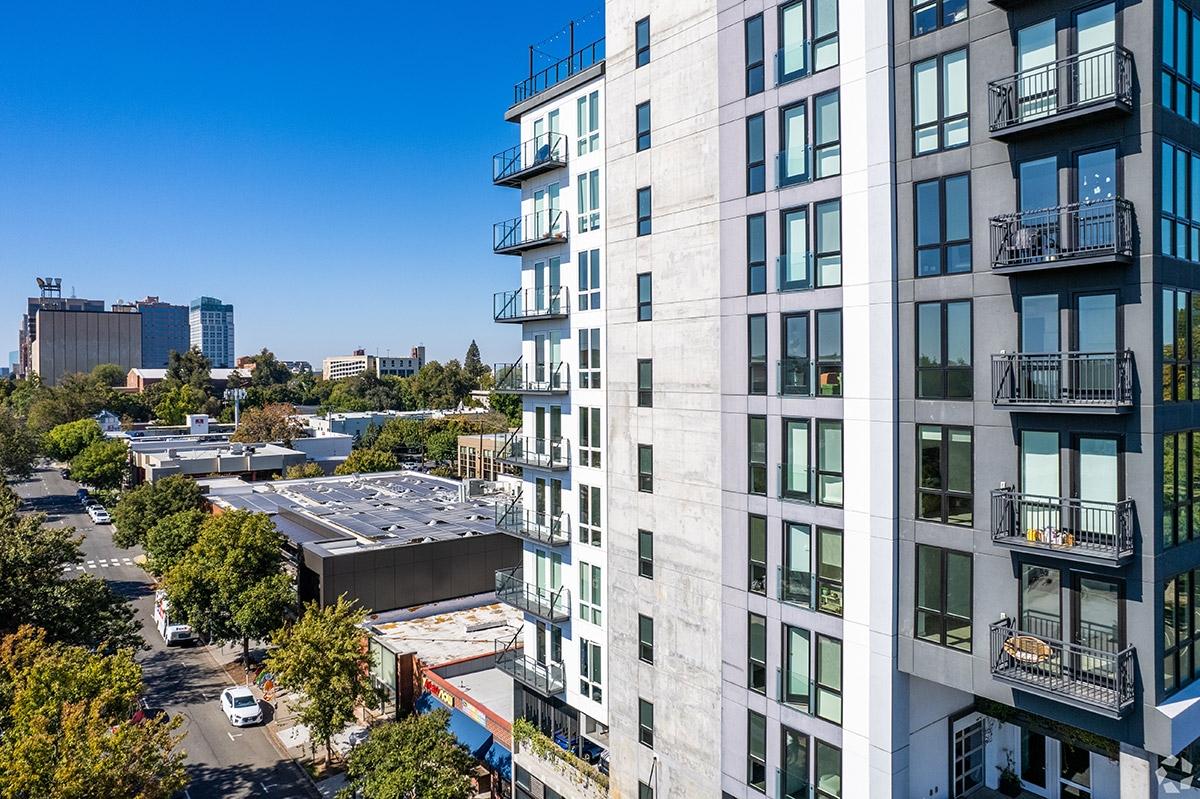
Renters are betting on Sacramento’s growth. Over the past five years, Sacramento’s population has grown, while the state of California’s has decreased — 2.2 percent compared to -0.5 percent respectively, according to the U.S. Census Bureau. Sacramento also posted the lowest unemployment rate, 4.7 percent, since last May, according to the Bureau of Labor Statistics.
Sacramento vs. San Francisco
With an average rent of $1,579/month and a vacancy rate of 6.5 percent, Sacramento draws renters for its affordability and availability, especially when compared to San Francisco. San Francisco is the tightest rental market this summer, as it has an average rent of $3,611/month, more than double the price in Sacramento, and a vacancy rate of 3.6 percent.
Developers are following renters to Sacramento
Where renters go, development follows. “Sacramento fed off spillover demand from the Bay Area following the onset of the pandemic, although that trend has cooled off in recent years as more workers have reported to the office. That flood of migration resulted in a supply wave that is still feeling its effects today, with slower rent growth and higher concessions,” says Joshua Ohl, CoStar Group’s Senior Director of Market Analytics for the Sacramento area.
A huge spike in construction in the last couple of years and several major apartment community sales show that investors recognize the growth in Sacramento. There is enough concrete evidence that the city is growing that they are willing to take the chance on it.
Data Centers Are Reshaping Sacramento’s Industrial Corridor
While data centers have been a part of Sacramento for a while, more and more are being built, reshaping the city’s physical and economic landscape. Data Center Map, a global data center database, says there are currently 22 data centers in Sacramento.
Prime Data Centers, a developer and operator of hyperscale and purpose-built data centers, broke ground on its second data center in Sacramento on May 7, 2026. It is the second data center on its campus, signaling that the company recognizes that Sacramento is becoming an extension of Silicon Valley. Prime Data Centers is just one of many companies that recognizes this potential.
Data centers are not welcomed by all
While some parts of Sacramento readily welcome the development, others don’t. Patterson extended its temporary moratorium on new data center projects through July 2027. In Roseville, rumors of a data center started flying after a proposal and residents pushed back, though the developer and city officials say it is not a hyperscale AI data center.
Modesto residents headed in droves to City Hall in August 2026 to demand that city officials prevent data centers in the city. While no moratorium was discussed, city officials later said that data centers were not an allowable land use under the municipal code and there were no proposals currently under review.
From Chipmaking to Capitol Mall: Sacramento’s Office and R&D Development
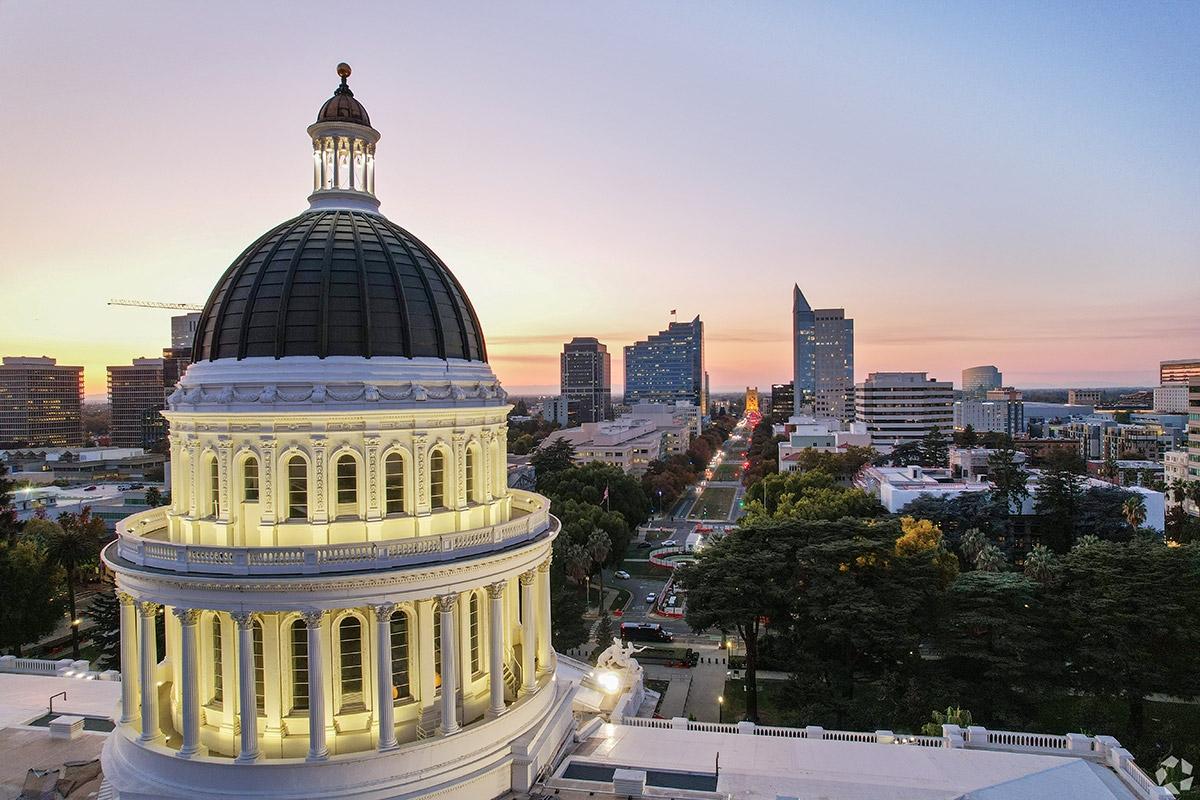
Companies are investing in the Sacramento area, not just as a place for infrastructure, but a place for talent, research, and development. Meta is investing $50 million to transform state office buildings in Sacramento to a mixed-use campus and housing for Sacramento State. In a statement from Mark Zuckerberg, Meta CEO, he said that the project will have a dedicated AI center and state-of-the-art STEM facilities that he believes will strengthen communities and the next generation.
The entire Sacramento region is experiencing AI growth, not just Sacramento itself. In 2025, Rancho Cordova approved $5 million to research and develop AI through a partnership with NVIDIA and HMCI. The city is already home to the infrastructure needed to support AI, leading to high-tech research companies and data centers relocating and building in Rancho Cordova.
Solidigm, an enterprise data storage company, invested $100 million into R&D facilities in Rancho Cordova as well, and as of April 2026 had surpassed that figure. They already have their headquarters in the city and are in the process of expanding that building as well as building out the surrounding R&D campus.
What Comes Next for Renters and Sacramento
While renters are currently enjoying a favorable market in Sacramento, with all the growth in the city, it may not stay that way. Ohl says that with more measured supply in 2026 and 2027, both occupancy rates and rent growth will go up, potentially creating a tighter market for renters. AI has changed the landscape of cities across the country, and Sacramento is seeing that same shift.
Your Sacramento Apartment Search Starts on Apartments.com
Sacramento has been steadily transforming over the years as AI investment shapes the region. It's drawing renters looking for more space and lower rent without giving up access to the Bay Area, and companies looking for room to grow without the price tag or red tape. If you're curious about what the city has to offer, then Apartments.com is the place to start looking.
Apartments.com makes it easy to find a rental that fits your budget and lifestyle, with detailed listings, neighborhood insights, and photos for communities across the Sacramento region. Whether you're relocating for a new tech job or just chasing more affordable rent, you can filter by price, pet-friendliness, amenities, and more to find the right fit before the market tightens further. Get started on your apartment hunt in Sacramento with Apartments.com.
FAQs
Are there any data centers in Sacramento, CA?
Yes. According to Data Center Map, there are currently 22 data centers in Sacramento. Prime Data Centers broke ground on its second data center on its Sacramento campus on May 7, 2026, and Rancho Cordova, part of the greater Sacramento region, is also seeing data center and R&D investment, including from Solidigm.
Is Sacramento considered Silicon Valley?
Not exactly, but it's becoming an extension of it. Sacramento is located 90 miles from the Bay Area and offers a business-friendly environment, lower land prices, fewer regulatory hurdles, and reliable utilities through the Sacramento Municipal Utility District, all of which are drawing AI companies and renters priced out of San Francisco.
What is the next Silicon Valley?
Sacramento is positioning itself as the next Silicon Valley due to its proximity to the Bay Area via Amtrak's Capitol Corridor and BART connections, its lower costs, and its growing AI infrastructure, though not everyone in the region welcomes this growth, as seen in Patterson's data center moratorium and pushback in Roseville and Modesto.


