

A multigenerational household is a living arrangement where two or more people from different generations live under the same roof. This housing solution is becoming more common as affordability remains a top concern. Pew Research Center found that U.S. adults living in multigenerational households cite financial reasons, such as rising housing costs and student debt, as their reason for this housing decision.
While multigenerational living is not uncommon for homeowners, renting as part of a multigenerational household is a different story. This article covers the ins and outs of multigenerational renting and how combined households can make this housing solution work for every member of the household.
Is Multigenerational Renting Becoming More Common?
Pew Research Center found that the share of the U.S. population living in multigenerational households grew from 7 percent in 1971 to 18 percent in 2021. While multigenerational living has increased nationwide, the share of renter households choosing this living arrangement is harder to identify. However, looking at renters’ search behavior can help determine what matters most during an apartment search.
An Apartments.com Q2 2026 survey found that 17 percent of renter respondents are currently living with their parents, grandparents, or other adult relatives, a slight increase from the same survey conducted in Q4 2025, where only 16 percent reported this housing solution. With Pew Research Center’s findings showing an increase in multigenerational households, combined with Apartments.com’s slight increase in renters reporting multigenerational living, multigenerational renting appears to be an increasingly popular housing solution.
Why Multigenerational Renting Is a Good Fit for Renters

An accessory dwelling unit (ADU) is typically found in single-family homes and serves as an independent housing unit detached from the main home, with its own kitchen, bathroom, and living area. Many households that include multiple generations use ADUs as a secondary living space, allowing for greater independence and privacy. While ADUs work well for some households, they require additional upkeep. Renting offers a lower-commitment housing solution that is often both more affordable and easier to adjust as needs change.
The National Association of Homebuilders found that the homeownership rate for multigenerational households rose to 74.2 percent, meaning 25.8 percent of multigenerational households rent. In addition, the median income for multigenerational households in 2025 was $109,300, according to the National Association of Realtors. Because multigenerational households often have higher household incomes, they may be more likely to purchase a home. However, with elevated mortgage rates in many markets, renting can be more affordable than buying.
An Apartments.com affordability survey found that 24 percent of renters said that if they had to share a home, they would prefer living in a multigenerational household with family over living with unrelated roommates. This data suggests that while multigenerational living is not the majority housing choice, many renters prefer living with family to reduce housing costs.
What to Look for When Searching for a Multigenerational Rental
Searching for a multigenerational rental is one of the most challenging parts of transitioning to this housing style. Based on an Apartments.com Market Renter Insights survey, only 14.3 percent of rentals across major metros are three-bedroom units, and only 3.3 percent are four-bedrooms or larger. Part of the reason multigenerational renting is less common is because there are not enough properties that meet the needs of larger households.
While most apartment communities don’t have the space every multigenerational household needs, there are several smart ways to search for a rental that accommodates a larger household.
Search by floor plan
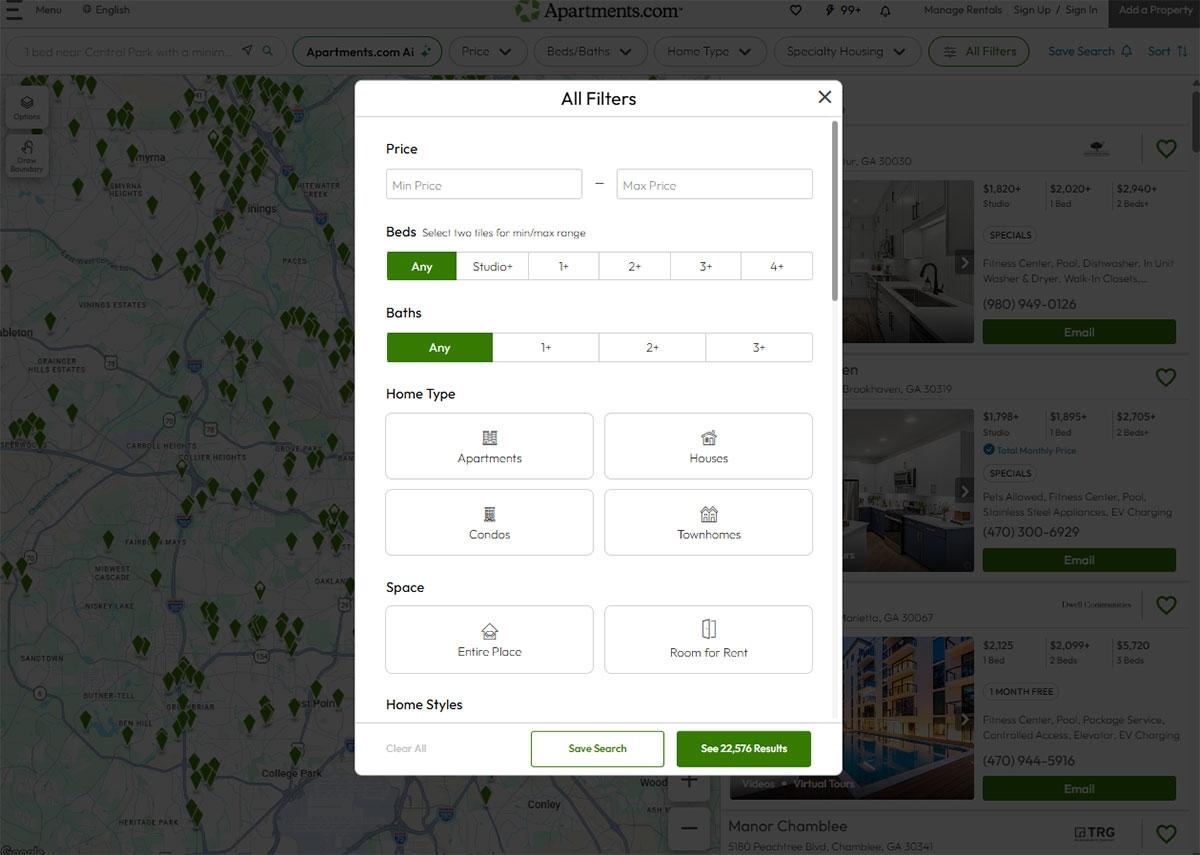
Floor plan is one of the most important factors to consider when searching for an apartment for a multigenerational household. In fact, the Apartments.com Q2 survey found that 68 percent of renters search for apartments by bedroom count, making it a top consideration during the apartment search.
On Apartments.com, you can search for apartments by bedroom or bathroom count, making it easy to find rentals that match your household’s needs. To search by bedroom count, navigate to the city where you want to rent, select “All Filters,” then choose the number of bedrooms your household needs. Apartments.com allows renters to search for three or more bedrooms, making the search for a multigenerational rental more efficient.
Search by square footage
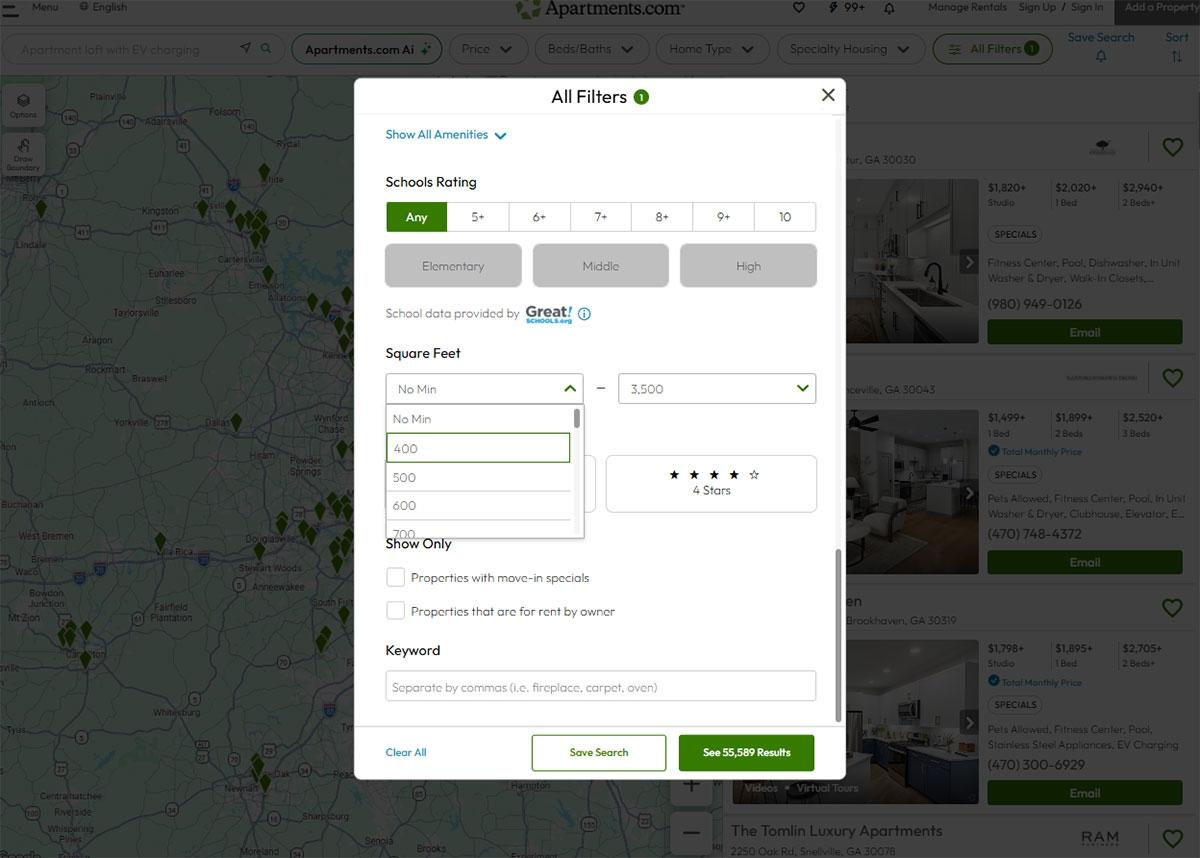
The size of a unit plays a major role in whether a unit can accommodate a large household. The square footage displayed on apartment listings includes all rooms, including the kitchen, laundry room, bathrooms, and bedrooms. If you have a specific square footage in mind, Apartments.com allows renters to search by size.
To search by square footage, navigate to the city where you want to rent, select “All Filters,” and scroll to the “Square Feet” section, where you can enter a minimum and maximum square footage, from 400 sq. ft. up to 4,500 sq. ft. By allowing renters to search by size, Apartments.com makes it easier for multigenerational households to find a rental that fits their needs.
Search by amenities
Apartment amenities can make or break a rental experience. If amenities are important to you and your household, Apartments.com makes it simple to search for the features that matter most.
After navigating to the city where you want to rent, select “All Filters,” then scroll to “Popular Amenities,” where you can filter by your preferred amenities. If you’re searching for an amenity that isn’t listed, scroll to the bottom of the "All Filters” menu until you reach the “Keyword” section. Enter the amenity you’re looking for, and Apartments.com will show listings that match your search term.
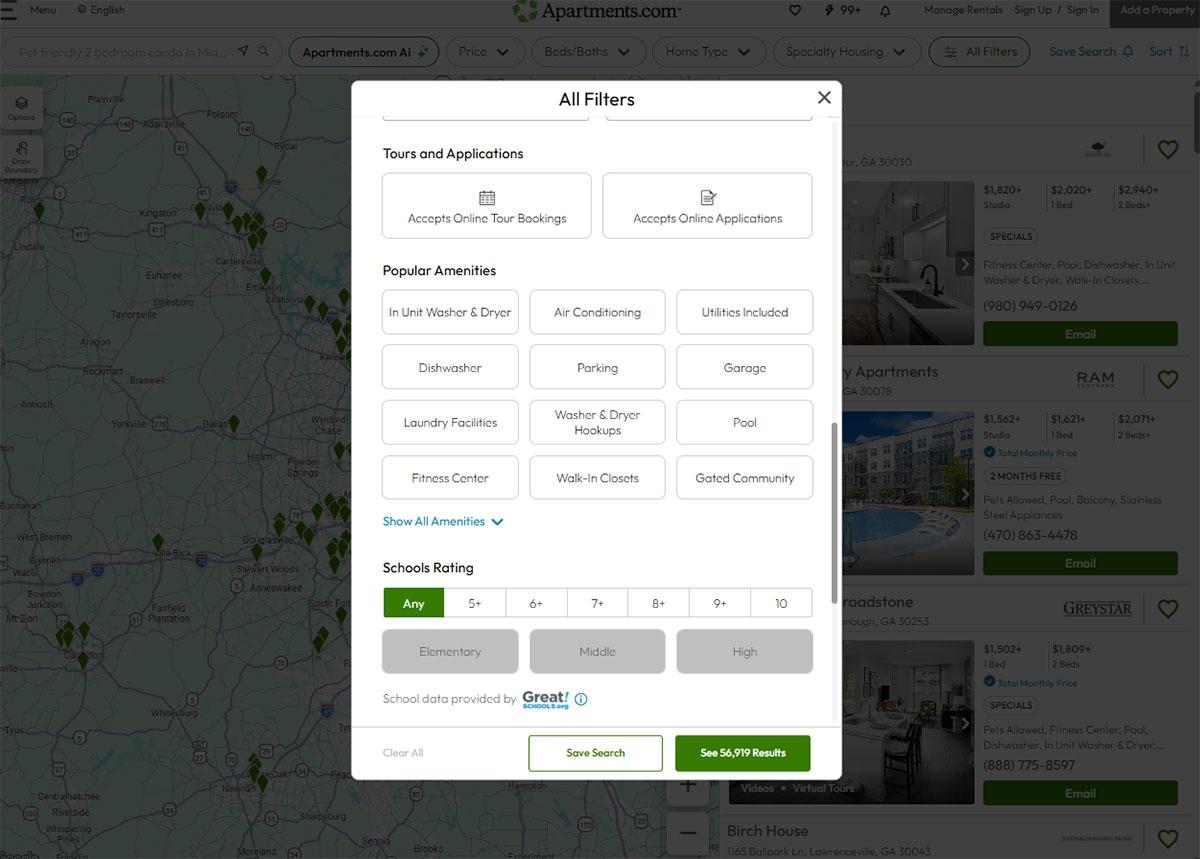
Renters looking for amenities that support a multigenerational household can use Apartments.com’s advanced search filters to narrow their options.
The Financial and Lease Considerations of Multigenerational Renting

Multigenerational renting may seem straightforward, but it’s important to establish the logistical and financial details of renting with multiple people under one roof. Before you sign a lease, decide which household members will be listed on the lease. By having your name on the lease, you become a tenant with legal rights and responsibilities. If the household doesn’t want just one name on the lease, most apartment communities will offer a joint lease, where all tenants share equal legal and financial responsibilities. However you and your household decide to handle the lease, it’s important to establish these expectations before signing so everyone understands their responsibilities.
Another aspect to consider is how you plan to split rent among occupants. Multigenerational households span several generations, so some occupants may earn more than others. Deciding how you will split the rent, either by income, by space, or another method, is important to establish before signing the lease and moving in to help avoid confusion and set clear expectations for monthly rent payments.
States With the Highest Share of Multigenerational Households
Although the share of multigenerational households nationwide is only 3.78 percent, some states have a larger share of this type of housing. Because these states have a larger share, renters may find more housing options that accommodate larger households. Based on the American Community Survey (ACS) conducted by the U.S. Census Bureau, these five states have the highest share of multigenerational households in the country.
|
State |
Share of Multigenerational Households |
|
7.75% |
|
|
5.92% |
|
|
4.66% |
|
|
4.55% |
|
|
4.55% |
Source: U.S. Census Bureau
Rising housing costs in these states may be one reason more households are turning to multigenerational living. While this housing arrangement remains a minority across the country, it continues to be an effective way to reduce housing expenses.
Where Multigenerational Living Is Growing
Multigenerational living is still an emerging housing arrangement in many parts of the country, making it difficult to determine whether households are choosing this lifestyle or turning to it because of affordability challenges.
Although the share of multigenerational households across the country is low, some states are seeing a surge in this housing solution. Based on the U.S. Census Bureau’s American Community Survey’s 2019-2024 estimates, these five states saw the largest growth in multigenerational living.
|
State |
Increase in Multigeneration Living |
|
+0.93% |
|
|
+0.56% |
|
|
+0.49% |
|
|
+0.41% |
|
|
+0.37% |
Source: U.S. Census Bureau
Analyzing this growth, four of the five states that saw the largest increases in multigenerational living are not the same states with the highest overall share of multigenerational households. Looking at the data nationally, rising housing costs may be one reason more households are turning to this living arrangement. Additionally, in states like Rhode Island, local lawmakers are seeking to accommodate households that live this way.
In 2024, the State of Rhode Island passed legislation that allows homeowners to build attached or detached accessory dwelling units (“in-law” apartments) to accommodate multigenerational households. Many states are recognizing the need for more flexible housing options, allowing this housing style to grow and help families manage housing costs.
Find a Multigenerational Rental on Apartments.com
If you’re looking for your next multigenerational rental, start your search on Apartments.com. With advanced search filters, including bedroom count, square footage, and price, multigenerational households can find rentals that are large enough to meet their needs.
Apartments.com Ai makes your rental search easier by allowing renters to search for apartments using conversational language. To use Apartments.com Ai, navigate to the Apartments.com home page and select the Apartments.com Ai button. Then simply describe what you’re looking for. For example: “I’m looking for an apartment with four bedrooms and four bathrooms in Omaha, Nebraska.”
Apartments.com Ai displays listings that match your search criteria, making it easy and efficient to find an apartment that fits your household.
FAQs
What is multigenerational renting?
Multigenerational renting is a living arrangement in which people from two or more generations share a rental home. A household may include parents, adult children, grandparents, or other adult relatives living under the same roof.
What should you look for in a multigenerational rental?
Look for a rental with enough bedrooms, bathrooms, square footage, privacy, and shared living space for every household member. Amenities such as in-unit laundry, accessible features, extra storage, and flexible floor plans may also make the home more suitable.
Is multigenerational renting becoming more common?
Multigenerational living has increased in the United States. Apartments.com survey data indicates modest growth among people living with parents, grandparents, or other adult relatives. Housing affordability and the preference to live with family rather than unrelated roommates may be a contributing factor.
Which states have the highest share of multigenerational households?
According to the U.S. Census Bureau, Hawaii, California, Texas, New Jersey, and Nevada have some of the highest shares of multigenerational households. Availability of suitable rentals can still vary by city and local housing market.


