

North Carolina has become one of the fastest-growing states in the Southeast, attracting renters with its affordable cost of living, growing job market, and mix of city, mountain, and coastal lifestyles. From the Blue Ridge Mountains to the Atlantic coast, the state offers a wide range of places to live depending on your budget and priorities.
Major cities like Charlotte, Raleigh, and Durham continue to grow thanks to strong industries in banking, technology, healthcare, and research. Meanwhile, cities like Asheville and Wilmington offer coastal and mountain lifestyles without the price tags typically associated with those features. Whether you’re relocating for a new job, looking for more space, or searching for a better balance between affordability and lifestyle, North Carolina puts a lot within reach.
What to Know About Living in North Carolina
Before you book your moving truck, you should know what to expect. Here’s what day-to-day life looks like in North Carolina:
Is North Carolina a Good Place to Live?

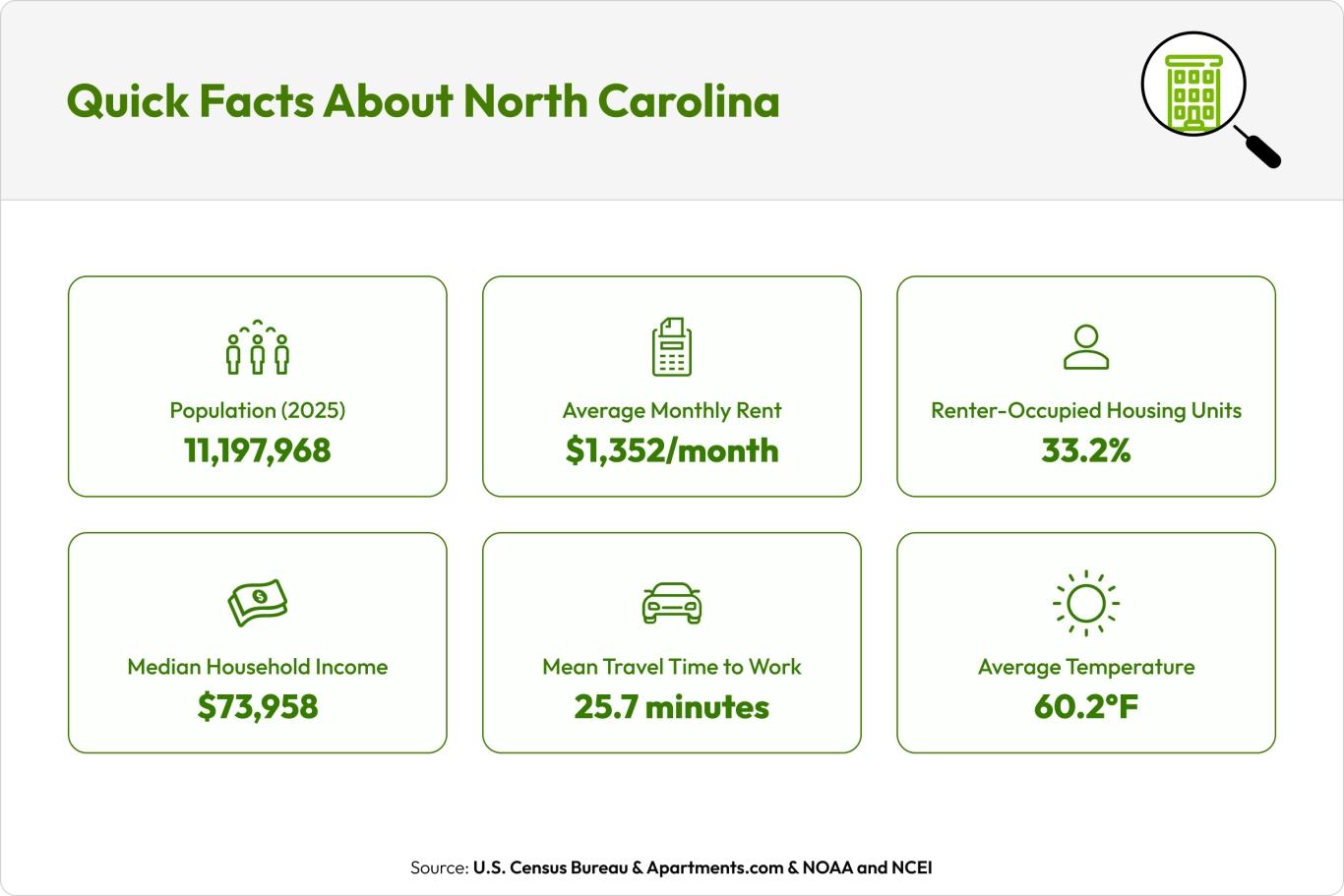
North Carolina checks some important boxes for renters weighing their options. The statewide average rent for a one-bedroom apartment is about 18% below the national average, and the cost of living in most major cities tracks near or below the U.S. baseline.
The Research Triangle, anchored by Raleigh, Durham, and Chapel Hill, has emerged as one of the country's top corridors for technology, life sciences, and research employment. Charlotte, meanwhile, is a major U.S. banking hub home to the headquarters of Bank of America and the East Coast operations of Wells Fargo, along with nine Fortune 500 companies.
Lifestyle is another major draw. Renters can spend weekends hiking in the Blue Ridge Mountains, relaxing on the Outer Banks, or exploring downtown districts filled with restaurants, breweries, museums, and live music venues. Cities across the state offer very different experiences, making it easier to find a place that fits your lifestyle.
Is It Expensive to Live in North Carolina?
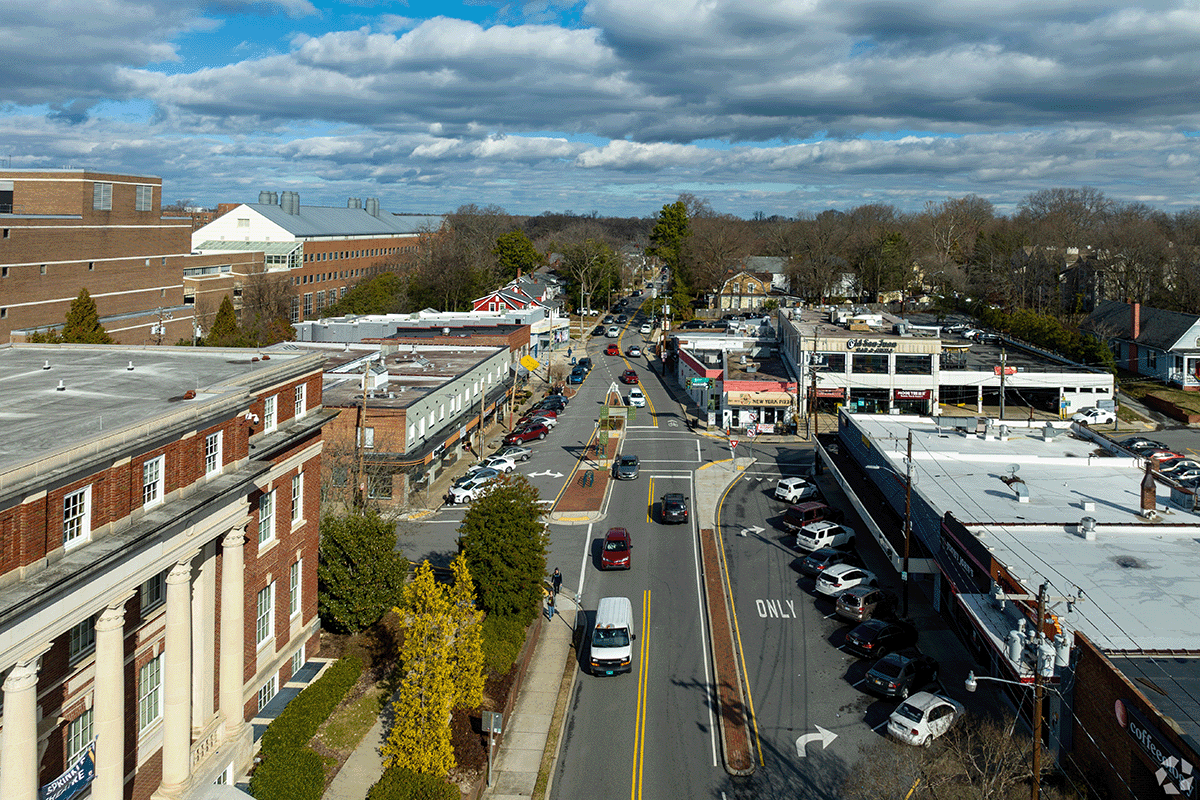
North Carolina sits in a comfortable middle ground on the affordability spectrum. It’s cheaper than most coastal states, with some cities landing well below the national average on multiple cost categories. Here's what renters can expect to pay across different property types:
|
Property Type |
Average Rent |
Average Sq Ft |
|
$1,725 |
960 |
|
|
$1,733 |
1,506 |
|
|
$1,562 |
1,131 |
|
|
$1,865 |
1,600 |
Compared to the national average rent of $1,645 for a 1-bedroom apartment, renting in North Carolina is about 18% less expensive than many areas across the country. Rents have also been trending slightly downward over the past year (down about 1.2% statewide), which gives renters more negotiating room than they've had in recent years.
The most affordable metro areas in North Carolina include:
- Fayetteville, averaging $1,094 per month for a 1-bedroom with a cost of living 7.7% below the national average.
- Greensboro, where the average 1-bedroom rents for $1,156 per month and the cost of living is 7.8% below the national average.
- Wilmington, at $1,385 per month for a 1-bedroom, with a cost of living 5.3% below the national average.
The most expensive metro areas in North Carolina include:
- Charlotte, where 1-bedroom apartments average $1,481 per month and the overall cost of living runs about 0.4% above the national average.
- Asheville, which averages $1,431 per month for a 1-bedroom and sits 6.6% above the national average in overall cost of living, making it the most expensive of the major North Carolina metros.
- Durham, averaging $1,405 per month for a 1-bedroom with a cost of living just 1.7% below the national average.
What Are the Best Places to Live in North Carolina?
Here's a look at average 1-bedroom rents across North Carolina's top cities:
|
Top Cities in North Carolina |
Average 1-Bedroom Rent |
|
$1,481/month |
|
|
$1,394/month |
|
|
$1,405/month |
|
|
$1,385/month |
|
|
$1,156/month |
|
|
$1,326/month |
|
|
$1,477/month |
|
|
$1,431/month |
|
|
$1,122/month |
|
|
$1,094/month |
Each of these cities has carved out a distinct identity worth knowing about before you sign a lease.
For the artsy renter: Asheville is known nationwide for its preserved Art Deco downtown and independent food scene. It’s one of the few cities in the country where a renter can walk from their apartment to an art gallery district.
For the brewery lover: Charlotte and Concord both place renters in the heart of North Carolina’s economy, and creative neighborhoods like NoDa and South End draw renters who want walkable streets and local breweries.
For the techie: Raleigh, Durham, and Cary are all in the Research Triangle, a hub anchored by Duke University and Research Triangle Park, a 7,000-acre research campus that employs tens of thousands across pharma, tech, and life sciences.
For the beachgoer: Wilmington sits between the Cape Fear River and the Atlantic Ocean, offering a 230-block historic district, a working deepwater port, and beachfront access to Wrightsville Beach a short drive away.
For the history buff: Greensboro, Winston-Salem, and Fayetteville each offer deep ties to American history. Greensboro was the site of the Woolworth’s lunch counter sit-ins that defined the Civil Rights Movement, Winston-Salem preserves the history of a Moravian settlement dating to 1766, and Fayetteville is home to Fort Liberty (formerly Fort Bragg), one of the largest military installations in the world.
What to Expect from North Carolina Weather

North Carolina's climate varies considerably from one end of the state to the other. Most of the state falls under a humid subtropical climate, while the higher elevations of the western Appalachians experience a cooler highland climate.
Based on NOAA and NCEI statewide climate data:
|
Average Temperature |
60.2°F |
|
Average Precipitation |
41.25” |
|
Temperature Range July 2025 |
70.8-89.8°F |
|
Temperature Range January 2026 |
27.7-50.4°F |
*Averages from May 2025-April 2026
Summer (June-August)
Highs across the Piedmont and coastal plain regularly reach 90°F in July, accompanied by humidity that can make temperatures feel considerably warmer. Afternoon thunderstorms are common, and air conditioning is essential to stay cool.
Winter (December-February)
Daily mean temperatures range from the low 40s°F in January across most of the Piedmont and coastal plain. Snowfall is possible but relatively infrequent in most of the state, with the western mountains receiving significantly more snow than the rest of North Carolina. Ice storms are a greater concern than heavy snow in the Piedmont, where freezing rain events can disrupt roads and utilities.
Additional weather considerations
North Carolina's Atlantic coastline and proximity to the Gulf Stream make it vulnerable to hurricane activity, primarily from June through November. Storms like Hurricane Florence (2018) and Hurricane Helene (2024) caused significant damage, particularly to eastern and western parts of the state, respectively. Inland areas are generally less exposed, though flooding from tropical systems can reach well inland.
The state also averages about 31 tornadoes per year, with spring being the most active season. Renters along the coast or in the mountains should factor in these weather patterns when selecting a location and planning for renters insurance.
What Are the Pros and Cons of Living in North Carolina?
There are benefits and drawbacks. See if North Carolina is a fit for you.
Pro: Affordable rent and cost of living
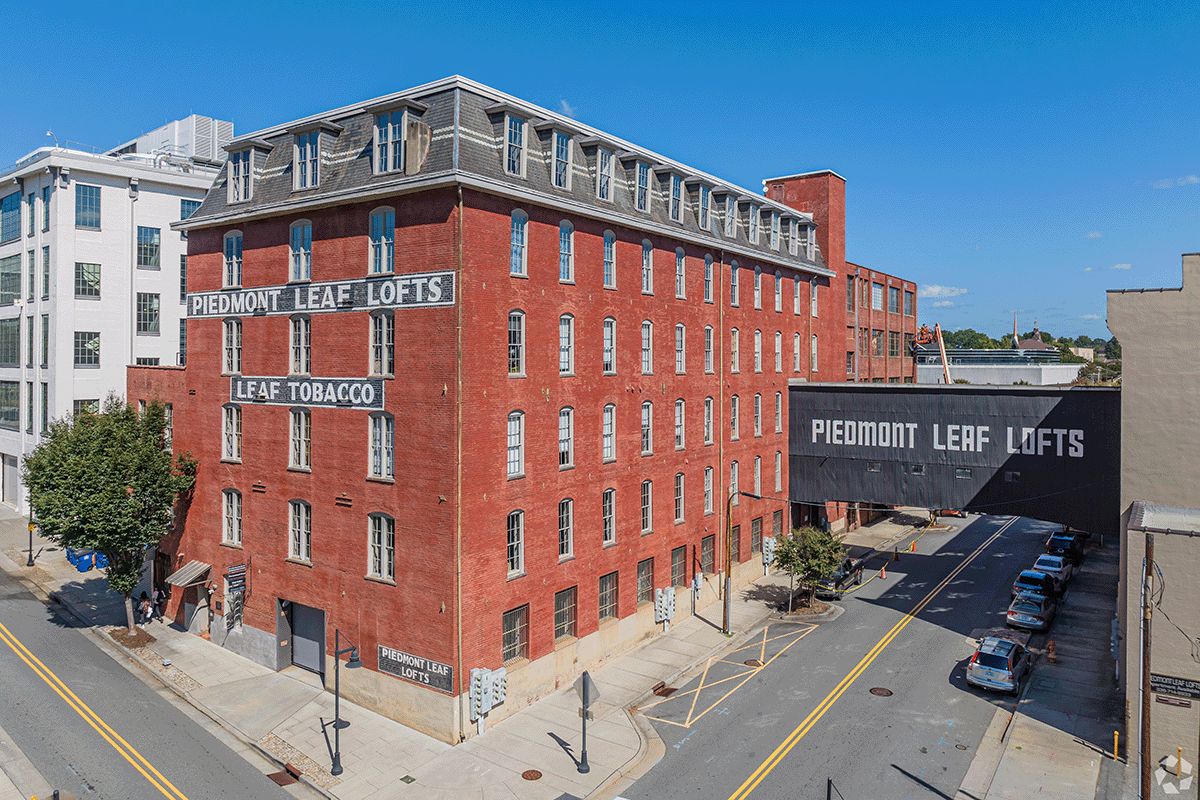
One of the strongest reasons to consider North Carolina is how far a paycheck stretches here compared to many other states. At a statewide average of $1,352 for a one-bedroom apartment, North Carolina ranks near the middle of the national pack, significantly cheaper than comparable East Coast states like Virginia ($1,797), Maryland ($1,673), or Florida ($1,685).
Beyond housing, utilities in most North Carolina cities run notably below national averages. According to our cost of living data, Raleigh's utility costs are about 9% below the U.S. benchmark, and both Charlotte and Durham post similarly favorable numbers. Grocery prices are roughly in line with the national average across the state, meaning renters can typically keep their overall monthly expenses manageable regardless of which city they choose.
Con: Car-dependent
Public transportation is one area where North Carolina falls short compared to larger metro states and most cities are car-dependent by design.
In Charlotte, the CATS bus system and LYNX Blue Line light rail provide workable options for getting to Uptown without a car, but coverage thins out considerably in suburban and outlying areas. Raleigh has a GoDurham and GoTriangle bus network and Amtrak service via Raleigh Union Station, but the city's spread-out layout means most daily errands and commutes still require a vehicle. In cities like Greensboro and Wilmington, the bus systems are limited and the infrastructure is built primarily around driving.
Renters who prioritize walkability and transit access will want to look carefully at specific neighborhoods—the Capital District in Raleigh, South End in Charlotte, and City Center Durham offer the most walkable options—rather than assuming transit will be convenient across the city.
Pro: Strong job market and economic diversity
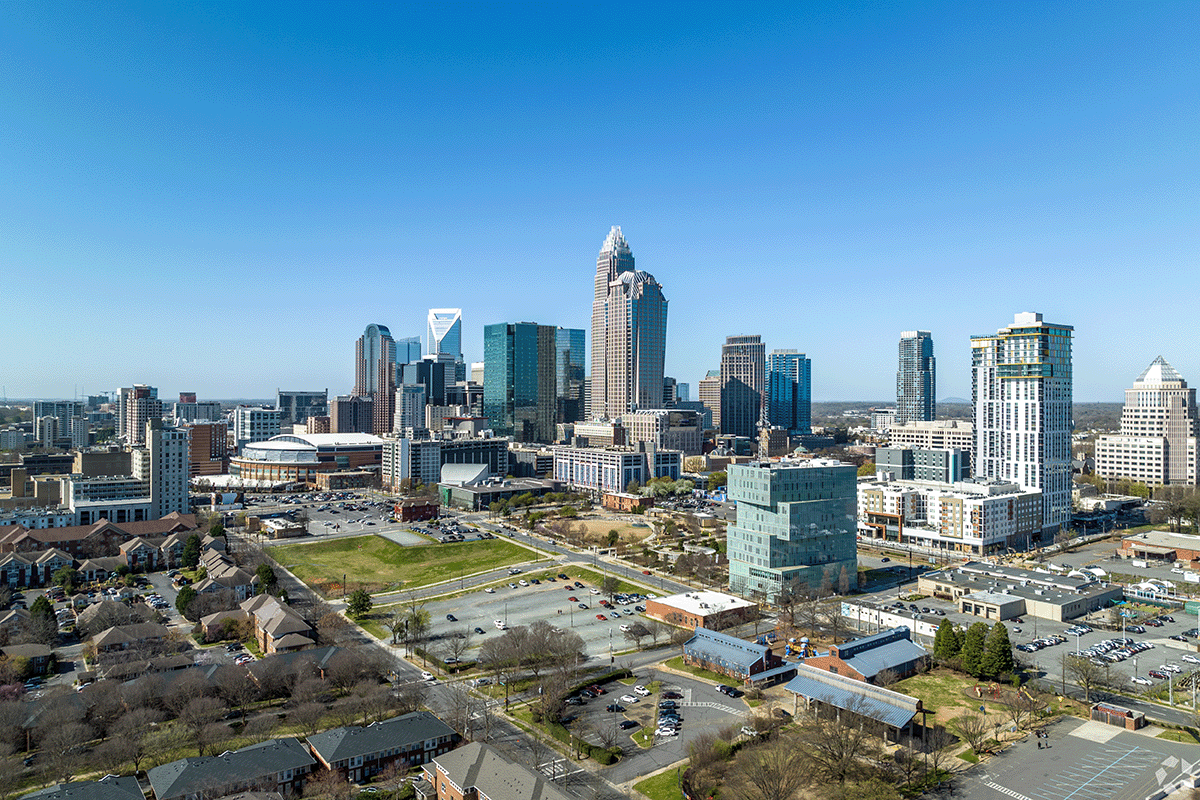
North Carolina's economy has diversified significantly over the past few decades, moving well beyond its historical roots in textile and tobacco manufacturing. Today, the Research Triangle Park, one of the largest research parks in the world, anchors a major concentration of pharmaceutical, biotech, and technology employers between Raleigh, Durham, and Chapel Hill. Charlotte's Fortune 500 presence provides employment stability across finance, energy, and logistics, and Asheville has grown into a hub for tourism, hospitality, and small business entrepreneurship. This range of economic activity across different regions of the state means renters have more options for where to live based on their work.
Con: Hot and humid summers
The summer climate across most of North Carolina is genuinely hot, with daytime highs regularly reaching 88–90°F from June through August in the Piedmont, accompanied by humidity that can make it feel significantly warmer. Afternoon thunderstorms are a near-daily occurrence in summer, and air conditioning is not optional. The heat and humidity can limit how much time is spent outdoors during the peak of summer, particularly during July heat waves.
The coastal areas see high overnight lows due to Atlantic moisture, meaning temperatures don't cool off much after sunset. Asheville is the main exception, with its elevation providing noticeably more comfortable summer conditions. Renters who are sensitive to heat or who moved from cooler climates should factor this into their decision about which North Carolina city fits them best.
Pro: Geographic range

Few states can offer mountains, Piedmont plains, and Atlantic coastline all within a few hours of each other, but living in North Carolina means a resident in Raleigh or Greensboro can reach the Blue Ridge Mountains or the Outer Banks in roughly the same drive time. Asheville residents wake up to mountain scenery and can be at a beach in about four hours. Wilmington renters have immediate access to Wrightsville Beach and the Cape Fear River, while still being within driving range of Charlotte and Raleigh for day trips.
This geographic reach also affects the rental market. Someone who wants a walkable downtown lifestyle in a mid-size city can find it in Raleigh, Durham, or Charlotte. A renter who prefers a smaller-scale, outdoors-oriented community has solid options in Asheville or Wilmington.
Con: Hurricane and severe weather risk
North Carolina's Atlantic coastline and its position in the path of storms moving up the East Coast make it one of the more hurricane-exposed states in the Southeast. The coast and eastern counties are most vulnerable—Hurricane Florence in 2018 caused catastrophic flooding in Wilmington and surrounding areas—but western mountain regions have proven they aren't immune, as Hurricane Helene demonstrated in 2024, delivering record rainfall to Asheville and surrounding counties that caused widespread destruction of infrastructure and property.
Inland Piedmont cities like Raleigh, Charlotte, and Greensboro are generally less exposed to the worst direct impacts of hurricanes, but tropical systems can still bring heavy rain and flooding well inland. Tornadoes also occur statewide, averaging about 31 per year, primarily in spring. Renters in coastal areas especially should account for flood risk when selecting a location, and renters across the state are strongly encouraged to carry renters insurance.
Find Your Next Apartment in North Carolina on Apartments.com
So, is North Carolina a good place to live? For most renters, the answer is a clear yes, with a few things worth noting before you commit. The combination of below-average rents in most cities, a cost of living that undercuts the national average across key categories, a diverse and growing job market, and a wide range of cities and landscapes makes North Carolina one of the stronger options in the Southeast for renters of all backgrounds.
Ready to find your next home? Browse apartments for rent in North Carolina on Apartments.com and explore listings across Charlotte, Raleigh, Durham, Asheville, Wilmington, Greensboro, and beyond. Good places to live in North Carolina are out there, it just comes down to finding the one that's right for you.
Methodology
All rent trends and cost of living information come from CoStar Group and Apartments.com. Weather data is provided by the NOAA and NCEI. The median income data, median commute times, and percentage of renter-occupied housing units was sourced from the U.S. Census Bureau.
FAQs
Is North Carolina a good place to live?
Yes, for most renters, North Carolina offers a strong combination of below-average rents, a reasonable cost of living in most major cities, and a diverse job market spanning banking, technology, life sciences, and research. Cities like Raleigh and Charlotte regularly appear on national lists of top places to live and work. The state does have trade-offs—most notably car dependency and hot, humid summers—but overall, it delivers solid value and lifestyle options for renters at a wide range of budgets.
What are the benefits of living in North Carolina?
The biggest benefits include rents that are well below the national average in most cities, a cost of living that trails the U.S. baseline in key categories like housing, utilities, and transportation, and a geographic range that puts mountains, Piedmont cities, and Atlantic beaches within a few hours of one another. The Research Triangle is one of the country's leading clusters for tech and life sciences employment, Charlotte is a top ten U.S. banking market, and cities like Durham and Asheville have developed nationally recognized arts and food scenes.
What is the cost of living in North Carolina?
Cost of living varies by city. Greensboro comes in 7.8% below the national average overall, Raleigh runs 5.6% below, and Wilmington is about 5.3% below. Charlotte sits just 0.4% above the national average, making it competitive with many mid-size cities across the country. Asheville is the most expensive of the major North Carolina cities at 6.6% above the national average, driven primarily by housing costs. Statewide, the average rent for a 1-bedroom apartment is $1,352/month, which is below the national average.
What are the best places to live in North Carolina?
The answer depends on what you're looking for. Raleigh is an excellent option for renters who want access to strong employment and more than 40 free museums and cultural attractions. Charlotte suits those who want a large-city environment with professional sports, a banking-industry job market, and neighborhoods like South End and NoDa within reach of the LYNX light rail. Durham offers a college-town feel with startup energy and lower-key pricing. Greensboro is the most affordable big city in the state, with easy interstate access in all directions. Wilmington is ideal for renters drawn to coastal living with a walkable historic downtown. Asheville is the pick for those who want mountain scenery, a distinctive arts scene, and a small-city pace.


