
Nowadays, you can find state-of-the-art amenities like phone-activated locks and smart appliances in apartments across the country. Like any other luxury amenity, these units are typically more expensive than the average rental. But Apartments.com data shows just how high of a premium renters pay for smart features.
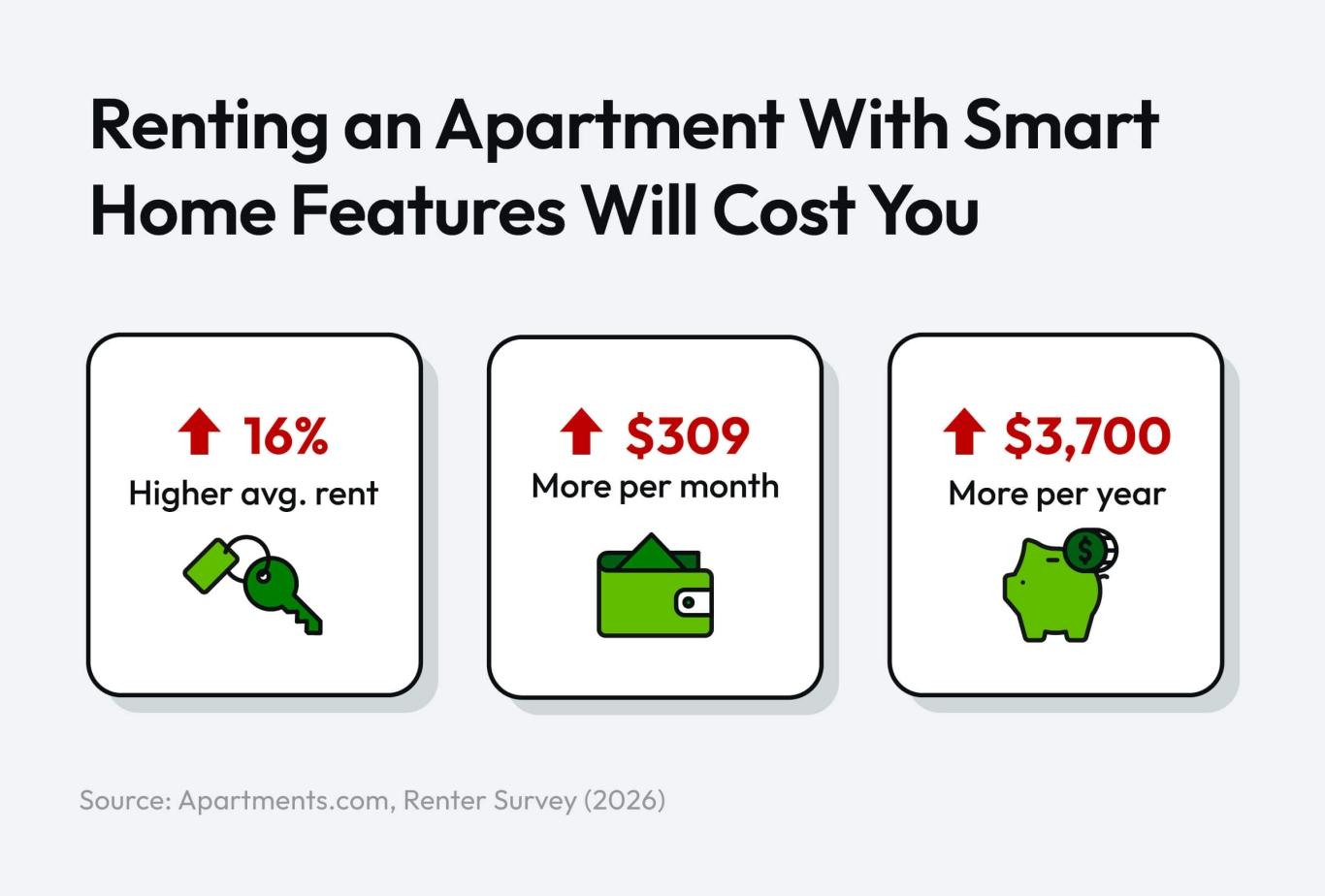
A new analysis of rental listings across 200 U.S. cities shows that apartment units with smart home features rent for an average of 16 percent more. That's an additional $309 each month, or about $3,700 per year. In 94 percent of cities we analyzed, smart amenity units are priced above the local market rate. In the top cities, the markup climbs to 72 percent and even 108 percent.
Our analysis shows where renters pay the highest premium for smart features and how, despite the higher costs, these features are rarely a priority.
Key Takeaways
- Detroit has the largest disparity in the country between average rents and listings with smart-home features. Smart apartment units are listed at 108 percent above the city's market average.
- Dollar for dollar, Detroit renters also pay the steepest premium for smart apartments in the nation. Smart apartment units average $1,422 per month more than the city's overall market rate.
- In some markets, smart amenity listings carry a separate tech fee on top of rent. This is especially common in Huntington Beach, CA, where 82 percent of smart amenity listings charge an additional monthly fee.
- Despite these premiums, basic features, such as air conditioning, in-unit laundry, parking, and dishwashers, dominate renters' must-have lists. Only 10 percent of renters say smart locks are a must-have in their next apartment.
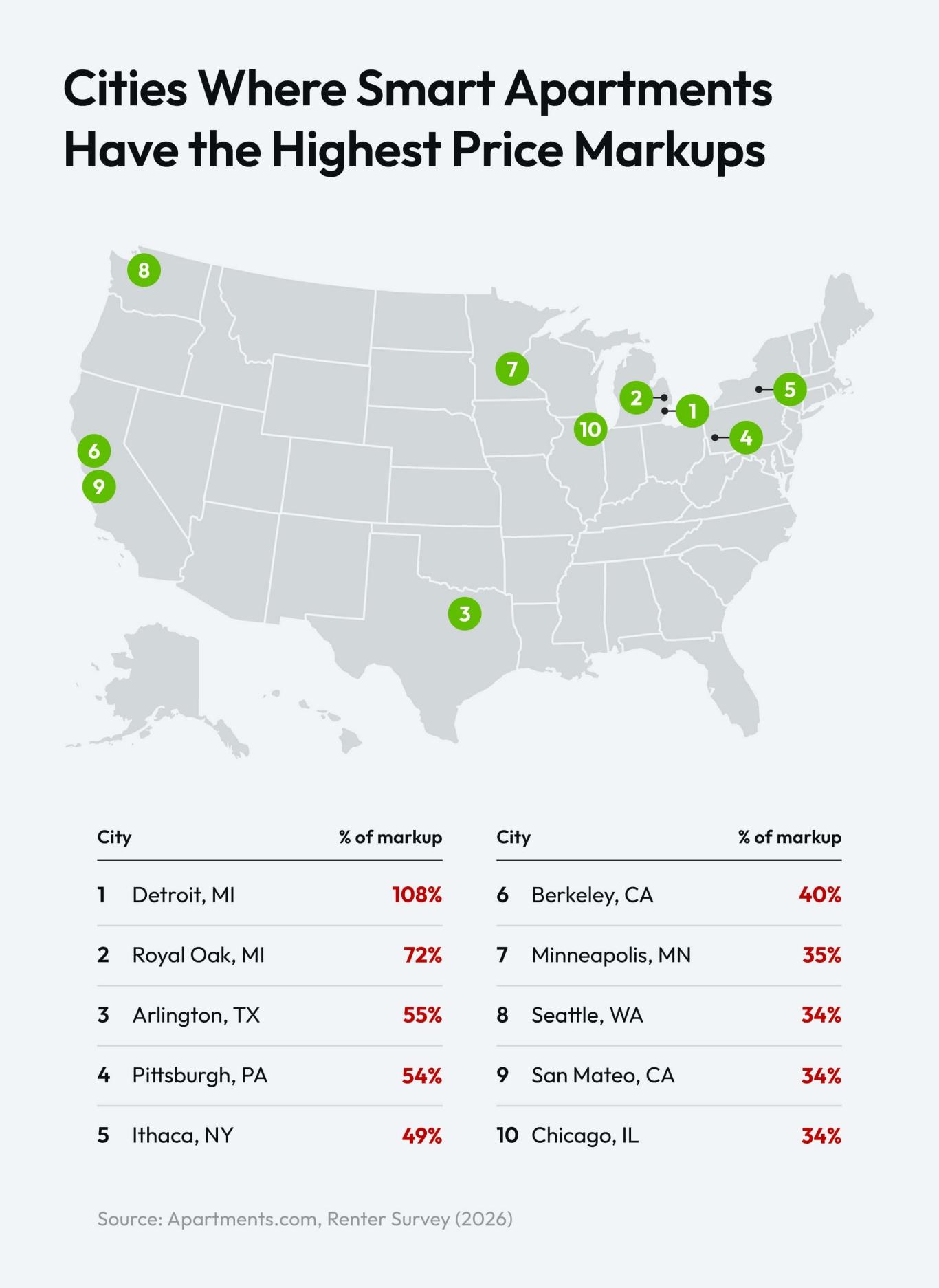
The 10 Cities Where Smart Apartments Have the Biggest Rent Markups
Apartments.com analyzed April rental listing data across 200 U.S. cities for average asking rents, as well as average rents for apartments with smart amenities — specifically smart locks and smart appliances.
Here are the top 10 cities in the country with the widest difference between overall average rents and average rents for smart apartments:
|
City |
% Cost increase for smart amenities |
Average rent for an apartment with smart amenities |
Average rent for all apartments |
|
108% |
$2,740 |
$1,318 |
|
|
72% |
$2,809 |
$1,633 |
|
|
55% |
$2,102 |
$1,356 |
|
|
54% |
$2,452 |
$1,591 |
|
|
49% |
$2,989 |
$2,003 |
|
|
40% |
$3,935 |
$2,816 |
|
|
35% |
$2,022 |
$1,500 |
|
|
34% |
$2,655 |
$1,975 |
|
|
34% |
$4,518 |
$3,362 |
|
|
34% |
$3,077 |
$2,293 |
The top two cities in the list are both in the Detroit metro area — one is Detroit itself and the other is its nearby suburb, Royal Oak.
But outside Detroit, there isn't a clear trend between top cities, which span the country from California to New York state. The top cities include a range of affordable, mid-sized spots, such as Arlington, TX; Ithaca, NY; and Minneapolis, MN, as well as major metropolitan cities with high overall rents, like Berkeley, CA; Seattle; and Chicago.
Detroit Leads the Nation With Smart Units Priced at Double the Market Rate
Smart apartments come at a higher premium in Detroit than in any other major city in the country. They average $2,740 per month, 108 percent higher than the general average rent of $1,318.
Just outside Detroit, Royal Oak, MI, has the second-highest premium in the country. Smart apartment units cost $2,809 per month on average, 72 percent higher than the city average.
The Motor City lost more than 20,000 rental units between 2000 and 2010, as it struggled financially due to the decline of its local auto industry. But over the last decade, the city has recovered, replacing some of those lost units with newly renovated apartments and new construction.
The median build year for Detroit smart apartments is between 2012 and 2013, older than most cities on this list, which indicates they may have been renovated. For example, in Arlington, a rapidly growing city in the Dallas-Fort Worth metro area, the median smart apartment was built in 2023.
Nationally, Smart Amenities Add $309 a Month to Your Rent on Average
In the top 10 cities in our list, smart apartment units rent anywhere from 34 percent to 108 percent more than average. But even outside those top cities, smart apartments can fetch a steep price.
Smart apartment units in 200 top U.S. cities are listed at an average of 16 percent above the overall market rate. This means renters will pay an average of $309 per month or roughly $3,700 per year.
These units aren't necessarily priced higher solely because they have smart amenities. Smart features are typically just one amenity, alongside other perks like outdoor spaces, fitness centers, and even EV charging. But some units specifically charge fees for new tech.
But in Select Cities, Smart Apartments Are a Bargain
While smart amenities are usually available in pricier-than-average units, 13 cities had smart apartment rents at or below the overall market average. Notably, that includes New York City, where rents for apartment units with smart amenities are $16 lower on average. In the NYC borough of Brooklyn, the average rent is $197 lower for listings with smart amenities, the largest jump of any major U.S. city.
These premium smart amenity units are often, but not always, new construction. Nearly half (92 of 200) of the top cities show a median build year of 2020 or later, which may have been the turning point when smart features became standard in new rental units.
In 20 cities, including New York, NY and Huntington Beach, CA, the median build year was before 2000. This suggests that many units with the latest features may have been renovated and won't command the same premium as new luxury construction.
In Some Markets, Smart Features Come With a Separate Monthly Fee
In some markets, smart amenity listings carry a separate monthly tech fee on top of asking rent. These fees are especially common in Huntington Beach, CA, where 82 percent of its smart amenity listings have an additional fee on top of rent, and in Costa Mesa, CA, where 80 percent of smart apartments have a fee.
In 72 of our top 200 cities, no listings with smart home features charge additional fees, meaning some landlords may roll smart costs into the asking rent rather than charging separately. Or, they don't charge for them at all.
Tech fees may include other amenities, like a cable or internet package. But these fees aren't always advertised, and you won't know immediately if an apartment has them unless you ask. Before comparing units, consider asking if there's a mandatory tech or smart amenity fee on top of the asking rent.
You can know this before you even take a tour with Apartments.com, which shows the full monthly listing price of a unit, including any additional fees.
Smart Features Are a Growing Perk, but Most Renters Still Prioritize the Basics
The average smart apartment rents for an additional $309 per month, which can be a high price for an amenity some people may not even want.
An Apartments.com survey of 13,805 renters shows that only 10 percent of people consider a smart lock a must-have when choosing their next rental, and just 8 percent said the same for smart appliances.
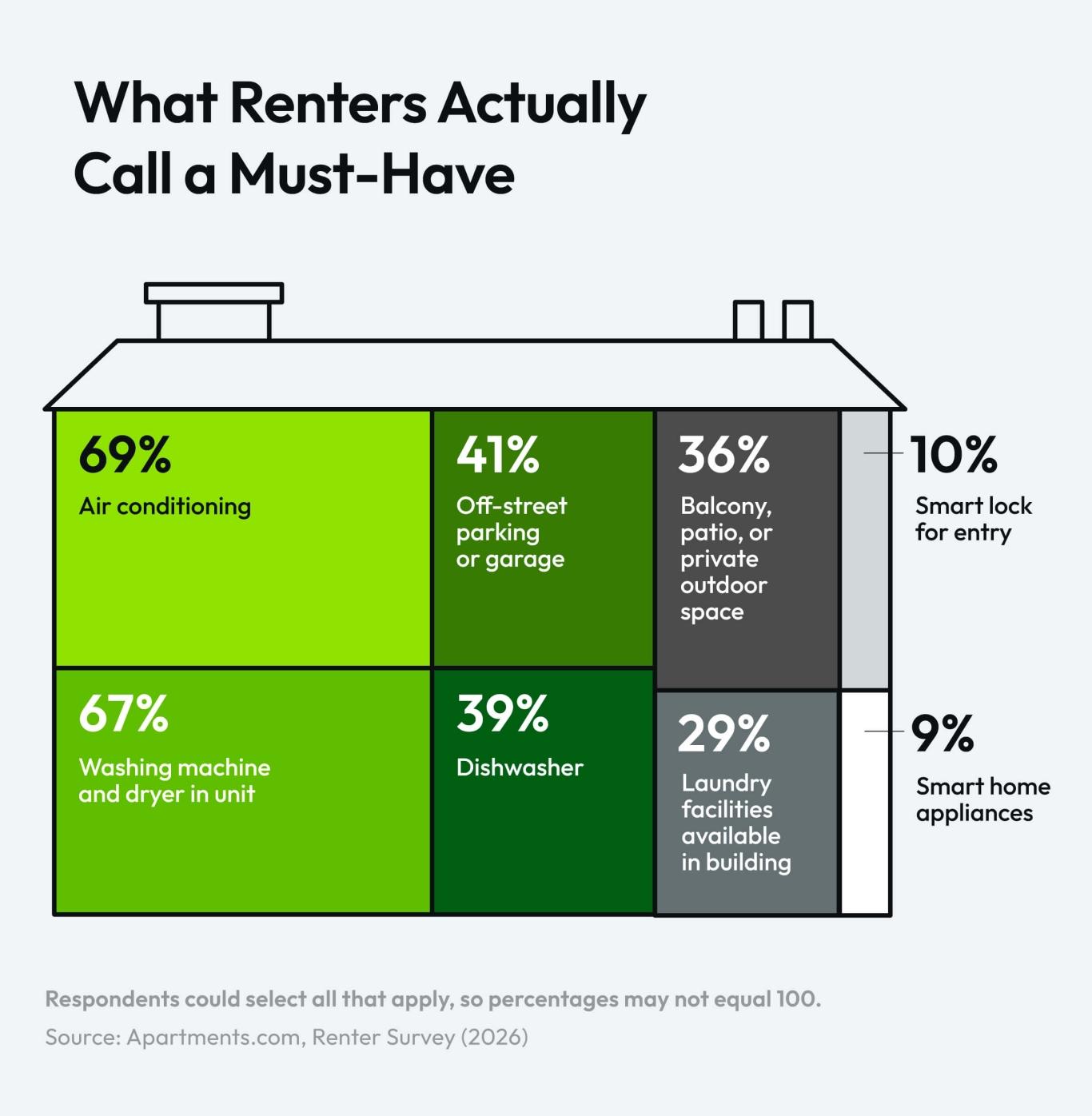
Instead of smart locks and smart appliances, most renters prioritize features that make their home more comfortable and that they'll use daily:
- Air conditioning (69%)
- In-unit washer/dryer (67%)
- Off-street parking (41%)
- Dishwasher (39%)
Although smart amenities may not be a major draw for many renters, they're generally considered a "nice to have," like an EV charging station or sports court. Still, renters may want to consider their next unit carefully to make sure that, if they're paying a premium on rent, they're getting features they'll actually use every day.
What This Means Before You Sign Your Next Lease
Smart amenities are priced above baseline market rents in the vast majority of U.S. cities, which means they're appearing in more searches, listings, and leases than renters might expect.
Whether you need a smart lock or want to prioritize other amenities, Apartments.com can help. AI-powered search features let you filter specifically for smart amenity listings, so you can decide whether the added features are worth the price before you sign. Apartments.com gives you the data you need for your next apartment hunt.
Methodology
This report analyzed Apartments.com listing data across 200 U.S. cities, comparing the average rent for listings advertising smart home amenities with each city's overall average rent. Listings were pulled in April 2026. Cities were ranked by markup percentage calculated via the following formula:
(Average Rent of a Smart Home − Average Overall Market Rent) / Average Overall Market Rent × 100
Renter preference data comes from a proprietary Apartments.com survey of 13,805 renters conducted in April 2026.


