

Ask 10 people where they're retiring, and eight will say Florida. Another might say Arizona. But there’s one person that will say “I haven’t figured it out yet." If you’re that last person, you should be looking at Virginia!
The Cavalier State doesn't market itself the way the Sun Belt does. There's no billboard on I-95 promising eternal sunshine. What Virginia has instead is a genuinely unusual combination: a geography that hands you the Blue Ridge and the Atlantic in the same afternoon's drive, healthcare infrastructure built for an aging population, and — this is the one nobody tells you about — free college tuition once you turn 60.
Here are seven reasons to retire in Virginia, with the facts and numbers attached.
1. The Tax Math Genuinely Works in Your Favor If You Retire in Virginia
Virginia is for lovers. Turns out it's also for people who did the math. Here's what Virginia actually does to your retirement income:
-
Social Security isn't taxed. If any part of your benefit got pulled into your federal taxable income, Virginia lets you subtract it right back out on your state return. Tier 1 Railroad Retirement gets the same treatment. Also, there is no estate or inheritance tax.
-
There's an age deduction of up to $12,000 per person. If you're 65 or older, you can shave up to $12,000 off your Virginia taxable income: pensions, IRA withdrawals, etc. It's income-tested on a rolling birth date cutoff, so it phases down as your income climbs, but married couples who both qualify can stack it for up to $24,000 combined.
-
Military retirees get up to $40,000 subtracted regardless of age. Virginia phased in a military benefits subtraction that reached $40,000 for tax year 2025 and later, and in 2024 the state dropped the old age-55 requirement entirely. That means someone who retired from the Navy at 44 gets the break immediately instead of waiting a decade. Survivor Benefit Plan annuities count. It also stacks with the age deduction if you qualify for both. (TSP withdrawals and CSRS/FERS pensions don't count — those are a different category.)
-
Your locality may knock down your property tax bill. Virginia law lets every city, county, and town offer real estate tax relief or deferral to homeowners 65 and older. It's optional and locally administered, so income limits, asset caps, and relief amounts vary a lot from one jurisdiction to the next, but many localities offer substantial relief, and some go to a full exemption. Veterans rated 100% permanently and totally disabled get a full statewide exemption on their principal residence, and so do unremarried surviving spouses of those veterans and of service members killed in the line of duty.
2. You Can Pick Your Price Point in Virginia
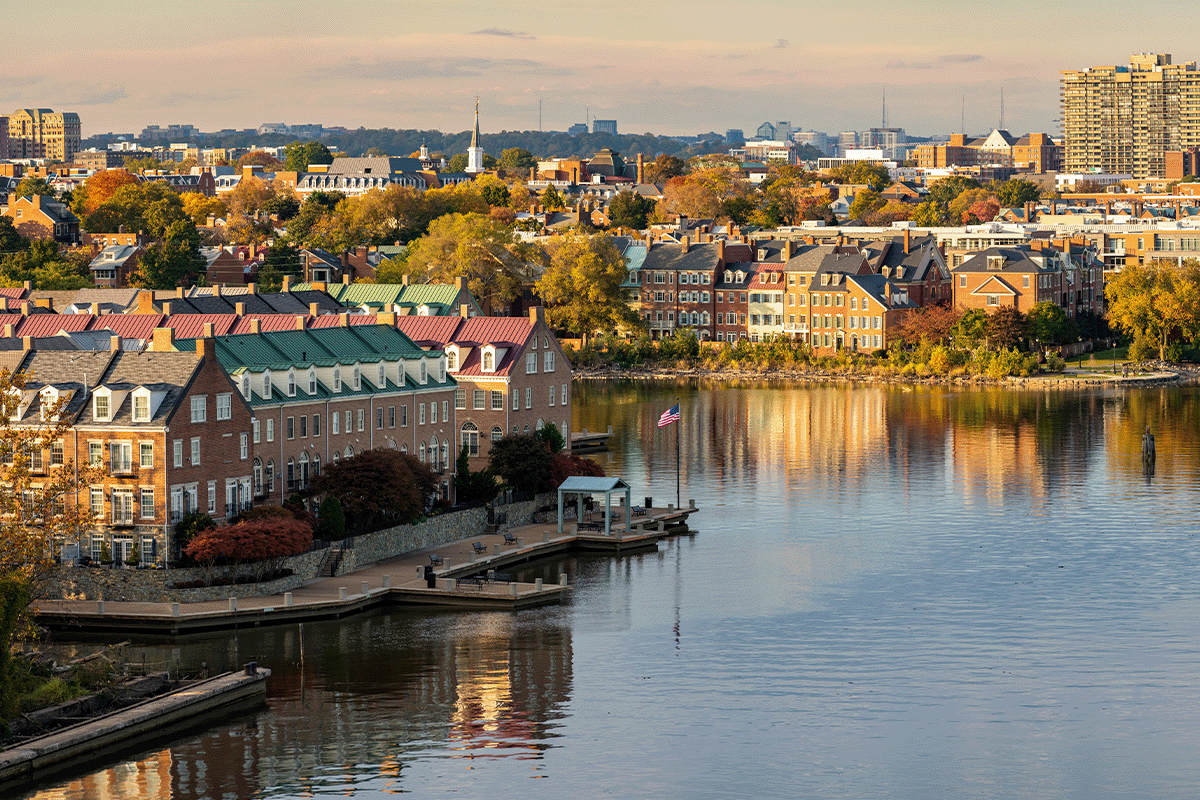
Virginia's cost of living sits a few points above the national average. However, Virginia is five different housing markets wearing one trench coat, so you’ll have plenty of options to choose from when looking for your next place.
-
Northern Virginia (Arlington, Alexandria, Falls Church, McLean, Fairfax County) is one of the priciest metros in the country. Although relatively expensive, it is also beautiful, walkable, and exceptionally well-served by transit and hospitals.
-
Push out 40 to 60 miles and the picture changes fast. Fredericksburg and Woodbridge give you commuter-rail access to D.C. at a real discount. Winchester puts you at the top of the Shenandoah Valley.
-
Richmond is the sweet spot for a lot of retirees: a genuine city with a nationally recognized food scene, a world-class art museum, an academic medical center, and rents well below the NoVA line.
-
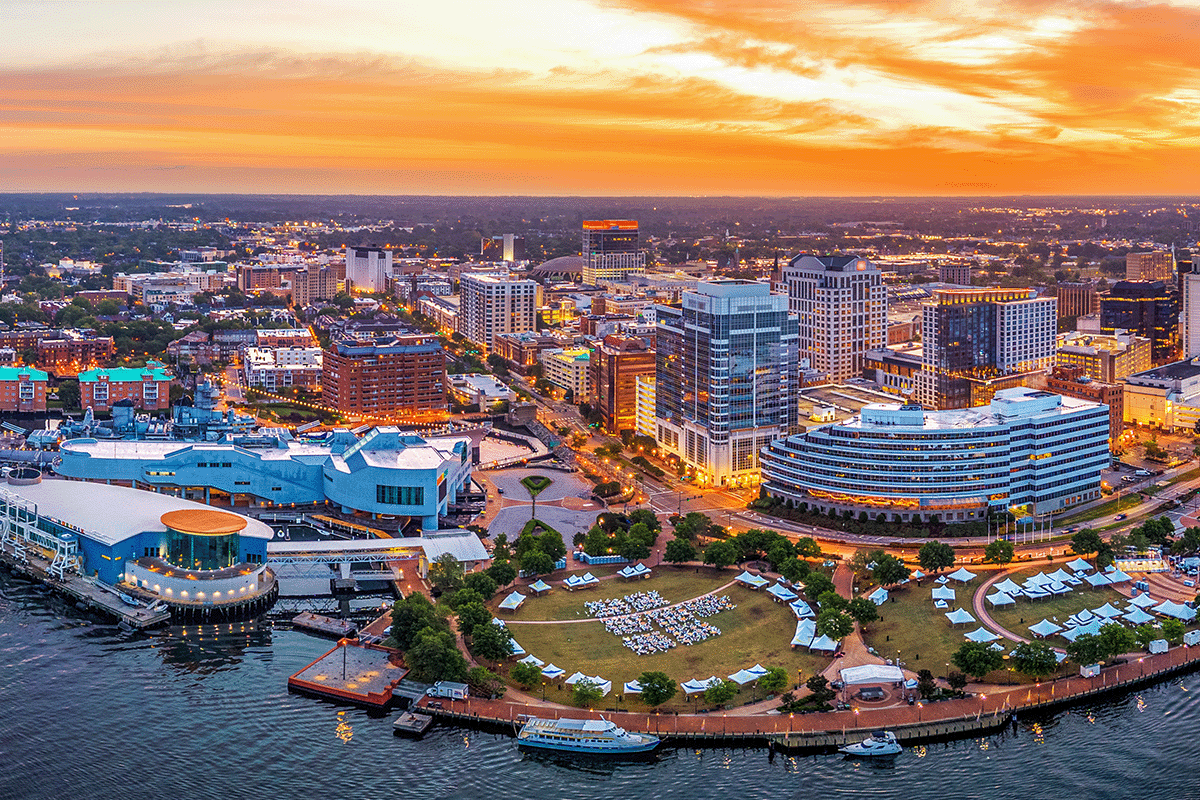
Hampton Roads — Norfolk, Newport News, Hampton, Portsmouth — is where coastal living gets affordable. Virginia Beach costs more; Norfolk and Newport News cost noticeably less for the same proximity to water.
-
Roanoke, Lynchburg, Blacksburg, and the Shenandoah Valley are the value plays with mountain views, small-city amenities, university towns with the cultural life that comes attached, and the lowest housing costs in the state.
-
Williamsburg remains a retirement magnet. Walkable, historic, and gorgeous, it comes with the price premium that the reputation earns.
Here's a practical upside: if you rent, you can test-drive a region for a year before committing to anything. That's advice retirement planners give constantly and almost nobody takes.
3. Healthcare Built for People Who Are Aging

The Virginia Hospital & Healthcare Association represents 26 member health systems and roughly 117 community, psychiatric, rehabilitation, and specialty hospitals across the Commonwealth.
More important than the count is the shape of it. Virginia has two major academic medical centers — UVA Health in Charlottesville and VCU Health in Richmond — plus large regional systems (Sentara, Inova, Carilion, Bon Secours, Ballad) that mean you're rarely more than an hour from tertiary care, even in the southwest. Geriatrics and gerontology programs are concentrated around Charlottesville, Richmond, Norfolk, and Roanoke.
For the roughly 612,000 veterans who live here — about 9.1% of the population, one of the highest concentrations in the country — the infrastructure is deeper still. VA medical centers operate in Hampton, Richmond, and Salem, backed by outpatient clinics and Vet Centers scattered from Bristol to Winchester, plus the Fredericksburg Health Care Center that opened in 2025. Virginia also runs four state veterans care centers: Roanoke, Richmond, Virginia Beach, and the Puller Veterans Care Center in Fauquier County, a 128-bed facility that welcomed its first residents in December 2025 and was designed to feel like a home rather than a nursing floor.
And when you need to figure out what's available near you, Virginia's network of Area Agencies on Aging and its No Wrong Door system exist specifically so you don't have to cold-call fifteen offices to find transportation, meal delivery, or in-home support.
4. College Is Free at 60 (Yes, Really)

This is the reason almost nobody mentions, and it might be the best perk if you consider yourself a lifelong learner.
Under Virginia's Senior Citizens Higher Education Act, residents 60 and older who've been domiciled in the state for at least a year can audit courses at public colleges and universities tuition-free, regardless of income. You may take up to three courses a semester, whether you’re auditing or not.
If your taxable income for the prior year was $23,850 or less, you can take courses for academic credit free of tuition and required fees.
The catch worth knowing: seats are space-available, so you register after tuition-paying students are accommodated, and you'll still pay for books, lab fees, and parking. Each campus runs its own paperwork through the registrar, and registration often opens just a few days before classes start.
Practically speaking, this means retiring near UVA, Virginia Tech, William & Mary, VCU, George Mason, JMU, or any of Virginia's 23 community colleges comes with a standing invitation to sit in on Greek mythology courses, learn Spanish, take up ceramics, or finally figure out organic chemistry. It's the single most underused retirement benefit in the Commonwealth.
5. Mountains and Ocean, Without Having to Choose

Virginia's geography is the state's real flex, and it's not just pretty.
- More Appalachian Trail than any other state. About 544 miles of the A.T. run through Virginia, close to a quarter of the entire trail, including McAfee Knob, the most photographed spot on the whole thing.
- Two of America's great scenic drives, end to end. Skyline Drive runs 105 miles through Shenandoah National Park, then hands off directly to the Blue Ridge Parkway, which covers 469 miles total with more than 200 of them in Virginia. You can pull over at an overlook, eat a sandwich, and be home for dinner.
- Forty-four state parks, from Grayson Highlands' wild ponies at 5,000 feet to First Landing's Chesapeake beaches. An $85 annual Naturally Yours Passport covers parking at all of them, which is a rounding error against what you'd pay for one round of golf in Naples.
- The Chesapeake Bay and the Atlantic shines with oyster country, the Eastern Shore, and Virginia Beach's boardwalk on the other end of the state.
And four actual seasons — including a fall that people drive hundreds of miles to see. Hurricane risk is real but moderate compared with Florida or the Carolinas; Virginia usually catches tropical remnants rather than direct landfalls, with rain and flooding the bigger concern in coastal and Tidewater areas.
6. You'll Never Run Out of Things to Do (Most of Them Free)

Virginia was founded in 1607 and was one of the original 13 colonies, which means the history here isn't behind glass. History breathes and lives all around you when you live in Virginia.
If you've ever wanted to spend a decade methodically working through American history on weekday mornings with no crowds, this is the place to do it. It’s hard to only name a few top spots! Historic Jamestowne, Colonial Williamsburg, Revolutionary Yorktown, Jefferson's Monticello, Washington's Mount Vernon, Arlington National Cemetery, and the Fredericksburg-area battlefields are only a few pieces of living history that you’ll be moments away from.
The festival calendar is just as full, and the reliable anchors are worth planning around. Add county fairs, wine festivals, mountain music gatherings, and the Virginia State Fair, and "nothing's happening this weekend" stops being a sentence that’s true.
7. You Won't Be Stranded When You'd Rather Not Drive
Here's a question most retirees don’t think about enough: what happens when driving stops being something you want to do every day? It's not a hypothetical. Research from the AAA Foundation for Traffic Safety has found that older adults typically outlive their ability to drive safely by roughly 7 to 10 years, and in a lot of sunbelt retirement destinations the answer to "so how do I get to my doctor?" is complicated. Virginia is one of the few states actively building its way out of that problem.
If you're choosing between a rural mountain town and a city neighborhood near a train station, this is a factor that tends to matter more in year fifteen than it does in year one. Luckily, you’ve got options.
Virginia is in the middle of Transforming Rail in Virginia, a roughly $3.7 billion program that's slated to deliver 13 daily Amtrak round trips across four corridors by 2030: Washington to Roanoke, Washington to Newport News, Washington to Norfolk, and Washington to Richmond. The plan includes near-hourly service between Richmond and D.C., along with a planned extension past Roanoke into the New River Valley.
Meanwhile, intercity buses fill the gaps. Virginia Breeze runs several routes stitching smaller cities to the main corridors, including the Tidewater Current, launched in 2026, which links Virginia Beach to Harrisonburg by way of Norfolk, Newport News, Williamsburg, Richmond, and Charlottesville. Tickets on some routes can be booked straight through Amtrak.
With four airports, visiting friends and family doesn’t have to involve absurd layovers. Viriginia residents get their picks with Reagan National, Dulles, Richmond International, and Norfolk.
So, Is Virginia for You?
If your retirement priorities are cheap and warm, Florida and Arizona will win on paper.
If they're a favorable tax picture, serious healthcare, mountains and coastline in the same state, free tuition at 60, and history you can walk through on a random Tuesday — Virginia is one of the best-value retirement destinations in the country, and it's still relatively under the radar.
Ready to find your place in to retire in Virginia? Start your search on Apartments.com.
This article was originally published on March 21, 2023 by the Apartments.com Team and has been updated.
FAQs
Does Virginia tax Social Security benefits?
No. Virginia exempts Social Security entirely. If part of your benefit was included in your federal taxable income, you subtract that amount back out on your Virginia return. The same applies to Tier 1 Railroad Retirement benefits.
Is Virginia tax-friendly for retirees?
Mostly yes, with one caveat. Social Security is exempt, there's no estate or inheritance tax, and there's an age deduction of up to $12,000 per person at 65. But Virginia does tax pensions and traditional IRA and 401(k) withdrawals as ordinary income, and the top 5.75% bracket starts at just $17,000 of taxable income. Retirees whose income is mostly Social Security do very well here; retirees drawing large taxable pensions do better in a no-income-tax state.
How much retirement income can Virginia seniors deduct?
Up to $12,000 per person if you're 65 or older. The full amount goes to anyone born on a rolling birth date cutoff; the deduction is income-tested and phases down as income rises. A married couple who both qualify can claim up to $24,000 combined. Military retirees have a separate, larger subtraction.
Does Virginia tax military retirement pay?
Up to $40,000 of eligible military retirement income can be subtracted from Virginia taxable income for tax year 2025 and later, and since 2024 there's no minimum age to claim it. Survivor Benefit Plan annuities paid to a surviving spouse qualify too, and the subtraction can be combined with the age deduction if you're eligible for both. Thrift Savings Plan withdrawals and CSRS or FERS pensions don't count as eligible military benefits.
Do seniors get a property tax break in Virginia?
Often, but it depends where you live. State law authorizes — without requiring — every city, county, and town to offer real estate tax exemptions or deferrals to homeowners 65 and older. Income limits, asset caps, relief amounts, and application deadlines are all set locally, so check with your locality's Commissioner of the Revenue. Veterans rated 100% permanently and totally disabled receive a full statewide exemption on their principal residence, as do their unremarried surviving spouses.
Can seniors take college classes for free in Virginia?
Yes. Under the Senior Citizens Higher Education Act, Virginia residents 60 and older who have been domiciled in the state for at least a year can audit courses at public colleges and universities tuition-free with no income limit. If your taxable income for the prior year was $23,850 or less, you can take up to three courses per semester for academic credit free of tuition and required fees. Seats are space-available after tuition-paying students register, and you'll still pay for books and lab fees.
What's the most affordable part of Virginia to retire in?
Southwest Virginia and the Shenandoah Valley — Roanoke, Lynchburg, Blacksburg, Staunton, Harrisonburg — offer the lowest housing costs alongside mountain scenery and university-town amenities. Norfolk and Newport News are the more affordable coastal options. Northern Virginia is the most expensive region by a wide margin, and Williamsburg and Virginia Beach carry a premium.
Is retiring in Virginia cheaper than retiring in Florida?
It depends heavily on which part of each state you compare and what your income looks like. Florida has no state income tax, which is a meaningful advantage if you're drawing a large taxable pension. Virginia's cost of living is a few points above the national average statewide, but its lower-cost regions are cheaper than Florida's popular retirement markets.
Which Virginia cities have the best healthcare for retirees?
Charlottesville (UVA Health) and Richmond (VCU Health) are home to the state's two academic medical centers. Norfolk, Roanoke, and Northern Virginia all have large regional systems with strong geriatrics programs. Veterans will want to look at Hampton, Richmond, and Salem, which host Virginia's three VA medical centers.


