10 Best Coastal Towns in New England
Looking to live by the water? Explore other coastal cities in New England.




Avg Rent
$1,879
Population
68,555
Renter Mix
58% Rent
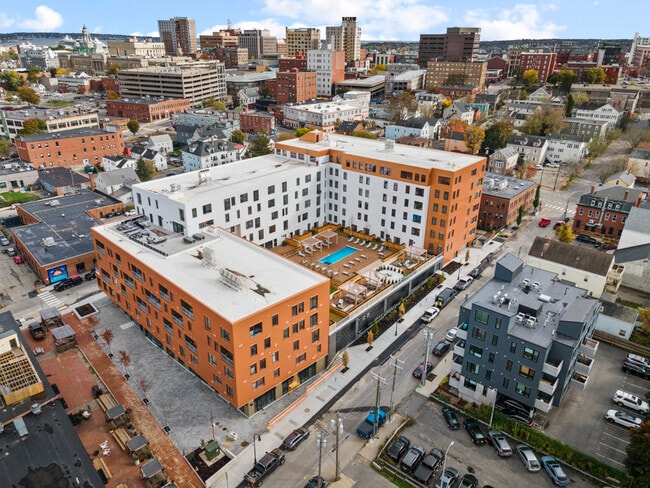
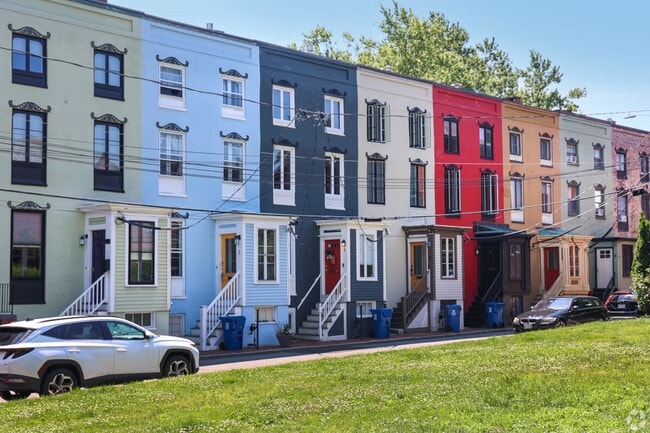
Portland is Maine's most populous city, and it carries that distinction with quiet confidence rather than sprawl—its walkable peninsula packs neighborhoods, a working waterfront, and postcard views of Casco Bay into just 22 square miles. The economy draws on healthcare, the service sector, and a port that ranks among the busiest by tonnage in New England. The University of Southern Maine anchors an educational presence in the city, and the Portland Museum of Art, designed by I.M. Pei and founded in 1882, gives the Congress Street Arts District a genuine cultural anchor. Portland's official seal features a phoenix rising from flames, a nod to the city's repeated rebuilding after devastating fires—resilience that still feels present in its architecture and character.
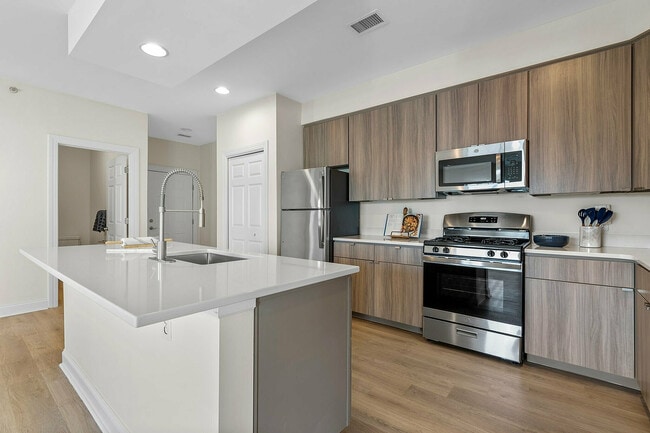
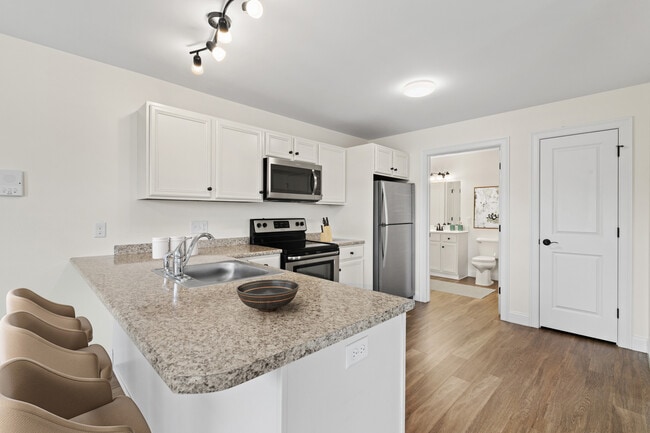
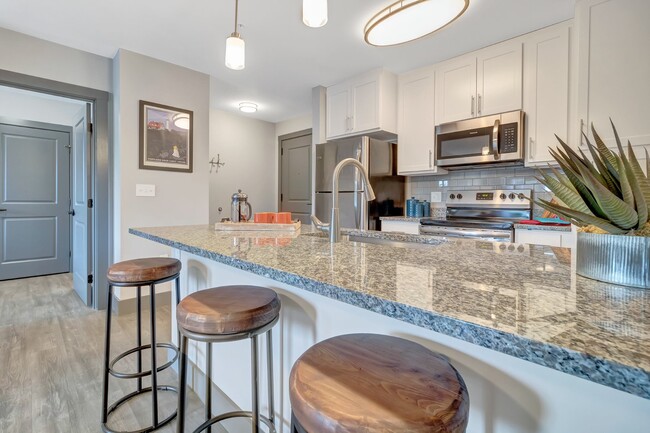
Neighborhoods here read like distinct chapters. Old Port draws renters to lofts and converted warehouse spaces above cobblestone streets, while Munjoy Hill and the East End offer homes steps from the Eastern Promenade's sweeping harbor views. The West End's historic brick walk-ups sit near Maine Medical Center, and Back Cove attracts those who want quieter residential streets by a 3.5-mile waterfront trail. The rental landscape spans studios in newer Bayside apartment communities to spacious multi-bedroom units in restored Victorian buildings, giving renters a wide range of styles at varying price points across the city.
Downtown Portland is known for seafood and waterfront dining.
Portland Farmers' Market runs Thursdays from late May to October.
Downtown Portland is a walkable neighborhood packed with colorful shops and cafes.
The Casco Bay off the shore of East End is a popular boating and fishing area.
Median Household Income
$69,584
Average: $96,182
Education
33,987
Residents Have a Degree
Job Market
39,199
Workers Employed
Median Age
39 Years
Largest Age Group
30-39 Years
Approximately 20% of Residents
Under 20
19%
Over 65
18%
Housing Distribution
Portland has more renters than homeowners.

Education Distribution
Review this city's overall education levels.

As of July 2026, the average apartment rent in Portland, ME is $1,642 for a studio, $1,881 for one bedroom, $2,176 for two bedrooms, and $2,358 for three bedrooms. Apartment rent in Portland has increased by 2.4% in the past year.
The cost of living in Portland, ME is 14.1% higher than the national average. Generally, housing in Portland is 35.8% more expensive than the national average, with rent falling between $1,642 - $2,358. You can expect to pay 1.3% more for groceries, 19.9% more for utilities, and 3.2% more for transportation.
Compare Cities

10 Best Coastal Towns in New England
Looking to live by the water? Explore other coastal cities in New England.

7 Best Places to Live in Maine
Open to exploring your options? Discover other great cities in Maine with our detailed guide.
How to Rent Your First Apartment
Budgeting, credit, roommate red flags—what every first-time renter should know before signing.
Explore how walkable, bikeable, drivable, and transit-friendly Portland, ME is for everyday living.
Minimal Public Transit
Transit
Exceptionally Drivable
Drivability
Somewhat Bikeable
Bikeability

Public
Grades PK-5
263 Students

Public
Grades PK-5
41 Students

Harrison Lyseth Elementary School
Public
Grades PK-5
496 Students

Public
Grades K-5
347 Students
Public
Grades PK-5
230 Students

Public
Grades 6-8
435 Students

Public
Grades 6-8
482 Students

Public
Grades 6-8
453 Students

Portland Arts & Technology High School
Public
Grades K-12

Public
Grades 9-12
382 Students
Public
Grades 9-12
912 Students
Public
Grades 9-12
750 Students
Baxter Academy for Tech & Sciences
Public
Grades 9-12
384 Students
Portland Arts & Technology High School
Public
Grades K-12
 The GreatSchools Rating helps parents compare schools within a state based on a variety of school quality indicators and provides a helpful picture of how effectively each school serves all of its students. Ratings are on a scale of 1 (below average) to 10 (above average) and can include test scores, college readiness, academic progress, advanced courses, equity, discipline and attendance data. We also advise parents to visit schools, consider other information on school performance and programs, and consider family needs as part of the school selection process.
View GreatSchools Rating Methodology
Data provided by
GreatSchools.org
© 2026. All rights reserved.
The GreatSchools Rating helps parents compare schools within a state based on a variety of school quality indicators and provides a helpful picture of how effectively each school serves all of its students. Ratings are on a scale of 1 (below average) to 10 (above average) and can include test scores, college readiness, academic progress, advanced courses, equity, discipline and attendance data. We also advise parents to visit schools, consider other information on school performance and programs, and consider family needs as part of the school selection process.
View GreatSchools Rating Methodology
Data provided by
GreatSchools.org
© 2026. All rights reserved.
† Our analysis of utilities, groceries, transportation, healthcare, home prices, and other goods and services is sourced from the Cost of Living Index, a respected benchmark published by the Council for Community and Economic Research (C2ER) that provides a thorough overview of living expenses across different regions.
Rent data is provided by CoStar Group’s Market Trend reports. As the industry leader in commercial real estate information, analytics, and news, CoStar conducts extensive research to produce and maintain a comprehensive database of commercial real estate information. We combine this data with public record to provide the most up-to-date rental information available.
Consumer goods, services, and home prices are sourced from the Cost of Living Index published by the Council for Community and Economic Research (C2ER). The data on this page is updated quarterly. It was last published in June 2026.
Demographic information comes from Neustar and combines detailed address data with U.S. Census and American Community Survey statistics to produce reliable local estimates.