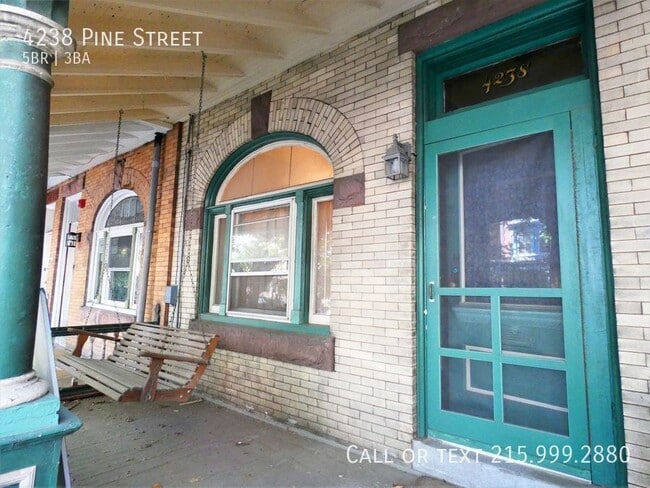
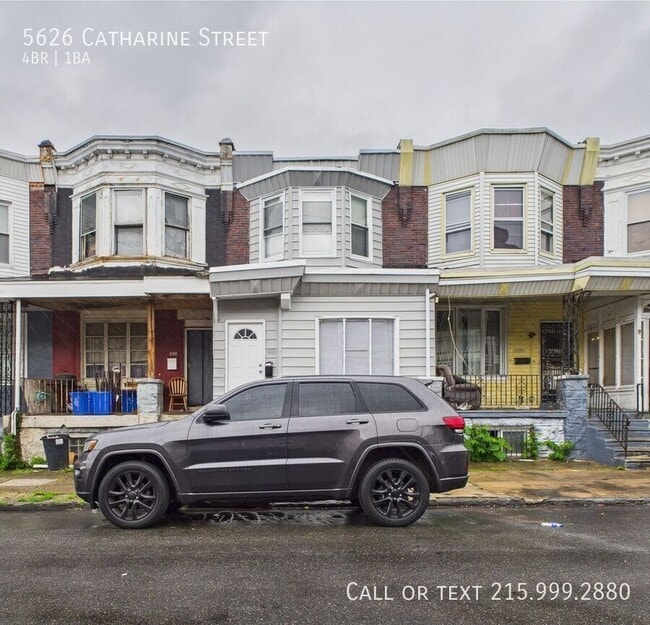
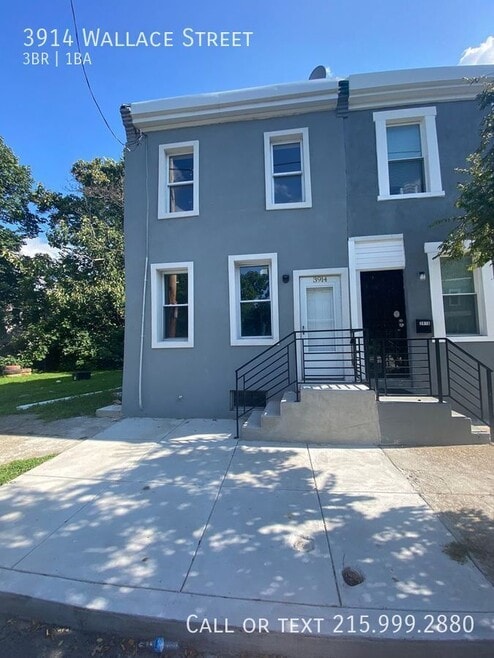
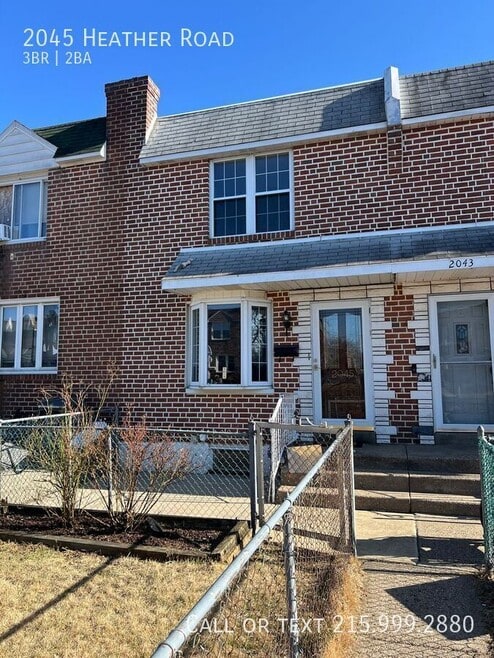
5 Most Affordable Neighborhoods in Philadelphia, PA
Moving to Philadelphia on a budget? Get the most for your money with this comprehensive guide.

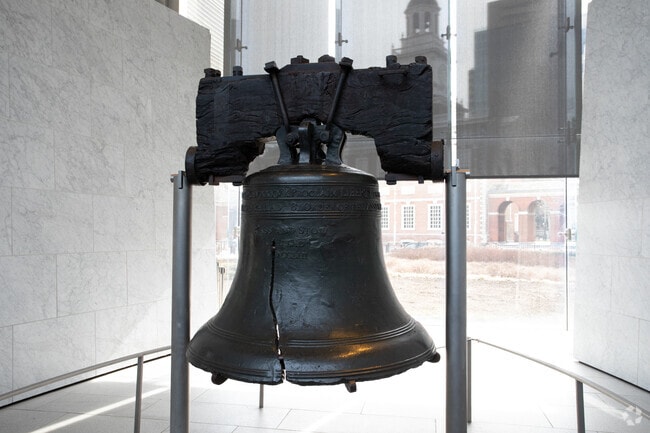



Avg Rent
$1,778
Population
1,536,683
Renter Mix
53% Rent
Philadelphia sits at the center of American history and still carries that weight with quiet confidence — it's the city where the Declaration of Independence was signed, and today those same streets anchor neighborhoods full of energy and purpose. As Pennsylvania's largest city and the sixth most populous in the country, Philly draws renters with a broad economy spanning healthcare, financial services, biotechnology, and information technology, plus a university presence that includes the University of Pennsylvania, Drexel, Temple, and several other institutions spread across the city.
Neighborhoods here range considerably in character. Old City offers cobblestone streets alongside contemporary gallery spaces, Fishtown pulses with creative industries and converted-warehouse architecture, Rittenhouse Square delivers manicured parks and polished streets, and Manayunk brings a hillside village feel within city limits. Northern Liberties and Graduate Hospital round out a city where each district has its own rhythm.
The housing stock reflects that variety well. Renters can choose from classic rowhouse conversions, high-rise apartment communities near Center City, historic brownstones, and newer loft-style buildings in up-and-coming corridors. Compared to similarly sized East Coast metros, Philadelphia offers meaningful range in price points, making it one of the more accessible large cities in the Northeast for renters at different stages of life.
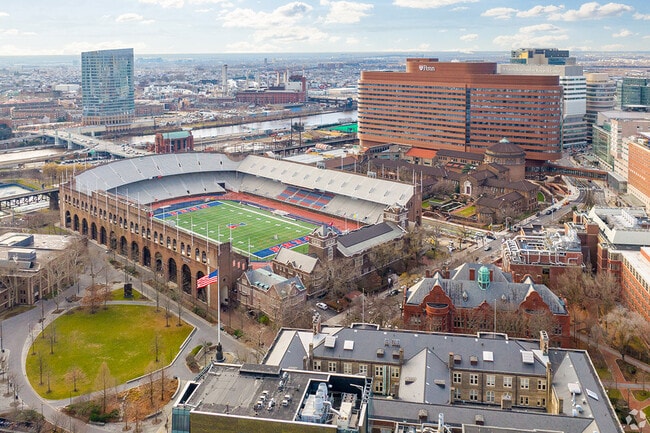
Lincoln Financial Field is home to the Eagles.
Residents flock to Ben Franklin Bridge in Old City each winter for ice skating by the river.
Completed in 1887, St Thomas of Villanova Church draws visitors from around the region.
The Art Museum in Logan Square attracts visitors from across the world.
The Philadelphia Zoo is a highlight attraction for tourists and visitors nearby Brewerytown.
Picturesque Cobbs Creek winds through Cobbs Creek Park.
Median Household Income
$54,633
Average: $79,079
Education
423,562
Residents Have a Degree
Job Market
738,676
Workers Employed
Median Age
37 Years
Largest Age Group
30-39 Years
Approximately 17% of Residents
Under 20
24%
Over 65
16%
Housing Distribution
Philadelphia has more renters than homeowners.

Education Distribution
Review this city's overall education levels.

As of September 2026, the average apartment rent in Philadelphia, PA is $1,427 for a studio, $1,777 for one bedroom, $2,210 for two bedrooms, and $2,893 for three bedrooms. Apartment rent in Philadelphia has increased by 2.2% in the past year.
The cost of living in Philadelphia, PA is 7.0% higher than the national average. Generally, housing in Philadelphia is 8.4% more expensive than the national average, with rent falling between $1,427 - $2,893. You can expect to pay 4.6% more for groceries, 9.2% more for utilities, and 3.4% more for transportation.
Compare Cities

5 Most Affordable Neighborhoods in Philadelphia, PA
Moving to Philadelphia on a budget? Get the most for your money with this comprehensive guide.
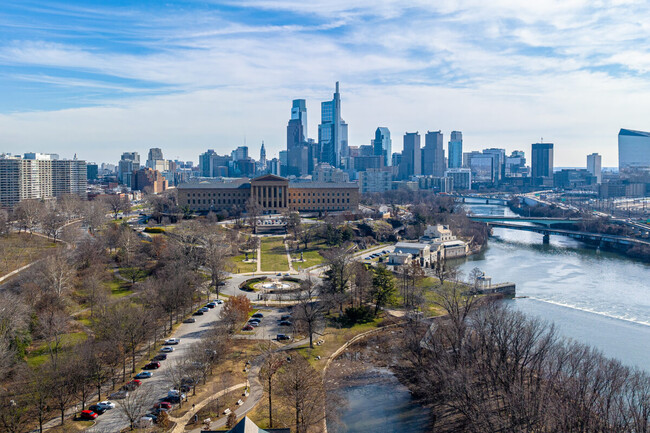
5 Best Neighborhoods to Rent a House in Philadelphia, PA
Looking to put down roots? Find the perfect neighborhood to rent a house in Philadelphia.
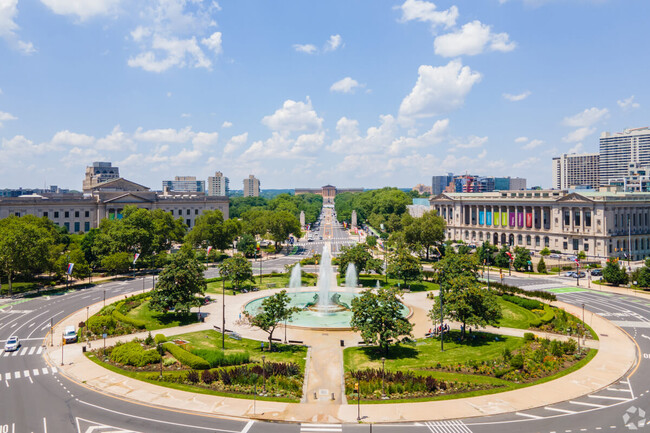
Is Philadelphia a Good Place to Live? Pros and Cons
Thinking about moving to Philadelphia? Here are some pros and cons of living in the City of Brotherly Love to help you decide.
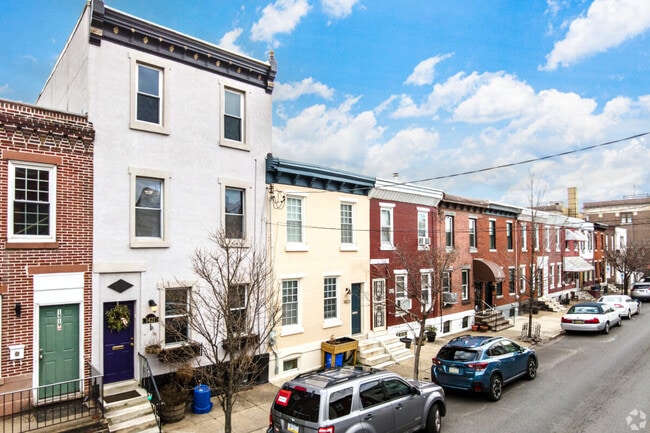
5 Amenities to Look for in Philadelphia, PA
Moving into a new place can be overwhelming, especially when narrowing down your list of must-haves in a rental. Here are some amenities to prioritize when apartment hunting in Philadelphia.
5 Best Neighborhoods in Philadelphia for Renters
Don’t know where to start your Philadelphia rental search? Here are five Philadelphia neighborhoods perfect for renters.
How to Find Off-Campus Housing in Philadelphia
Looking for off-campus housing in Philadelphia? Check out some of the best neighborhoods for each university to find the best fit.
Explore how walkable, bikeable, drivable, and transit-friendly Philadelphia, PA is for everyday living.
Exceptionally Walkable
Walkability
Good Public Transit
Transit
Fairly Drivable
Drivability
Fairly Bikeable
Bikeability

Public
Grades K-8
629 Students

Public
Grades K-8
595 Students
Public
Grades K-8
556 Students
Public
Grades PK-5
1,622 Students

Masterman Julia R Secondary School
Public
Grades K-12
1,183 Students
Public
Grades K-8
629 Students
Public
Grades K-8
595 Students
Public
Grades K-8
556 Students
Public
Grades 6-8
1,511 Students
Masterman Julia R Secondary School
Public
Grades K-12
1,183 Students
Public
Grades 9-12
2,329 Students
Masterman Julia R Secondary School
Public
Grades K-12
1,183 Students
High School of Engineering & Science
Public
Grades 6-12
851 Students
Public
Grades 9-12
1,225 Students

Public
Grades K-12
634 Students
 The GreatSchools Rating helps parents compare schools within a state based on a variety of school quality indicators and provides a helpful picture of how effectively each school serves all of its students. Ratings are on a scale of 1 (below average) to 10 (above average) and can include test scores, college readiness, academic progress, advanced courses, equity, discipline and attendance data. We also advise parents to visit schools, consider other information on school performance and programs, and consider family needs as part of the school selection process.
View GreatSchools Rating Methodology
Data provided by
GreatSchools.org
© 2026. All rights reserved.
The GreatSchools Rating helps parents compare schools within a state based on a variety of school quality indicators and provides a helpful picture of how effectively each school serves all of its students. Ratings are on a scale of 1 (below average) to 10 (above average) and can include test scores, college readiness, academic progress, advanced courses, equity, discipline and attendance data. We also advise parents to visit schools, consider other information on school performance and programs, and consider family needs as part of the school selection process.
View GreatSchools Rating Methodology
Data provided by
GreatSchools.org
© 2026. All rights reserved.
† Our analysis of utilities, groceries, transportation, healthcare, home prices, and other goods and services is sourced from the Cost of Living Index, a respected benchmark published by the Council for Community and Economic Research (C2ER) that provides a thorough overview of living expenses across different regions.
Rent data is provided by CoStar Group’s Market Trend reports. As the industry leader in commercial real estate information, analytics, and news, CoStar conducts extensive research to produce and maintain a comprehensive database of commercial real estate information. We combine this data with public record to provide the most up-to-date rental information available.
Consumer goods, services, and home prices are sourced from the Cost of Living Index published by the Council for Community and Economic Research (C2ER). The data on this page is updated quarterly. It was last published in September 2026.
Demographic information comes from Neustar and combines detailed address data with U.S. Census and American Community Survey statistics to produce reliable local estimates.