Median Age
40 Years
Largest Age Group
55-64 Years
Approximately 14% of Residents
Under 20
23%
Over 65
17%



Avg Rent
$1,327
Population
6,298
Renter Mix
26% Rent
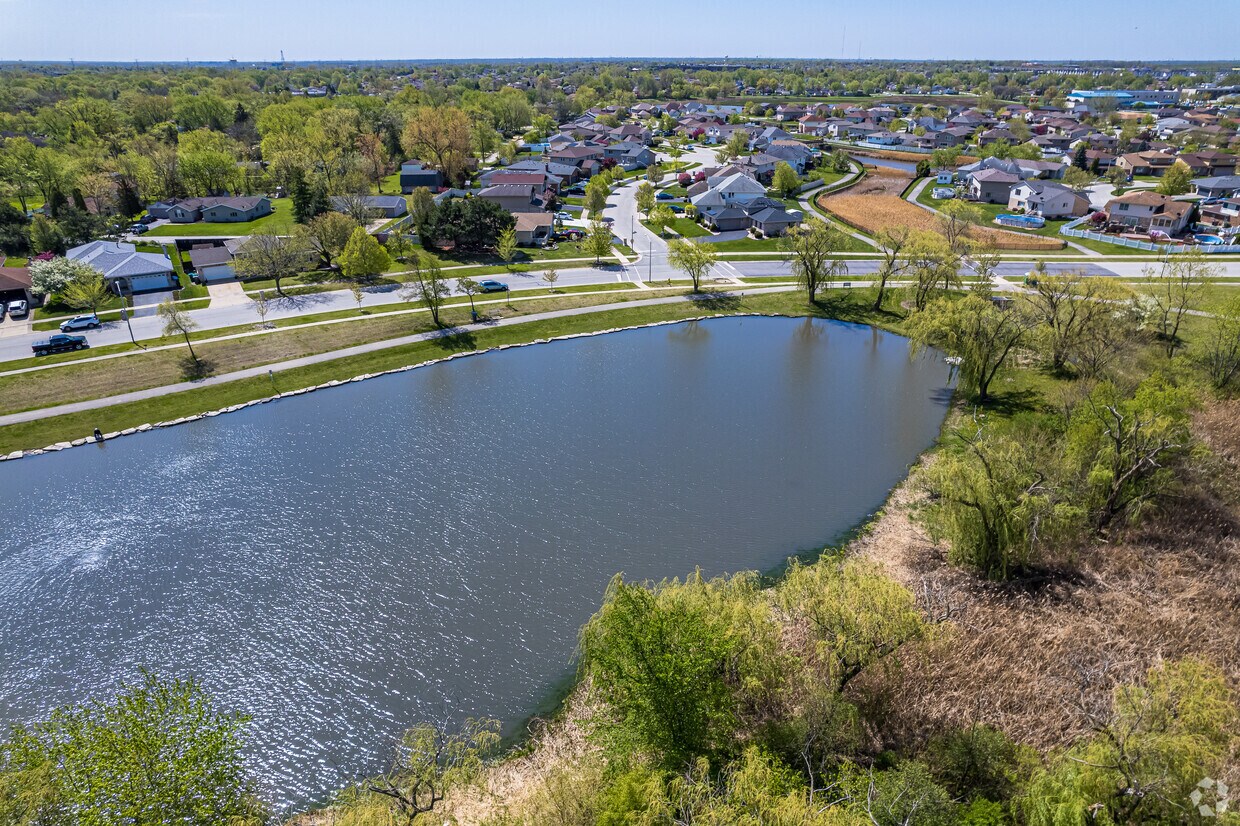
Orland Hills is a small Cook County village that packs a lot of convenience into its roughly two square miles, sitting squarely between Orland Park and Tinley Park about 40 minutes southwest of downtown Chicago. Moraine Valley Community College is the closest higher-education option, about 16 minutes away, while Saint Xavier University and Prairie State College are both reachable within half an hour.
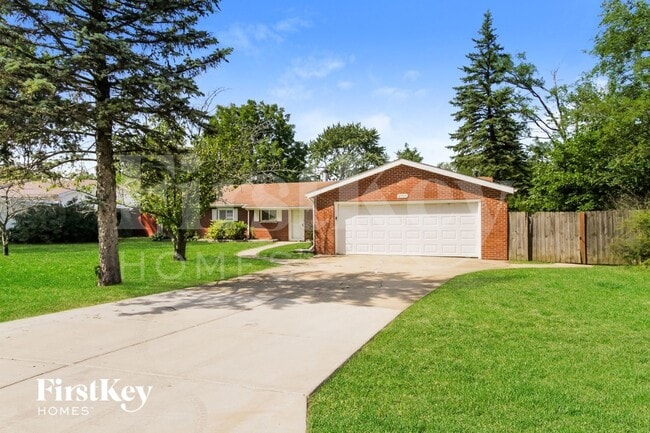
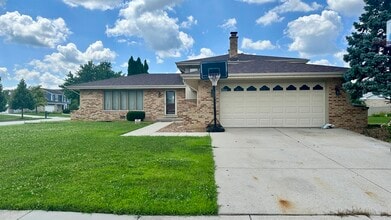
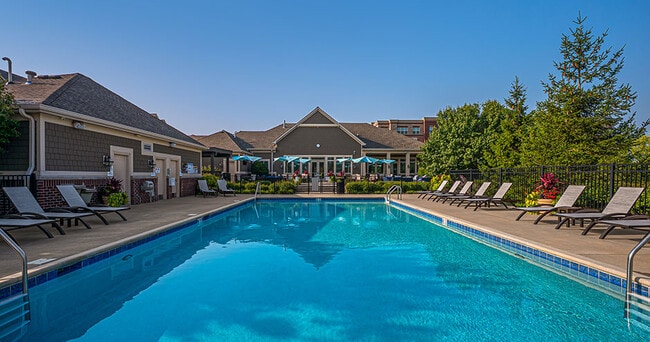
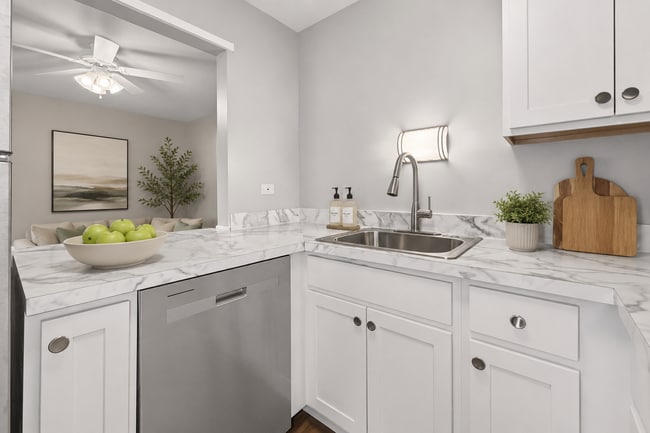
The rental landscape here leans toward apartment communities and single-family rentals rather than high-rises, keeping the streetscape low-key and residential. Orland Hills consistently comes in well below the Illinois state average for rent, making it one of the more accessible options in the southwest suburban corridor without requiring residents to sacrifice access to the commercial amenities available just across the border in Orland Park. Metra's SouthWest Service line has multiple stations within a short drive, connecting commuters directly to Union Station in Chicago. Kelly Park serves as the village's civic anchor, hosting community events year-round alongside its lake, recreation center, and tennis courts.
Lake Ashbourne is a great place to relax and enjoy the beautiful atmosphere.
A family of geese can be found walking in one of the parks in Orland Hills.
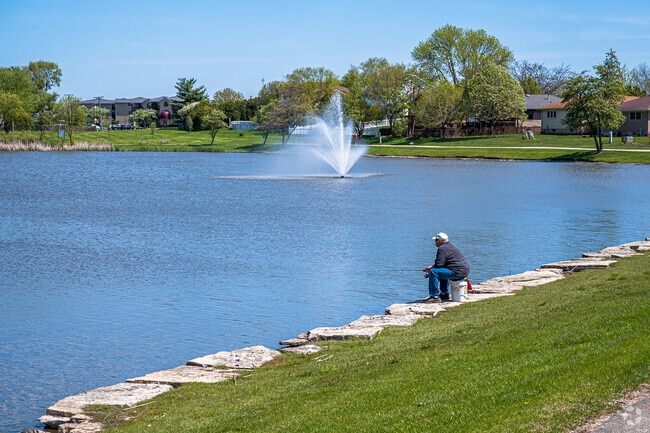
There are a few lakes in the Orland Hills area that offer great fishing opportunities.
Kelly Park has baseball and softball fields, tennis courts, and football fields.
Many people attended the Party in the Park in Orland Hills, IL.
Orland Hills is a great place to find restaurants with outdoor dining.
Median Household Income
$93,635
Average: $111,629
Education
2,229
Residents Have a Degree
Job Market
3,588
Workers Employed
Median Age
40 Years
Largest Age Group
55-64 Years
Approximately 14% of Residents
Under 20
23%
Over 65
17%
Housing Distribution
Orland Hills has more homeowners than renters.

Education Distribution
Review this city's overall education levels.

As of September 2026, the average apartment rent in Orland Hills, IL is $1,327 for one bedroom, and $1,710 for two bedrooms. Apartment rent in Orland Hills has increased by 1.6% in the past year.
Explore how walkable, bikeable, drivable, and transit-friendly Orland Hills, IL is for everyday living.
Fairly Walkable
Walkability
Exceptionally Drivable
Drivability
Moderately Bikeable
Bikeability

Public
Grades 9-12
2,199 Students

 The GreatSchools Rating helps parents compare schools within a state based on a variety of school quality indicators and provides a helpful picture of how effectively each school serves all of its students. Ratings are on a scale of 1 (below average) to 10 (above average) and can include test scores, college readiness, academic progress, advanced courses, equity, discipline and attendance data. We also advise parents to visit schools, consider other information on school performance and programs, and consider family needs as part of the school selection process.
View GreatSchools Rating Methodology
Data provided by
GreatSchools.org
© 2026. All rights reserved.
The GreatSchools Rating helps parents compare schools within a state based on a variety of school quality indicators and provides a helpful picture of how effectively each school serves all of its students. Ratings are on a scale of 1 (below average) to 10 (above average) and can include test scores, college readiness, academic progress, advanced courses, equity, discipline and attendance data. We also advise parents to visit schools, consider other information on school performance and programs, and consider family needs as part of the school selection process.
View GreatSchools Rating Methodology
Data provided by
GreatSchools.org
© 2026. All rights reserved.
† Our analysis of utilities, groceries, transportation, healthcare, home prices, and other goods and services is sourced from the Cost of Living Index, a respected benchmark published by the Council for Community and Economic Research (C2ER) that provides a thorough overview of living expenses across different regions.
Rent data is provided by CoStar Group’s Market Trend reports. As the industry leader in commercial real estate information, analytics, and news, CoStar conducts extensive research to produce and maintain a comprehensive database of commercial real estate information. We combine this data with public record to provide the most up-to-date rental information available.
Consumer goods, services, and home prices are sourced from the Cost of Living Index published by the Council for Community and Economic Research (C2ER). The data on this page is updated quarterly. It was last published in September 2026.
Demographic information comes from Neustar and combines detailed address data with U.S. Census and American Community Survey statistics to produce reliable local estimates.