10 Best Chicago Neighborhoods for Foodies
Looking to live in a Chicago neighborhood with great food? Explore some of the hotspots of Chicago’s food scene for the best deep-dish pizza, Italian beef, and Chicago-style hot dogs.




Area Guide
Little Italy is home to the University of Illinois at Chicago and is consequently also known as University Village. Therefore, if you’re a college student looking to rent, Little Italy is perfect for you. This neighborhood also borders the Illinois Medical District, making it a popular choice for healthcare employees as well as university students, faculty, and staff.
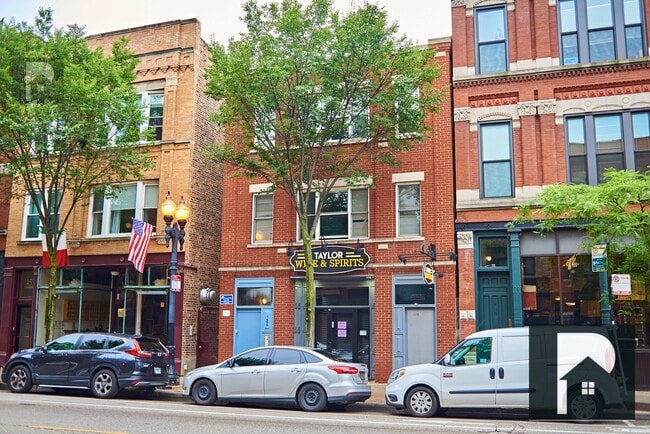
A bevy of restaurants, shops, bars, and cafes line West Taylor Street in Little Italy. Some of the neighborhood’s main attractions include the National Italian American Sports Hall of Fame and the historic statue of Christopher Columbus. Situated just two miles west of Downtown Chicago, Little Italy gives renters easy commutes via I-90, I-290, and the Blue Line.
A view of the skyline from a neighborhood park
A community garden during the spring in Little Italy
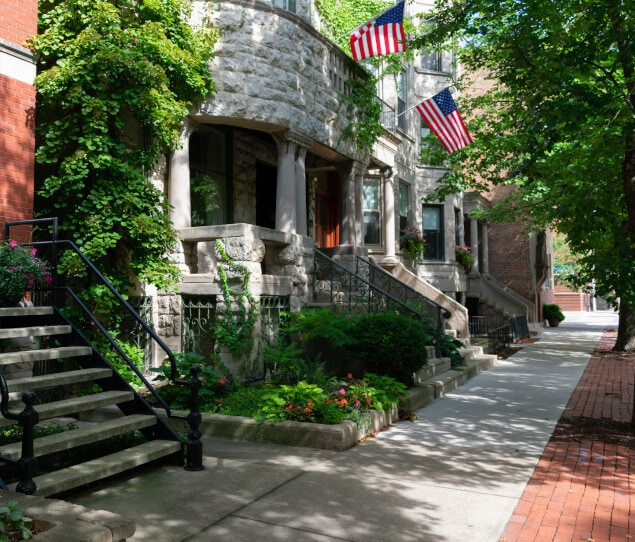
Shady street in Little Italy
As of September 2026, the average apartment rent in Little Italy is $1,944 for a studio, $2,122 for one bedroom, $2,560 for two bedrooms, and $2,787 for three bedrooms. Apartment rent in Little Italy has increased by 2.4% in the past year.
Studio
480 sq ft
Average Sq Ft
$1,944/month
Average Rent
1 BR
573 sq ft
Average Sq Ft
$2,122/month
Average Rent
2 BR
789 sq ft
Average Sq Ft
$2,560/month
Average Rent
3 BR
933 sq ft
Average Sq Ft
$2,787/month
Average Rent

10 Best Chicago Neighborhoods for Foodies
Looking to live in a Chicago neighborhood with great food? Explore some of the hotspots of Chicago’s food scene for the best deep-dish pizza, Italian beef, and Chicago-style hot dogs.

Renters Insurance vs. Landlord Insurance: Why You’re Not Covered by Your Landlord
Your landlord’s insurance protects the building—not you. See where renters insurance fills the gap.

How to Stay Organized When Messaging Multiple Landlords
Messaging multiple landlords? A simple system keeps your search organized and your dream unit within reach.
Explore how walkable, bikeable, drivable, and transit-friendly Little Italy - Chicago, IL is for everyday living.
Exceptionally Walkable
Walkability
Exceptional Public Transit
Transit
Fairly Drivable
Drivability
Exceptionally Bikeable
Bikeability
In Little Italy - Chicago, IL, daily errands are quick and hassle-free.
Supermarket Within a 5 Minute Walk
Groceries
Exceptional Restaurant Variety Nearby
Restaurants
Exceptional Café Variety Nearby
Cafes
Exceptional Variety of Shops Nearby
Shopping
Little Italy - Chicago, IL provides ample green space and fitness centers within easy reach.
Very Large Amount of Park Space Nearby
Parks
Good Wellness Amenity Variety Nearby
Wellness
Get a sense of what it’s like to live in Little Italy - Chicago, IL from everyday activity to noise and nightlife.
Vibrant Atmosphere
Vibrancy
Exceptional Nightlife Variety Nearby
Nightlife
Fairly Noisy
Quiet Score

† Our analysis of utilities, groceries, transportation, healthcare, home prices, and other goods and services is sourced from the Cost of Living Index, a respected benchmark published by the Council for Community and Economic Research (C2ER) that provides a thorough overview of living expenses across different regions.
Rent data is provided by CoStar Group’s Market Trend reports. As the industry leader in commercial real estate information, analytics, and news, CoStar conducts extensive research to produce and maintain a comprehensive database of commercial real estate information. We combine this data with public record to provide the most up-to-date rental information available.
Consumer goods, services, and home prices are sourced from the Cost of Living Index published by the Council for Community and Economic Research (C2ER). The data on this page is updated quarterly. It was last published in September 2026.
Demographic information comes from Neustar and combines detailed address data with U.S. Census and American Community Survey statistics to produce reliable local estimates.