Background Image

Area Guide

Illinois Medical District Chicago, IL

Bask in the benefits of city living and great healthcare

Urban Diverse Welcoming

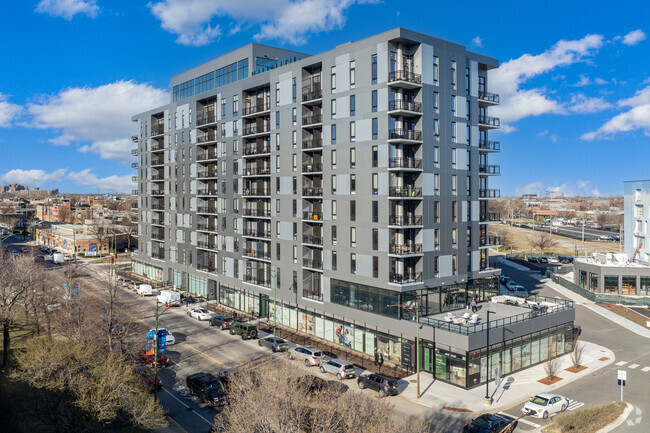
The Illinois Medical District sits on Chicago's Near West Side, less than two miles from the Loop. Spanning 560 acres, it is one of the largest urban medical campuses in the United States.

Four major hospitals, more than 40 healthcare-related facilities, active research labs, a biotech incubator, and two universities all operate within its boundaries. Rush University and the University of Illinois at Chicago give the neighborhood a distinctly academic and innovative energy.

The surrounding residential fabric is diverse and close-knit with a blend of long-established working-class blocks and newer mixed-use development. Little Italy, Greektown, the United Center, and Union Park are all within easy reach.

Urban, welcoming, and steadily growing, the Illinois Medical District balances the intensity of a world-class medical hub with the grounded character of an authentic Chicago neighborhood.

Learn More About Illinois Medical District

Getting Around

Very Walkable

Walkability

80 / 100

Exceptional Public Transit

Transit

90 / 100

Very Drivable

Drivability

80 / 100

Exceptionally Bikeable

Bikeability

90 / 100

Daily Essentials

Supermarket Within a 5 Minute Walk

Groceries

90 / 100

Exceptional Restaurant Variety Nearby

Restaurants

90 / 100

Exceptional Café Variety Nearby

Cafes

90 / 100

Great Variety of Shops Nearby

Shopping

80 / 100

Recreation

Large Amount of Park Space Nearby

Parks

70 / 100

Good Wellness Amenity Variety Nearby

Wellness

70 / 100

Local Vibe

Vibrant Atmosphere at Times

Vibrancy

50 / 100

Exceptional Nightlife Variety Nearby

Nightlife

90 / 100

Moderately Noisy

Quiet Score

40 / 100

Top Apartments in Illinois Medical District

Houses for Rent in Illinois Medical District

Living in Illinois Medical District

Restaurants

-

The Illinois Medical District benefits from one of the most celebrated dining corridors in Chicago right at its doorstep. Taylor Street in neighboring Little Italy delivers some of the city's most storied Italian-American dining. Greektown's Halsted Street corridor sits just to the northeast.

Within the district itself, a large daily population of hospital workers, students, and visitors supports a practical mix of cafes, fast-casual spots, and neighborhood lunch counters. Randolph Street's acclaimed restaurant row is only minutes away. Go there and you'll experience one of Chicago's premier dining destinations without ever leaving the Near West Side.

Transportation

-

The Illinois Medical District is exceptionally well-connected, earning a transit score of 90 and a bike score of 90. The dedicated Illinois Medical District Blue Line station and the nearby Polk Street Pink Line station place the Loop within minutes by rail, while multiple CTA bus routes and Divvy bike-share docking stations support everyday mobility throughout the neighborhood. Drivers benefit from direct access to I-290 and I-90, and Chicago Midway International Airport is just 14 minutes away by car, with O'Hare approximately 28 minutes out. Chicago Union Station and Ogilvie Transportation Center, both under 2.6 miles away, connect residents to the regional Metra commuter rail network, rounding out one of the most comprehensively connected transit profiles of any Chicago neighborhood.

Parks

-

The Illinois Medical District carries a parks score of 70, reflecting a large amount of green space accessible to residents. Douglas Park and Community Center is roughly three minutes away, offering athletic fields, a fieldhouse, and open lawns. Garfield Park and its stunning Golden Dome Field House sit about five minutes out, while Women's Park and Gardens provides a quieter nearby retreat. Union Park, directly adjacent to the neighborhood, serves as the most immediate everyday green space for residents and is within easy walking distance for a morning run or an afternoon outdoors.

Cost

-

Rental data for the Illinois Medical District shows a clear and consistent upward trend across all unit sizes. As of July 2026, studios average $1,663/month, one-bedrooms $2,057, and two-bedrooms $2,603, with year-over-year increases ranging from approximately 4.2% to 4.5% for smaller units. Three-bedroom units average $3,117/month. Pricing positions the district as moderately competitive relative to the broader Chicago market — more accessible than the Gold Coast or Lincoln Park, but reflecting steady demand driven by the large healthcare and academic workforce that prefers to live close to campus.

Shopping

-

The Illinois Medical District posts a shopping score of 80, with great retail variety for an institutionally anchored neighborhood. The closest dedicated retail destination is the Gateway at Illinois Medical District, under half a mile away, followed by the Ashland and Roosevelt corridor and the 1215–1225 S. Ashland Avenue strip, both within a two-minute drive. Groceries score a 90, reachable in under five minutes on foot, making daily errands remarkably convenient. For broader retail needs, the West Loop and Fulton Market District are immediately accessible, offering independent boutiques, design-forward shops, and specialty grocery options.

Highlights

-

One of America's largest urban medical campuses, the Illinois Medical District combines world-class hospitals, major research universities, and a resilient Near West Side community.

With exceptional transit, strong walkability, and immediate access to Little Italy, the West Loop, and the United Center, it delivers a uniquely connected and professionally anchored Chicago living experience.

Search Nearby Rentals

Methodology

† Our analysis of utilities, groceries, transportation, healthcare, home prices, and other goods and services is sourced from the Cost of Living Index, a respected benchmark published by the Council for Community and Economic Research (C2ER) that provides a thorough overview of living expenses across different regions.

Rent data is provided by CoStar Group’s Market Trend reports. As the industry leader in commercial real estate information, analytics, and news, CoStar conducts extensive research to produce and maintain a comprehensive database of commercial real estate information. We combine this data with public record to provide the most up-to-date rental information available.

Consumer goods, services, and home prices are sourced from the Cost of Living Index published by the Council for Community and Economic Research (C2ER). The data on this page is updated quarterly. It was last published in June 2026.

Demographic information comes from Neustar and combines detailed address data with U.S. Census and American Community Survey statistics to produce reliable local estimates.