Claremont

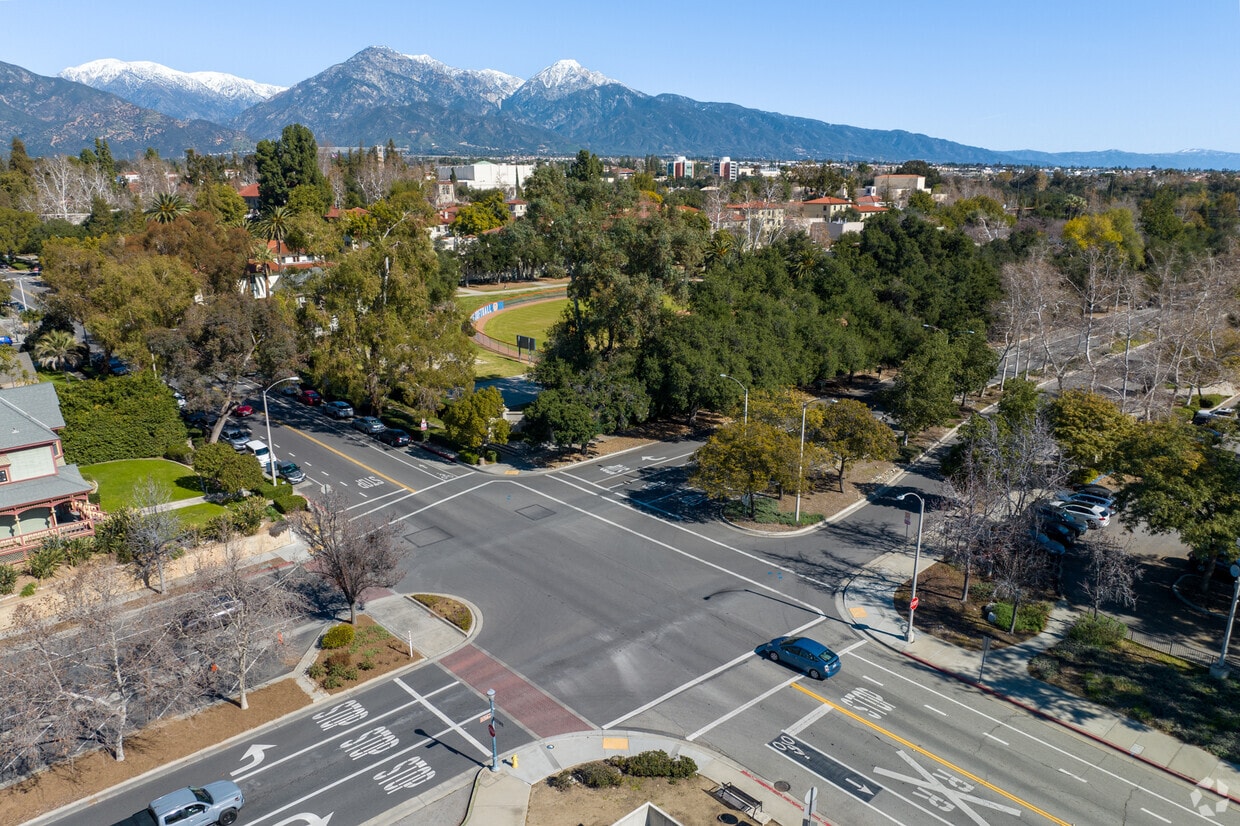
San Gabriel mountains surrounding the neighborhood of Claremont.
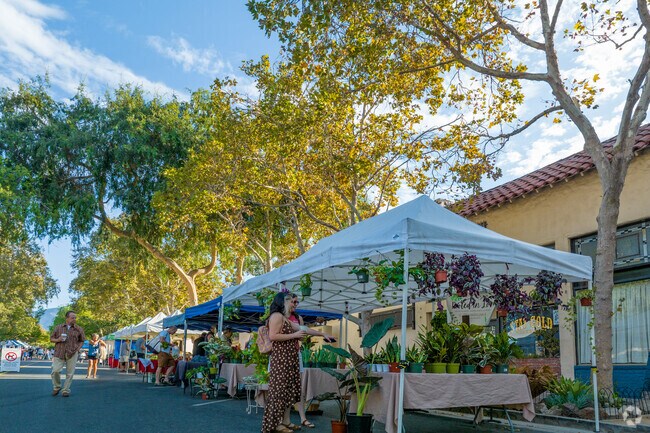
Farmer's Market held each Sunday from 8am-1pm
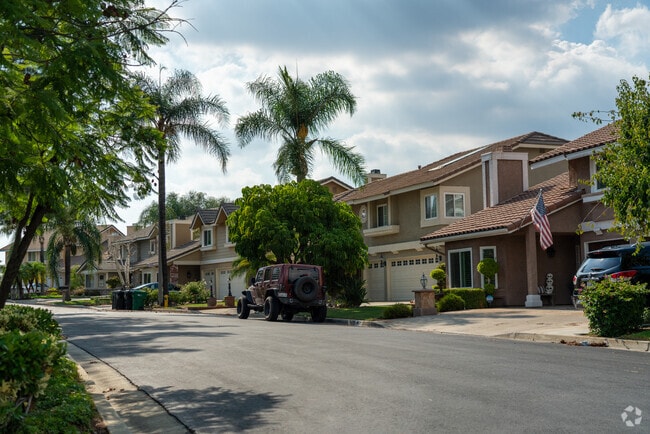
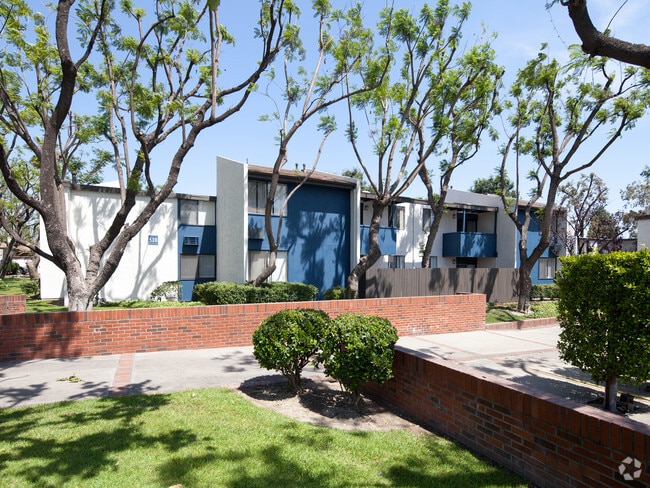
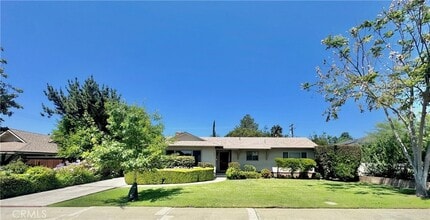
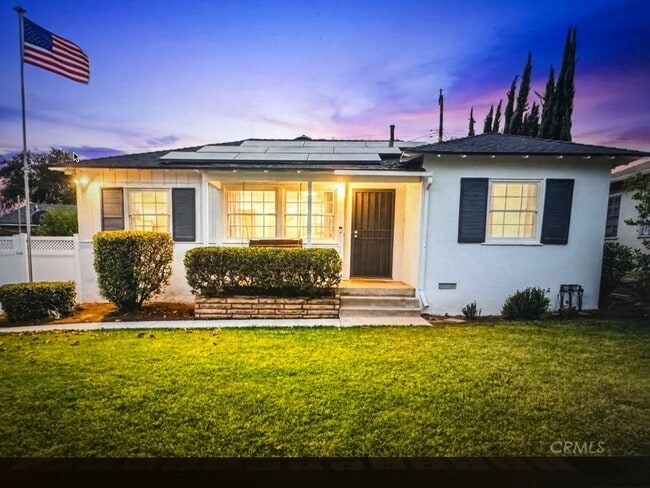
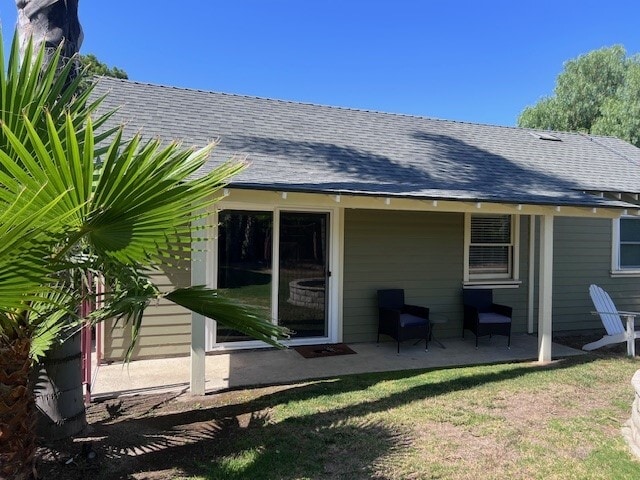
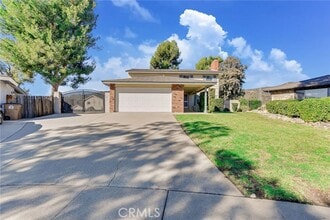
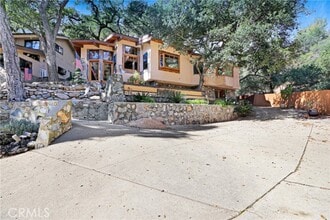
Homes in the Claremont neighborhood have a variety of styles.
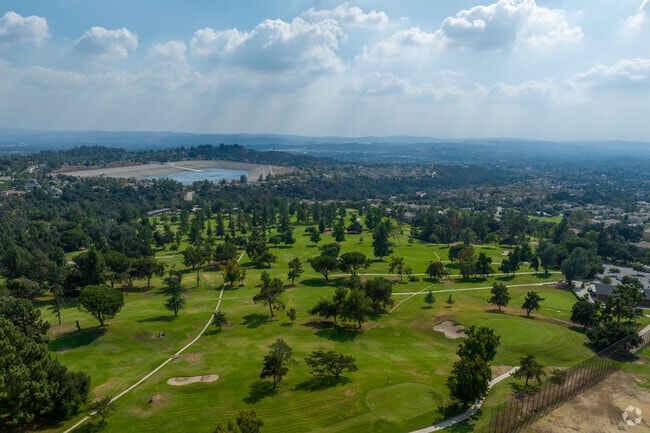
Marshal Canyon Golf Course is rated to be one of the best courses in the area.
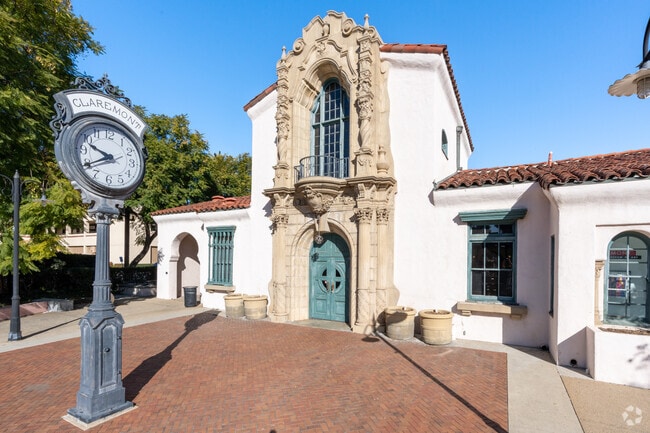
Claremont locals can reach further destinations using the Claremont Train Station.

Claremont, CA Area Guide

Avg Rent

$1,825

Population

35,938

Renter Mix

36% Rent

Welcome to the City of Trees and PhDs

Urban Colleges Mountainous Great Schools Affluent

Claremont wears its nickname, the City of Trees and PhDs, honestly — the San Gabriel Mountains frame nearly every street, and seven colleges give this small city a depth of thought and culture rarely found in a place this size. Sitting at the eastern edge of Los Angeles County in the Pomona Valley, Claremont carries the feel of a self-contained town with real connections to the broader region. The Claremont Colleges anchor intellectual and arts life here, with the Benton Museum of Art and Bridges Auditorium drawing residents throughout the year. The Claremont Folk Festival, held annually, reflects how seriously this community takes local culture and shared gathering.

The commercial heart, known locally as the Village, offers a walkable stretch of galleries, cafes, and the weekly Farmers and Artisans Market. Beyond it, neighborhoods like Claraboya sit close to Claremont Hills Wilderness Park, and the Russian Village Historic District preserves a quiet stretch of stone cottages with real architectural character. Renters will find a solid mix of apartment communities, historic bungalow conversions, and townhomes spread across the city. The Metrolink San Bernardino Line stops at the restored Claremont Depot, giving car-free commuters a practical connection to Los Angeles.

Explore the City

Homes in the Claremont neighborhood have a variety of styles.

Marshal Canyon Golf Course is rated to be one of the best courses in the area.

Claremont locals can reach further destinations using the Claremont Train Station.

Claremont locals and kids enjoy the playground at Memorial Park.

Check off your locally grown grocery list at the Farmers Market in Claremont.

Enjoy the many shops alongside the Packing House in Claremont.

Demographics

Median Household Income

$120,436

Average: $148,218

Education

15,503

Residents Have a Degree

Job Market

17,113

Workers Employed

Age Distribution
Get a sense of this area's population profile.

Median Age

38 Years

Largest Age Group

20-29 Years

Approximately 19% of Residents

Under 20

22%

Over 65

21%
Housing Distribution

Claremont has more homeowners than renters.

Renters
36%
Non-Renters
64%

Education Distribution

Review this city's overall education levels.

Bachelor's or Higher
40%
Other Education
60%

Rent Trends

As of April 2026, the average apartment rent in Claremont, CA is $1,742 for a studio, $1,825 for one bedroom, $2,253 for two bedrooms, and $2,908 for three bedrooms. Apartment rent in Claremont has decreased by -2.9% in the past year.

Property Type
Average Rent
Average Sq Ft
Apartment
$1,825/month
589 Sq Ft
House
$4,254/month
1,885 Sq Ft
Condo
$3,375/month
1,461 Sq Ft
Townhome
$3,675/month
1,594 Sq Ft
See Rental Market Trends in Claremont, CA

Getting Around

Fairly Walkable

Walkability

40 / 100

Minimal Public Transit

Transit

10 / 100

Exceptionally Drivable

Drivability

90 / 100

Fairly Bikeable

Bikeability

50 / 100

Schools

Sycamore Elementary

Public

Grades K-5

350 Students

Chaparral Elementary

Public

Grades K-5

648 Students

Sumner Elementary

Public

Grades K-5

444 Students

Condit Elementary

Public

Grades K-5

603 Students

Vista del Valle Elementary

Public

Grades K-5

264 Students

El Roble Intermediate

Public

Grades 6-8

952 Students

Danbury Special Education School

Public

Grades K-8

47 Students

Claremont High

Public

Grades 9-12

2,065 Students

Points of Interest

Parks and Recreation

  • Rancho Santa Ana Botanic Garden
  • Pitzer College Arboretum
  • Alf Museum of Paleontology
  • Millikan Planetarium
  • San Dimas Canyon Nature Center

Airports

  • Ontario International
  • John Wayne/Orange County

Top Apartments in Claremont

Houses for Rent in Claremont

Living in Claremont

History

-

Spanish explorers arrived in Claremont in 1771, displacing the Serrano Indians who had long occupied the land at the foothills of the San Gabriel Mountains. The real foundation of modern Claremont came in 1883 with the development of Pomona College, which secured the town's future as a center for education and commerce. Incorporated in 1907, the city grew into one of California's important citrus-growing centers, a past still visible in the historic Claremont Packing House, now transformed into a community hub. The Claremont Colleges consortium today houses several museums, including the Clark Humanities Museum and the Benton Museum of Art, preserving the city's intellectual legacy.

The Russian Village Historic District preserves a quiet collection of stone cottages that anchor the city's architectural character. Downtown, the restored Claremont Depot serves Metrolink commuters while standing as a reminder of the railroad's role in the region's growth. The Padua Hills Theatre, a historic venue, continues to draw audiences. Tree-lined streets throughout the city reflect early planning decisions that earned Claremont its nickname. Annual events like the Claremont Folk Festival keep residents connected to the city's cultural roots.

Restaurants

-

Claremont's dining scene centers on the Claremont Village, a walkable downtown where residents find a range of cuisines from Italian and Portuguese to Korean-influenced fusion and health-forward California fare. The college-town atmosphere keeps many restaurants approachable in price while maintaining genuine variety, drawing both students and longtime residents to the same tables. The transformed Claremont Packing House adds a community gathering dimension to the food landscape, hosting local vendors and events that reflect the city's mix of history and contemporary culture. On Saturdays, the Claremont Village Farmers and Artisans Market brings certified organic produce and local goods directly to residents, reinforcing a food culture rooted in quality and community.

Transportation

-

Claremont is a car-dependent city with a walk score of 40, so most residents rely on personal vehicles to handle daily errands. Interstate 10 runs along the southern edge of the city, while SR-210 cuts through the north, giving drivers straightforward access to Pomona, Rancho Cucamonga, Pasadena, and downtown Los Angeles about 33 miles west. For those who prefer to leave the car behind, the Metrolink San Bernardino Line stops at the historic Claremont Depot, offering a roughly one-hour ride into LA Union Station. Foothill Transit bus lines extend connections to neighboring cities throughout the Inland Empire. Cyclists benefit from on-street bike routes and priority zones near Claremont Village and the Colleges, and the Claremont Hills Wilderness Park fire road network doubles as a recreational corridor for riders and hikers alike. Ontario International Airport is a short drive southeast, adding a convenient regional travel option.

Parks

-

Claremont's position at the foothills of the San Gabriel Mountains gives residents immediate access to outdoor spaces that range from neighborhood parks to open wilderness. Claremont Hills Wilderness Park draws hikers and mountain bikers to an extensive network of fire roads and trails with sweeping views of the Pomona Valley. The 86-acre California Botanic Garden offers a quieter outdoor experience focused on native plants and designed landscapes. Memorial Park serves as a community anchor, hosting summer concerts and seasonal events, while Cahuilla Park provides ball fields, a basketball court, and a skate park. Families head to Higginbotham Park for its distinctive steam train playground, and dog owners appreciate the off-leash area at Rancho San Jose Park. With more than 20 parks citywide, residents can access green space at no charge.

Cost

-

Claremont carries a median household income of around $120,000, reflecting a relatively affluent community by Inland Empire standards. Average rent for a one-bedroom sits at approximately $1,824 per month, with studios averaging $1,754 and two-bedrooms reaching $2,242. Those figures track below the California statewide average for one-bedrooms. Rents have held largely steady, with year-over-year increases modest across all unit sizes. The housing mix leans toward single-family homes, particularly near the Colleges, with apartment options concentrated closer to the Village and transit corridors.

Shopping

-

Claremont Village serves as the city's primary shopping destination, a walkable downtown district where boutiques, galleries, and specialty retailers line tree-shaded streets near the Claremont Colleges. The area, known locally as the Village, draws both residents and visitors with a mix of independently owned shops oriented toward everyday needs and browsing. The Claremont Packing House adds a mixed-use dimension to the district, blending retail and gathering space in a repurposed historic structure. On Saturdays, the Claremont Village Farmers and Artisans Market brings certified organic produce, handmade goods, and local crafts to the area, rounding out the Village as a well-established retail and community hub.

Search Nearby Rentals

Methodology

† Our analysis of utilities, groceries, transportation, healthcare, home prices, and other goods and services is sourced from the Cost of Living Index, a respected benchmark published by the Council for Community and Economic Research (C2ER) that provides a thorough overview of living expenses across different regions.

Rent data is provided by CoStar Group’s Market Trend reports. As the industry leader in commercial real estate information, analytics, and news, CoStar conducts extensive research to produce and maintain a comprehensive database of commercial real estate information. We combine this data with public record to provide the most up-to-date rental information available.

Consumer goods, services, and home prices are sourced from the Cost of Living Index published by the Council for Community and Economic Research (C2ER). The data on this page is updated quarterly. It was last published in February 2026.

Demographic information comes from Neustar and combines detailed address data with U.S. Census and American Community Survey statistics to produce reliable local estimates.