Published on
January 22, 20262026 Multifamily Outlook Offers Signs for Optimism After Challenging Year
After a tough year marked by decelerating rent growth, the multifamily market is on track to begin recovering in 2026, according to a recent Apartments.com webinar presented by CoStar’s Grant Montgomery. The national director of multifamily analytics for CoStar offered the highlights of 2025 performance and provided an analysis of market trends to come in the year ahead.
Supply slowdown coincides with declining demand
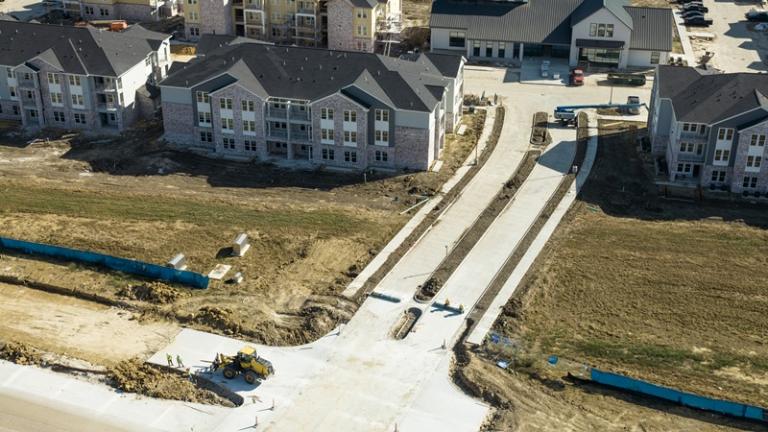
After peaking at over 700,000 units delivered in 2024, the multifamily supply pipeline has been slowing down. This year, deliveries are expected to fall dramatically by over 40 percent, dropping below even the pre-pandemic average.
At the same time, however, demand is also on the decline. While demand in 2025 was strong, it fell below that of the previous year. This downward trend will continue in 2026, driven by a slowdown in population growth and the softening labor market. Absorption this year is projected to drop 15 percent below pre-pandemic levels.
High vacancy rate pushes up concession use
The multifamily market is still struggling to absorb the flood of new supply added over the last few years. In the most oversupplied Sun Belt markets, vacancy rates remain in double digits, and the national average rose 20 basis points to reach 8.5 percent by the end of 2025.
While vacancy in 2026 is not expected to drop significantly, its projected plateau signals “the first signs of stabilization for the multifamily market,” Montgomery said.
In an effort to fill their vacancies, multifamily owners and operators have embraced concessions. Concession use has skyrocketed above the pre-pandemic average of 17 percent. Today, 47 percent of advertised units include concessions, Montgomery said. This is a notable jump from 34 percent this time last year.
In 2026, this rate is expected to trend downwards but stay above the pre-pandemic average.
Rent growth to remain muted, with scattered performance
Even paired with moderating demand, the slowdown in new supply additions is expected to gradually ease the supply/demand imbalance. Montgomery anticipates market conditions to become more balanced in the second half of 2026, and a few winners are projected to outperform the nation.
Mid-priced properties have seen asking rents rise by 0.5 percent year over year, while rent growth for luxury properties has remained in negative territory. Mid-priced properties, also known as three-star buildings according to the CoStar rating system, have benefited from more limited supply additions, as four- and five-star properties make up nearly 70 percent of the multifamily construction pipeline.
The Midwest and Northeast regions, along with several major California markets, have also outperformed due to limited supply conditions. Recovery for the Sun Belt, which has borne the brunt of new supply additions, is expected to be slow.
At the national level, CoStar’s cautiously optimistic outlook for 2026 shows rent growth modestly increasing to around 1 percent by year’s end. This would mark a clear reversal from 2025, when rent growth decelerated to close the year nearly flat at 0.3 percent.
“2026 has the potential to mark a turning point for the multifamily sector,” Montgomery said, “with conditions conducive to incremental rent improvement and a gradual return to growth.”