Published on
Even as the supply wave continued to recede last year, the multifamily market faced decelerating rent growth and above-average vacancy. What does 2026 hold for apartment owners and operators? Explore the latest CoStar predictions for the sector in the year ahead.
1. Rent growth will accelerate — but slowly
Following its skyrocketing rise during the pandemic, rent growth at the national level has remained relatively weak since 2023. In 2025, annual rent growth averaged 1.3 percent in the first quarter and proceeded to fall each subsequent quarter.
In 2026, this trend of flattening and declining rent is expected to break, with rent growth finally beginning to accelerate, thanks to the slowdown in supply additions. The trendline, however, will be muted. Rent growth is projected to rise to a modest 1 percent by the end of this year, according to the latest CoStar data as of January.
2. Bay Area markets will continue to dominate
The San Francisco and San Jose multifamily markets rocketed up to the top of rent growth charts last year, remaining among the top five markets throughout the year, with San Francisco retaining the #1 spot every quarter. Rent growth in these markets far outperformed the national average, with San Francisco posting 5.9 percent by year’s end and San Jose seeing 3.4 percent.
At the same time, vacancy in these markets fell to only 4.6 percent, notably below the national average of 8.5 percent.
In 2026, these San Francisco Bay Area markets are poised to continue to outperform.
Tech-heavy San Francisco and San Jose have benefited from the boom in AI investment. Along with return-to-office mandates and quality-of-life improvements in the region, this trend has contributed to a rising population and strength in renter demand. Paired with limited development in the region, the strong demand has driven up rents faster here than in any other major markets in the country.
Looking ahead, these markets will continue to outperform the nation, and fellow Bay Area and Northern California markets will also see a strong performance.
Even the East Bay, which has lagged behind San Francisco and San Jose with rent growth slightly above the national average, is expected to see rent growth accelerate. As recent supply additions are absorbed by strong renter demand, the East Bay market is projected to see rent growth expand to nearly 2 percent by year’s end.
3. The supply pipeline will slow down
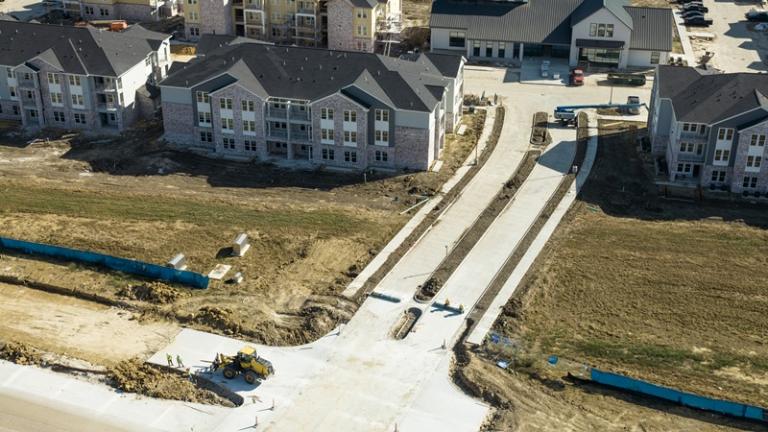
In 2024, a 40-year record number of new multifamily units were added to the market. The supply wave has crested, and 2025 saw new additions drop by about 25 percent. In 2026, the slowdown is expected to accelerate further, with new additions dropping by over 40 percent compared to the previous year.
This rapid slowdown in new supply additions will help ease the imbalance between supply and demand, although it will likely take years for demand to fully absorb the supply from the last few years’ aggressive development pipeline.
4. Rising vacancy rate will plateau
Thanks to above-average supply paired with moderate demand, the national multifamily vacancy rate in 2025 rose from 8.3 percent in the first quarter to 8.5 percent by the end of the year.
In the year ahead, vacancy will remain around the 8.5 percent mark, with the potential to drop slightly to 8.4 percent in the second half of the year.
It won’t be until 2027 or even 2028 that vacancy is projected to fall below 8 percent. Only at this point is the supply overhang expected to be absorbed sufficiently to reduce the vacancy rate nationally to 7.8 or 7.9 percent.
5. Demand will be moderate
Mid-2024 saw a significant rise in absorption, with a peak of over 167,000 units absorbed in the second quarter. Since then, absorption has fallen slightly, with over 153,000 units absorbed in the same period the following year.
2026 is expected to follow the same trendline, with absorption peaking for the year in the second quarter but dropping compared to the year before. According to the latest CoStar projection, the second quarter of 2026 will see absorption fall to nearly 73,000 units.
Inflation, economic uncertainty, and reduced household formation will contribute to the decline in renter demand.
6. Concession use will remain elevated
In the face of high vacancy, property owners and operators often rely on concessions to draw in new residents and meet their occupancy goals. In June of 2022, when renter demand was soaring in the midst of pandemic-era migration, only 7 percent of units were advertised with concessions.
Since then, concession use has risen dramatically, as vacancy has increased and rent growth has dropped. Concession use in January reached over 46 percent, a steep increase compared both to the pandemic-era decline and the pre-pandemic norm around 16 percent.
In line with the plateau in vacancy, concession use in 2026 is expected to remain high but not rise significantly.
Properties are expected to see the most success from rent discounts, compared to gift cards and gifts. In a recent Apartments.com survey, renters expressed the most interest in specials prorated over the course of a 12-month lease term and free one-month rent of the same monetary value. Over 72 percent of renters in the latest Apartments.com survey said they would be motivated by the prorated discount, while 71 percent said they would be motivated by the one-time discount.
7. The Sun Belt will continue to struggle in the wake of its supply overhang
As rent growth begins to accelerate this year, fewer markets are expected to remain in negative territory, but the transition will be gradual. The Sun Belt region, where the development pipeline was more active than elsewhere during the post-pandemic supply wave, will continue to face the effects of the supply glut.
For example, the Tampa market is projected to see negative rent growth continue through the end of the year, while San Antonio’s rent growth is expected finally rise into positive territory by the fourth quarter.
Get the full outlook
For more analysis of the multifamily market, join the upcoming webinar with CoStar’s Grant Montgomery. You’ll get an overview of the top trends from 2025 and a look at what’s coming in the year ahead.