Published on
The rent growth deceleration trend that has characterized 2025 continued into November, with year-over-year rent growth falling to 0.7 percent nationally, according to the latest CoStar data. Asking rents fell month over month to $1,709, marking the fifth consecutive month of flat or negative rent growth and the steepest November decline in over 15 years, although the decline was less steep than the drop from September to October.
The deceleration trend continues
At the national level, asking rents have been increasing year over year, but the rate of annual growth has steadily decelerated since March. The multifamily market typically follows a seasonal pattern, with asking rents rising in line with increased demand during the spring and early summer, followed by a slowdown beginning in late summer and continuing through fall and winter.
These seasonal trends have been exacerbated this year, with September, October, and November each seeing the steepest monthly declines for those months in 15 years.
Regional winners stay strong

The Midwest, which overtook the rest of the country for rent growth in 2022 and has remained in the top place ever since, posted 2.2 percent year-over-year rent growth in November.
The region, where post-pandemic development has remained relatively limited, has benefited from low supply compared to demand. The Northeast, which has been characterized by a similarly healthy balance of supply and demand, maintained its #2 spot with 1.7 percent rent growth.
Some of the top-performing Midwest and Northeast markets include Chicago, Pittsburgh, New York, Minneapolis, and Cincinnati.
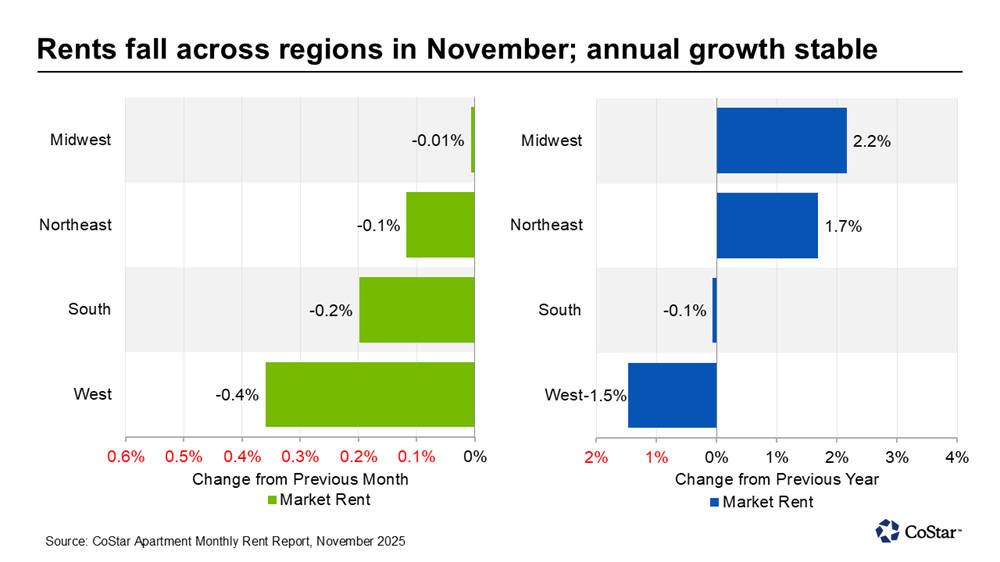
On the other hand, the South dipped back into negative territory, with annual rent growth of negative 0.1 percent in November. The West continued to lag the furthest behind the nation. Rents in this region dropped by 1.5 percent year over year.
Rents in the Bay Area grow by 5x to 8x the national average
At the metro level, two Bay Area markets, which rocketed up to the top of the rent growth charts this year, maintained their dominance. San Francisco, which has kept its #1 position for several months, posted eight times the national average for rent growth. The San Francisco multifamily market, which extends beyond the bounds of the city itself, saw annual rent growth of 5.6 percent. Nearby San Jose came in second with 3.6 percent rent growth.
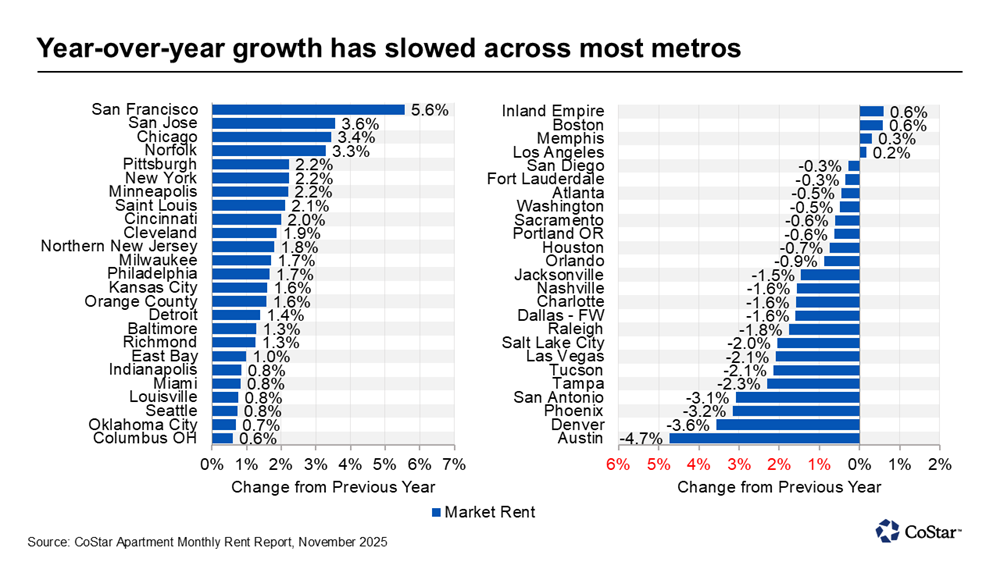
Leading the Midwest, Chicago posted annual rent growth of 3.4 percent, nearly five times the national average.
Rounding out the top five markets are Norfolk, Virginia; Pittsburgh; and New York, which saw rents increase annually by 3.3 percent, 2.2 percent, and 2.2 percent, respectively.
Oversupplied Austin sees rent growth slip further
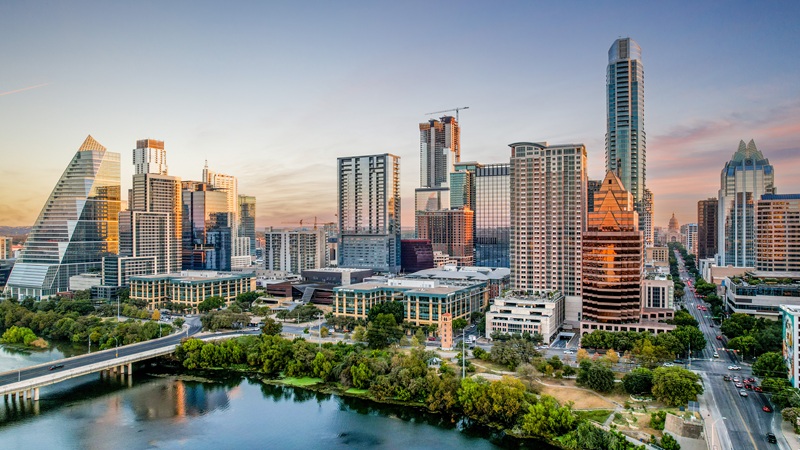
At the other end of the scale, rents continued to fall in Austin. This oversupplied Texas market has struggled with a mismatch of supply and demand. Rent growth has remained negative in the Texas capital, and in November the decline deepened to negative 4.7 percent.
Austin was joined at the bottom of the rent growth charts by Denver, where rents declined by 3.7 percent. Sun Belt markets Phoenix, San Antonio, and Tampa rounded out the bottom five, with negative 3.2 percent, negative 3.1 percent, and negative 2.3 percent, respectively.
In general, the markets that have seen the greatest declines have been those with the highest levels of new construction, although in some markets, weakening demand has contributed to the slump in asking rents.
Will rent growth finally begin to accelerate next year?
Where is the multifamily market going in 2026? Check out Apartments.com’s 11 predictions for the year ahead, including the latest projections about rent growth, new supply, and concession use in the year ahead.