

As the academic year starts, the struggle of finding a good spot to study in your apartment also begins. Beds get covered in books and papers, couches become laptop study spots, and dining room tables are used for group study sessions. However, where you study matters as it shapes your focus, creates a good habit, and stimulates your brain. That’s why having a dedicated desk helps you study better.
Creating a productive study space can be tricky when every apartment and living situation is different. Whether you live in a studio or share an apartment with roommates, here’s how to create study spaces that work across a variety of floor plans.
Studio Apartments

Studios are a compact option where you sleep, study, eat, and relax all in one space. It’s still important to carve out a spot solely for studying because when the same spot has dual functions, your brain can have trouble switching between purposes. Creating distinct zones helps your mind differentiate between the roles of each space and switch tasks with ease.
To save space, it can be tempting to just use your couch or dining table as a study area. However, having a dedicated desk allows you to truly have a place where you can focus. If you have to use the couch or dining table then make a setup that you can clear away to seamlessly transition between work and relaxation.
Zoning strategies for studios
- Room dividers: Physically separating your study space from the rest of your studio trains your brain to associate that spot with work. There are plenty of ways to do so, from room dividers and shelving units to tension rods with curtains or beaded strands. These can be folded away or pushed to the side when you want to open the room back up.
- Convertible or folding desks: Studios are limited on space, but that doesn’t mean you can’t have a study spot. Convertible or folding desks allow you to have your dedicated workspace while being able to put it away and use that space for other purposes. Popular options include desks that collapse completely, fold into a shelf, or compress into a flat profile.
One-Bedroom Apartments
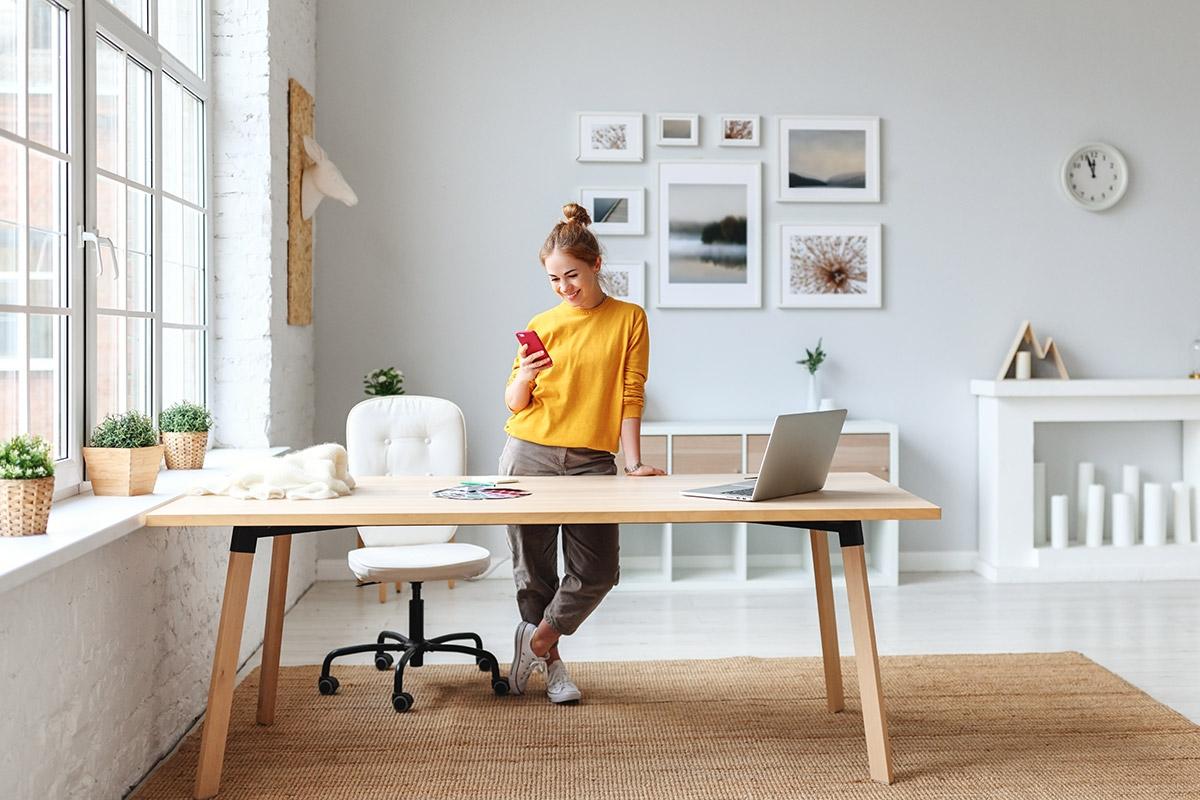
One-bedroom apartments give more options of where you can put your desk, but the decision can still be a challenging one. You could put it in your living room, so your bedroom is reserved for sleeping and relaxing. However, if there’s lots of activity in the living room, then you might want to put your desk in the quiet of the bedroom so you can focus without distractions. The choice is up to you, and you aren’t locked into it; try it one way and if you don’t like it, you can always move it.
Zoning strategies for one-bedroom apartments
- Try different desk positions: Feng shui design recommends that you should place your desk so your back is against the wall instead of facing it. This allows you to feel more grounded and secure. That same reason is why facing the door and windows are ideal positions as well. If you can’t face the window, then try sitting perpendicular to it instead of putting it at your back. However, these are only guidelines as the most important part is putting your desk where it will fit.
- Set up a dedicated nook: Setting up a desk in the corner of a room, an alcove in the hallway, or in a small closet naturally creates a dedicated study spot that’s out of the way without the need for room dividers. Put a rug under the space to help it really feel separate.
Shared Apartments

Shared apartments bring an additional challenge to finding the perfect study spot: roommates. Common spaces are shared amongst everyone, so you may not be able to or want to put your study space there. For shared spaces, the bedroom is often a better location for a quiet, distraction-free study spot. If there is still noise, noise canceling headphones might be a smart investment, or you can chat with your roommates about quiet study hours.
Zoning strategies for shared apartments
- Create clear separation between spaces: Since it is in your bedroom, you still want it to feel separate from your bed. Treat your room like a studio apartment and put up a room divider to section off the study space.
- Use a built-in or folding desk: Whether it’s in a closet, wardrobe, or bookshelf, built-in or convertible desks allow you to have a spot that you can fold away when you’re done. This frees up your bedroom, but also eases the transition between working and relaxing because your desk is out of sight.
- Establish a ritual: If you have to use a communal space, then create a ritual that gets your brain in the studying mindset. It could be turning on a lamp, setting up a folding desk, or organizing your materials in a certain way. This also allows you to put away your studying supplies so that you can use the space for other purposes.
Level-Up Your Study Space

As you can spend a lot of time studying, it’s important to make it a space you’ll enjoy being in. Here are some renter-friendly ways to upgrade your study setup:
- Choose furniture that works for your space like smaller or convertible desks and open shelves that double as a room divider
- Make the most of your vertical space with renter-friendly adhesive (like command strips) to hang up hooks, peg boards, cork boards, and other items on your wall
- Design the space in your style so you enjoy spending time there
- Keep everything organized with cable management strips or boxes and desk organizers
- Get an ergonomic chair so you can study comfortably
- Use the right colors, ones that make you happy or shades that help you focus, like reds that evoke energy or greens that provide a sense of familiarity and encourage focus
- Add some indoor plants to bring some life to the space
Find Your Perfect Study-Ready Space on Apartments.com
Whether you're searching for a studio where you can carve out a dedicated study nook or a shared apartment where you'll have your own quiet bedroom retreat, finding the right space starts with Apartments.com. Browse thousands of listings with detailed floor plans, high-quality photos, 3D tours, and more so you can find a space that works for your study setup before the semester kicks off.
FAQs
How do you create a good apartment study space?
The most important principle is having a dedicated spot used only for studying. When a space serves multiple purposes, your brain struggles to switch between them. Use zoning strategies like room dividers, shelving units, or curtains to physically separate your study area from the rest of your living space. Make it somewhere you'll enjoy spending time by adding personal style, indoor plants, good organization, and an ergonomic chair for comfort during long sessions.
How do you create a small study space?
In a small apartment or studio, a convertible or folding desk is your best friend. These options collapse completely, fold into a shelf, or compress flat to let you have a dedicated workspace without permanently sacrificing square footage. If a full desk isn't possible, set up a consistent arrangement at your dining table or couch that you can pack away cleanly, helping your brain still associate that setup with focused work.
What are some clever ideas to maximize space in a studio apartment?
Use open shelving units that pull double duty as both storage and a room divider, visually carving out a study zone without eating up extra floor space. Tension rods with curtains or beaded strands create separation and can be pushed aside when you want to open the room back up. Folding desks are another smart pick, since they disappear completely when not in use. Going vertical with renter-friendly adhesive strips to hang organizers, pegboards, and hooks also frees up valuable surface and floor space.
What is the best layout for a study room?
Feng shui principles suggest placing your desk with your back against a wall rather than facing it, as this grounds the space and creates a sense of security. Facing the door or a window is ideal. If a window view isn't possible, sitting perpendicular to it is the next best option. Setting your desk in a corner, hallway alcove, or converted closet nook naturally creates a sense of separation and focus. Finishing the space with a rug underneath helps anchor the area and make it feel distinct from the rest of the room.


