

The College Board, in its Trends in College Pricing report, found that the average tuition for a public four-year in-state school in 2025 was $11,950. This is $340 higher than the previous school year. While undergraduate and graduate students struggle to afford monthly expenses, their federal borrowing continues to increase, rising to $275.1 billion in 2025. One way to stay aware of how much you’re spending on housing costs every month as a student is to compare your average rent with how much it costs to attend your university.
This article covers the schools with the highest and lowest tuition costs, how many credit hours a month’s rent could cover, and where student renters can find the most value in college towns across the country.
Tuition Isn’t the Only Cost
The Total Cost of Attendance (COA) refers to the tuition and fees required to attend college. The costs included in the COA are tuition and fees, housing and food, books and supplies, transportation, and other expenses. In 2025, the College Board reported that the average COA was $30,990.
The Higher Education Act was passed in 1965 and requires colleges that participate in federal aid programs to make their tuition costs and total COA public to keep prospective and enrolled students informed about university costs. While the total COA is an important cost to consider, students should also think about other monthly expenses that can eat into their already limited budgets.
What College Students Actually Spend in a Year

The Bureau of Labor Statistics conducts an annual survey called the Consumer Expenditure Survey. This survey collects data on buying habits, spending patterns, and income levels across demographic characteristics in the United States.
Based on its 2024 reports, people under the age of 25 spend the following amounts on expenses that don’t involve school, tuition, or financial aid debt:
- Housing: $12,146/year
- Transportation: $9,955/year
- Food/groceries: $6,559/year
- Entertainment: $1,849/year
- Healthcare: $1,606/year
The survey highlights that the highest annual expense people under the age of 25 must budget for is housing. Although this survey was conducted in 2024, housing affordability remains a prevalent issue throughout the country, especially since the national average rent in the United States has increased by 0.8 percent over the past year.
Students must balance higher tuition and college costs with the rising cost of living. Because of this, student renters should know which cities and schools offer the most value and affordability.
Five Public Universities with the Highest Tuition
In 2025, 72 percent of college students attended a public university, making it the popular choice for higher education. While public universities are usually seen as less expensive than private universities, some flagship universities still report higher tuition costs that continue to increase over time.
These are the five public universities with the highest tuition costs, according to the College Board:
|
School |
Tuition Cost |
|
$21,330 |
|
|
$21,080 |
|
|
$20,050 |
|
|
$19,682 |
|
|
$17,840 |
Source: The College Board
These tuition costs only cover classes, not added fees, housing costs, or university meal plans. To put these costs into perspective, consider the average tuition cost in the U.S. of $11,950. Tuition costs continue to be a barrier to higher education for prospective students and households with lower incomes.
Although multiple public universities report increasing tuition costs, some universities report lower tuition or tuition decreases.
Five Public Universities with the Lowest Tuition
These are the five public universities with the lowest in-state tuition costs, according to the College Board:
|
School |
Tuition Cost |
|
$9,824 |
|
|
$9,750 |
|
|
University of North Carolina |
$9,096 |
|
$7,430 |
|
|
$6,380 |
Source: The College Board
Although these universities reported lower tuition costs, a college education can still be expensive, especially when factoring in the total COA. To help cover these costs, many students have turned to applying for financial and federal aid through the Free Application for Federal Student Aid (FAFSA form). According to the College Board, 54 percent of high school seniors completed the FAFSA form in 2025, a 7 percent increase from the previous year.
While this aid is meant to financially assist students seeking higher education, the debt some students accumulate can be overwhelming. In fact, among 2023-2024 bachelor’s degree recipients, 47 percent graduated with debt, averaging $29,560 per student. Knowing how much tuition costs at your university and how much debt you may be taking on can help you make informed financial decisions, especially if you’re balancing housing costs with these expenses.
How Much Class Time Could a Month’s Rent Buy You?

To put monthly rent into perspective in different college towns, student renters can compare the average monthly rent with the cost per credit hour at each respective university.
The following figures were determined by dividing the average monthly rent in each college town by the cost per credit hour for each school. The cost per credit hour is sourced from the university’s tuition information page, and the average monthly rent is provided by the Apartments.com Rent Trends pages.
Most expensive university yields higher rents
The university that reported the highest tuition in the 2025-2026 school year was the University of Connecticut. The university is in Storrs, Connecticut, which has seen a 6.7 percent increase in average monthly rent over the past year.
|
School |
Average Monthly Rent |
Cost per Credit Hour |
Credit Hours vs. Average Rent |
|
University of Connecticut |
$2,539/month |
$709/credit hour |
3.6 credits |
Source: The College Board and Apartments.com
The average monthly rent in Storrs is $2,539/month and the cost per credit hour at the University of Connecticut is $709. After dividing the monthly rent by the cost per credit hour, a student living in Storrs and attending the University of Connecticut could cover the equivalent cost of about 3.6 credit hours for the same amount they are paying for one month of rent.
This information can give student renters perspective on how the amount they are paying in monthly rent compares with other important expenses. Comparing these costs can help student renters understand how housing and tuition costs can vary across college towns.
Lower tuition offers greater affordability for students
The University of Florida is located in Gainesville, Florida and reported the lowest tuition for flagship universities in 2025, according to the College Board. While Storrs and the University of Connecticut offer a glimpse into a market with higher tuition and monthly rent, the University of Florida and Gainesville offer the opposite.
|
School |
Average Monthly Rent |
Cost per Credit Hour |
Credit Hours vs. Average Rent |
|
University of Florida |
$1,277/month |
$212.71/credit hour |
6 credits |
Source: The College Board and Apartments.com
This analysis suggests that colleges that have higher tuition costs coupled with higher monthly rents offer less value than universities with lower costs overall. While average rent is not directly comparable to university costs, comparing the two can provide context as student renters evaluate their budget.
Here are the flagship universities and their respective monthly rents, cost per credit hour, and equivalent credit hours:
|
School |
City |
Average Monthly Rent |
Cost per Credit Hour |
Credit Hours vs. Average Rent |
|
Pennsylvania State University |
$1,382/month |
$638/credit hour |
2.2 credits |
|
|
University of Virginia |
$1,719/month |
$541/credit hour |
3.2 credits |
|
|
University of New Hampshire |
$1,676/month |
$665/credit hour |
2.5 credits |
|
|
University of Vermont |
$2,076/month |
$692/credit hour |
3 credits |
|
|
University of Idaho |
$887/month |
$470/credit hour |
1.9 credits |
|
|
University of Montana |
$1,380/month |
$378/credit hour |
3.7 credits |
|
|
University of North Carolina |
$1,548/month |
$292.46/credit hour |
5.3 credits |
|
|
University of Wyoming |
$793/month |
$180/credit hour |
4.4 credits |
Source: The College Board & Apartments.com
Student renters looking to balance affordability across different expenses can use this information to help guide their apartment and college search.
College Towns with the Best Value for Student Renters
After analyzing the average monthly rents for these flagship universities and comparing housing costs to cost per credit hour, these five college towns offer the best value for student renters looking to combine lower rents with lower per-credit costs.
1. University of Florida- Gainesville, Florida
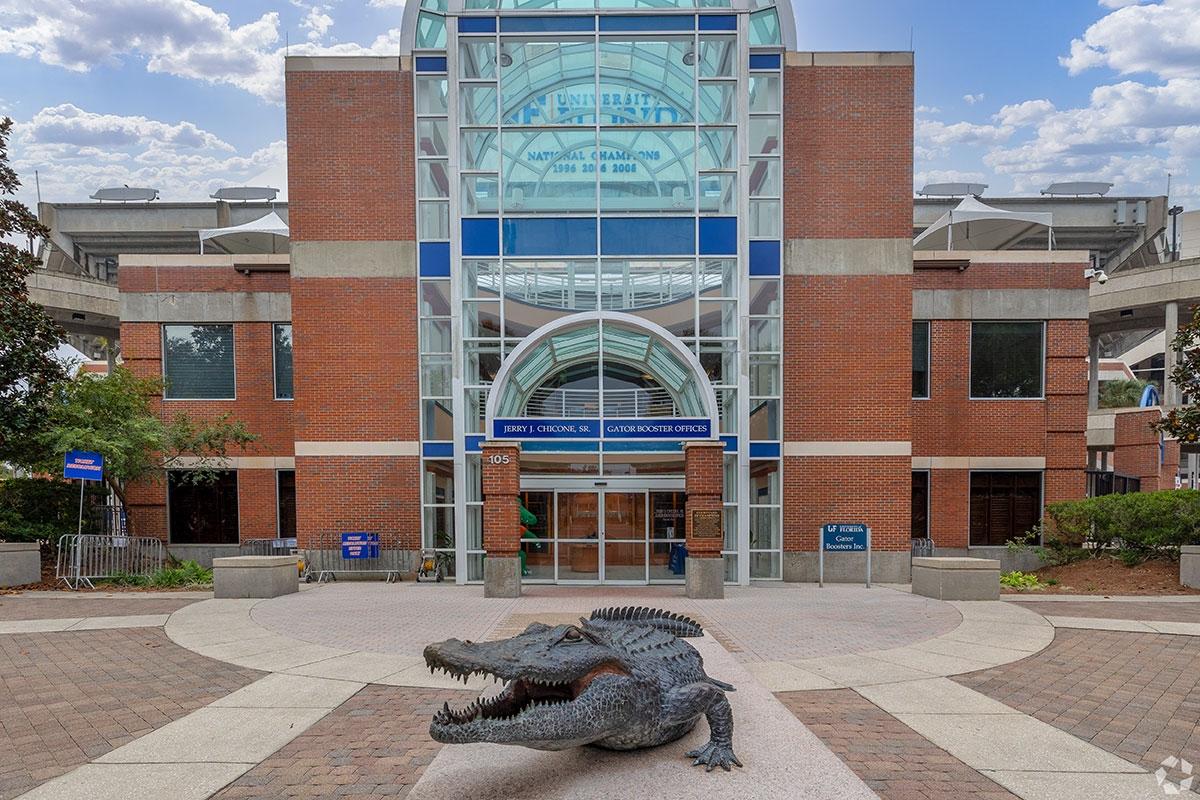
The University of Florida in Gainesville offers some of the highest value for student renters among the universities analyzed. The average monthly rent in Gainesville is 23 percent lower than the national average, making it one of the more affordable cities to live in. After comparing the average monthly rent with the cost per credit hour, one month of average rent is equivalent to the cost of about six credit hours, making the University of Florida the most affordable option on this list.
2. University of North Carolina- Chapel Hill, North Carolina
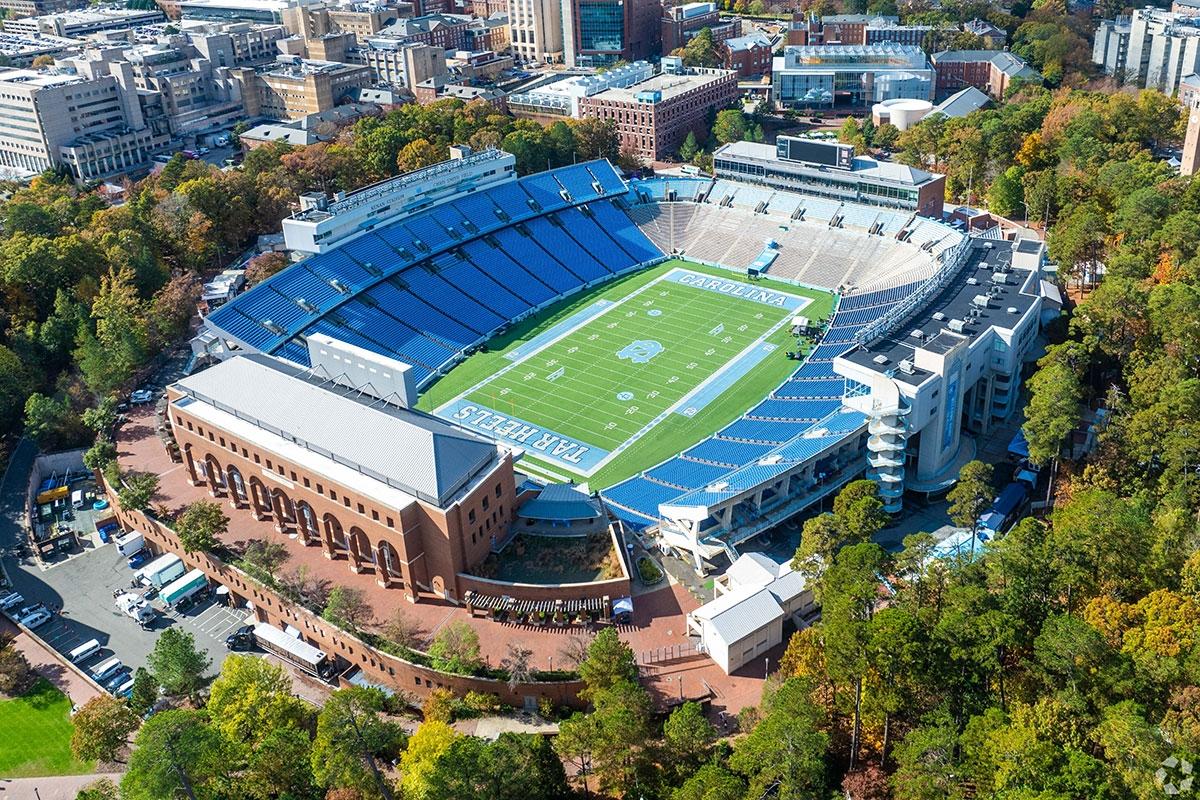
The average monthly rent in Chapel Hill is $1,548/month, which is lower than the national average, but higher than some of the other cities on this list. Although rents here are higher, the cost per credit hour is low at the University of North Carolina. The cost per credit hour is $292.46, making it one of the lower rates among the colleges on this list and making one month of average rent equivalent to about 5.3 credit hours.
3. University of Wyoming- Laramie, Wyoming
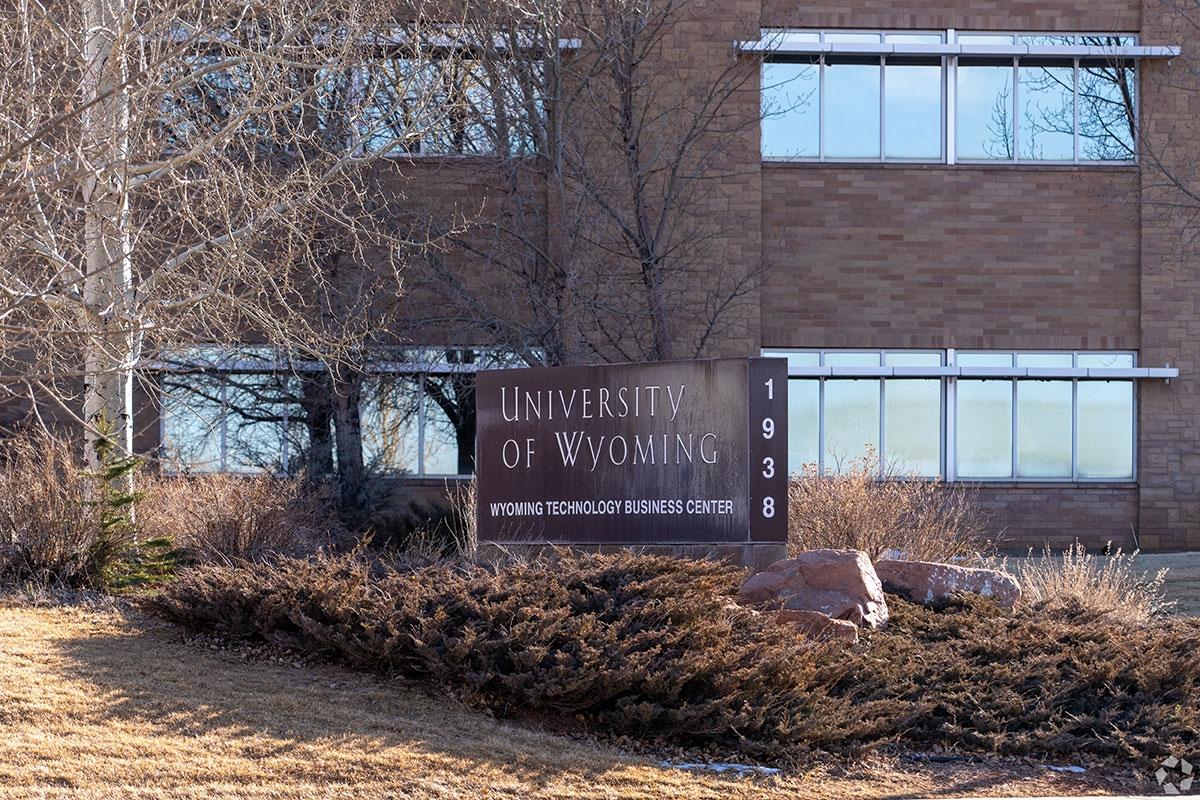
The University of Wyoming is located in Laramie and offers great affordability and value to student renters. The average monthly rent in Laramie is $793/month, which is 52 percent lower than the national average. The cost per credit hour at the University of Wyoming is the lowest on this list at $180 per credit hour. After comparing monthly rent with credit hour costs, one month of average rent is equivalent to the cost of about 4.4 credit hours.
4. University of Montana- Missoula, Montana

Missoula is the second most populous city in Montana and home to the University of Montana. The average monthly rent in Missoula is $1,380/month, which is 17 percent lower than the national average rent. Students attending the university and living in Missoula pay an average monthly rent equivalent to the cost of about 3.7 credit hours.
5. Pennsylvania State University- State College, Pennsylvania

Pennsylvania State University is located in State College and offers some of the highest value for renters who prioritize living in a college town at an affordable price. The average rent in State College is $1,382/month, falling below the national average. The cost per credit hour is one of the highest on the list at $638/credit hour. While that number is higher, one month of average rent is still equivalent to about 2.2 credit hours.
Five-Year Tuition Changes: Who’s Paying More and Who Isn’t
In its Trends in College Pricing report, the College Board examines which flagship universities have seen tuition decreases and increases over a five-year period. In its 2025 report, the College Board found that the University of Missouri increased its tuition by 18 percent over the past five years. On the flip side, the University of Georgia has seen a 24 percent decrease in tuition costs. Looking at tuition fluctuations can help students better understand which universities may be more or less expensive over time.
The colleges that saw the greatest tuition drops over the past five years are:
|
School |
Tuition Decrease |
|
University of Georgia |
-24% |
|
University of Florida |
-20% |
|
-20% |
|
|
University of Texas |
-19% |
|
University of North Carolina |
-19% |
Source: The College Board
Only three schools reported tuition increases over a five-year period. The three schools that saw tuition increases are:
|
School |
Tuition Increase |
|
+18% |
|
|
University of Wyoming |
+3% |
|
+1% |
Source: The College Board
Staying aware of tuition increases and decreases as well as monthly rent in their college town can help student renters make informed financial decisions while they are in school. Understanding where student renters can find greater value and affordability can help them compare costs while they’re pursuing higher education.
Find an Affordable Off-Campus Apartment with Apartments.com
If you’re a student looking for an affordable apartment near your college campus, start your student housing search on Apartments.com! On Apartments.com, you can search for available apartments near your university by simply entering your university name into the search bar. From there, available listings near your college campus will appear, making it easier to find an off-campus apartment.
Methodology
All university tuition and cost data were pulled from the College Board Trends in College Pricing report and the respective university tuition information pages. The credit hour cost relative to monthly rent calculation was found by dividing the average monthly rent in the college town by the cost per credit hour, which was sourced from the university information pages. The five universities and college towns offering the best value for renters were chosen based on their average monthly rent, tuition costs, and credit hour cost relative to average rent.
FAQs
Is rent or tuition the bigger expense for most students?
Whether tuition or rent is the bigger expense depends on the student, school, and housing arrangement. A student's housing situation can influence their overall costs. If a student is renting an apartment, living at home, living on campus, or has another housing arrangement, their expenses can vary significantly.
What's included in a school's total cost of attendance?
A school's total cost of attendance combines tuition and fees, housing and food, books and supplies, transportation, and other expenses. Because these costs can vary by student, universities publish a total cost of attendance so students have a more comprehensive view of how much it may cost to enroll.
How is cost per credit hour calculated?
Cost-per-credit-hour calculations can vary by college, degree level, program, residency status, and other factors. Some schools charge different rates per credit hour based on degree level or program. Students should check their university's official tuition information for the rate that applies to their program.


