

The fastest-growing states in the U.S. are largely concentrated to one region: the Sun Belt. The Sun Belt, a region spread across the southern and southwestern United States, is becoming an increasingly popular area for renters because of factors such as lower housing costs, warmer climates, business growth, lower taxes, lifestyle flexibility, and an expanding job market.
With migration and metro trends continuing to shape rental markets nationwide and affordability pressures increasing, the Sun Belt has become one of the most competitive markets across the country.
The top 10 fastest-growing states in the U.S. are:
Methodology
Rent and vacancy rate data are provided by Apartments.com and all population and migration data was sourced from the U.S. Census Bureau. Sun Belt, state-by-state, and market analysis is provided by CoStar Group. This ranking is based on state-level population growth between 2024 and 2025 and uses total inbound movers and rental trends to analyze the growth rate.
Why Are Americans Moving to These States?
Deciding where to move is a personal decision that depends on several factors, but these states are seeing high levels of inbound migration. The Sun Belt region is known for its lower cost of living and lower asking rents, but why else is this region seeing an influx of renters?
The housing supply in southern and western states has shifted in recent years, with many states seeing supply outpace demand. When apartment construction increases, rent growth can soften because there are not enough renters to fill vacant units. On the flip side, Sun Belt states combine this high level of construction with lower rents and housing costs, making the region especially appealing to renters looking for a more affordable place to live.
The 10 Fastest-Growing States: Migration and Rent Trends
#1 South Carolina
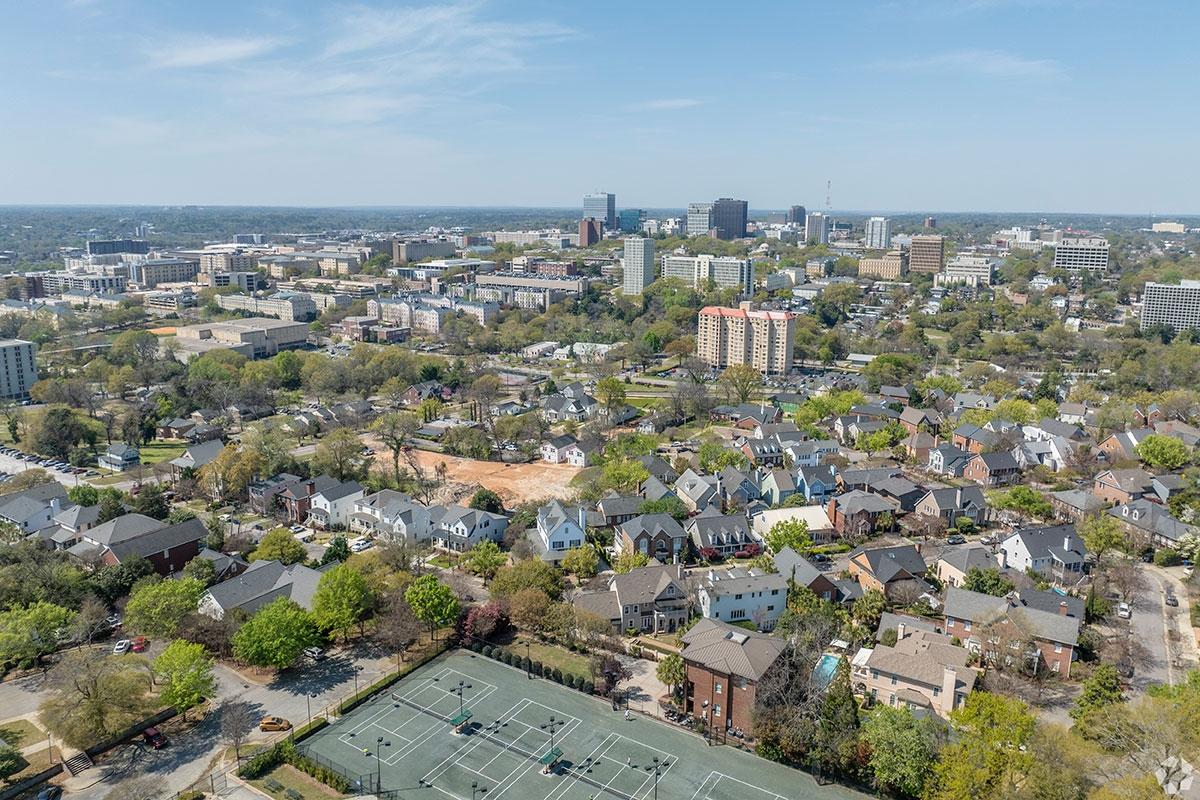
In 2024, 189,333 people moved to South Carolina, and the state had a population estimate of 5.57 million in 2025. South Carolina is known for its relatively affordable cost of living compared to other coastal markets. The average rent in South Carolina is $1,386/month, with asking rent prices trending down 0.2 percent year over year, according to Apartments.com. With strong lifestyle appeal and several fast-growing metros, South Carolina is seeing a competitive rental market due to vacancies dropping 4.1 percent year over year.
#2 Idaho

The average rent in Idaho is $1,379/month, well below the national average rent. Idaho saw an influx of 72,817 people in 2024, while its population remained relatively manageable at 2 million in 2025. The vacancy rate in Idaho dropped by 15.4 percent year over year, creating a more competitive rental market with asking rent prices trending up 2.7 percent year over year.
#3 North Carolina
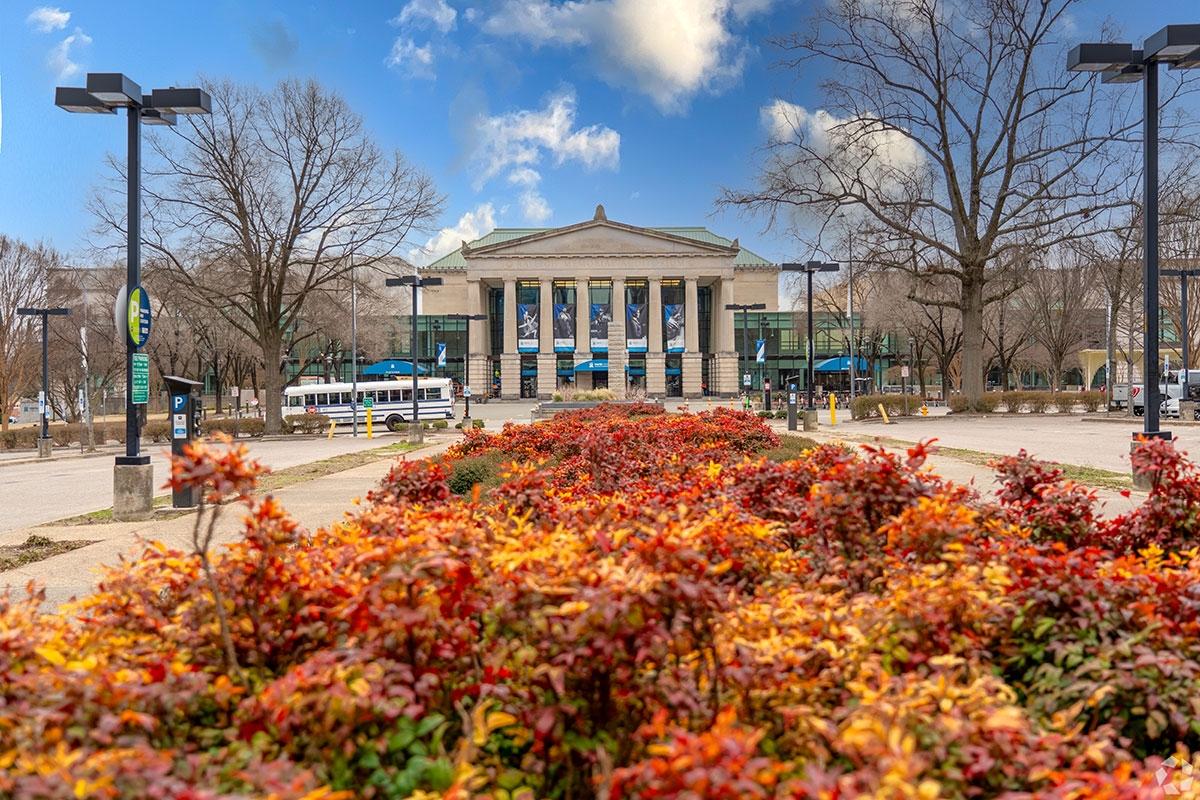
North Carolina welcomed 299,782 people in 2024, bringing its 2025 population estimate to 11.1 million. The state is seeing expansion within its tech and finance sectors, improving its local job market and economy. The average rent in North Carolina is $1,351/month, with rents increasing 0.3 percent year over year. With vacancies down 3.4 percent and metro hotspots like Raleigh and Charlotte continuing to grow, North Carolina is becoming an increasingly popular state for renters and homeowners alike.
#4 Texas

Texas is the largest state in the continental U.S. and showcased that growth with a 2024 inbound migration of 556,165 people, bringing the state’s population to 31.7 million people. It’s easy to see why renters are drawn to Texas, with metros like Dallas and Houston offering lifestyle perks and average rent prices of $1,237/month, down 0.7 percent year over year.
Texas is one state affected by the oversupply and under-demand trend the housing market has seen in recent years. Although asking rents are falling, vacancies are still up 2.4 percent. Texas remains a leader in population growth and offers an affordable alternative to other states with similar lifestyle appeal.
#5 Utah
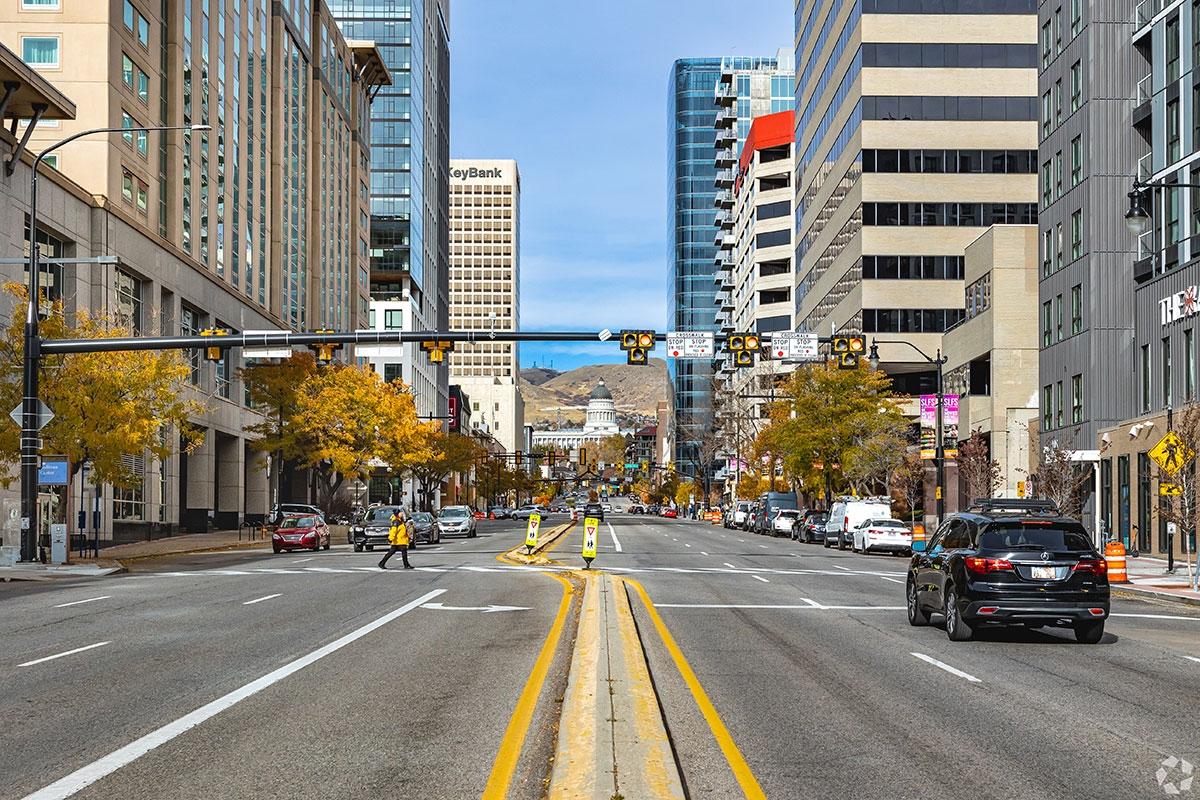
Boasting a strong outdoor recreation scene and a growing tech corridor, Utah saw an influx of 95,218 people to the Beehive State in 2024, bringing its total population to 3.5 million. Utah’s average monthly rent is $1,375/month, falling well below the national average rent. Asking rents increased by 0.7 percent year over year, while vacancies have been up by 6.8 percent year over year. The growing vacancy rate coupled with a lower cost of living makes Utah an attractive choice for renters who prioritize affordability.
#6 Delaware
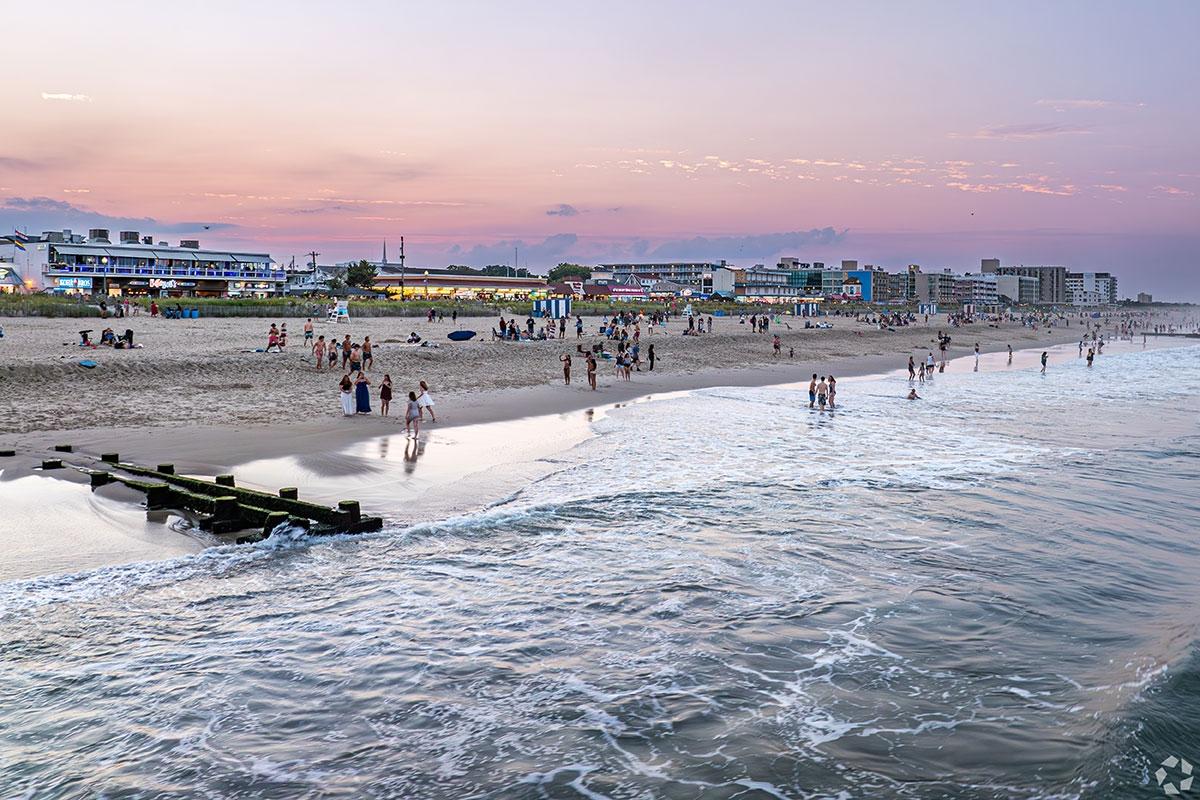
Delaware offers a mixture of East Coast accessibility with lower costs than many other Northeastern states and cities. The average rent in Delaware is $1,522/month, which is lower than the national average rent of $1,642/month. Asking rent prices have increased by 2.2 percent year over year and the vacancy rate in Delaware rose to a high of 12.7 percent. Although high vacancies are often viewed negatively, they can present renters with an opportunity to negotiate their rent or request rent concessions from landlords looking to fill vacant units.
#7 Washington
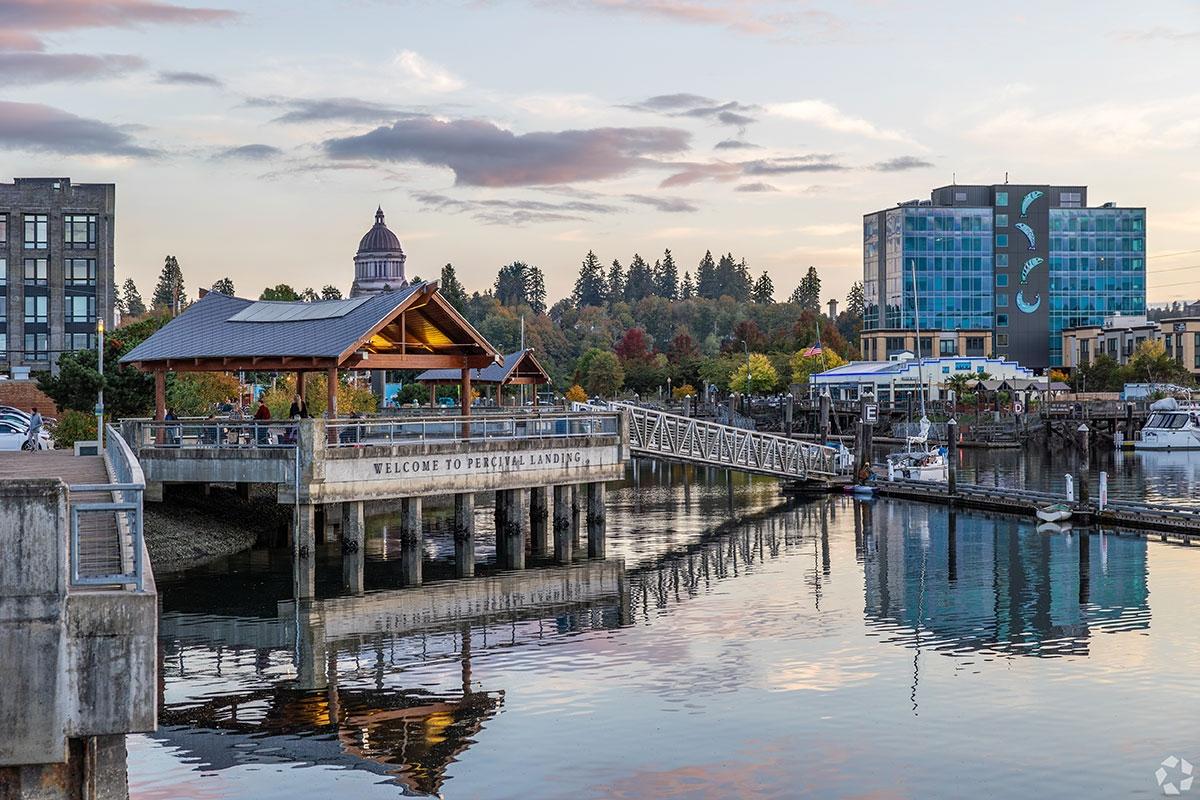
Home to tech powerhouses Microsoft and Amazon, Washington has no shortage of job opportunities and natural scenery. In 2024, 222,059 people moved to Washington, bringing the state’s population to 8 million, according to 2025 estimates. The vacancy rate in Washington dropped by 2.7 percent, while asking rent prices rose 0.7 percent year over year.
The average monthly rent in Washington is $1,829/month, higher than the national average rent, but the state continues to see strong rent growth and lower vacancies than similar sized metros. Washington continues to attract renters because of its job market, outdoor recreation access, and major tech employment hubs.
#8 Arizona

Arizona’s average monthly rent is $1,322/month, with asking prices trending down by 1 percent year over year. The vacancy rate in Arizona also dropped by 2.5 percent, suggesting the state strikes a balance between affordability and lifestyle.
In 2024, 234,926 people moved to Arizona, bringing the state’s population to 7.6 million. With Phoenix serving as a cultural and economic anchor and supply and demand remaining relatively balanced, Arizona appeals to renters who want lower asking rents without sacrificing access to major metros.
#9 Nevada
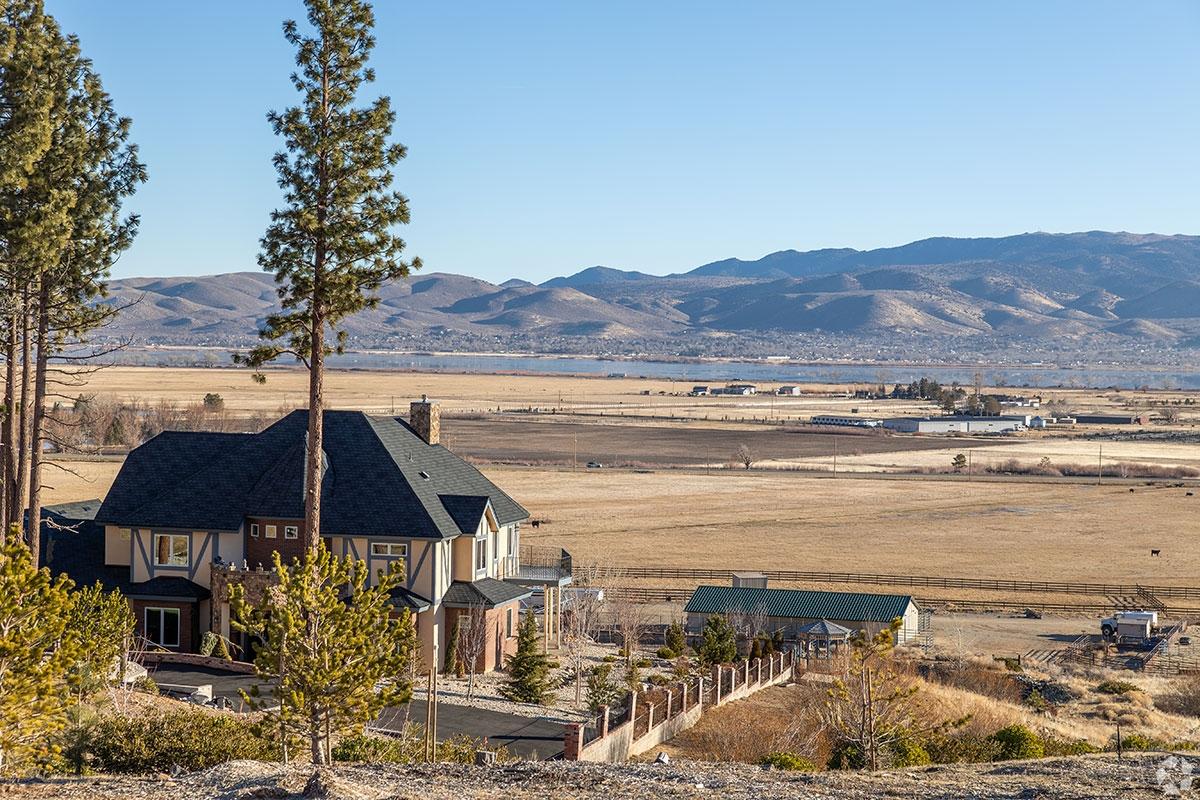
Nevada welcomed 130,813 people in 2024, bringing its population estimate to 3.2 million in 2025. Home to the entertainment hub of Las Vegas, affordable average rent prices of $1,344/month, and proximity to higher-cost states like California, Nevada continues to attract renters nationwide. Asking rent prices are also trending down 0.2 percent year over year.
The vacancy rate in Nevada increased by 3.2 percent year over year, presenting renters with an opportunity to take advantage of falling rent prices and greater unit availability.
#10 Tennessee

Rounding out the list of fastest-growing states in the U.S. is another Sun Belt favorite: Tennessee. Tennessee has long been a popular destination thanks to entertainment hubs like Nashville and Knoxville.
With average rent prices around $1,351/month and vacancies falling by 0.9 percent, Tennessee appeals to budget-conscious renters who value proximity to growing metros. The Volunteer State welcomed 192,215 people in 2024, bringing its total population to 7.3 million. With vacancy rates falling and asking rent prices increasing by 0.3 percent year over year, Tennessee is expected to see continued renter and homeowner growth in the coming years.
|
State |
Average Rent |
YoY Vacancy Rate |
|
$1,386 |
-4.1% |
|
|
$1,379 |
-15.4% |
|
|
$1,351 |
-3.4% |
|
|
$1,237 |
+2.4% |
|
|
$1,375 |
+6.8% |
|
|
$1,522 |
+12.7% |
|
|
$1,829 |
-2.7% |
|
|
$1,322 |
-2.5% |
|
|
$1,344 |
+3.2% |
|
|
$1,351 |
-0.9% |
Source: Apartments.com
What This Data Means for Renters
While these are some of the fastest-growing states in the U.S. based on migration and year over year population changes, renters may still find this data difficult to navigate. Even though some of these states are seeing major year over year vacancy decline, others are experiencing a continued high level of vacancy, leading to higher rents and living costs. Understanding why this happens can help renters decide where to move based on projected real estate growth and rent fluctuations.
Multifamily supply and demand equilibrium
Rising rents in these high-growth states may signal that renter demand is finally catching up with multifamily supply. In 2025, the multifamily market experienced historically high construction levels while many units remained vacant. Multifamily construction saw a 73 percent decline in the first three months of 2026, one of the lowest quarterly levels since 2011, according to Apartments.com. This slowdown in construction gives renter demand a chance to catch up with supply, which can lead to lower vacancies and higher rents.
Lower vacancies promote a competitive rental market
Some states have seen major year over year vacancy rate declines, including South Carolina, Idaho, and North Carolina. These declines suggest that the states are not only among the fastest growing in the country, but also increasingly competitive rental markets.
When vacancy rates are low, rental markets can tighten due to high demand for available units. While this trend benefits property managers and apartment communities, it can make apartment hunting more challenging for renters.
High vacancies mean more rent concessions
Utah and Delaware saw some of the largest year over year vacancy rate increases, with rates rising by 6.8 percent and 12.7 percent respectively. High vacancies often favor renters because there’s more negotiating power, less competition for available units, and more rent concessions available.
Apartments.com found that in 2026, 41.2 percent of multifamily properties nationwide are offering rent concessions. These concessions can be especially helpful in states like Delaware, where average rents remain close to the national average and continue to rise.
Key Takeaways for Renters
- Falling vacancies usually mean more competition for apartments.
- Rising vacancies can create more negotiating power.
- States with falling rents and rising vacancies may offer the best short-term renter opportunities.
- Slower multifamily construction could reduce apartment availability in future years.
The Fastest-Growing Metros in the United States
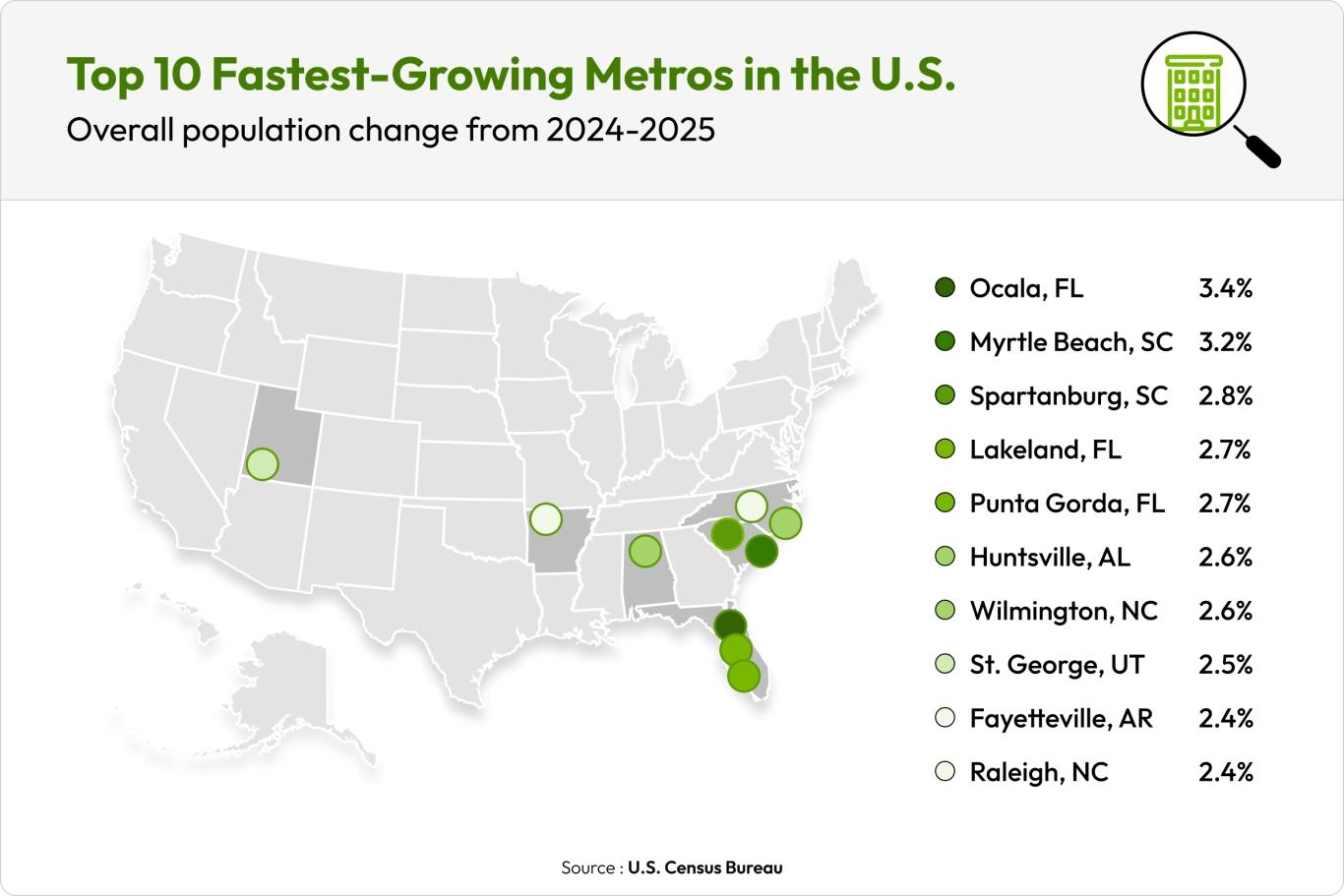
While the Sun Belt has spurred significant real estate growth across the country, metro areas both within and near the region have seen population increases over the past year. Slowed nationwide population growth at the beginning of 2026 affected larger markets the most, but domestic migration patterns suggest the population is redistributing from large counties to smaller, less populous ones.
|
City |
YoY Population Increase |
|
3.4% |
|
|
3.2% |
|
|
2.8% |
|
|
2.7% |
|
|
2.7% |
|
|
2.6% |
|
|
2.6% |
|
|
2.5% |
|
|
2.4% |
|
|
2.4% |
Source: U.S. Census Bureau
Although large cities still dominate overall population size, smaller metros are growing faster than legacy cities like New York and Chicago. These so-called “secondary cities” offer renters a mix of affordability, growing job markets, and proximity to major metros without the high downtown price tag.
All of these cities fall within the broader Sun Belt region, reinforcing the trend of Americans relocating in search of affordability and lifestyle flexibility. This trend is not new. In 2025, Costar Group reported that large corporations relocated to major Sun Belt metros like Dallas, Atlanta, and Charlotte. These companies are increasingly moving away from higher-tax, highly regulated states in favor of business-friendly markets with skilled workforces.
While apartment construction has historically remained high throughout the Sun Belt, the years between 2022 and 2025 saw some of the region’s highest levels of multifamily supply in recent history. Although slowing construction could lead to tighter rental inventory in the future, the appeal of the Sun Belt remains strong as affordability continues to be a top priority for renters.
Find Your Next Sun Belt Rental on Apartments.com
Apartments.com can help you find the perfect rental in one of the country’s fastest-growing regions, the Sun Belt. Use Apartments.com’s advanced search filters to browse Sun Belt apartments by price, location, and amenities. Start your Sun Belt apartment search on Apartments.com today.
FAQs
What are the fastest-growing states in the United States?
The fastest-growing states in the U.S. include South Carolina, Idaho, North Carolina, Texas, Utah, Delaware, Washington, Arizona, Nevada, and Tennessee, based on U.S. Census Bureau data.
Why are so many people moving to the Sun Belt?
People are moving to the Sun Belt because the region offers warmer weather, lower housing costs, job growth, lower taxes in some states, and more lifestyle flexibility than many higher-cost markets.
Which fastest-growing state has the lowest average rent?
Among the fastest-growing states, Texas has one of the lowest average rents at about $1,237/month for a one-bedroom apartment.
Which fastest-growing states have the most competitive rental markets?
States with falling vacancy rates, such as Idaho, South Carolina, North Carolina, Washington, Arizona, and Tennessee may have more competitive rental markets because fewer units are available.


