Median Age
38 Years
Largest Age Group
25-34 Years
Approximately 18% of Residents
Under 20
21%
Over 65
20%

Avg Rent
$1,075
Population
35,346
Renter Mix
50% Rent
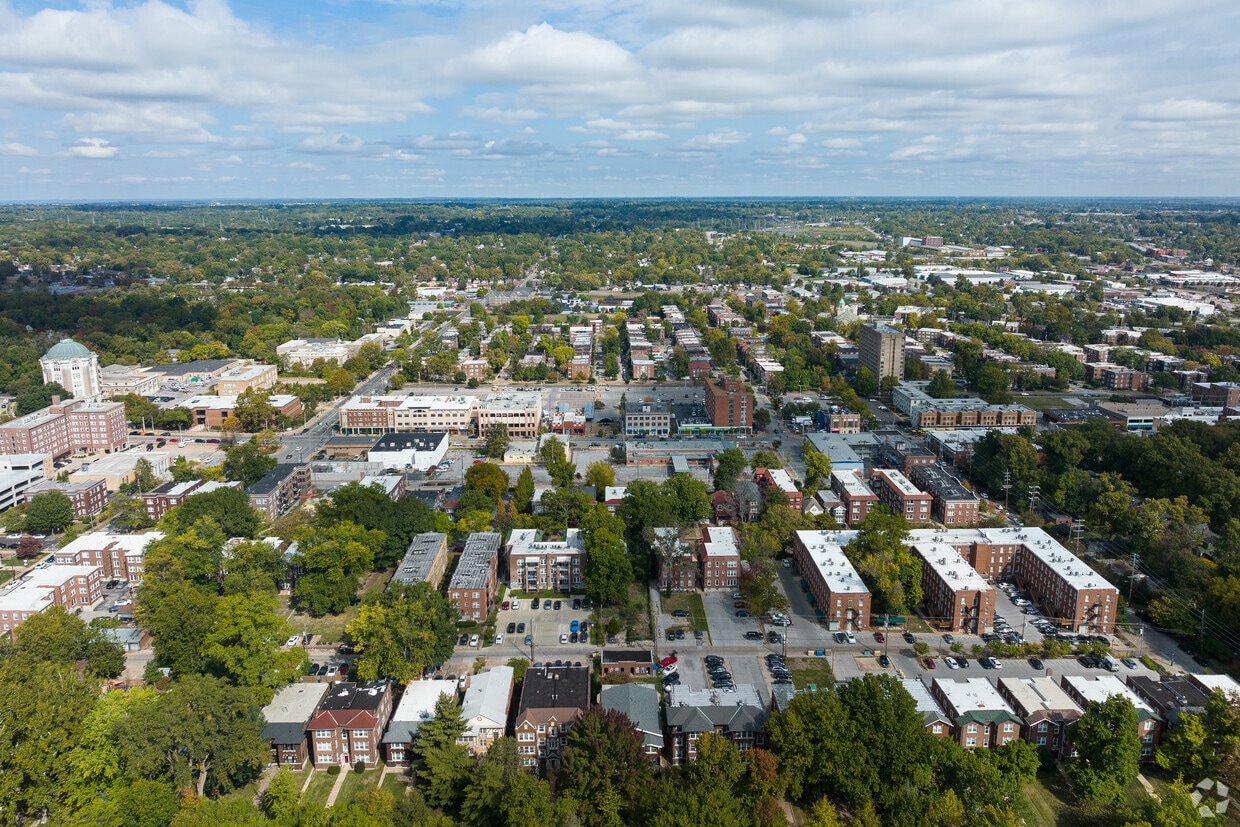
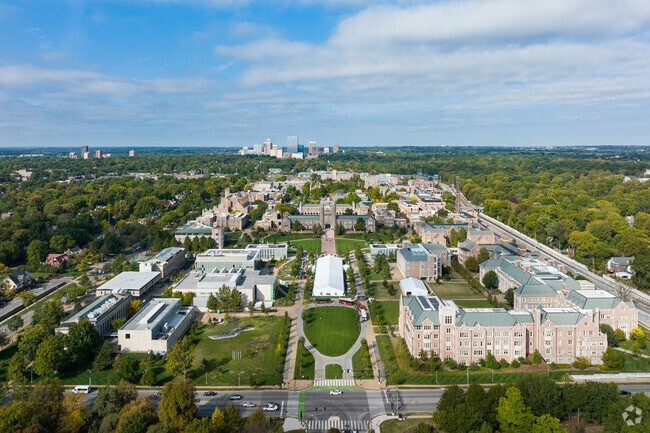
University City, Missouri, known locally as U. City, is an inner-ring suburb located about ten miles west of Downtown St. Louis, bordered by Washington University in St. Louis to the southeast. The city has a rich history as a streetcar suburb dating back to the late 19th century, and much of its original architecture is still visible today, especially along the southern end of town. Renters looking at apartments for rent in University City will find a well-established community with a median household income of around $69,000 and a population density that reflects its walkable, connected feel. The city's ties to Washington University draw a steady mix of students, faculty, researchers, and working professionals, giving the area a lively, educated atmosphere year-round.
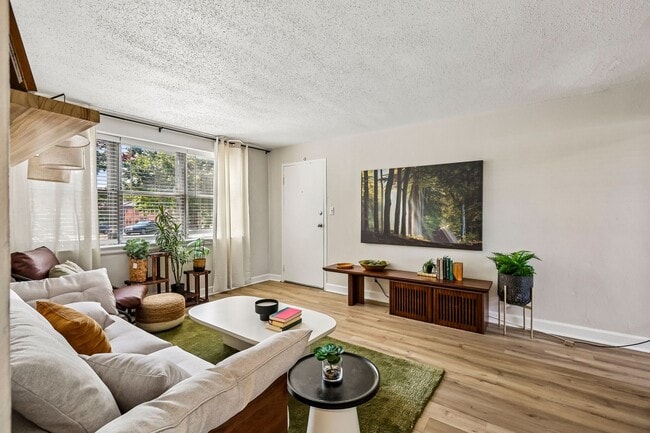
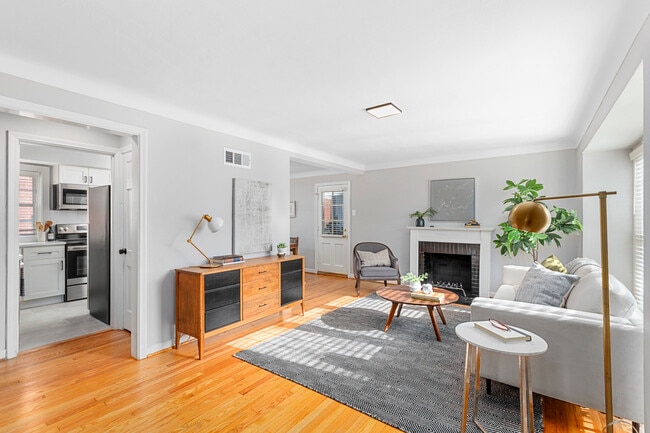
The rental market in University City is notably diverse, offering everything from budget-friendly studio and one-bedroom apartments to spacious condos, houses, and townhomes. Renters can find garden-style apartment communities as well as older walk-up buildings with classic architectural details. Delmar Boulevard is the heart of the city's social scene, lined with local dining spots like Blueprint Coffee and Three Kings Public House, along with the 560 Music Center for live entertainment. Heman Park offers open green space along with recreation and community amenities, and the Saint Louis Zoo and St. Louis Science Center are just a short drive away. Shopping options are close at hand with Westover Center, University City Square, and American-Asian Mall all within the city.
Getting around is straightforward for renters who commute or prefer not to drive everywhere. The MetroLink light rail system has multiple nearby stations, including University City-Big Bend, Forsyth, and Clayton, connecting residents to Downtown St. Louis, Clayton, and beyond with ease. St. Louis Lambert International Airport is roughly 13 minutes away by car, making travel simple. Major employers in the area include Washington University and its medical system, as well as businesses throughout the greater St. Louis metro. Whether you are drawn by the walkable streets, the access to transit, or the range of rental options, University City offers a well-rounded base for renting in the St. Louis area.
The pond has a fountain in the center at Lewis Park in University City, Missouri.
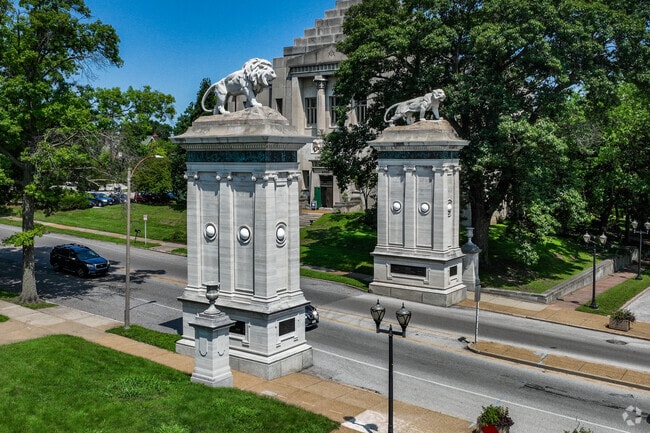
University City has a very grand entrance with lion statues sitting on top in University City.
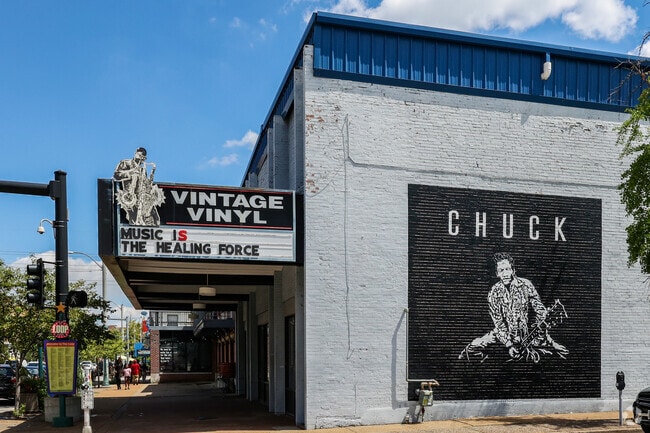
University City, Missouri has a Vintage Vinyl venue which performs year-round.
Get a nice view of the core part of Fogerty Park in University City, Missouri.
The train connects University City to Saint Louis,
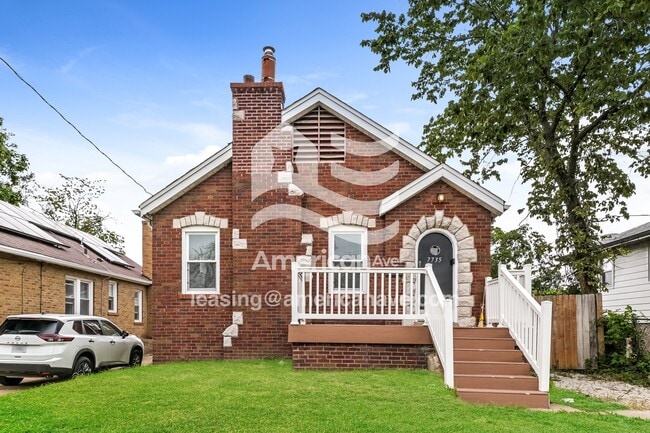
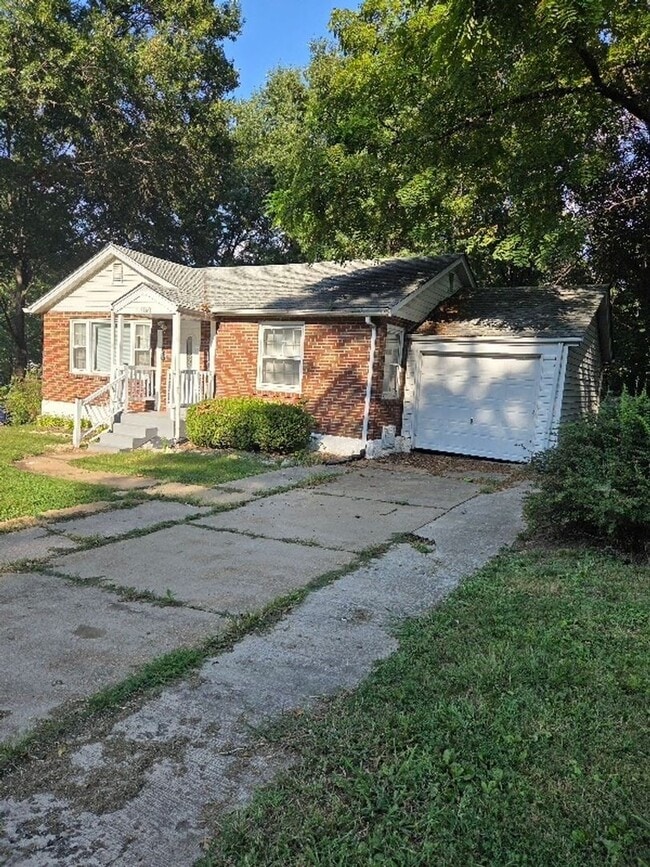
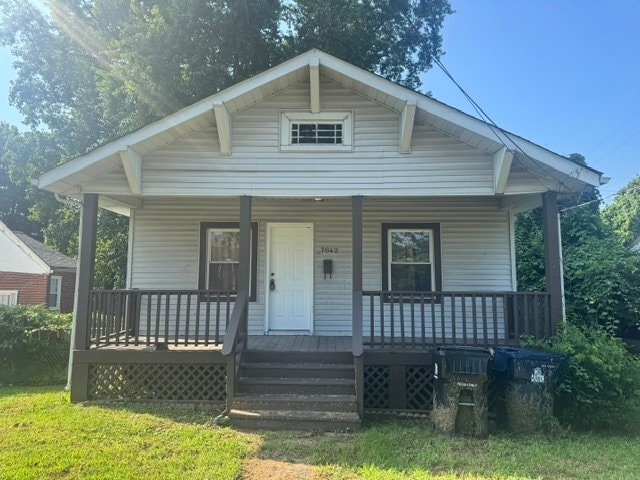
University City has nice homes scattered all around town in Missouri.
Median Household Income
$68,940
Average: $108,682
Education
17,181
Residents Have a Degree
Job Market
18,435
Workers Employed
Median Age
38 Years
Largest Age Group
25-34 Years
Approximately 18% of Residents
Under 20
21%
Over 65
20%
Housing Distribution
In University City, there are roughly the same number of renters and homeowners.

Education Distribution
Review this city's overall education levels.

As of September 2026, the average apartment rent in University City, MO is $1,619 for a studio, $1,069 for one bedroom, $1,922 for two bedrooms, and $2,186 for three bedrooms. Apartment rent in University City has increased by 2.5% in the past year.
Explore how walkable, bikeable, drivable, and transit-friendly University City, MO is for everyday living.
Moderately Walkable
Walkability
Limited Public Transit
Transit
Very Drivable
Drivability
Fairly Bikeable
Bikeability

Barbara Jordan Elementary School
Public
Grades K-5
386 Students

Public
Grades K-5
323 Students

Jackson Park Elementary School
Public
Grades K-5
304 Students
Public
Grades K-5
286 Students
Public
Grades 6-8
557 Students

University City Sr. High School
Public
Grades 9-12
874 Students
 The GreatSchools Rating helps parents compare schools within a state based on a variety of school quality indicators and provides a helpful picture of how effectively each school serves all of its students. Ratings are on a scale of 1 (below average) to 10 (above average) and can include test scores, college readiness, academic progress, advanced courses, equity, discipline and attendance data. We also advise parents to visit schools, consider other information on school performance and programs, and consider family needs as part of the school selection process.
View GreatSchools Rating Methodology
Data provided by
GreatSchools.org
© 2026. All rights reserved.
The GreatSchools Rating helps parents compare schools within a state based on a variety of school quality indicators and provides a helpful picture of how effectively each school serves all of its students. Ratings are on a scale of 1 (below average) to 10 (above average) and can include test scores, college readiness, academic progress, advanced courses, equity, discipline and attendance data. We also advise parents to visit schools, consider other information on school performance and programs, and consider family needs as part of the school selection process.
View GreatSchools Rating Methodology
Data provided by
GreatSchools.org
© 2026. All rights reserved.
† Our analysis of utilities, groceries, transportation, healthcare, home prices, and other goods and services is sourced from the Cost of Living Index, a respected benchmark published by the Council for Community and Economic Research (C2ER) that provides a thorough overview of living expenses across different regions.
Rent data is provided by CoStar Group’s Market Trend reports. As the industry leader in commercial real estate information, analytics, and news, CoStar conducts extensive research to produce and maintain a comprehensive database of commercial real estate information. We combine this data with public record to provide the most up-to-date rental information available.
Consumer goods, services, and home prices are sourced from the Cost of Living Index published by the Council for Community and Economic Research (C2ER). The data on this page is updated quarterly. It was last published in September 2026.
Demographic information comes from Neustar and combines detailed address data with U.S. Census and American Community Survey statistics to produce reliable local estimates.