Background Image

Sedona, AZ Area Guide

Avg Rent

$1,705

Population

11,278

Renter Mix

26% Rent

A bohemian enclave amid the red rocks of Verde Valley

Desert Tourism Scenic

Sedona sits at about 4,300 feet in the high desert of Arizona's Verde Valley, where the surrounding sandstone formations shift from deep orange to soft pink depending on the light. The city straddles the county line between Coconino and Yavapai counties and sits entirely within the Coconino National Forest, which means hiking trails, canyon overlooks, and open red-rock terrain are essentially part of the neighborhood. Flagstaff is about 30 miles north, and the Village of Oak Creek lies just to the south, giving residents easy access to both mountain-town amenities and Verde Valley wine country.

Day-to-day life in Sedona revolves around the outdoors, local arts, and a genuinely close-knit community. Uptown Sedona, the Gallery District, and West Sedona each have their own feel: Uptown draws visitors with shops and restaurants, while West Sedona is more residential and walkable for daily errands. The dining scene, coffee shops, and retail run along State Route 89A, which serves as the city's main artery. The Sedona International Film Festival, established in 1995, is one of the most anticipated events on the local calendar each year.

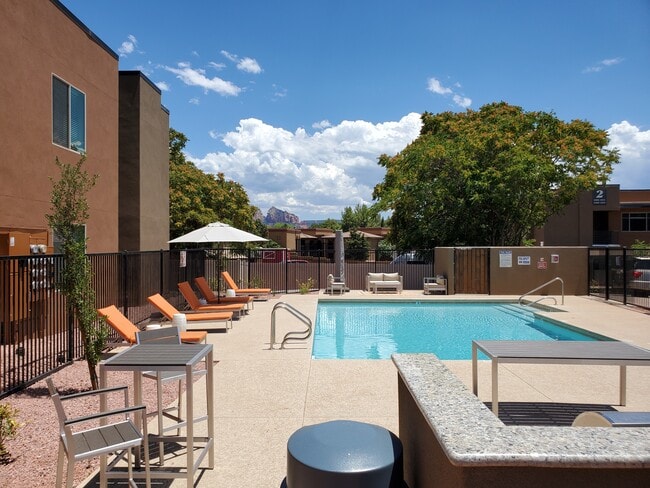
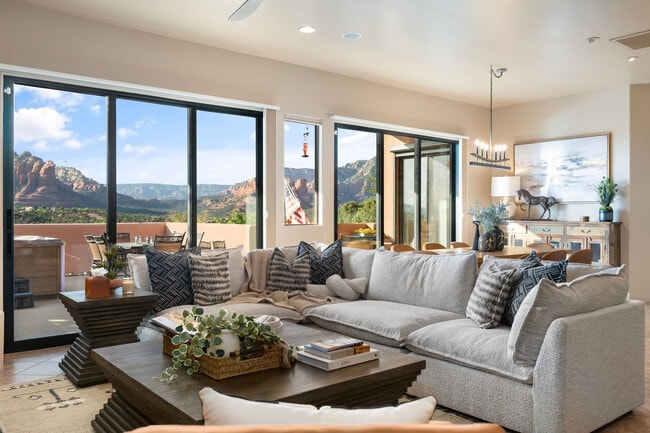
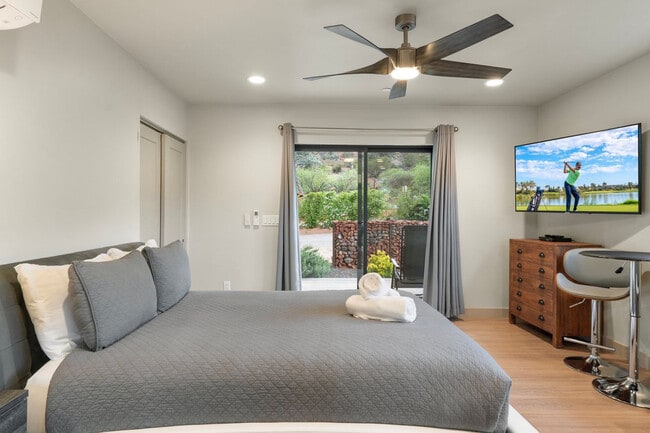
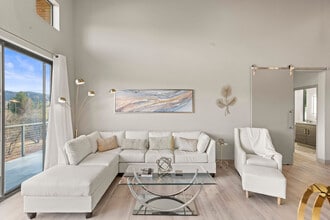
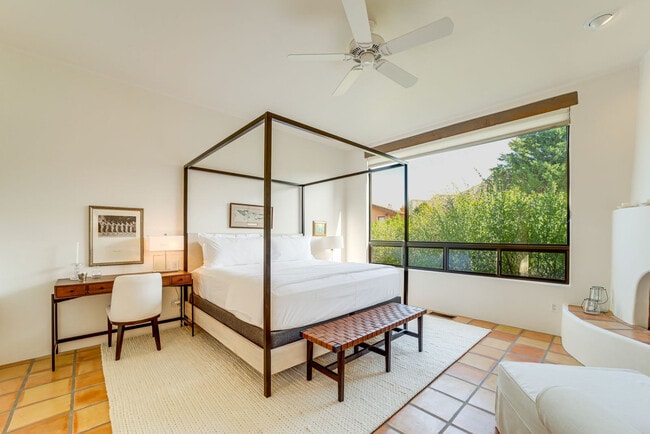
Rentals in Sedona tend toward single-family homes, garden apartments, and smaller low-rise apartment communities. The housing stock is relatively limited given the city's compact footprint of about 19 square miles. Townhomes and casita-style units appear throughout the market, and some mid-rise options exist closer to the commercial corridors along 89A.

Popular Neighborhoods

Demographics

Median Household Income

$60,857

Average: $92,056

Education

5,461

Residents Have a Degree

Job Market

5,187

Workers Employed

Age Distribution
Get a sense of this area's population profile.

Median Age

63 Years

Largest Age Group

65-74 Years

Approximately 25% of Residents

Under 20

10%

Over 65

46%

Housing Distribution

Sedona has more homeowners than renters.

Renters
26%
Non-Renters
74%

Education Distribution

Review this city's overall education levels.

Bachelor's or Higher
42%
Other Education
58%

Rent Trends

As of July 2026, the average apartment rent in Sedona, AZ is $1,705 for one bedroom, $1,944 for two bedrooms, and $2,435 for three bedrooms. Apartment rent in Sedona has increased by 0.8% in the past year.

Property Type
Average Rent
Average Sq Ft
Apartment
$1,705/month
743 Sq Ft
House
$3,697/month
1,822 Sq Ft
See Rental Market Trends in Sedona, AZ

Learn More About Sedona

Getting Around

Fairly Walkable

Walkability

40 / 100

Minimal Public Transit

Transit

10 / 100

Very Drivable

Drivability

80 / 100

Very Bikeable

Bikeability

80 / 100

Schools

West Sedona Elementary School

Public

Grades PK-5

276 Students

Sedona Charter School

Public

Grades K-8

143 Students

Big Park Community School

Public

Grades K-6

193 Students

Red Rock Academy

Public

Grades K-12

13 Students

Sedona Red Rock High School

Public

Grades 6-12

407 Students

Sedona Charter School

Public

Grades K-8

143 Students

Red Rock Academy

Public

Grades K-12

13 Students

Sedona Red Rock High School

Public

Grades 6-12

407 Students

Red Rock Academy

Public

Grades K-12

13 Students

VACTE - Yavapai College Sedona Center

Public

Grades 9-12

1 Students

Points of Interest

Parks and Recreation

  • Red Rock
  • Red Rock State Park
  • Slide Rock State Park

Commuter Rail

Airports

  • Flagstaff Pulliam

Top Apartments in Sedona

Houses for Rent in Sedona

Living in Sedona

History

-

The Sedona Arts Center, founded in 1958, is the oldest arts center in northern Arizona and still operates today as a hub for local painters, sculptors, and performing artists. It traces back to an era when Sedona first began drawing creative figures to its dramatic landscape, including surrealist artist Max Ernst, who helped put the area on the international art world's map when the town had fewer than 100 residents. That artistic legacy has carried forward, and today the city maintains a dedicated arts and culture department and hosts events like the annual Sedona Hummingbird Festival and the city's own Red Dirt Concert series at Posse Grounds Pavilion. The Chapel of the Holy Cross is another landmark that reflects the city's architectural character. Completed in 1956, the chapel rises 70 feet out of a 1,000-foot red-rock cliff and was designed to harmonize with, rather than compete with, the surrounding landscape. The Sedona Heritage Museum, housed in a historic apple packing shed in Uptown, gives residents and visitors a look at the area's early settler history and its decades as a backdrop for Hollywood film productions, with more than 60 productions shot in the red rocks from the 1920s through the 1970s.

Restaurants

-

Sedona's restaurant scene leans heavily on Southwestern and New American cooking, with wood-fired preparations, locally foraged ingredients, and flavors drawn from the broader Arizona and northern Mexico region appearing on menus throughout town. Along State Route 89A and in Uptown, you'll find everything from casual breakfast cafes serving blue corn pancakes and green chile eggs to sit-down spots offering dishes like mesquite-grilled meats, prickly pear sauces, and roasted chiles. The dining corridor in West Sedona is a bit more neighborhood-oriented, with local pizzerias, Thai kitchens, and Mexican taquerias filling the strip malls between art galleries. Sedona is also part of the Verde Valley wine region, so it's easy to pair dinner with a glass from a nearby tasting room. The Sedona Food Truck Festival is a popular annual event that brings a wide variety of prepared foods to the community in a casual outdoor setting.

Transportation

-

State Route 89A is the main road through Sedona, running east to west and connecting Uptown with West Sedona and continuing up through the scenic switchbacks of Oak Creek Canyon toward Flagstaff. State Route 179 heads south from the city toward the Village of Oak Creek and on to Interstate 17, which is the primary highway link to Phoenix, about 120 miles away. For those without a car, the Sedona Roadrunner public transit service operates local fixed-route bus service with stops along 89A and into key commercial areas, making car-free travel possible for basic errands. The nearest commercial airport is Flagstaff Pulliam Airport, about 28 miles to the north; Phoenix Sky Harbor International Airport is roughly 120 miles to the south. Sedona also has its own general aviation airport located atop Airport Mesa, which offers one of the more dramatic runway settings in the country. Sidewalks and multi-use paths exist in parts of West Sedona, and the city has invested in pedestrian infrastructure along some of the main commercial corridors, though a car remains useful for most daily trips.

Parks

-

Red Rock State Park, about eight miles from the city center, is one of the most visited outdoor spaces in the region, offering guided nature walks, riparian habitat along Oak Creek, and sweeping views of Cathedral Rock and other formations. Slide Rock State Park, located in Oak Creek Canyon roughly seven miles from downtown, is known for its natural water slides carved into the creek bed and draws crowds during warm months. Both parks offer picnic areas, paved and unpaved trails, and wildlife viewing opportunities. Within Sedona's city limits, Posse Grounds Regional Park is the main municipal green space, featuring sports fields, a skate park, a community pavilion used for concerts and events, a dog park, and paved walking paths. The Sedona Wetlands Preserve along Tequa Drive is a quieter spot well known for birding. The entire Coconino National Forest, which surrounds the city, provides hundreds of miles of trails including the popular Bell Rock Pathway, Cathedral Rock Trail, and Boynton Canyon Trail, all accessible within a short drive from most parts of town.

Cost

-

Average rent in Sedona runs around $1,020 per month for a one-bedroom unit and approximately $1,143 for a two-bedroom, both of which sit above the Arizona statewide average for comparable units. The local economy is driven largely by tourism, hospitality, and the arts, with healthcare, retail, and small business services also playing significant roles. Sedona's overall cost of living, while not tracked with a published index at the city level, is generally understood to run higher than most of Arizona given the premium placed on the limited housing supply and the desirability of the location. The city's housing market is constrained by its placement within national forest boundaries, which limits how much new construction can occur.

Shopping

-

The primary shopping corridor in Sedona runs along State Route 89A, with Uptown Sedona serving as the densest commercial stretch and West Sedona offering more neighborhood-scale retail. Uptown is lined with galleries, gift shops, and tourist-oriented boutiques, while Tlaquepaque Arts and Shopping Village in the 89A corridor near SR-179 is one of the most recognizable retail destinations in the city. Tlaquepaque, which opened in the 1970s and continues to operate today, is designed to evoke a traditional Mexican village and houses a mix of fine art galleries, jewelry stores, and specialty shops in a courtyard setting. The Hillside Sedona shopping center along SR-179 offers additional gallery and retail space with red-rock views. For everyday needs, West Sedona has the main grocery anchors and service retail. A local farmers market operates seasonally, offering produce, prepared foods, and artisan goods from regional vendors.

Highlights

-

Sedona offers direct access to hundreds of miles of trails inside the Coconino National Forest, a thriving arts scene anchored by the oldest arts center in northern Arizona, and one of the most visually distinctive landscapes in the American Southwest, all within a small city of roughly 10,000 residents.

Search Nearby Rentals

Methodology

† Our analysis of utilities, groceries, transportation, healthcare, home prices, and other goods and services is sourced from the Cost of Living Index, a respected benchmark published by the Council for Community and Economic Research (C2ER) that provides a thorough overview of living expenses across different regions.

Rent data is provided by CoStar Group’s Market Trend reports. As the industry leader in commercial real estate information, analytics, and news, CoStar conducts extensive research to produce and maintain a comprehensive database of commercial real estate information. We combine this data with public record to provide the most up-to-date rental information available.

Consumer goods, services, and home prices are sourced from the Cost of Living Index published by the Council for Community and Economic Research (C2ER). The data on this page is updated quarterly. It was last published in June 2026.

Demographic information comes from Neustar and combines detailed address data with U.S. Census and American Community Survey statistics to produce reliable local estimates.