Median Age
39 Years
Largest Age Group
10-19 Years
Approximately 14% of Residents
Under 20
27%
Over 65
22%

Riverton, Wyoming sits where the Little Wind and Big Wind rivers converge in Fremont County, giving the city its name and a geography that shapes nearly everything about daily life here. Founded in 1906 on land at the edge of the Wind River Indian Reservation, Riverton carries a layered history that still informs its identity today. Known locally as "The Rendezvous City," it is the most populous city in Fremont County, with a close-knit civic culture and a strong sense of place.
Central Wyoming College anchors the city's educational presence and draws a steady stream of students and staff to the area. The broader economy reflects the region's ties to energy, agriculture, and public services. Residents live within reach of dramatic landscapes, with three mountain ranges visible from the valley and both Yellowstone and Grand Teton national parks within driving distance.
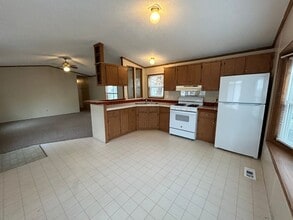
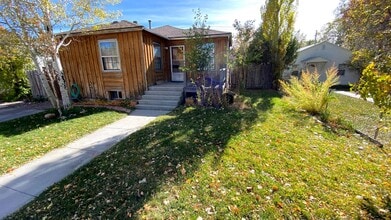
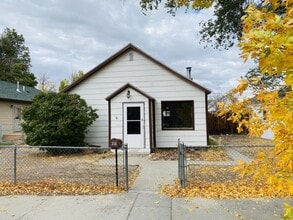
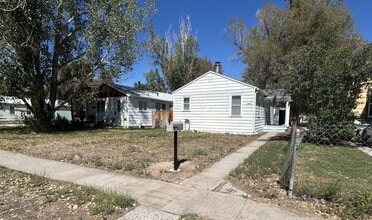
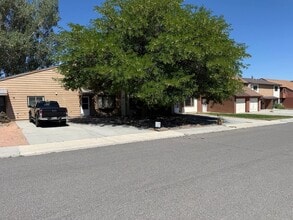
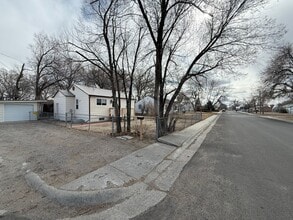
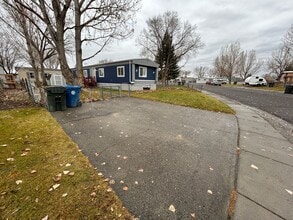
The housing mix in Riverton tends toward the approachable and practical, with single-story rentals, small apartment communities, and modest multi-unit buildings spread across a compact 10-square-mile footprint. The city's low density means open space is rarely far away. For renters seeking affordability, elbow room, and a genuine small-city atmosphere in the heart of Wyoming, Riverton offers a grounded and livable option.
Median Household Income
$52,094
Average: $65,397
Education
2,453
Residents Have a Degree
Job Market
5,535
Workers Employed
Median Age
39 Years
Largest Age Group
10-19 Years
Approximately 14% of Residents
Under 20
27%
Over 65
22%
Housing Distribution
Riverton has more homeowners than renters.

Education Distribution
Review this city's overall education levels.

Explore how walkable, bikeable, drivable, and transit-friendly Riverton, WY is for everyday living.
Somewhat Walkable
Walkability
Exceptionally Drivable
Drivability
Somewhat Bikeable
Bikeability

Public
Grades K-5
324 Students

Public
Grades K-5
269 Students

Public
Grades K-5
173 Students

Public
Grades PK-5
286 Students

Public
Grades K-5
150 Students

Public
Grades 6-8
559 Students
Public
Grades 9-12
701 Students
Public
Grades 9-12
42 Students
 The GreatSchools Rating helps parents compare schools within a state based on a variety of school quality indicators and provides a helpful picture of how effectively each school serves all of its students. Ratings are on a scale of 1 (below average) to 10 (above average) and can include test scores, college readiness, academic progress, advanced courses, equity, discipline and attendance data. We also advise parents to visit schools, consider other information on school performance and programs, and consider family needs as part of the school selection process.
View GreatSchools Rating Methodology
Data provided by
GreatSchools.org
© 2026. All rights reserved.
The GreatSchools Rating helps parents compare schools within a state based on a variety of school quality indicators and provides a helpful picture of how effectively each school serves all of its students. Ratings are on a scale of 1 (below average) to 10 (above average) and can include test scores, college readiness, academic progress, advanced courses, equity, discipline and attendance data. We also advise parents to visit schools, consider other information on school performance and programs, and consider family needs as part of the school selection process.
View GreatSchools Rating Methodology
Data provided by
GreatSchools.org
© 2026. All rights reserved.
† Our analysis of utilities, groceries, transportation, healthcare, home prices, and other goods and services is sourced from the Cost of Living Index, a respected benchmark published by the Council for Community and Economic Research (C2ER) that provides a thorough overview of living expenses across different regions.
Rent data is provided by CoStar Group’s Market Trend reports. As the industry leader in commercial real estate information, analytics, and news, CoStar conducts extensive research to produce and maintain a comprehensive database of commercial real estate information. We combine this data with public record to provide the most up-to-date rental information available.
Consumer goods, services, and home prices are sourced from the Cost of Living Index published by the Council for Community and Economic Research (C2ER). The data on this page is updated quarterly. It was last published in September 2026.
Demographic information comes from Neustar and combines detailed address data with U.S. Census and American Community Survey statistics to produce reliable local estimates.