Median Age
39 Years
Largest Age Group
30-39 Years
Approximately 14% of Residents
Under 20
25%
Over 65
19%

Avg Rent
$1,288
Population
65,964
Renter Mix
50% Rent
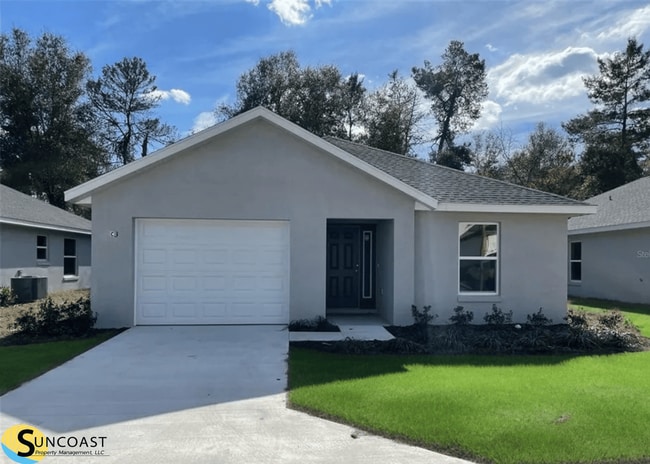
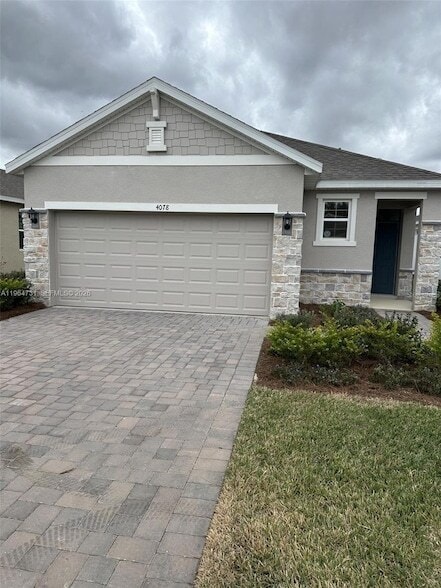
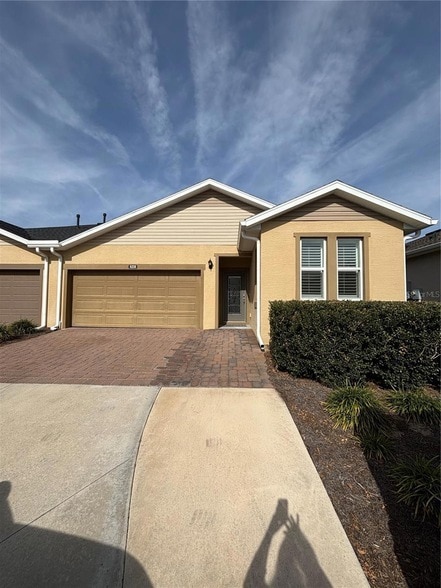
Located in North Central Florida, Ocala is renowned as the "Horse Capital of the World," with hundreds of thoroughbred farms and training centers dotting its landscape. The rental market includes garden-style communities near the historic downtown district and newer developments close to the World Equestrian Center. One-bedroom units average $1,243 monthly, while two-bedroom homes typically lease for $1,551, reflecting a 4.5% year-over-year increase. The historic district, with its Victorian architecture along East Fort King Street, and the area near the College of Central Florida are among the city's most sought-after neighborhoods.
Residents enjoy easy access to outdoor recreation at the Ocala National Forest and Silver Springs State Park, home to famous glass-bottom boats and crystal-clear springs. Downtown Ocala centers around the historic Marion Theatre and the downtown square, offering shopping and dining options. The College of Central Florida campus adds to the area's appeal. With more than 230 sunny days annually, residents can take advantage of the city's parks and trails year-round. Ocala's history dates to 1849, and its "Brick City" nickname comes from the rebuilding efforts following an 1883 fire. The city hosts several equestrian events throughout the year, including the HITS competition, highlighting its significance in the international horse industry.
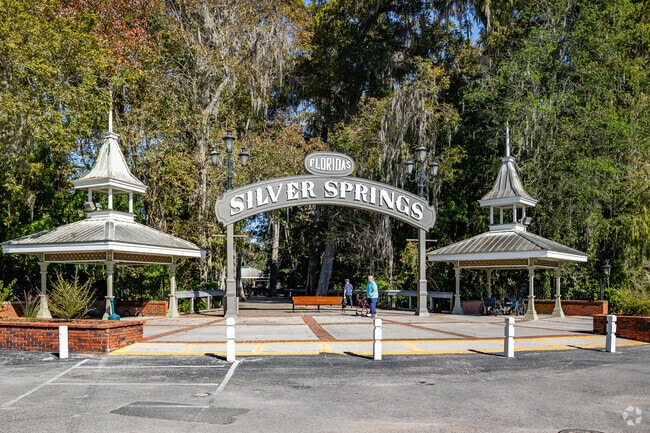
The entrance to Silver Springs State Park.
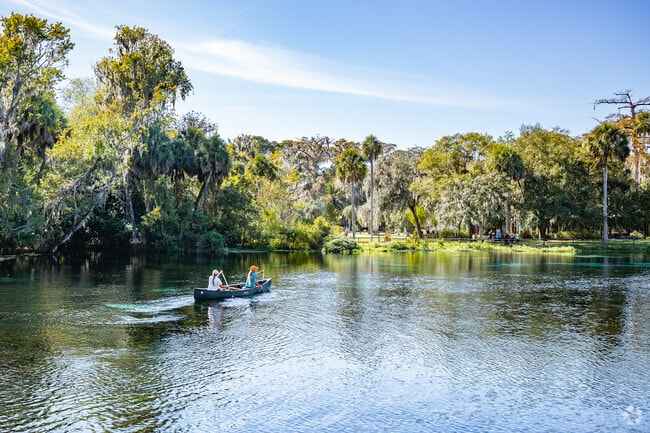
Canoeing is a very popular activity on the fresh water springs at Silver Springs State Park.
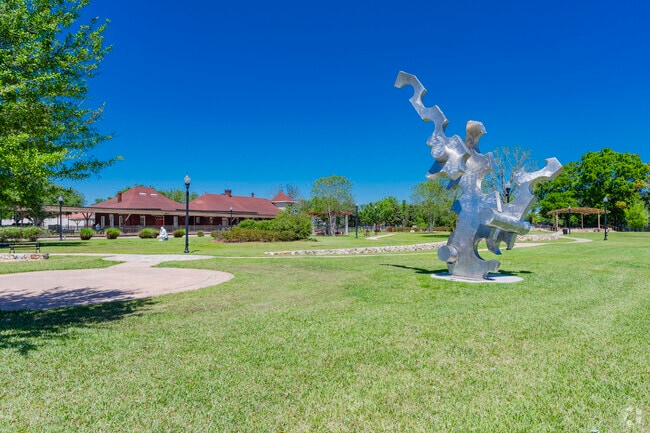
Downtown Ocala is sprinkled with art throughout the neighborhood.
Take the little ones out for a day at Tuscawilla Playground in Downtown Ocala.
This interactive mural is one of the art installations in Downtown Ocala.
The World Equestrian Complex near Southeast Ocala hosts numerous events year round in Ocala.
Median Household Income
$51,442
Average: $76,226
Education
15,347
Residents Have a Degree
Job Market
28,007
Workers Employed
Median Age
39 Years
Largest Age Group
30-39 Years
Approximately 14% of Residents
Under 20
25%
Over 65
19%
Housing Distribution
In Ocala, there are roughly the same number of renters and homeowners.

Education Distribution
Review this city's overall education levels.

As of September 2026, the average apartment rent in Ocala, FL is $837 for a studio, $1,288 for one bedroom, $1,523 for two bedrooms, and $1,829 for three bedrooms. Apartment rent in Ocala has increased by 0.9% in the past year.
The cost of living in Ocala, FL is 11.7% lower than the national average. Generally, housing in Ocala is 31.0% less expensive than the national average, with rent falling between $837 - $1,829. You can expect to pay 4.3% more for groceries, 3.1% less for utilities, and 6.0% less for transportation.
Compare Cities
Explore how walkable, bikeable, drivable, and transit-friendly Ocala, FL is for everyday living.
Not Walkable
Walkability
Exceptionally Drivable
Drivability
Somewhat Bikeable
Bikeability

Dr N High Jones Elementary School
Public
Grades PK-5
862 Students

Madison Street Academy Of Visual And Performing Arts
Public
Grades PK-5
476 Students

Eighth Street Elementary School
Public
Grades PK-5
356 Students
Ward-Highlands Elementary School
Public
Grades PK-5
838 Students

Public
Grades PK-5
729 Students
Public
Grades 6-8
807 Students

Public
Grades 6-8
195 Students

Public
Grades 6-8
1,099 Students

Public
Grades 6-8
996 Students

Horizon Academy At Marion Oaks
Public
Grades 6-8
1,237 Students

Public
Grades 9-12
2,372 Students
Public
Grades 9-12
3,021 Students
Public
Grades 9-12
1,641 Students
Public
Grades K-12
356 Students
Public
Grades 9-12
1,500 Students

 The GreatSchools Rating helps parents compare schools within a state based on a variety of school quality indicators and provides a helpful picture of how effectively each school serves all of its students. Ratings are on a scale of 1 (below average) to 10 (above average) and can include test scores, college readiness, academic progress, advanced courses, equity, discipline and attendance data. We also advise parents to visit schools, consider other information on school performance and programs, and consider family needs as part of the school selection process.
View GreatSchools Rating Methodology
Data provided by
GreatSchools.org
© 2026. All rights reserved.
The GreatSchools Rating helps parents compare schools within a state based on a variety of school quality indicators and provides a helpful picture of how effectively each school serves all of its students. Ratings are on a scale of 1 (below average) to 10 (above average) and can include test scores, college readiness, academic progress, advanced courses, equity, discipline and attendance data. We also advise parents to visit schools, consider other information on school performance and programs, and consider family needs as part of the school selection process.
View GreatSchools Rating Methodology
Data provided by
GreatSchools.org
© 2026. All rights reserved.
† Our analysis of utilities, groceries, transportation, healthcare, home prices, and other goods and services is sourced from the Cost of Living Index, a respected benchmark published by the Council for Community and Economic Research (C2ER) that provides a thorough overview of living expenses across different regions.
Rent data is provided by CoStar Group’s Market Trend reports. As the industry leader in commercial real estate information, analytics, and news, CoStar conducts extensive research to produce and maintain a comprehensive database of commercial real estate information. We combine this data with public record to provide the most up-to-date rental information available.
Consumer goods, services, and home prices are sourced from the Cost of Living Index published by the Council for Community and Economic Research (C2ER). The data on this page is updated quarterly. It was last published in September 2026.
Demographic information comes from Neustar and combines detailed address data with U.S. Census and American Community Survey statistics to produce reliable local estimates.