Median Age
49 Years
Largest Age Group
55-64 Years
Approximately 16% of Residents
Under 20
18%
Over 65
26%





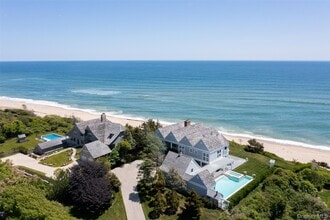
At the far eastern tip of Long Island, Montauk occupies a stretch of coastline where six state parks and sprawling nature preserves make up much of the landscape. This small hamlet carries a laid-back, end-of-the-road character that sets it apart from busier Hamptons communities to the west. While it draws seasonal visitors in droves, its year-round population maintains a close-knit, unhurried pace shaped by fishing, boating, and an abiding connection to the Atlantic.
The Plaza area anchors daily life with locally owned shops and eateries, while the Lake Montauk corridor to the north offers marina access and ferry service to Block Island. The Montauk Point Lighthouse, the first lighthouse built in New York State, stands as both a landmark and a symbol of the area's deep maritime history.
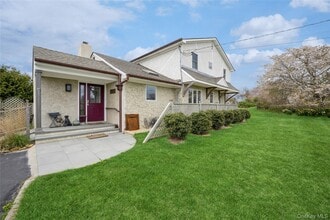
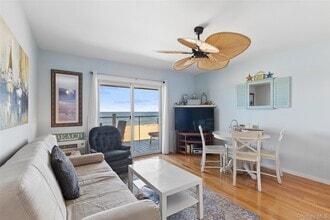
Rentals here lean toward cottage-style homes, beach bungalows, and smaller apartment communities rather than the high-rise towers found in more urban settings. The housing mix tends to feel relaxed and low-density, reflecting the surrounding natural environment. Whether you're drawn by the water, the open space, or the slower rhythm of life at the island's end, Montauk offers a living experience that's genuinely unlike anywhere else in New York.
The Moai statue at the Montauk Beach House reflects the village’s artistic, eclectic character and the creative community that has long shaped the area.
The coastline below the Montauk Lighthouse offers sweeping Atlantic views and access to iconic beaches favored by swimmers, surfers, and sightseers.
Walk along one of the many beaches in Montauk.
Big Reed Nature Trail is one of Montauk’s many nature preserves, spanning thousands of acres for hiking and outdoor adventure.
Montauk Points Beach has a walking path down to it from the Montauk Lighthouse parking lot.
Montauk's Grucci Fireworks display attracts many visitors every year.
Median Household Income
$136,358
Average: $164,993
Education
3,486
Residents Have a Degree
Job Market
3,665
Workers Employed
Median Age
49 Years
Largest Age Group
55-64 Years
Approximately 16% of Residents
Under 20
18%
Over 65
26%
Housing Distribution
Montauk has more homeowners than renters.

Education Distribution
Review this city's overall education levels.

Explore how walkable, bikeable, drivable, and transit-friendly Montauk, NY is for everyday living.
Somewhat Walkable
Walkability
Limited Public Transit
Transit
Exceptionally Drivable
Drivability
Fairly Bikeable
Bikeability

Public
Grades PK-8
298 Students

Public
Grades PK-8
298 Students
 The GreatSchools Rating helps parents compare schools within a state based on a variety of school quality indicators and provides a helpful picture of how effectively each school serves all of its students. Ratings are on a scale of 1 (below average) to 10 (above average) and can include test scores, college readiness, academic progress, advanced courses, equity, discipline and attendance data. We also advise parents to visit schools, consider other information on school performance and programs, and consider family needs as part of the school selection process.
View GreatSchools Rating Methodology
Data provided by
GreatSchools.org
© 2026. All rights reserved.
The GreatSchools Rating helps parents compare schools within a state based on a variety of school quality indicators and provides a helpful picture of how effectively each school serves all of its students. Ratings are on a scale of 1 (below average) to 10 (above average) and can include test scores, college readiness, academic progress, advanced courses, equity, discipline and attendance data. We also advise parents to visit schools, consider other information on school performance and programs, and consider family needs as part of the school selection process.
View GreatSchools Rating Methodology
Data provided by
GreatSchools.org
© 2026. All rights reserved.
† Our analysis of utilities, groceries, transportation, healthcare, home prices, and other goods and services is sourced from the Cost of Living Index, a respected benchmark published by the Council for Community and Economic Research (C2ER) that provides a thorough overview of living expenses across different regions.
Rent data is provided by CoStar Group’s Market Trend reports. As the industry leader in commercial real estate information, analytics, and news, CoStar conducts extensive research to produce and maintain a comprehensive database of commercial real estate information. We combine this data with public record to provide the most up-to-date rental information available.
Consumer goods, services, and home prices are sourced from the Cost of Living Index published by the Council for Community and Economic Research (C2ER). The data on this page is updated quarterly. It was last published in June 2026.
Demographic information comes from Neustar and combines detailed address data with U.S. Census and American Community Survey statistics to produce reliable local estimates.