Median Age
40 Years
Largest Age Group
30-39 Years
Approximately 14% of Residents
Under 20
24%
Over 65
20%
Avg Rent
$799
Population
11,863
Renter Mix
43% Rent
Downtown Martinsville says it all -- this city is rich with history, charm, and that small-town sense of style. But this Indiana gem has a quirky side. Founded in 1822, it is home to one of Indiana's few remaining pre-Civil War courthouses -- an impressive brick Italianate building completed in 1859. From the late 1800s to around 1968, visitors from all over came to Martinsville for its mineral water health spas, giving the city the slogan, "Martinsville City of Mineral Water."
Back in 1899, Grassyfork Fisheries was established in Martinsville by Eugene Shireman. These fisheries, created from swampland, transformed the landscape of Martinsville, and many of the fisheries still exist (especially in the Shireman subdivision). These fisheries gave Martinsville another slogan: "Goldfish Capital of the World." Today, the businesses are more commonplace, ranging from locally-owned bakeries and gift shops to cafes and restaurants.
Many small towns pride themselves on their festivals and events, and Martinsville is no different. Residents enjoy a variety of events, including the Morgan County Fair, Artie Fest, Farmer's Market Day, Fall Foliage Festival, and Martinsville on the Square. Martinsville is a suburban city, located about 28 miles southwest of Indianapolis.
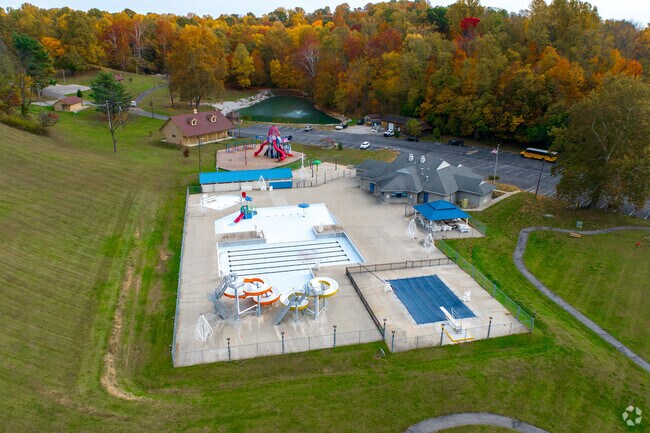
Martinsville City Park has a pool, playground and pickleball courts.
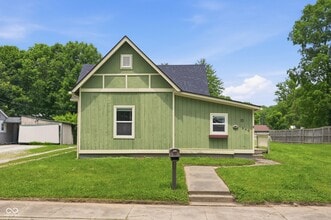
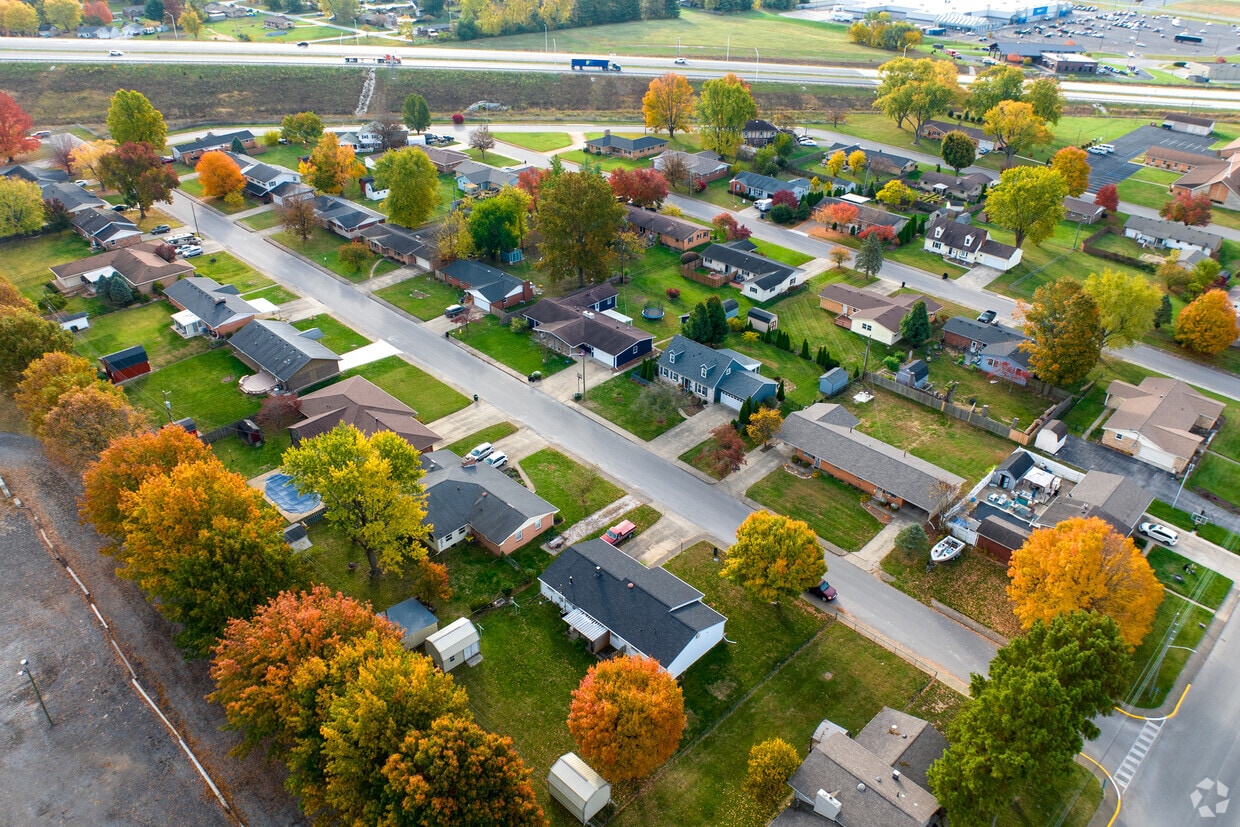
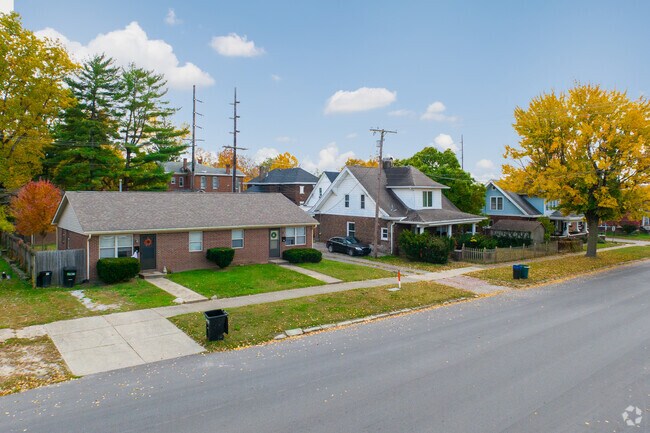
Houses in Martinsville line peaceful streets.
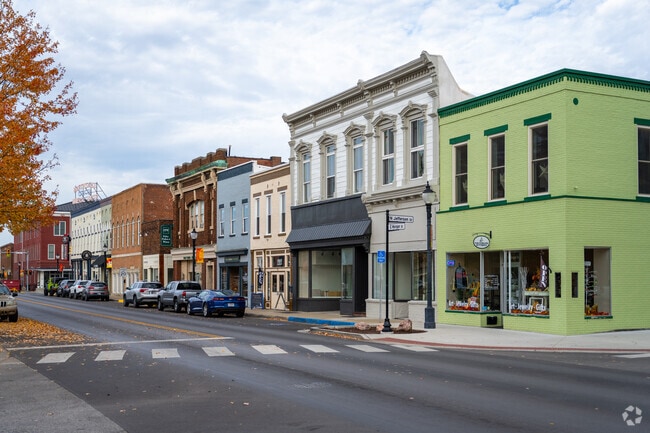
Downtown Martinsville is lined with charming two-story historic buildings.
An outdoor stage in downtown Martinsville is used for musical and theatrical performances.
Halloween decorations transform Martinsville into another world.
Martinsville relies on the bus for public transit.
Median Household Income
$51,476
Average: $61,935
Education
1,489
Residents Have a Degree
Job Market
5,644
Workers Employed
Median Age
40 Years
Largest Age Group
30-39 Years
Approximately 14% of Residents
Under 20
24%
Over 65
20%
Housing Distribution
Martinsville has more homeowners than renters.

Education Distribution
Review this city's overall education levels.

As of September 2026, the average apartment rent in Martinsville, IN is $792 for a studio, $803 for one bedroom, $933 for two bedrooms, and $1,144 for three bedrooms. Apartment rent in Martinsville has increased by 1.9% in the past year.
Explore how walkable, bikeable, drivable, and transit-friendly Martinsville, IN is for everyday living.
Fairly Walkable
Walkability
Exceptionally Drivable
Drivability
Somewhat Bikeable
Bikeability

Green Township Elementary School
Public
Grades PK-5
137 Students

Public
Grades PK-5
126 Students
Public
Grades PK-5
404 Students

Charles L Smith Elementary School
Public
Grades PK-5
375 Students

Public
Grades PK-5
237 Students

Public
Grades 8
760 Students
Public
Grades 9-12
1,284 Students
 The GreatSchools Rating helps parents compare schools within a state based on a variety of school quality indicators and provides a helpful picture of how effectively each school serves all of its students. Ratings are on a scale of 1 (below average) to 10 (above average) and can include test scores, college readiness, academic progress, advanced courses, equity, discipline and attendance data. We also advise parents to visit schools, consider other information on school performance and programs, and consider family needs as part of the school selection process.
View GreatSchools Rating Methodology
Data provided by
GreatSchools.org
© 2026. All rights reserved.
The GreatSchools Rating helps parents compare schools within a state based on a variety of school quality indicators and provides a helpful picture of how effectively each school serves all of its students. Ratings are on a scale of 1 (below average) to 10 (above average) and can include test scores, college readiness, academic progress, advanced courses, equity, discipline and attendance data. We also advise parents to visit schools, consider other information on school performance and programs, and consider family needs as part of the school selection process.
View GreatSchools Rating Methodology
Data provided by
GreatSchools.org
© 2026. All rights reserved.
† Our analysis of utilities, groceries, transportation, healthcare, home prices, and other goods and services is sourced from the Cost of Living Index, a respected benchmark published by the Council for Community and Economic Research (C2ER) that provides a thorough overview of living expenses across different regions.
Rent data is provided by CoStar Group’s Market Trend reports. As the industry leader in commercial real estate information, analytics, and news, CoStar conducts extensive research to produce and maintain a comprehensive database of commercial real estate information. We combine this data with public record to provide the most up-to-date rental information available.
Consumer goods, services, and home prices are sourced from the Cost of Living Index published by the Council for Community and Economic Research (C2ER). The data on this page is updated quarterly. It was last published in September 2026.
Demographic information comes from Neustar and combines detailed address data with U.S. Census and American Community Survey statistics to produce reliable local estimates.