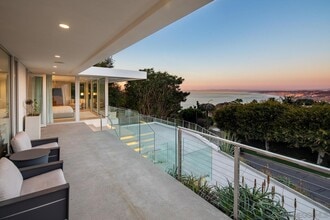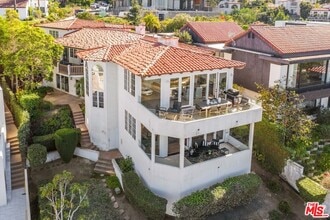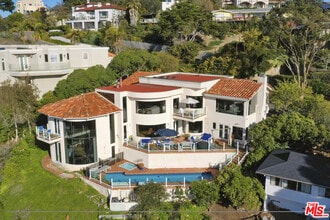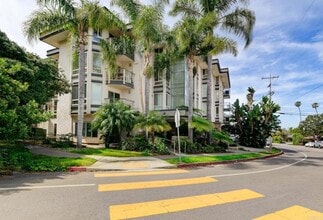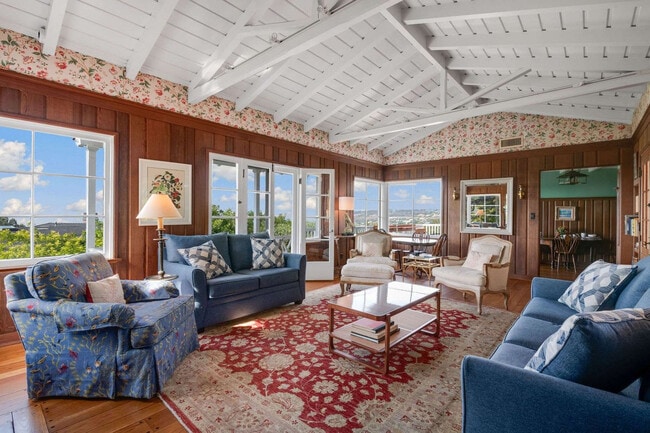
1850 Castellana Rd
1850 Castellana Rd,
San Diego, CA 92037
$15,735 Total Monthly Price
4 Beds

Area Guide
La Jolla is a coastal neighborhood in San Diego that rewards those who want Pacific Ocean views, world-class research institutions, and a lively village-style core all within the same zip code. The neighborhood stretches along several miles of coastline, with the Village at its heart offering walkable blocks lined with restaurants, cafes, and boutiques. Pacific Beach borders it to the south, and the hills and canyons that frame the area give it a distinct sense of place compared to the flatter parts of the city.
Renters in La Jolla find mid-century, two-story apartment buildings alongside newer high- and medium-rise communities perched on the bluffs or just steps from the shoreline. That range spans decades of coastal development rather than any single era. Many communities take advantage of the terrain itself, with ocean-facing units and bluff-top positioning that's hard to find elsewhere along the San Diego coast.
The University of California, San Diego anchors the northern end of the neighborhood and brings a steady academic and research presence. La Jolla is also home to the Scripps Institution of Oceanography, the Salk Institute for Biological Studies, and Scripps Research, making it one of the most research-intensive neighborhoods anywhere on the West Coast. The Kumeyaay, the area's original inhabitants, named the location in reference to the sea-level caves visible in the north-facing coastal bluffs.
As of September 2026, the average apartment rent in La Jolla is $967 for a studio, $1,186 for one bedroom, $1,565 for two bedrooms, and $1,561 for three bedrooms. Apartment rent in La Jolla has increased by 2.2% in the past year.
Studio
414 sq ft
Average Sq Ft
$967/month
Average Rent
1 BR
604 sq ft
Average Sq Ft
$1,186/month
Average Rent
2 BR
944 sq ft
Average Sq Ft
$1,565/month
Average Rent
3 BR
1,236 sq ft
Average Sq Ft
$1,561/month
Average Rent
Explore how walkable, bikeable, drivable, and transit-friendly La Jolla - San Diego, CA is for everyday living.
Fairly Walkable
Walkability
Exceptionally Drivable
Drivability
Somewhat Bikeable
Bikeability
La Jolla - San Diego, CA offers all daily essentials, but they’re limited to a few main areas.
Supermarket Within a 20 Minute Walk
Groceries
Good Restaurant Variety Nearby
Restaurants
Good Café Variety Nearby
Cafes
Good Variety of Shops Nearby
Shopping
La Jolla - San Diego, CA provides green space and wellness resources in certain areas.
Very Large Amount of Park Space Nearby
Parks
Fair Wellness Amenity Variety Nearby
Wellness
Get a sense of what it’s like to live in La Jolla - San Diego, CA from everyday activity to noise and nightlife.
Mostly Calm Atmosphere
Vibrancy
Good Nightlife Variety Nearby
Nightlife
Not Noisy
Quiet Score

† Our analysis of utilities, groceries, transportation, healthcare, home prices, and other goods and services is sourced from the Cost of Living Index, a respected benchmark published by the Council for Community and Economic Research (C2ER) that provides a thorough overview of living expenses across different regions.
Rent data is provided by CoStar Group’s Market Trend reports. As the industry leader in commercial real estate information, analytics, and news, CoStar conducts extensive research to produce and maintain a comprehensive database of commercial real estate information. We combine this data with public record to provide the most up-to-date rental information available.
Consumer goods, services, and home prices are sourced from the Cost of Living Index published by the Council for Community and Economic Research (C2ER). The data on this page is updated quarterly. It was last published in September 2026.
Demographic information comes from Neustar and combines detailed address data with U.S. Census and American Community Survey statistics to produce reliable local estimates.