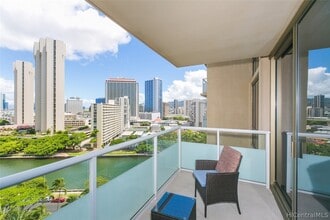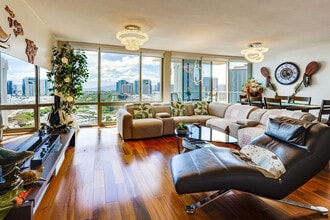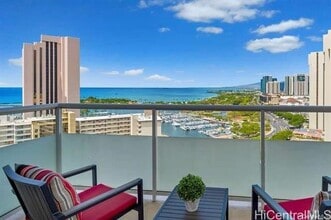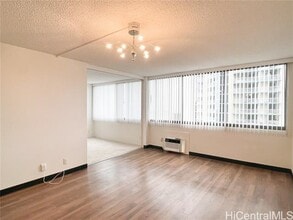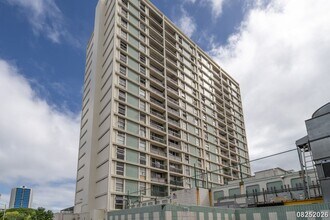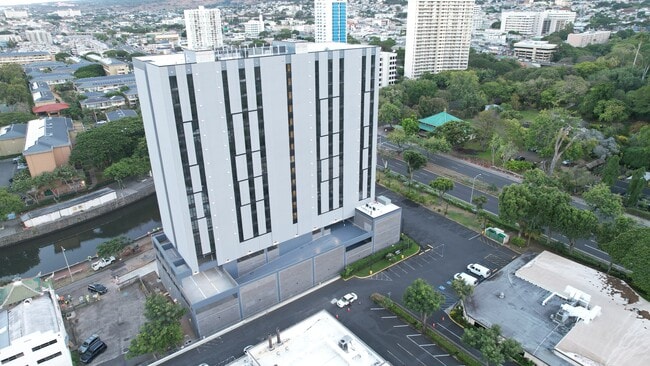
Halewai'olu Senior Residences
1331 River St,
Honolulu, HI 96817
$1,577 - $2,365
1-2 Beds

Area Guide
Nestled along the southern end of Oahu, neighboring Downtown Honolulu, Kalihi-Palama is a beautiful residential and commercial hub. Kalihi-Palama is home to government offices, light industry companies, schools, shopping centers, diverse restaurants, and more. Kalihi-Palama is also known for its strong sense of community. In true Hawaii fashion, most homes in the neighborhood house multiple generations of family members. Canoe clubs paddle along the shores of Sand Island, a peninsula on the southern end of the area, and families and friends socialize and celebrate at cultural events at one of the neighborhood’s many community centers. This family-friendly slice of paradise has affordable and upscale rentals from affordable homes to lavish apartments with dazzling views of the city and the Pacific Ocean. Locals have access to a wide variety of diverse restaurants. Enjoy Hawaiian barbecue with friends or enjoy a meal with a view at scenic waterfront eatery.
Centrally located next to Downtown Honolulu on the south shore, Kalihi-Palama neighbors the highly popular Ala Moana-Kakaako and Waikiki neighborhoods, in addition to being located off the Pali and Likelike highways that connect Honolulu to the east and north sides of the island. This excellent location gives residents access to even more options for shopping, dining, and entertainment. Kalihi-Palama’s proximity to Downtown Honolulu gives residents access to Hawai’i Pacific University, museums, landmarks, restaurants, and more.
As of September 2026, the average apartment rent in Kalihi-Palama is $1,122 for a studio, $1,894 for one bedroom, $2,060 for two bedrooms, and $2,795 for three bedrooms. Apartment rent in Kalihi-Palama has increased by 3.9% in the past year.
Studio
370 sq ft
Average Sq Ft
$1,122/month
Average Rent
1 BR
512 sq ft
Average Sq Ft
$1,894/month
Average Rent
2 BR
689 sq ft
Average Sq Ft
$2,060/month
Average Rent
3 BR
899 sq ft
Average Sq Ft
$2,795/month
Average Rent
Explore how walkable, bikeable, drivable, and transit-friendly Kalihi-Palama - Honolulu, HI is for everyday living.
Very Walkable
Walkability
Some Public Transit
Transit
Very Drivable
Drivability
Fairly Bikeable
Bikeability
In Kalihi-Palama - Honolulu, HI, daily errands are quick and hassle-free.
Supermarket Within a 5 Minute Walk
Groceries
Exceptional Restaurant Variety Nearby
Restaurants
Exceptional Café Variety Nearby
Cafes
Exceptional Variety of Shops Nearby
Shopping
Kalihi-Palama - Honolulu, HI provides green space and wellness resources in certain areas.
Large Amount of Park Space Nearby
Parks
Fair Wellness Amenity Variety Nearby
Wellness
Get a sense of what it’s like to live in Kalihi-Palama - Honolulu, HI from everyday activity to noise and nightlife.
Vibrant Atmosphere at Times
Vibrancy
Great Nightlife Variety Nearby
Nightlife
Somewhat Noisy
Quiet Score

† Our analysis of utilities, groceries, transportation, healthcare, home prices, and other goods and services is sourced from the Cost of Living Index, a respected benchmark published by the Council for Community and Economic Research (C2ER) that provides a thorough overview of living expenses across different regions.
Rent data is provided by CoStar Group’s Market Trend reports. As the industry leader in commercial real estate information, analytics, and news, CoStar conducts extensive research to produce and maintain a comprehensive database of commercial real estate information. We combine this data with public record to provide the most up-to-date rental information available.
Consumer goods, services, and home prices are sourced from the Cost of Living Index published by the Council for Community and Economic Research (C2ER). The data on this page is updated quarterly. It was last published in September 2026.
Demographic information comes from Neustar and combines detailed address data with U.S. Census and American Community Survey statistics to produce reliable local estimates.