Median Age
46 Years
Largest Age Group
50-59 Years
Approximately 15% of Residents
Under 20
19%
Over 65
22%


Avg Rent
$1,932
Population
202,338
Renter Mix
54% Rent
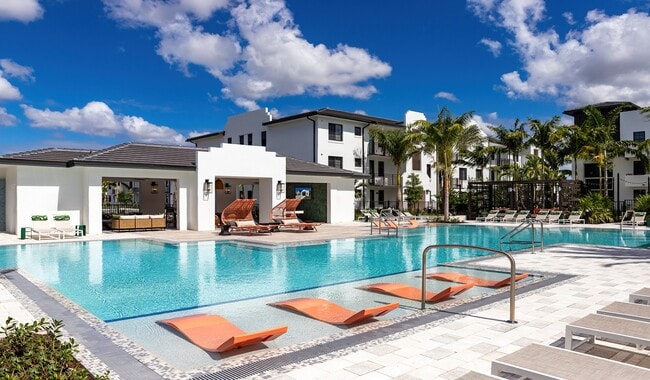
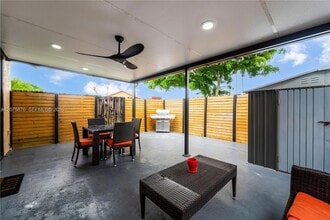
Hialeah is the sixth-largest city in Florida and one of the most distinctly Cuban-American cities in the United States, sitting just northwest of Miami in the heart of Miami-Dade County. Established in 1925 and celebrating its centennial in 2025, the city carries a deep cultural identity shaped by decades of history, including its transformation after the Cuban Revolution of 1959. Today, Hialeah functions as a self-contained urban center with its own street grid, three Metrorail stations, and Tri-Rail access that connects residents to Downtown Miami and beyond. Amelia Earhart Park's 515 acres and Hialeah Park Racing and Casino, a designated National Historic Landmark, anchor the city's recreational and cultural landscape.
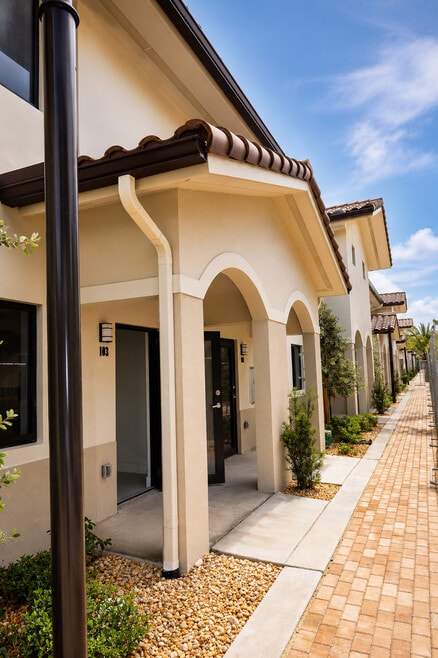
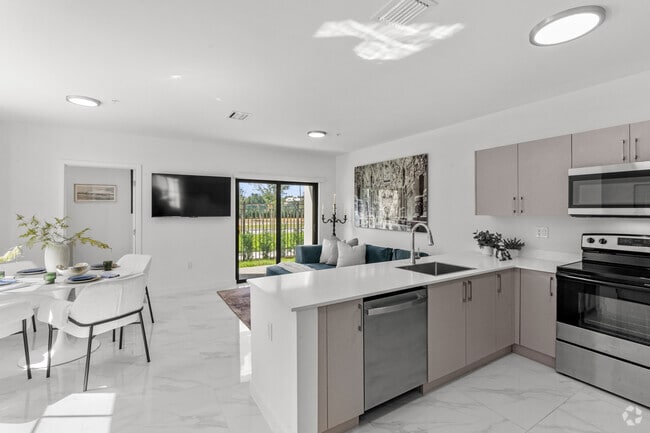
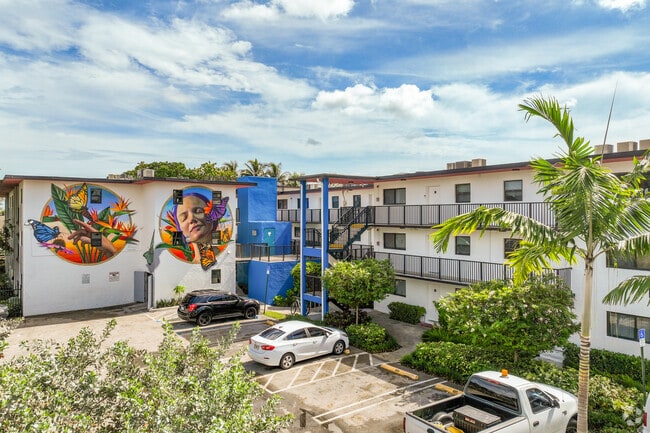
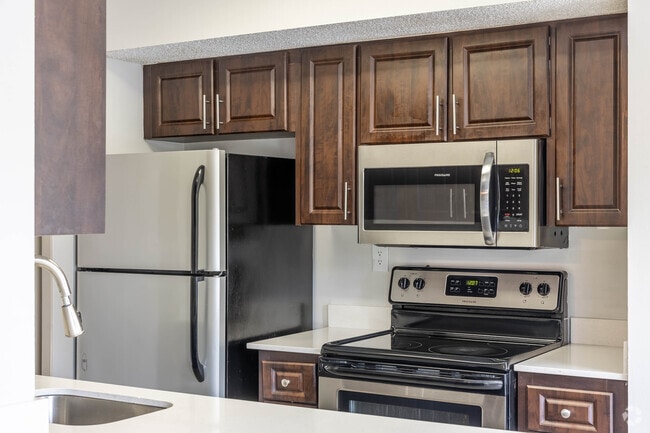
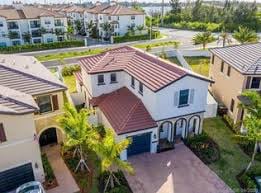
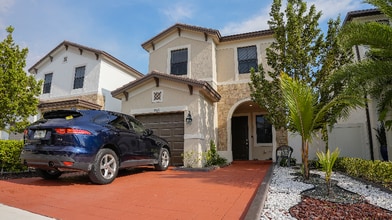
Neighborhood variety runs the full spectrum here. West Hialeah draws renters toward garden-style apartment communities near Westland Mall, while the Leah Arts District has grown into an arts-forward corridor with murals, live music, and local gathering spaces. East Hialeah offers tree-lined streets close to transit, and the Palm Avenue corridor puts residents steps from City Hall and the Milander Center for Arts and Entertainment. The housing mix reflects that range, from low-rise garden apartments to spacious townhomes and mid-rise apartment communities. Hialeah offers a grounded, well-connected place to rent within reach of one of the country's most dynamic metro areas.
Median Household Income
$44,506
Average: $60,343
Education
37,804
Residents Have a Degree
Job Market
102,760
Workers Employed
Median Age
46 Years
Largest Age Group
50-59 Years
Approximately 15% of Residents
Under 20
19%
Over 65
22%
Housing Distribution
Hialeah has more renters than homeowners.

Education Distribution
Review this city's overall education levels.

As of September 2026, the average apartment rent in Hialeah, FL is $1,603 for a studio, $1,904 for one bedroom, $2,309 for two bedrooms, and $2,760 for three bedrooms. Apartment rent in Hialeah has increased by 2.0% in the past year.
Explore how walkable, bikeable, drivable, and transit-friendly Hialeah, FL is for everyday living.
Moderately Walkable
Walkability
Limited Public Transit
Transit
Exceptionally Drivable
Drivability
Somewhat Bikeable
Bikeability

Public
Grades PK-5
898 Students

Highly Inquisitive & Versatile (Hive) Preparatory School
Public
Grades K-8
844 Students
John G. Dupuis Elementary School
Public
Grades PK-5
479 Students

Palm Springs North Elementary School
Public
Grades PK-8
1,541 Students

Public
Grades PK-8
1,119 Students
Public
Grades 6-12
1,049 Students
Highly Inquisitive & Versatile (Hive) Preparatory School
Public
Grades K-8
844 Students
Palm Springs North Elementary School
Public
Grades PK-8
1,541 Students
Public
Grades PK-8
1,119 Students
Public
Grades 6-8
993 Students
Public
Grades 6-12
1,049 Students
Mater Academy Lakes High School
Public
Grades 9-12
1,178 Students

City Of Hialeah Education Academy
Public
Grades 6-12
1,031 Students
Youth Co-Op Preparatory High School
Public
Grades 9-12
261 Students
Imater Preparatory Academy High School
Public
Grades 9-12
971 Students

 The GreatSchools Rating helps parents compare schools within a state based on a variety of school quality indicators and provides a helpful picture of how effectively each school serves all of its students. Ratings are on a scale of 1 (below average) to 10 (above average) and can include test scores, college readiness, academic progress, advanced courses, equity, discipline and attendance data. We also advise parents to visit schools, consider other information on school performance and programs, and consider family needs as part of the school selection process.
View GreatSchools Rating Methodology
Data provided by
GreatSchools.org
© 2026. All rights reserved.
The GreatSchools Rating helps parents compare schools within a state based on a variety of school quality indicators and provides a helpful picture of how effectively each school serves all of its students. Ratings are on a scale of 1 (below average) to 10 (above average) and can include test scores, college readiness, academic progress, advanced courses, equity, discipline and attendance data. We also advise parents to visit schools, consider other information on school performance and programs, and consider family needs as part of the school selection process.
View GreatSchools Rating Methodology
Data provided by
GreatSchools.org
© 2026. All rights reserved.
† Our analysis of utilities, groceries, transportation, healthcare, home prices, and other goods and services is sourced from the Cost of Living Index, a respected benchmark published by the Council for Community and Economic Research (C2ER) that provides a thorough overview of living expenses across different regions.
Rent data is provided by CoStar Group’s Market Trend reports. As the industry leader in commercial real estate information, analytics, and news, CoStar conducts extensive research to produce and maintain a comprehensive database of commercial real estate information. We combine this data with public record to provide the most up-to-date rental information available.
Consumer goods, services, and home prices are sourced from the Cost of Living Index published by the Council for Community and Economic Research (C2ER). The data on this page is updated quarterly. It was last published in September 2026.
Demographic information comes from Neustar and combines detailed address data with U.S. Census and American Community Survey statistics to produce reliable local estimates.