Median Age
43 Years
Largest Age Group
30-39 Years
Approximately 18% of Residents
Under 20
17%
Over 65
21%
Avg Rent
$1,245
Population
14,673
Renter Mix
53% Rent
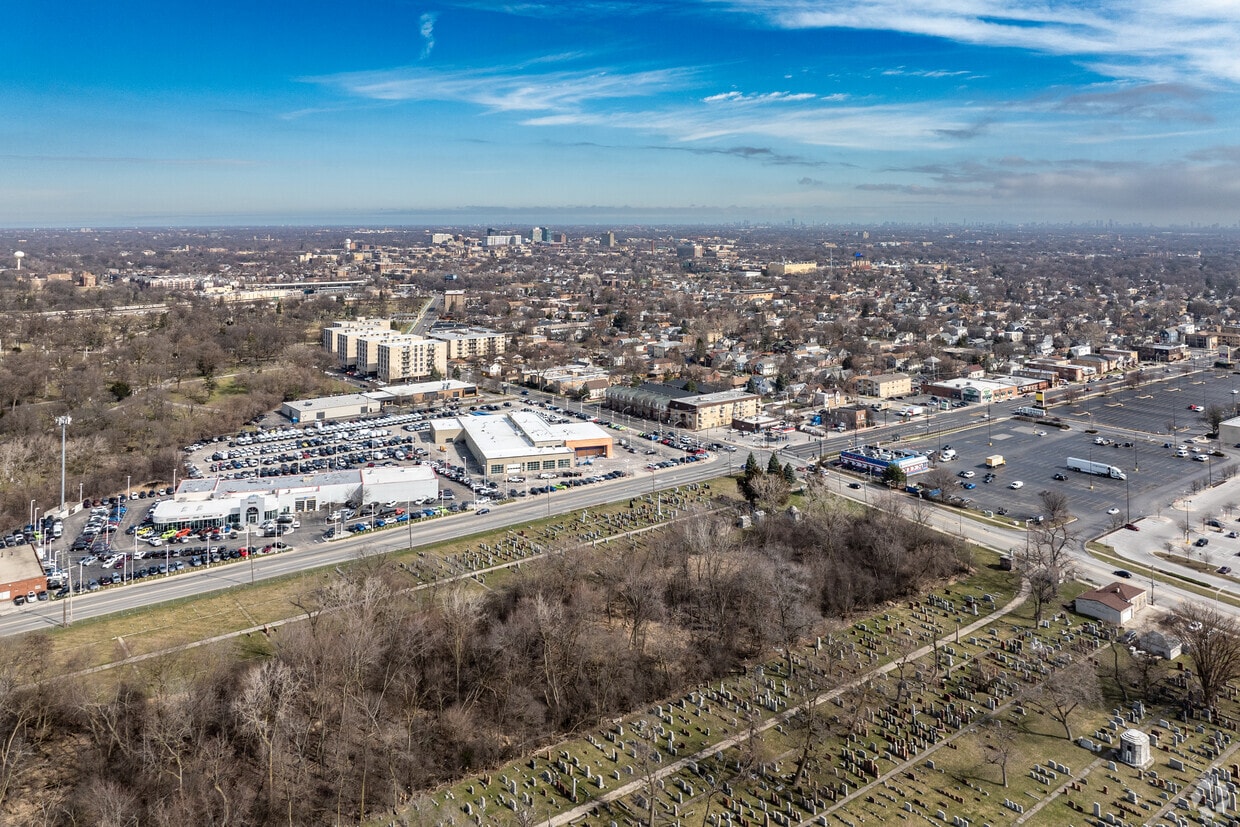
Just ten miles west of downtown Chicago, Forest Park sits at the western end of the CTA Blue Line, making it one of the few suburbs with a direct “L” train connection to the city. The Des Plaines River traces the edge of town, and the streets are lined with locally owned restaurants and pubs that give the main corridor on Madison Street a real neighborhood personality. Nearby Oak Park is a short drive away, adding even more dining and shopping options to an already well-rounded area.
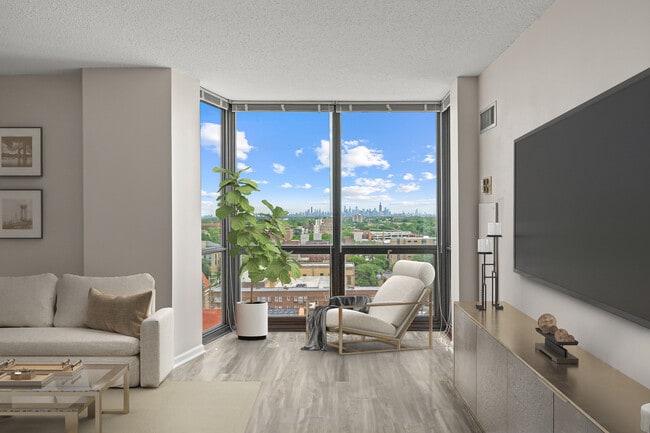
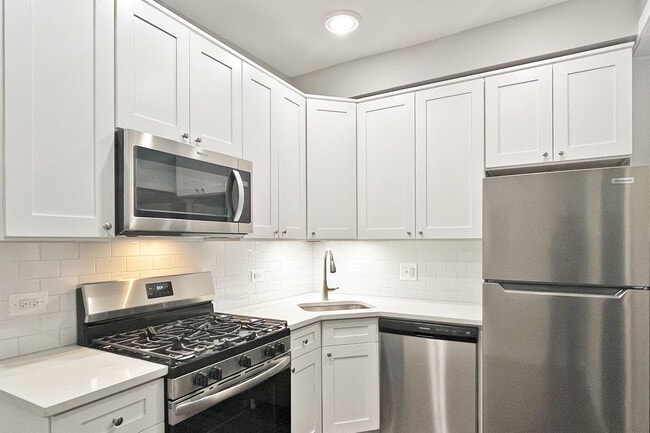
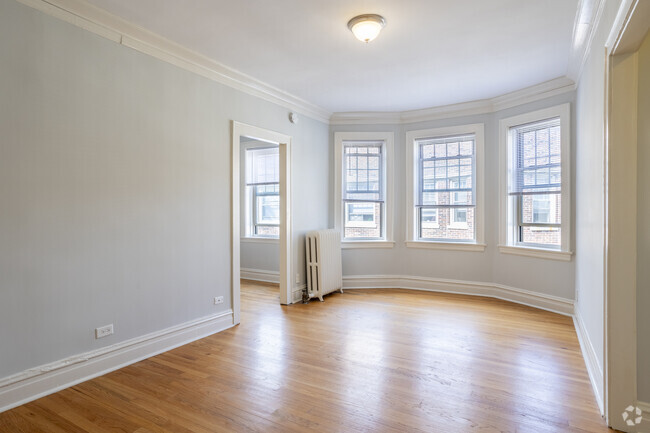
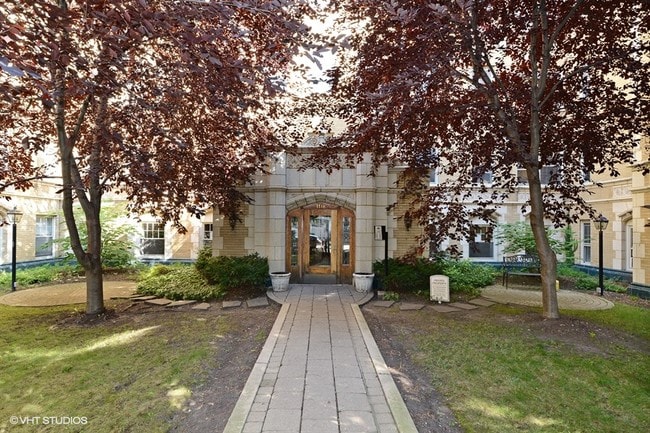
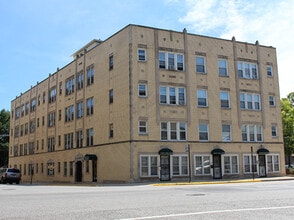
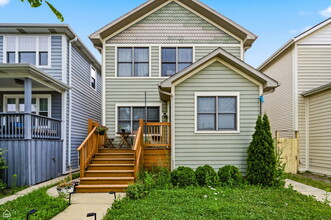
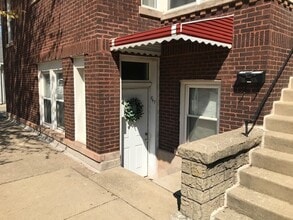
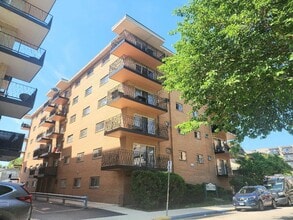
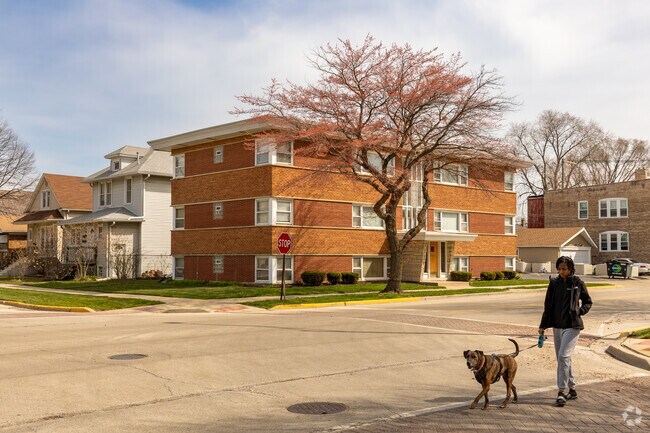
Renters here will find a mix of courtyard-style apartment communities, garden flats, and updated multi-unit buildings that offer more space than a comparable Chicago address. Whether you prefer a cozy studio or a two-bedroom with room to spread out, the rental landscape covers a solid range of options. The Blue Line connection means you can skip the expressway entirely on most days, and the Eisenhower is right there when you need it. Forest Park also holds one of Illinois' most historically significant cemeteries, Forest Home, where labor movement leaders including Emma Goldman are buried—a reminder that this small village carries a bigger story than its three square miles might suggest.
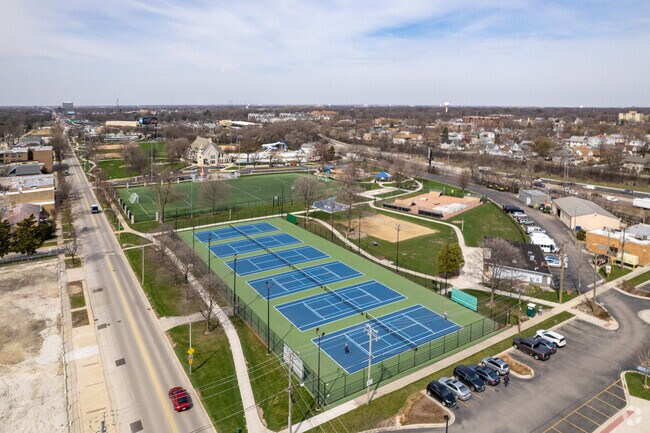
Park District at Forest Park tennis courts.
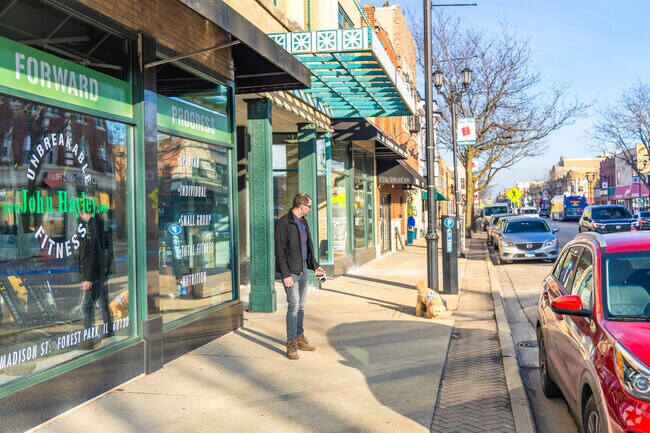
Forest Park residents enjoy taking walks on Madison Avenue.
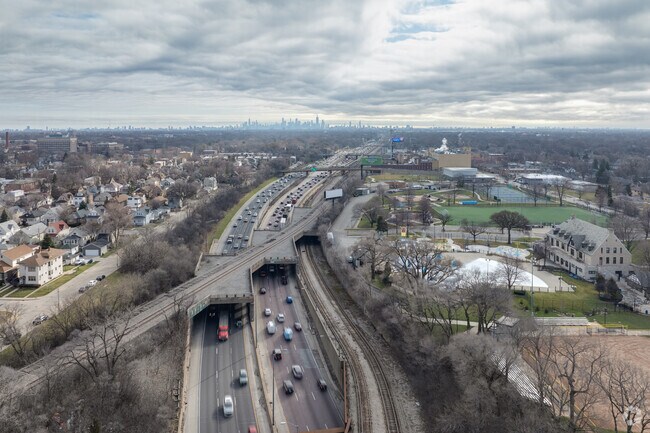
Forest Park is just a few miles from downtown Chicago on Interstate 290.
Chicago Transit Authority trains run between Forest Park and downtown Chicago.
There are many large condo properties in the Forest Park area to choose from.
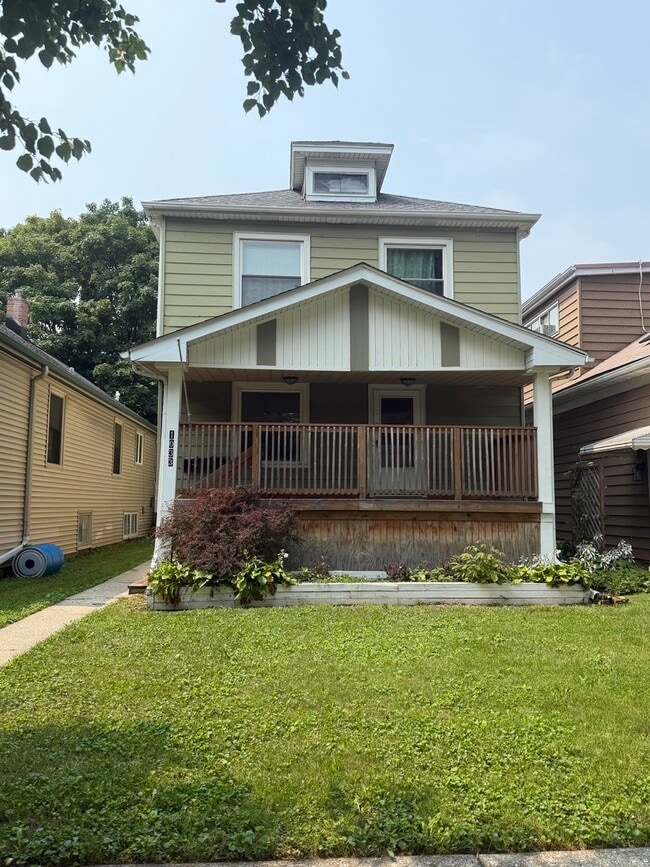
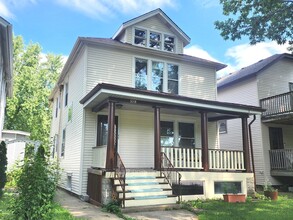
Stroll to enjoy the single-family Craftsman and bungalow-style homes in Forest Park.
Median Household Income
$73,606
Average: $96,707
Education
6,446
Residents Have a Degree
Job Market
8,292
Workers Employed
Median Age
43 Years
Largest Age Group
30-39 Years
Approximately 18% of Residents
Under 20
17%
Over 65
21%
Housing Distribution
Forest Park has more renters than homeowners.

Education Distribution
Review this city's overall education levels.

As of August 2026, the average apartment rent in Forest Park, IL is $986 for a studio, $1,245 for one bedroom, $1,710 for two bedrooms, and $1,281 for three bedrooms. Apartment rent in Forest Park has increased by 1.9% in the past year.
Explore how walkable, bikeable, drivable, and transit-friendly Forest Park, IL is for everyday living.
Moderately Walkable
Walkability
Good Public Transit
Transit
Exceptionally Drivable
Drivability
Fairly Bikeable
Bikeability

Field Stevenson Elementary School
Public
Grades K-5
210 Students

Public
Grades PK-5
185 Students

Public
Grades K-5
135 Students
Public
Grades 3-5
103 Students
Public
Grades 6-8
177 Students

Proviso Math And Science Academy
Public
Grades 9-12
918 Students

 The GreatSchools Rating helps parents compare schools within a state based on a variety of school quality indicators and provides a helpful picture of how effectively each school serves all of its students. Ratings are on a scale of 1 (below average) to 10 (above average) and can include test scores, college readiness, academic progress, advanced courses, equity, discipline and attendance data. We also advise parents to visit schools, consider other information on school performance and programs, and consider family needs as part of the school selection process.
View GreatSchools Rating Methodology
Data provided by
GreatSchools.org
© 2026. All rights reserved.
The GreatSchools Rating helps parents compare schools within a state based on a variety of school quality indicators and provides a helpful picture of how effectively each school serves all of its students. Ratings are on a scale of 1 (below average) to 10 (above average) and can include test scores, college readiness, academic progress, advanced courses, equity, discipline and attendance data. We also advise parents to visit schools, consider other information on school performance and programs, and consider family needs as part of the school selection process.
View GreatSchools Rating Methodology
Data provided by
GreatSchools.org
© 2026. All rights reserved.
† Our analysis of utilities, groceries, transportation, healthcare, home prices, and other goods and services is sourced from the Cost of Living Index, a respected benchmark published by the Council for Community and Economic Research (C2ER) that provides a thorough overview of living expenses across different regions.
Rent data is provided by CoStar Group’s Market Trend reports. As the industry leader in commercial real estate information, analytics, and news, CoStar conducts extensive research to produce and maintain a comprehensive database of commercial real estate information. We combine this data with public record to provide the most up-to-date rental information available.
Consumer goods, services, and home prices are sourced from the Cost of Living Index published by the Council for Community and Economic Research (C2ER). The data on this page is updated quarterly. It was last published in June 2026.
Demographic information comes from Neustar and combines detailed address data with U.S. Census and American Community Survey statistics to produce reliable local estimates.