Median Age
36 Years
Largest Age Group
10-19 Years
Approximately 16% of Residents
Under 20
28%
Over 65
18%


Avg Rent
$1,018
Population
29,627
Renter Mix
42% Rent
Eagle Pass is the county seat of Maverick County and sits along the Rio Grande, directly bordering Piedras Negras, Coahuila, Mexico. It holds the distinction of being the first American settlement on the Rio Grande, a history that still shapes much of the city's character today. If you're looking at apartments for rent in Eagle Pass, you'll find a city with a rich cross-border culture, recognized landmarks like the Fort Duncan Museum, listed on the National Register of Historic Places, and the Lucky Eagle Casino, operated by the Kickapoo Tribe.
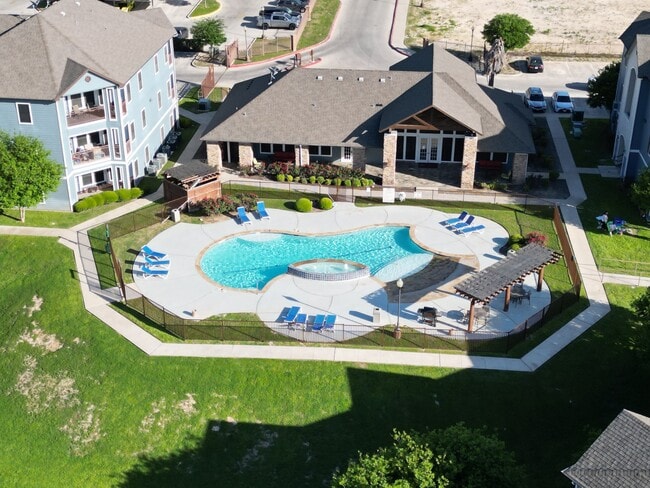
Renters in Eagle Pass can choose from a range of housing options, including apartments, condos, townhomes, and houses spread across walkable and residential areas throughout the city. The downtown district features local shops and restaurants, while the Mall de las Aguilas offers convenient retail access. Residents also enjoy a municipal golf course and easy access to the international bridges, which connect to the Zaragoza Mercado and cultural landmarks in Piedras Negras. Southwest Texas Junior College has a campus in Eagle Pass, making apartment communities near the school a practical option for students and staff alike.
Getting around Eagle Pass is straightforward, with US-57 and US-277 serving as the main routes in and out of the city. The two international bridges, International Bridge I and Camino Real International Bridge II, provide direct access to Piedras Negras for those who work or shop across the border. Major employers in the area include the Eagle Pass Independent School District, Maverick County, and the retail and hospitality sectors. Laughlin Air Force Base is located roughly 56 miles away, and Del Rio International Airport serves the broader region. With its blend of history, cross-border access, and steady rental inventory, Eagle Pass is a practical and well-connected place to call home.
Eagle Pass Veterans Day Parade is one of the highlights of Downtown Eagle Pass.
Median Household Income
$42,770
Average: $57,921
Education
5,452
Residents Have a Degree
Job Market
12,025
Workers Employed
Median Age
36 Years
Largest Age Group
10-19 Years
Approximately 16% of Residents
Under 20
28%
Over 65
18%
Housing Distribution
Eagle Pass has more homeowners than renters.

Education Distribution
Review this city's overall education levels.

As of September 2026, the average apartment rent in Eagle Pass, TX is $997 for one bedroom, $1,208 for two bedrooms, and $1,325 for three bedrooms. Apartment rent in Eagle Pass has increased by 0.6% in the past year.
Explore how walkable, bikeable, drivable, and transit-friendly Eagle Pass, TX is for everyday living.
Fairly Walkable
Walkability
Exceptionally Drivable
Drivability
Somewhat Bikeable
Bikeability

Public
Grades K-5
539 Students

Armando Cerna Elementary School
Public
Grades K-5
588 Students

Ray High Darr Elementary School
Public
Grades K-5
383 Students

Dena Kelso Graves Elementary School
Public
Grades K-5
515 Students

Perfecto Mancha Elementary School
Public
Grades K-5
501 Students
Public
Grades 6-8
1,040 Students
Public
Grades 6-8
927 Students

Public
Grades 9-12
2,323 Students
Public
Grades 9-12
1,878 Students

 The GreatSchools Rating helps parents compare schools within a state based on a variety of school quality indicators and provides a helpful picture of how effectively each school serves all of its students. Ratings are on a scale of 1 (below average) to 10 (above average) and can include test scores, college readiness, academic progress, advanced courses, equity, discipline and attendance data. We also advise parents to visit schools, consider other information on school performance and programs, and consider family needs as part of the school selection process.
View GreatSchools Rating Methodology
Data provided by
GreatSchools.org
© 2026. All rights reserved.
The GreatSchools Rating helps parents compare schools within a state based on a variety of school quality indicators and provides a helpful picture of how effectively each school serves all of its students. Ratings are on a scale of 1 (below average) to 10 (above average) and can include test scores, college readiness, academic progress, advanced courses, equity, discipline and attendance data. We also advise parents to visit schools, consider other information on school performance and programs, and consider family needs as part of the school selection process.
View GreatSchools Rating Methodology
Data provided by
GreatSchools.org
© 2026. All rights reserved.
† Our analysis of utilities, groceries, transportation, healthcare, home prices, and other goods and services is sourced from the Cost of Living Index, a respected benchmark published by the Council for Community and Economic Research (C2ER) that provides a thorough overview of living expenses across different regions.
Rent data is provided by CoStar Group’s Market Trend reports. As the industry leader in commercial real estate information, analytics, and news, CoStar conducts extensive research to produce and maintain a comprehensive database of commercial real estate information. We combine this data with public record to provide the most up-to-date rental information available.
Consumer goods, services, and home prices are sourced from the Cost of Living Index published by the Council for Community and Economic Research (C2ER). The data on this page is updated quarterly. It was last published in September 2026.
Demographic information comes from Neustar and combines detailed address data with U.S. Census and American Community Survey statistics to produce reliable local estimates.