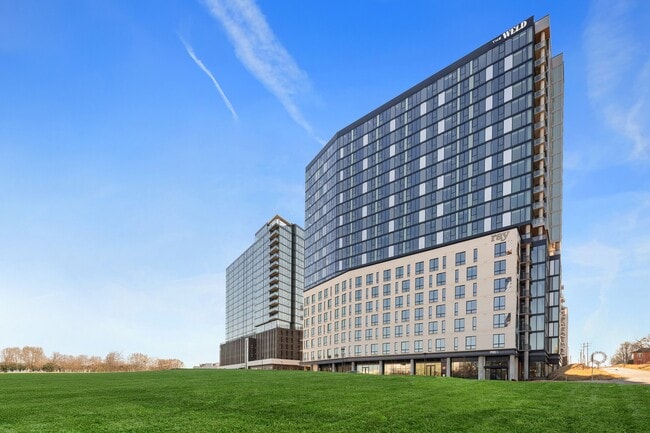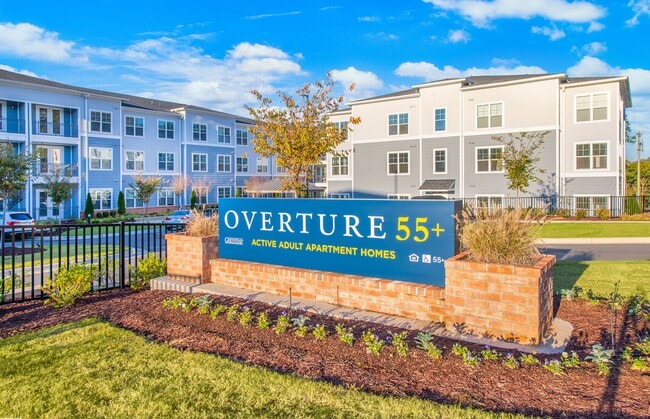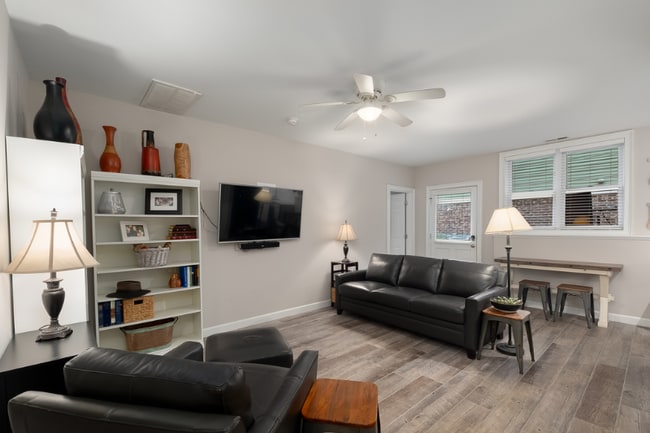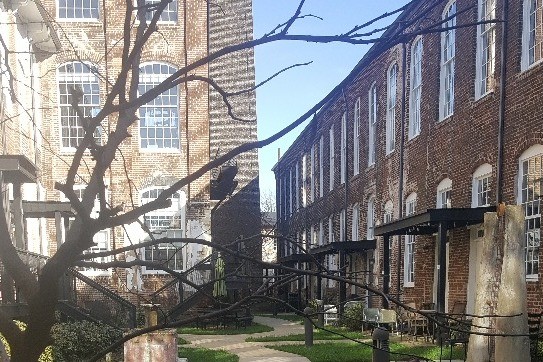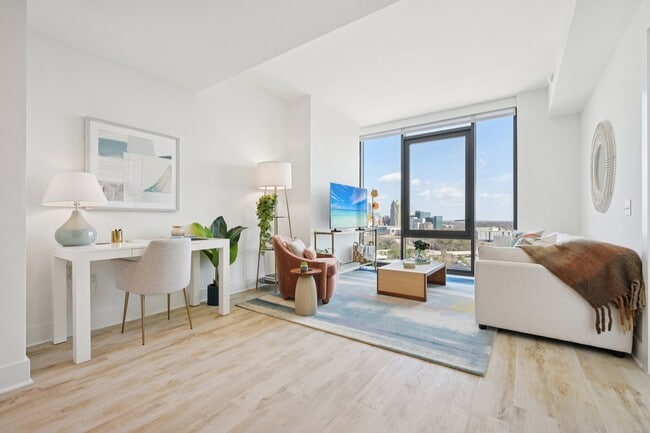
The Holston
1020 Hammell Dr,
Raleigh, NC 27603
$1,633 - $7,538
Studio - 3 Beds

Area Guide
During the 1800s, the mentally ill had a strong voice in Dorothea Dix. She visited North Carolina in 1848 to advocate for better care of the mentally ill. The State Medical Society was formed the following year, and the capital city of Raleigh was chosen for the hospital, Dix Hill, which opened in 1856. The original property covered 2,354 acres. Over time, pieces were sold or given away -- a large chunk of land was donated to NC State for its Centennial Campus in 1984. The hospital closed in 2008, and by 2015, Raleigh officially acquired the remaining 308 acres for the creation of a park. Today, Dorothea Dix Park is at the heart of the Dorothea Dix neighborhood, hosting community events and serving as a gathering place for the neighborhood.
The Dorothea Dix neighborhood begins along I-40 and extends north to Western Boulevard. Situated on the southwest side of Downtown Raleigh, Dorothea Dix is perfectly located to the heart of the city and to NC State, which is on the northwest side of the neighborhood. Dorothea Dix is also the location of the State Farmers Market, situated near the intersection of Centennial Parkway and Lake Wheeler Road. This popular farmers market is open all week year-round, with a farmers building that covers 30,000 square feet and the Market Shoppes, an enclosed building covering 15,600 square feet. Other buildings include the Wholesale Terminal, the Truckers Building, and Market Imports. The market also offers three on-site restaurants.
As of August 2026, the average apartment rent in Dorothea Dix is $1,650 for a studio, $2,170 for one bedroom, $3,240 for two bedrooms, and $5,220 for three bedrooms. Apartment rent in Dorothea Dix has decreased by -9.6% in the past year.
Studio
579 sq ft
Average Sq Ft
$1,650/month
Average Rent
1 BR
811 sq ft
Average Sq Ft
$2,170/month
Average Rent
2 BR
1,158 sq ft
Average Sq Ft
$3,240/month
Average Rent
3 BR
1,547 sq ft
Average Sq Ft
$5,220/month
Average Rent
Explore how walkable, bikeable, drivable, and transit-friendly Dorothea Dix - Raleigh, NC is for everyday living.
Fairly Walkable
Walkability
Some Public Transit
Transit
Exceptionally Drivable
Drivability
Fairly Bikeable
Bikeability
Dorothea Dix - Raleigh, NC offers all daily essentials, but they’re limited to a few main areas.
Supermarket Within a 10 Minute Walk
Groceries
Great Restaurant Variety Nearby
Restaurants
Good Café Variety Nearby
Cafes
Good Variety of Shops Nearby
Shopping
Dorothea Dix - Raleigh, NC provides green space and wellness resources in certain areas.
Very Large Amount of Park Space Nearby
Parks
Fair Wellness Amenity Variety Nearby
Wellness
Get a sense of what it’s like to live in Dorothea Dix - Raleigh, NC from everyday activity to noise and nightlife.
Mostly Calm Atmosphere
Vibrancy
Great Nightlife Variety Nearby
Nightlife
Fairly Noisy
Quiet Score

† Our analysis of utilities, groceries, transportation, healthcare, home prices, and other goods and services is sourced from the Cost of Living Index, a respected benchmark published by the Council for Community and Economic Research (C2ER) that provides a thorough overview of living expenses across different regions.
Rent data is provided by CoStar Group’s Market Trend reports. As the industry leader in commercial real estate information, analytics, and news, CoStar conducts extensive research to produce and maintain a comprehensive database of commercial real estate information. We combine this data with public record to provide the most up-to-date rental information available.
Consumer goods, services, and home prices are sourced from the Cost of Living Index published by the Council for Community and Economic Research (C2ER). The data on this page is updated quarterly. It was last published in June 2026.
Demographic information comes from Neustar and combines detailed address data with U.S. Census and American Community Survey statistics to produce reliable local estimates.