Median Age
40 Years
Largest Age Group
15-24 Years
Approximately 16% of Residents
Under 20
26%
Over 65
20%
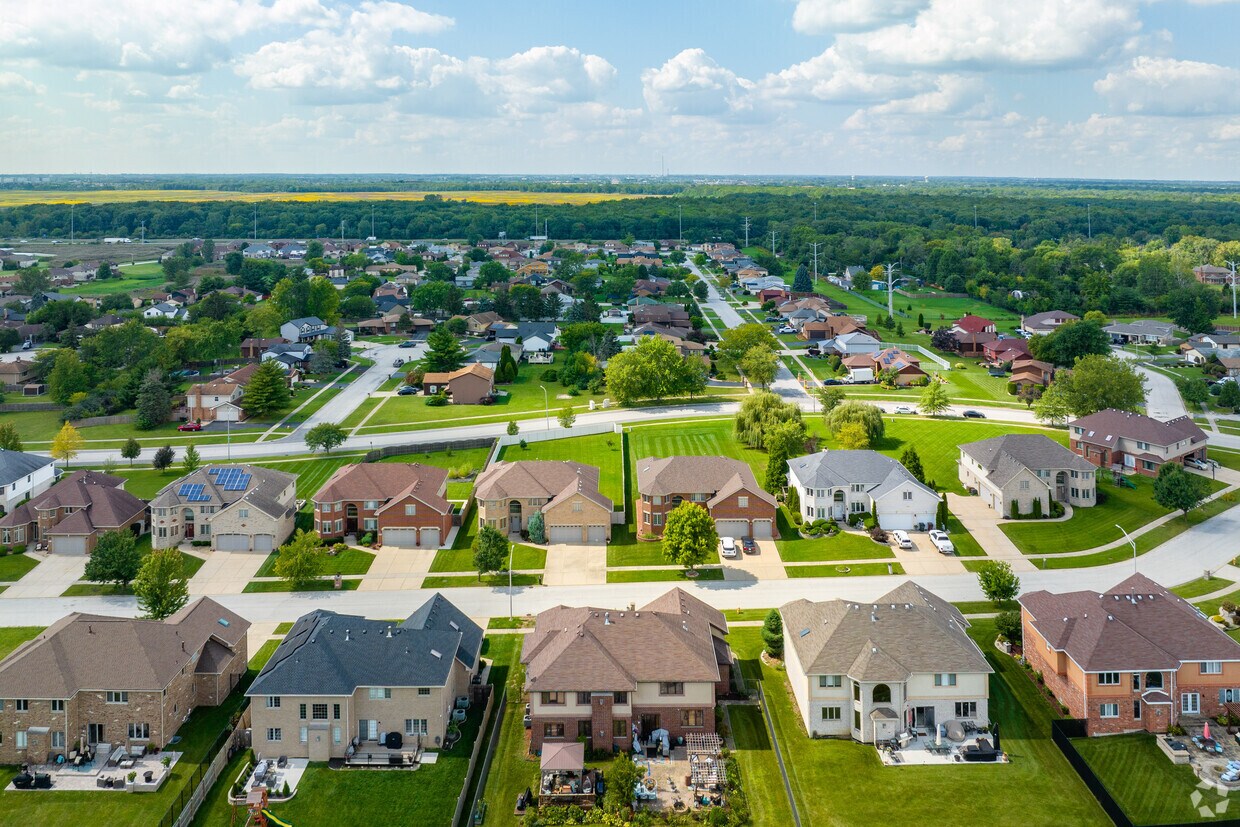
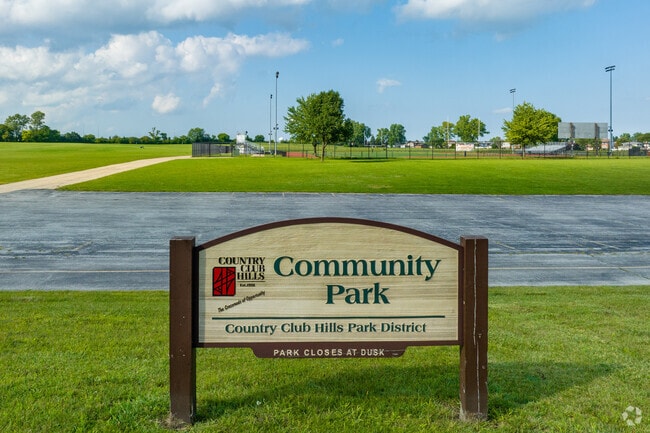
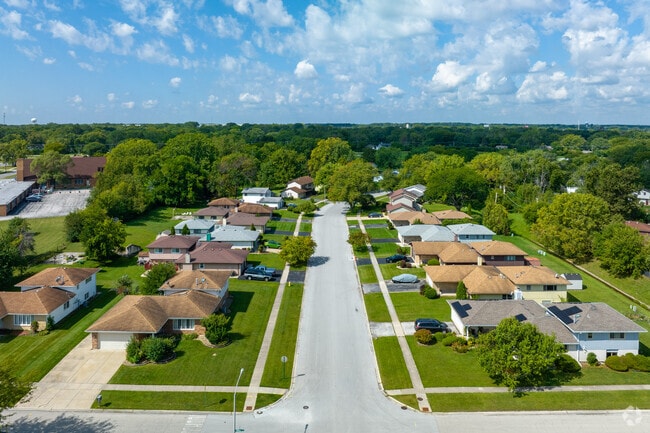
Country Club Hills is a city in Cook County, Illinois, about 25 miles southwest of Chicago. Originally called Cooper's Grove, it was incorporated in 1958 and has grown into a well-established residential community of around 16,700 people. If you're searching for apartments for rent in Country Club Hills, you'll find a quieter, more relaxed setting than city living, without losing easy access to everything the greater Chicago metro has to offer. Day-to-day life here comes with solid conveniences. Local shopping centers like Heritage Plaza and Shops at Coopers Grove cover everyday needs, and Bartel Grassland Nature Preserve offers a welcome escape outdoors. The city keeps things lively throughout the year with community events like Ward Picnics, a City-Wide Garage Sale, and the Summer Under the Stars Concert Series. Apartment communities in the area tend to feature garden-style layouts that fit the neighborhood's residential feel. Nearby communities like Homewood, Oak Forest, and Matteson give renters even more options to explore along the south suburban corridor. Getting around is easy. Interstates 57 and 80 give drivers direct routes into Chicago or across the region, and Metra commuter rail stations in Homewood and Oak Forest are just a short drive away, making downtown Chicago reachable without a car. Chicago Midway International Airport is about 17 miles out, and O'Hare is accessible within roughly 70 minutes. Higher education is close by too, with Prairie State College, Governors State University, and South Suburban College all within about 10 miles. For renters who want suburban living with strong Chicago connections, Country Club Hills is a smart, well-positioned choice.
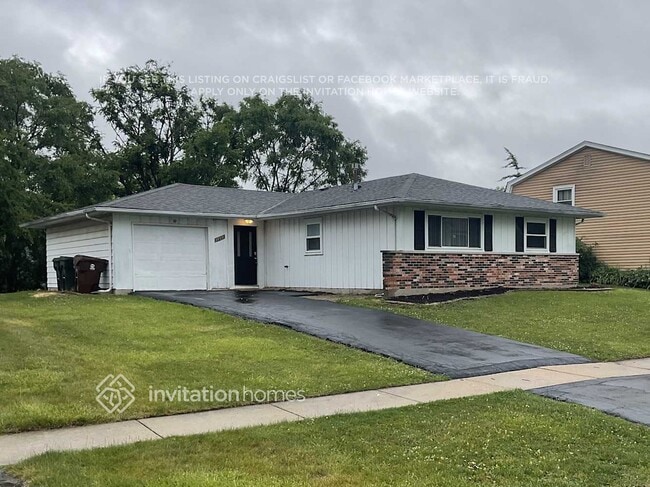
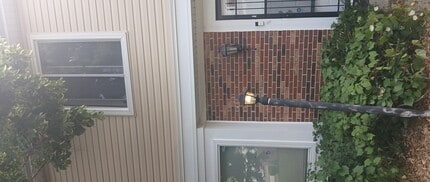
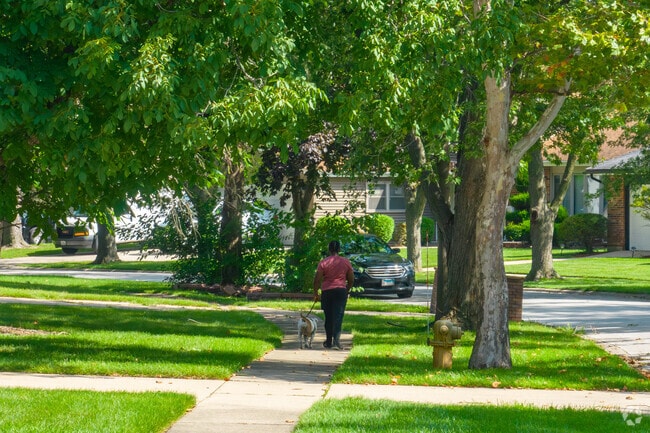
Enjoy a walk with your dog on the quiet tree-lined streets of Country Club Hills.
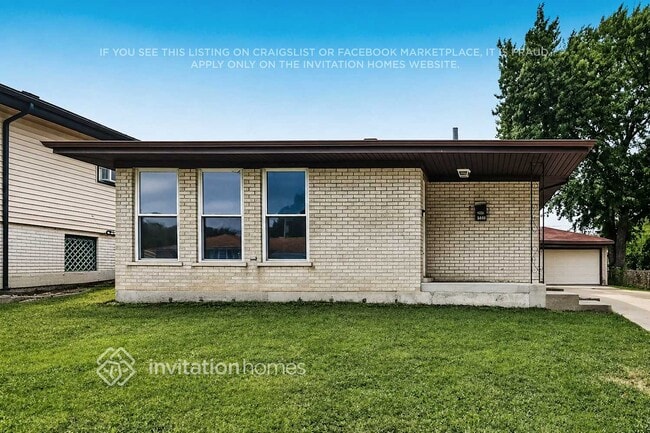
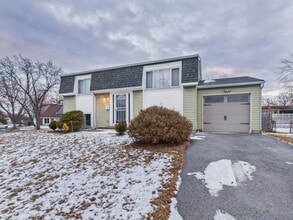
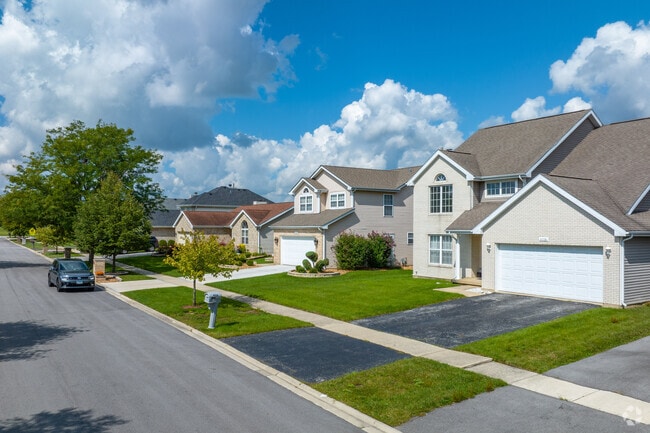
Country Club Hills features homes with two-car garages and ample lots.
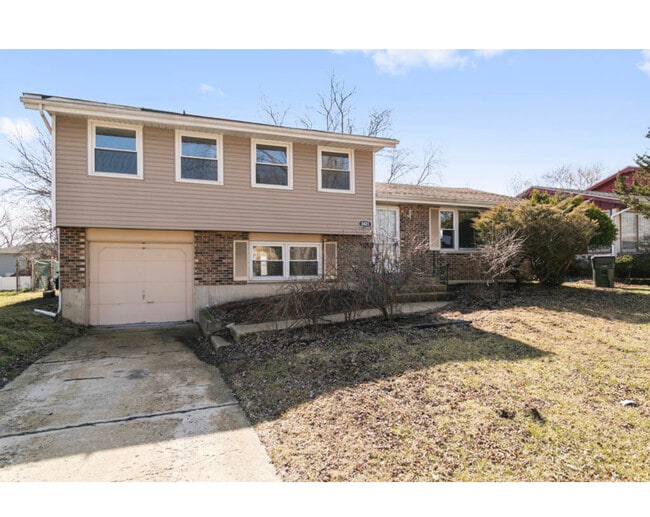
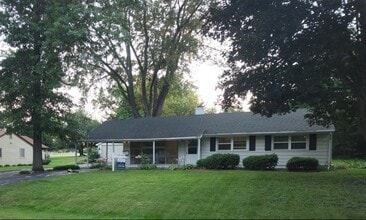
Country Club Hills offers spacious lots and meticulously maintained lawns.
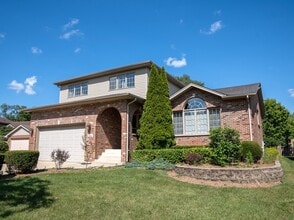
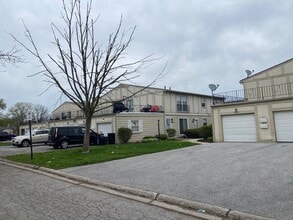
Stately homes with stone and brick exteriors are being built in Country Club Hills, IL.
Marycrest Park in Country Club Hills has a shaded walking path perfect for daily walks.
Country Club Hills is near I-80 which runs East-West & I-57 which runs North-South.
Median Household Income
$67,849
Average: $85,309
Education
3,927
Residents Have a Degree
Job Market
7,497
Workers Employed
Median Age
40 Years
Largest Age Group
15-24 Years
Approximately 16% of Residents
Under 20
26%
Over 65
20%
Housing Distribution
Country Club Hills has more homeowners than renters.

Education Distribution
Review this city's overall education levels.

Explore how walkable, bikeable, drivable, and transit-friendly Country Club Hills, IL is for everyday living.
Fairly Walkable
Walkability
Limited Public Transit
Transit
Exceptionally Drivable
Drivability
Fairly Bikeable
Bikeability

Public
Grades K-5
281 Students

Public
Grades PK-5
161 Students
Public
Grades PK-5
269 Students

Public
Grades 6-8
277 Students
Public
Grades 9-12
982 Students

 The GreatSchools Rating helps parents compare schools within a state based on a variety of school quality indicators and provides a helpful picture of how effectively each school serves all of its students. Ratings are on a scale of 1 (below average) to 10 (above average) and can include test scores, college readiness, academic progress, advanced courses, equity, discipline and attendance data. We also advise parents to visit schools, consider other information on school performance and programs, and consider family needs as part of the school selection process.
View GreatSchools Rating Methodology
Data provided by
GreatSchools.org
© 2026. All rights reserved.
The GreatSchools Rating helps parents compare schools within a state based on a variety of school quality indicators and provides a helpful picture of how effectively each school serves all of its students. Ratings are on a scale of 1 (below average) to 10 (above average) and can include test scores, college readiness, academic progress, advanced courses, equity, discipline and attendance data. We also advise parents to visit schools, consider other information on school performance and programs, and consider family needs as part of the school selection process.
View GreatSchools Rating Methodology
Data provided by
GreatSchools.org
© 2026. All rights reserved.
† Our analysis of utilities, groceries, transportation, healthcare, home prices, and other goods and services is sourced from the Cost of Living Index, a respected benchmark published by the Council for Community and Economic Research (C2ER) that provides a thorough overview of living expenses across different regions.
Rent data is provided by CoStar Group’s Market Trend reports. As the industry leader in commercial real estate information, analytics, and news, CoStar conducts extensive research to produce and maintain a comprehensive database of commercial real estate information. We combine this data with public record to provide the most up-to-date rental information available.
Consumer goods, services, and home prices are sourced from the Cost of Living Index published by the Council for Community and Economic Research (C2ER). The data on this page is updated quarterly. It was last published in September 2026.
Demographic information comes from Neustar and combines detailed address data with U.S. Census and American Community Survey statistics to produce reliable local estimates.