Median Age
46 Years
Largest Age Group
55-64 Years
Approximately 14% of Residents
Under 20
21%
Over 65
23%
Avg Rent
$1,455
Population
229,679
Renter Mix
25% Rent
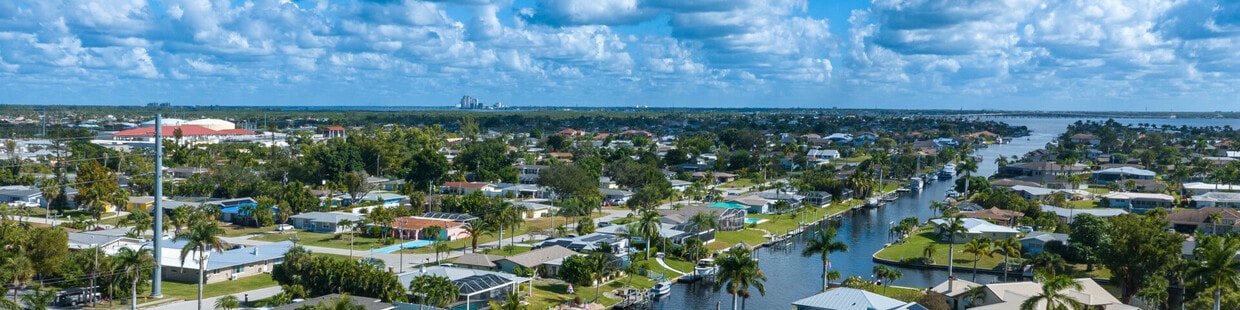
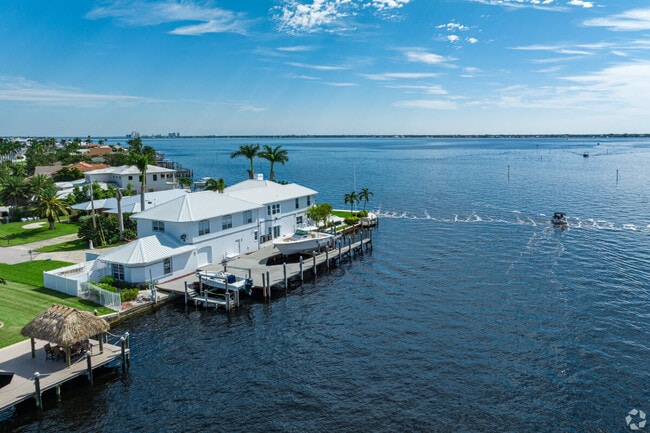
Cape Coral holds a geographic distinction that shapes everything about daily life here: the city has more navigable waterways than any other city on earth, with over 400 miles of canals weaving through its 121 square miles. Founded in 1957 as a planned community, it has grown into the largest city between Tampa and Miami by both population and area, now home to nearly 230,000 residents. The economy draws strength from healthcare, construction, and a steady flow of businesses expanding into Southwest Florida, with HealthPark Medical Center and the broader Fort Myers metro just across the Caloosahatchee River via two connecting bridges.
The city spans several distinct pockets, each with its own character. The Yacht Club area in the southeast sits close to riverfront access and the lively stretch along Cape Coral Parkway, while Southwest Cape centers on Cape Harbour and Tarpon Point Marina. Newer development along Burnt Store Road in the northwest continues to attract residents drawn to quieter streets and fresh construction. The rental landscape reflects this range, offering single-family canal homes, townhomes, and apartment communities that suit a variety of lifestyles. Cape Coral is also home to Florida's largest population of burrowing owls, a small but telling sign of the natural character threaded through this otherwise fast-growing Gulf Coast city.
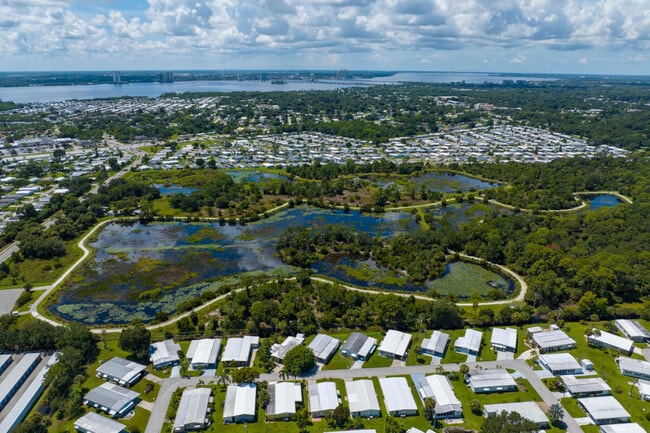
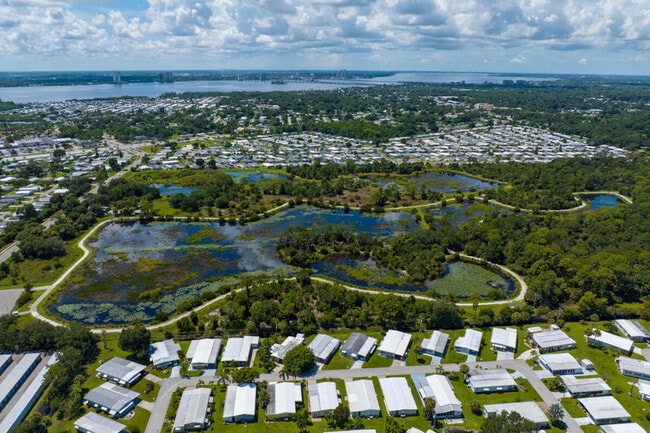
An aerial view of Powell Creek Preserve.
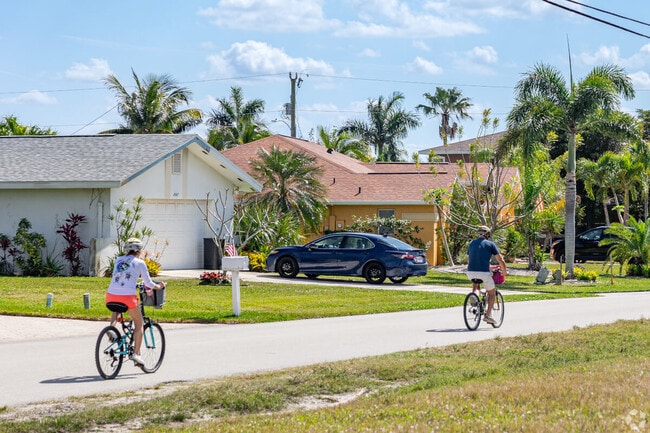
Cape Coral cyclists can ride around quiet residential streets.
Waterways behind homes open up into the expansive Caloosahatchee River.
Median Household Income
$68,902
Average: $85,555
Education
52,882
Residents Have a Degree
Job Market
107,204
Workers Employed
Median Age
46 Years
Largest Age Group
55-64 Years
Approximately 14% of Residents
Under 20
21%
Over 65
23%
Housing Distribution
Cape Coral has more homeowners than renters.

Education Distribution
Review this city's overall education levels.

As of September 2026, the average apartment rent in Cape Coral, FL is $1,342 for a studio, $1,454 for one bedroom, $1,692 for two bedrooms, and $2,069 for three bedrooms. Apartment rent in Cape Coral has decreased by -5.8% in the past year.
The cost of living in Cape Coral, FL is 1.7% lower than the national average. Generally, housing in Cape Coral is 12.8% less expensive than the national average, with rent falling between $1,342 - $2,069. You can expect to pay 4.6% more for groceries, 0.3% more for utilities, and 2.8% more for transportation.
Compare Cities
Explore how walkable, bikeable, drivable, and transit-friendly Cape Coral, FL is for everyday living.
Somewhat Walkable
Walkability
Very Drivable
Drivability
Somewhat Bikeable
Bikeability

Oasis Charter Elementary School
Public
Grades K-5
875 Students

Oasis Elementary Charter School - North
Public
Grades K-5
815 Students
Public
Grades PK-5
1,127 Students

Public
Grades PK-5
1,039 Students
Public
Grades PK-5
819 Students

Public
Grades 6-8
843 Students

Public
Grades 6-8
982 Students
Public
Grades 6-8
912 Students
Public
Grades 6-8
975 Students

Public
Grades PK-8
1,198 Students

Public
Grades 9-12
944 Students
Public
Grades 9-12
1,999 Students
Public
Grades 9-12
2,144 Students

Public
Grades 9-12
1,826 Students
Public
Grades 9-12
1,458 Students

 The GreatSchools Rating helps parents compare schools within a state based on a variety of school quality indicators and provides a helpful picture of how effectively each school serves all of its students. Ratings are on a scale of 1 (below average) to 10 (above average) and can include test scores, college readiness, academic progress, advanced courses, equity, discipline and attendance data. We also advise parents to visit schools, consider other information on school performance and programs, and consider family needs as part of the school selection process.
View GreatSchools Rating Methodology
Data provided by
GreatSchools.org
© 2026. All rights reserved.
The GreatSchools Rating helps parents compare schools within a state based on a variety of school quality indicators and provides a helpful picture of how effectively each school serves all of its students. Ratings are on a scale of 1 (below average) to 10 (above average) and can include test scores, college readiness, academic progress, advanced courses, equity, discipline and attendance data. We also advise parents to visit schools, consider other information on school performance and programs, and consider family needs as part of the school selection process.
View GreatSchools Rating Methodology
Data provided by
GreatSchools.org
© 2026. All rights reserved.
† Our analysis of utilities, groceries, transportation, healthcare, home prices, and other goods and services is sourced from the Cost of Living Index, a respected benchmark published by the Council for Community and Economic Research (C2ER) that provides a thorough overview of living expenses across different regions.
Rent data is provided by CoStar Group’s Market Trend reports. As the industry leader in commercial real estate information, analytics, and news, CoStar conducts extensive research to produce and maintain a comprehensive database of commercial real estate information. We combine this data with public record to provide the most up-to-date rental information available.
Consumer goods, services, and home prices are sourced from the Cost of Living Index published by the Council for Community and Economic Research (C2ER). The data on this page is updated quarterly. It was last published in September 2026.
Demographic information comes from Neustar and combines detailed address data with U.S. Census and American Community Survey statistics to produce reliable local estimates.