Background Image

Boston, PA Area Guide

The rural Pennsylvania counterpart to Massachusetts’ capital city

Rural Affordable Historic

A tiny trailside hamlet on the Great Allegheny Passage, Boston is a census-designated place in Elizabeth Township, Allegheny County, about 15 to 20 miles southeast of Pittsburgh. Nicknamed "Little Boston" to distinguish it from its Massachusetts namesake, the community covers less than one square mile and draws visitors and residents who appreciate its quiet, small-town feel along a celebrated rail trail corridor. The main commercial strip along Smithfield Street has a historic downtown character, and day-to-day errands are close at hand even in this compact setting.

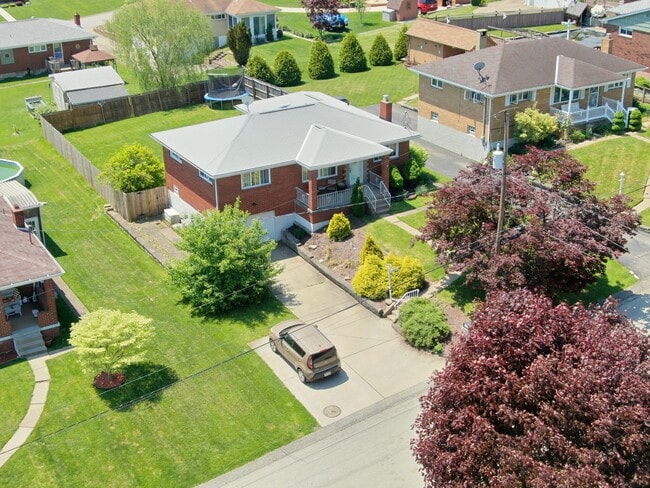
The rental landscape leans toward modest single-family homes, with most of the housing stock consisting of ranch and Craftsman-style construction. That architecture gives the area a settled, mid-century character rather than the high-rise or loft aesthetic found in larger nearby cities. Boston's identity is closely tied to the Great Allegheny Passage, the 150-mile rail trail connecting Pittsburgh to Cumberland, Maryland, which runs directly through town and brings a steady stream of cyclists each season.

Demographics

Median Household Income

$74,617

Average: $96,603

Education

1,294

Residents Have a Degree

Job Market

2,497

Workers Employed

Age Distribution
Get a sense of this area's population profile.

Median Age

47 Years

Largest Age Group

60-69 Years

Approximately 16% of Residents

Under 20

20%

Over 65

28%

Housing Distribution

Boston has more homeowners than renters.

Renters
23%
Non-Renters
77%

Education Distribution

Review this city's overall education levels.

Bachelor's or Higher
25%
Other Education
75%

Learn More About Boston

Getting Around

Somewhat Walkable

Walkability

30 / 100

Limited Public Transit

Transit

20 / 100

Very Drivable

Drivability

80 / 100

Fairly Bikeable

Bikeability

50 / 100

Points of Interest

Parks and Recreation

  • Renziehausen Park Rose Garden & Arboretum
  • White Oak Park
  • Round Hill Park & Exhibit Farm
  • Rivers Of Steel National Heritage Area
  • South Park Nature Center

Airports

  • Arnold Palmer Regional
  • Pittsburgh International

Top Apartments in Boston

Living in Boston

History

-

Dead Man's Hollow, a 450-acre conservation area near Boston, carries one of the region's more striking names. The site was once a quarry and later a pipe factory where dangerous working conditions gave rise to stories of on-the-job fatalities. Today, the Allegheny Land Trust manages the property, and the hollow's trails wind past sycamore trees, streams, and remnants of its industrial past.

The Great Allegheny Passage has roots as an abandoned railroad corridor before it was transformed into one of the country's most celebrated rail trails, stretching 150 miles and connecting to the C&O Canal Towpath for a continuous path all the way to Washington, D.C. That repurposed infrastructure is now the backbone of Boston's character as a trail town.

Restaurants

-

Dining options in Boston reflect its identity as a trail town: the options are few but purposeful. Local spots serve both residents and the cyclists who roll through on the Great Allegheny Passage, offering casual meals, cold drinks, and a place to rest after a long ride.

The scene runs toward hearty, unfussy food rather than elaborate menus, with riverside dining along the Youghiogheny adding a scenic backdrop for those who venture just beyond the main strip.

Transportation

-

Unlike the major metro that shares its name, getting around Boston requires a car, as local public transit options are limited in this setting. The Great Allegheny Passage offers a car-free route for cyclists heading toward Pittsburgh or south toward Maryland, making the trail a practical commuting option for those living along the corridor.

For longer travel, the Pittsburgh Amtrak station is about 33 minutes away by car, and Pittsburgh International Airport is roughly 57 minutes west. Arnold Palmer Regional Airport provides an alternative about 52 minutes to the east.

Parks

-

Dead Man's Hollow Conservation Area offers 450 acres and roughly 8 miles of trails through forested terrain, past stream crossings and the ruins of an old factory, all managed by the Allegheny Land Trust. The Great Allegheny Passage runs directly through town, giving residents immediate access to one of the most celebrated rail trails in the country, with connections stretching from Pittsburgh all the way to Cumberland, Maryland.

A boat ramp near Boston Bridge puts the Youghiogheny River within easy reach for kayaking, fishing, and boating. A short drive out brings additional options: Renziehausen Park, about three miles away, features a rose garden and arboretum, while Round Hill Park with its exhibit farm and South Park Nature Center round out the green spaces accessible within a half-hour.

Shopping

-

Retail in Boston is intentionally minimal, where neighbors know their options well. The Olympia Shopping Center, just over a mile away, anchors everyday grocery needs and provides a convenient stop for household staples.

A small cluster of storefronts along Smithfield Street handles basic essentials, and additional shopping centers are reachable within a few minutes by car. For those willing to make a short drive, a broader range of retail opens up in the surrounding townships.

Highlights

-

The Great Allegheny Passage runs directly through Boston, connecting residents and visitors to 150 miles of rail trail stretching toward Pittsburgh and beyond. Add the 450-acre Dead Man's Hollow conservation area, Youghiogheny River access for paddling and fishing, and proximity to Pittsburgh's metro amenities, and this small community packs a great deal into its one square mile.

Search Nearby Rentals

Methodology

† Our analysis of utilities, groceries, transportation, healthcare, home prices, and other goods and services is sourced from the Cost of Living Index, a respected benchmark published by the Council for Community and Economic Research (C2ER) that provides a thorough overview of living expenses across different regions.

Rent data is provided by CoStar Group’s Market Trend reports. As the industry leader in commercial real estate information, analytics, and news, CoStar conducts extensive research to produce and maintain a comprehensive database of commercial real estate information. We combine this data with public record to provide the most up-to-date rental information available.

Consumer goods, services, and home prices are sourced from the Cost of Living Index published by the Council for Community and Economic Research (C2ER). The data on this page is updated quarterly. It was last published in September 2026.

Demographic information comes from Neustar and combines detailed address data with U.S. Census and American Community Survey statistics to produce reliable local estimates.