Median Age
43 Years
Largest Age Group
35-44 Years
Approximately 15% of Residents
Under 20
20%
Over 65
24%




Avg Rent
$1,352
Population
9,682
Renter Mix
52% Rent
Astoria sits at the edge of Oregon where the Columbia River meets the Pacific Ocean, making it the oldest city in the state and the first permanent American settlement west of the Rocky Mountains. Founded in 1811 as a fur trading post, this small port city carries more than two centuries of history within its roughly ten square miles. The maritime economy, tourism, and public services anchor the local workforce, giving the city a self-sufficient character that sets it apart from larger Oregon metros.
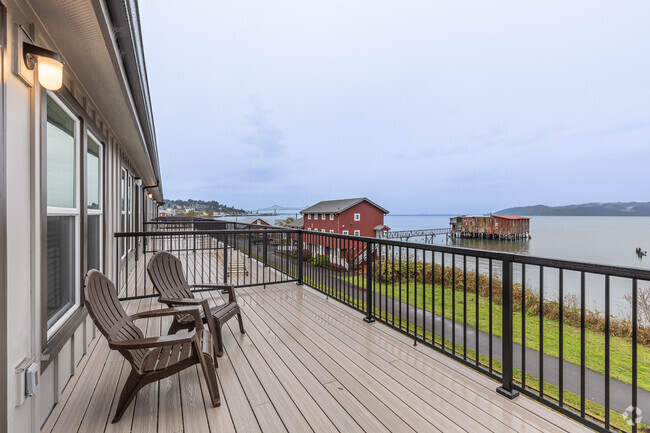
Downtown Astoria serves as the social and commercial heart of the city, with its Riverwalk corridor, working waterfront, and a walkable grid of Victorian-era storefronts. Neighborhoods climb the hillside above the river, offering sweeping water views and well-preserved historic homes. The Astoria Column, standing 600 feet above sea level, and the Columbia River Maritime Museum are two enduring landmarks that reflect the city's deep connection to its seafaring past.
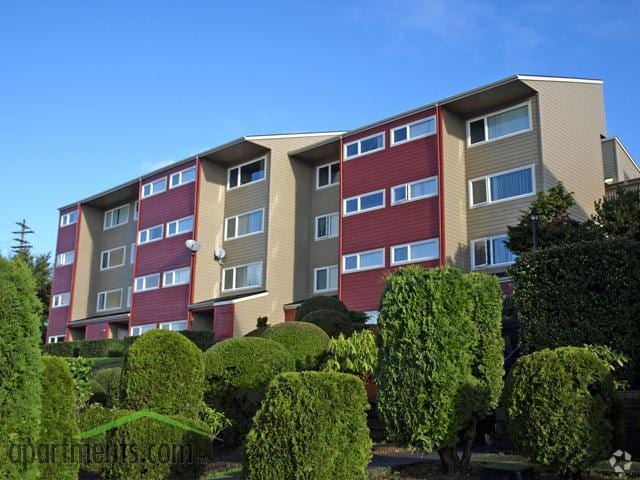
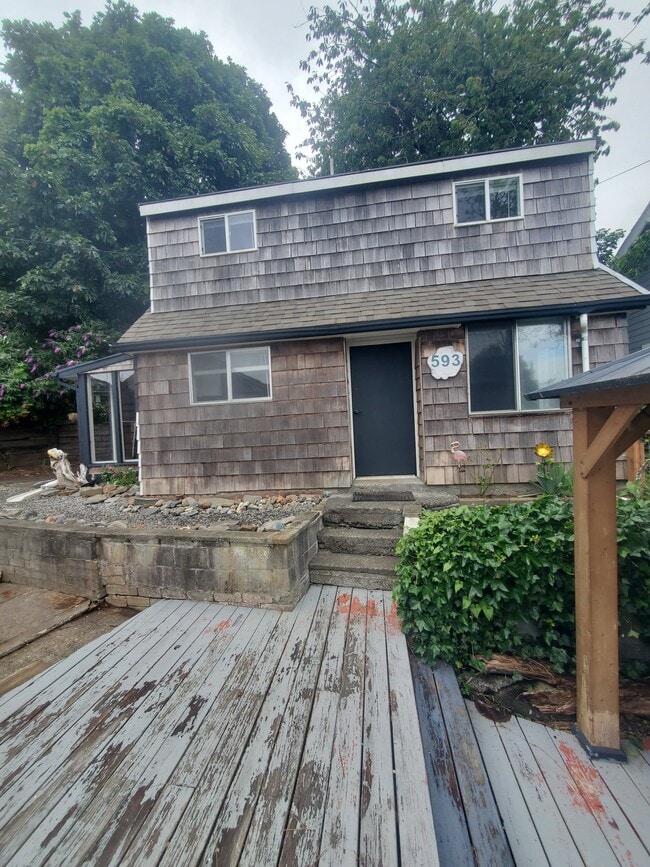
The rental market here leans toward character-rich older homes converted into apartments, modest garden-style apartment communities, and a modest supply of single-family rentals. Larger high-rise inventory is limited, which gives the housing landscape a low-key, residential feel throughout. For anyone drawn to Pacific Northwest coastal living with genuine history beneath it, Astoria offers a compelling and grounded place to call home.
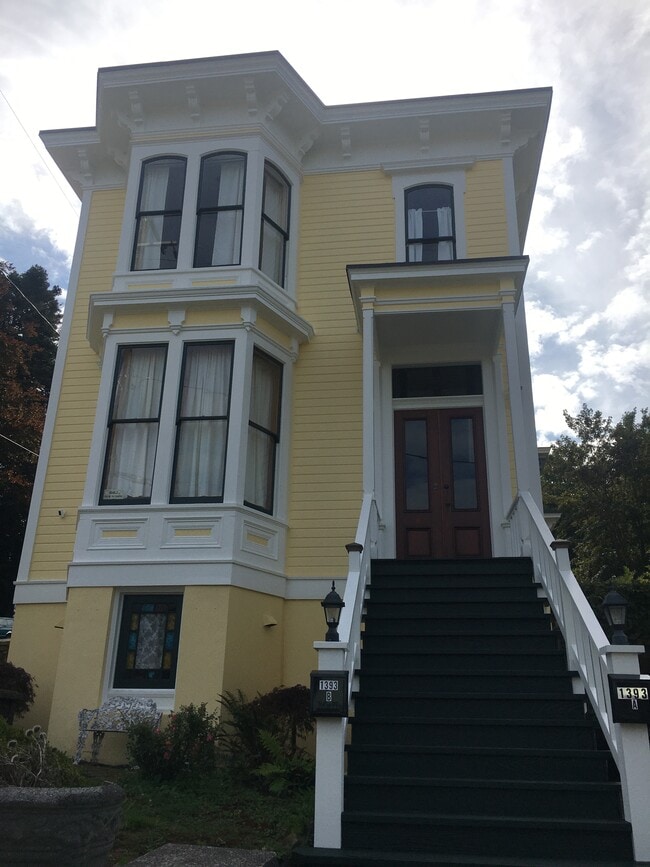
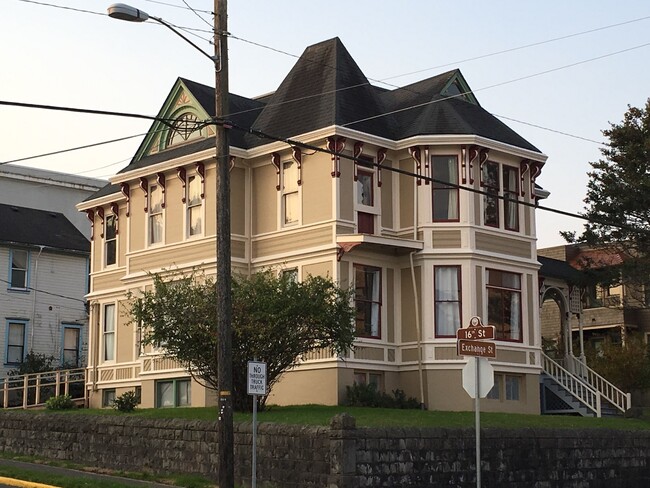
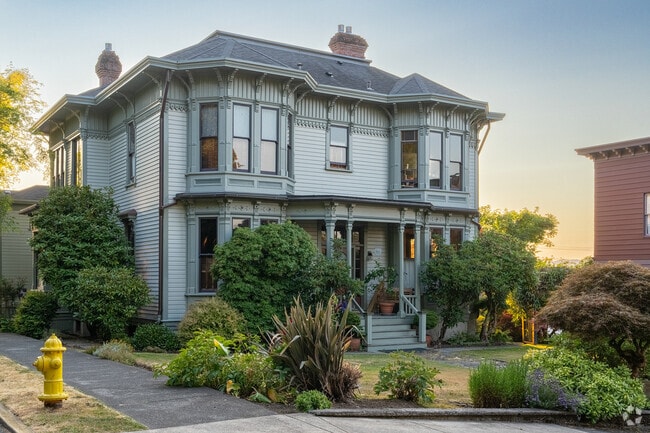
A large Victorian home in the Downtown neighborhood.
Bridgewater Bistro sits right on the Columbia River and offers local seafood entrees.
The Columbia River Maritime Museum collects and preserves the history of the Columbia River.
The Port of Upper Astoria sits beside Highway 30 as you drive into Astoria.
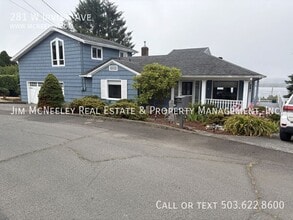
A Victorian home with views of the Columbia River in Adairs Port of Upper Astoria.
Residents enjoy cycling, jogging and walking on the paved Astoria Riverwalk.
Median Household Income
$63,370
Average: $83,775
Education
2,887
Residents Have a Degree
Job Market
4,634
Workers Employed
Median Age
43 Years
Largest Age Group
35-44 Years
Approximately 15% of Residents
Under 20
20%
Over 65
24%
Housing Distribution
Astoria has more renters than homeowners.

Education Distribution
Review this city's overall education levels.

As of September 2026, the average apartment rent in Astoria, OR is $1,261 for a studio, $1,351 for one bedroom, $1,560 for two bedrooms, and $1,634 for three bedrooms. Apartment rent in Astoria has increased by 7.2% in the past year.
Explore how walkable, bikeable, drivable, and transit-friendly Astoria, OR is for everyday living.
Fairly Walkable
Walkability
Limited Public Transit
Transit
Exceptionally Drivable
Drivability
Fairly Bikeable
Bikeability

Public
Grades K-8
293 Students

Lewis & Clark Elementary School
Public
Grades K-5
352 Students

Public
Grades K-5
342 Students

Public
Grades K-5
Public
Grades K-8
293 Students
Public
Grades 6-8
454 Students

Public
Grades 9-12
594 Students

Public
Grades 9-12
131 Students

 The GreatSchools Rating helps parents compare schools within a state based on a variety of school quality indicators and provides a helpful picture of how effectively each school serves all of its students. Ratings are on a scale of 1 (below average) to 10 (above average) and can include test scores, college readiness, academic progress, advanced courses, equity, discipline and attendance data. We also advise parents to visit schools, consider other information on school performance and programs, and consider family needs as part of the school selection process.
View GreatSchools Rating Methodology
Data provided by
GreatSchools.org
© 2026. All rights reserved.
The GreatSchools Rating helps parents compare schools within a state based on a variety of school quality indicators and provides a helpful picture of how effectively each school serves all of its students. Ratings are on a scale of 1 (below average) to 10 (above average) and can include test scores, college readiness, academic progress, advanced courses, equity, discipline and attendance data. We also advise parents to visit schools, consider other information on school performance and programs, and consider family needs as part of the school selection process.
View GreatSchools Rating Methodology
Data provided by
GreatSchools.org
© 2026. All rights reserved.
† Our analysis of utilities, groceries, transportation, healthcare, home prices, and other goods and services is sourced from the Cost of Living Index, a respected benchmark published by the Council for Community and Economic Research (C2ER) that provides a thorough overview of living expenses across different regions.
Rent data is provided by CoStar Group’s Market Trend reports. As the industry leader in commercial real estate information, analytics, and news, CoStar conducts extensive research to produce and maintain a comprehensive database of commercial real estate information. We combine this data with public record to provide the most up-to-date rental information available.
Consumer goods, services, and home prices are sourced from the Cost of Living Index published by the Council for Community and Economic Research (C2ER). The data on this page is updated quarterly. It was last published in September 2026.
Demographic information comes from Neustar and combines detailed address data with U.S. Census and American Community Survey statistics to produce reliable local estimates.