

You probably know someone who packed up and moved to Florida. Maybe it’s the relative that keeps posting beach photos after retiring there, or a friend won’t stop talking about their Miami adventures, the sunshine, and every incredible meal they had. At some point, you’re stricken with FOMO. It’s only natural to start wondering what the fuss is all about!
Florida has a way of staying on people’s minds. Between the beaches, warm winters, theme parks, college towns, and coastal cities, Florida’s top cities offer a lot of different ways to live.
For many renters, the biggest question is less “Is Florida a good place to live?” and more “what are the best places to live in Florida for my lifestyle?” Luckily, we’re here to help. This guide breaks down what it’s like to live in Florida, rent trends, weather, popular metros, and everyday pros and cons to help narrow down your search in the Sunshine State.
What’s It Like Living in Florida?
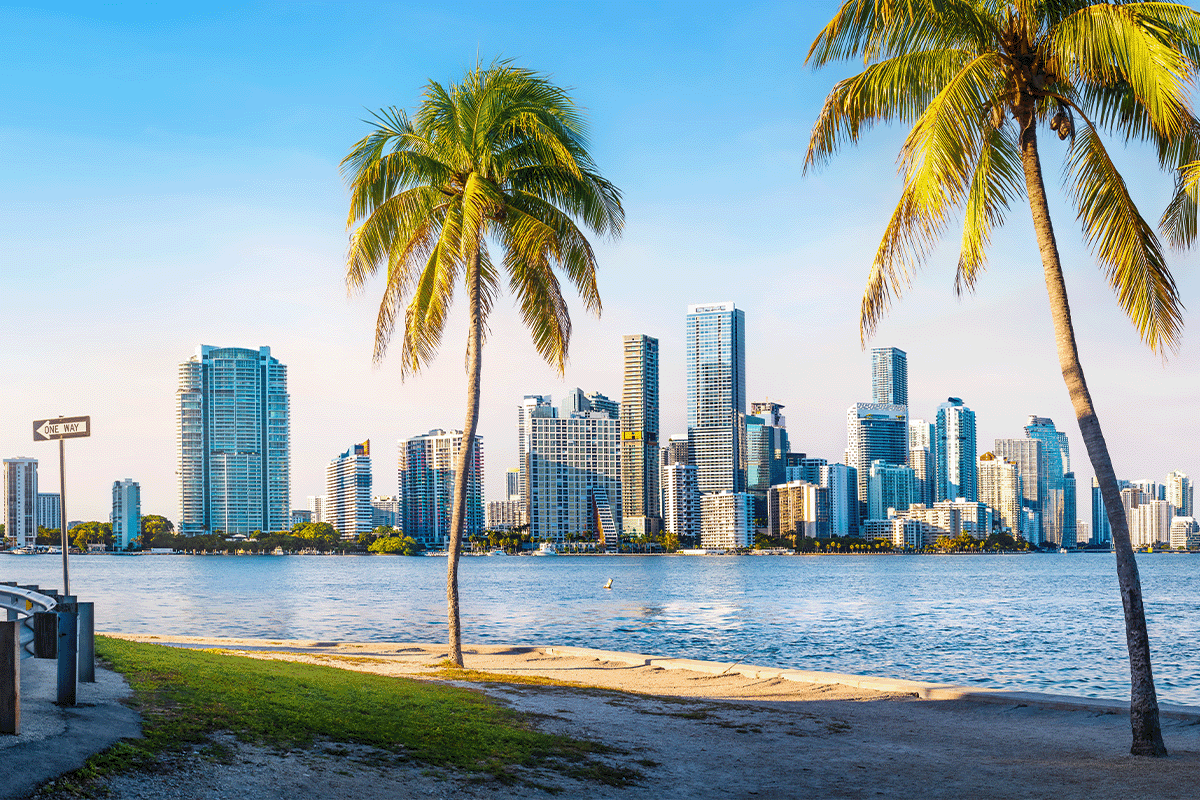
Florida is one of the most recognizable states in the country, with coastal cities, inland college towns, theme-park corridors, Gulf Coast beach communities, and major job centers spread across more than 65,000 square miles. Living in Florida can look very different depending on where you land — from fast paced metros to quieter rhythms near the water.
The state is also shaped by its weather. Warm winters, long summers, afternoon storms, and hurricane season all play a role in daily life.
Is Florida a Good Place to Live?
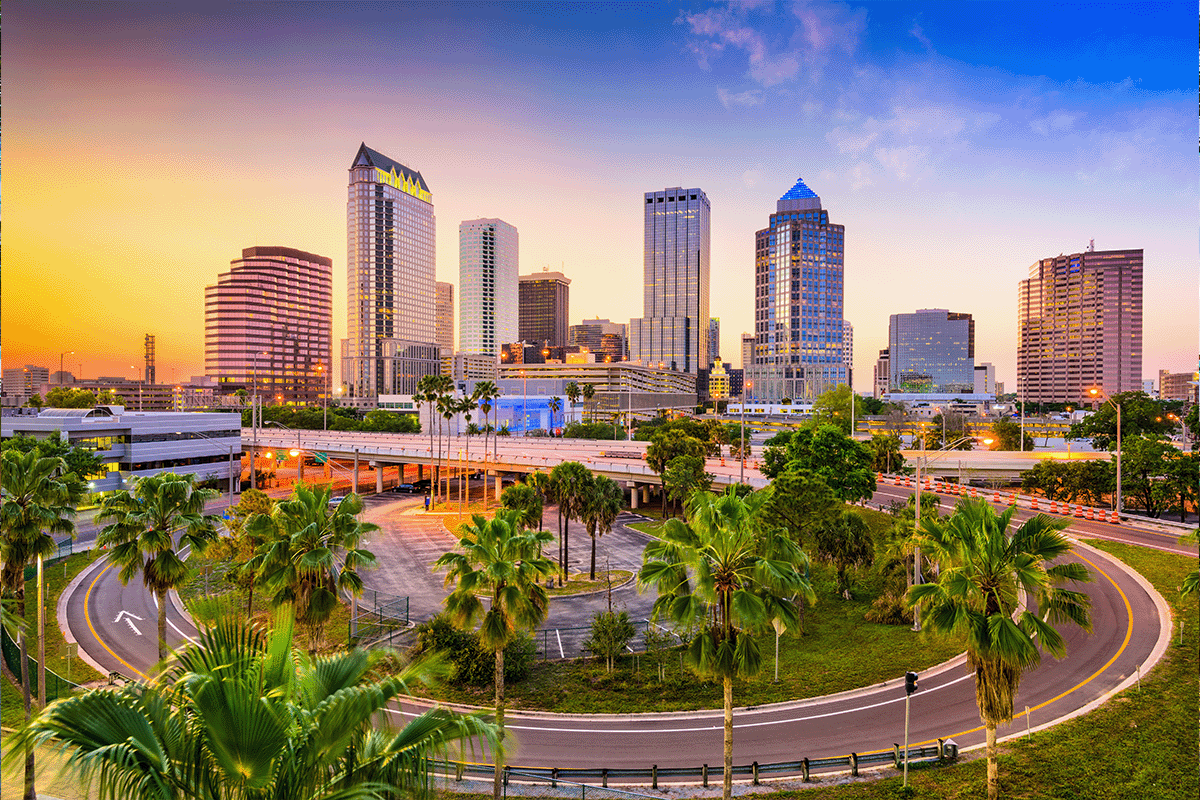
Florida can be a good place to live for renters who want warm weather, access to beaches, no snowy winters, and a wide mix of city types. The state has large metro areas with major airports, cruise ports, universities, sports venues, theme parks, and coastal districts, along with smaller cities where rent tends to be lower.
South and Southwest Florida is known for beaches, nightlife, international restaurants, art districts, and dense rental markets near the coast. Central Florida is anchored by theme parks, lakes, and a tourism economy.
Florida’s culture also changes by region. The South is known for Cuban coffee windows, Spanish-language media, and neighborhoods like Little Havana and Wynwood. Central Florida blends theme-park tourism with local neighborhoods around lakes, food halls, and entertainment corridors. The Panhandle and North Florida tend to feel more traditionally Southern, with live oaks, college football, and a slower pace than the state’s larger coastal metros.
Is It Expensive to Live in Florida?
Florida’s rental market depends heavily on location and property type. South Florida beach and coastal markets tend to be among the most expensive, while inland and North Florida metros often offer lower average rents.
For one-bedroom rentals in Florida, the averages are:
Property Type |
Average Rent |
Square Feet |
|
Apartment |
$1,892/month |
774 sq ft |
|
House |
$1,404/month |
733 sq ft |
|
Condo |
$2,635/month |
749 sq ft |
|
Townhome |
$1,529/month |
742 sq ft |
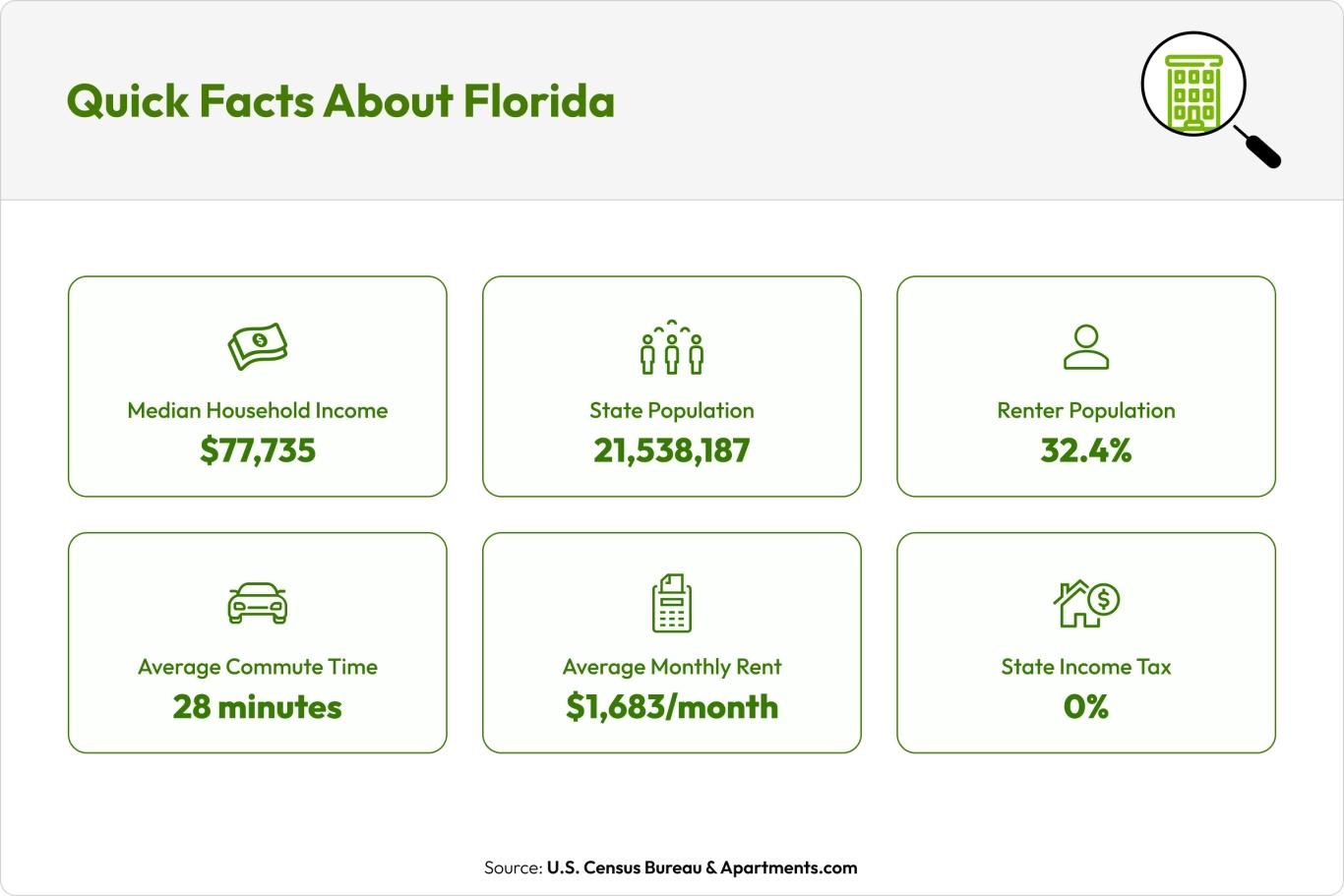
The average rent in Florida is $1,683/month. Within the one-bedroom data, apartments average $1,892/month, houses average $1,404/month, townhomes average $1,529/month, and condos average $2,635/month. It is currently the 15th most expensive rent in the United States, although it stays on par with the national average rent in the US, which is $1,642/month.
Cheapest Metro Areas in Florida
Metro Area |
Average Rent |
Average Square Footage |
|
Lehigh Acres |
$744/month |
648 sq ft |
|
Tallahassee |
$1,183/month |
717 sq ft |
|
Gainesville |
$1,265/month |
680 sq ft |
|
Jacksonville |
$1,299/month |
744 sq ft |
|
Lakeland |
$1,339/month |
723 sq ft |
|
Brandon |
$1,433/month |
746 sq ft |
|
Palm Bay |
$1,476/month |
680 sq ft |
|
Cape Coral |
$1,485/month |
770 sq ft |
|
Spring Hill |
$1,492/month |
782 sq ft |
|
Clearwater |
$1,547/month |
720 sq ft |
Lehigh Acres has the lowest average rent on this list at $744/month, followed by Tallahassee and Gainesville. These affordable places in Florida may be a good fit for renters looking beyond Florida’s larger coastal markets. Jacksonville also stands out because it offers a large-city setting while staying well below several South Florida averages.
Most Expensive Metro Areas in Florida
Metro Area |
Average Rent |
Average Square Feet |
|
Fort Lauderdale |
$2,292/month |
710 sq ft |
|
Miami |
$2,215/month |
693 sq ft |
|
Miramar |
$2,182/month |
799 sq ft |
|
West Palm Beach |
$2,141/month |
711 sq ft |
|
Davie |
$2,089/month |
747 sq ft |
|
Pembroke Pines |
$2,050/month |
769 sq ft |
|
Coral Springs |
$2,023/month |
841 sq ft |
|
Miami Gardens |
$1,926/month |
670 sq ft |
|
Hialeah |
$1,890/month |
656 sq ft |
|
Pompano Beach |
$1,807/month |
642 sq ft |
Florida’s highest-rent metros are concentrated in South Florida. Fort Lauderdale, Miami, Miramar, and West Palm Beach all have average rents above $2,100/month, reflecting demand near beaches, employment centers, airports, shopping districts, and major highways.
What Are the Best Places to Live in Florida?
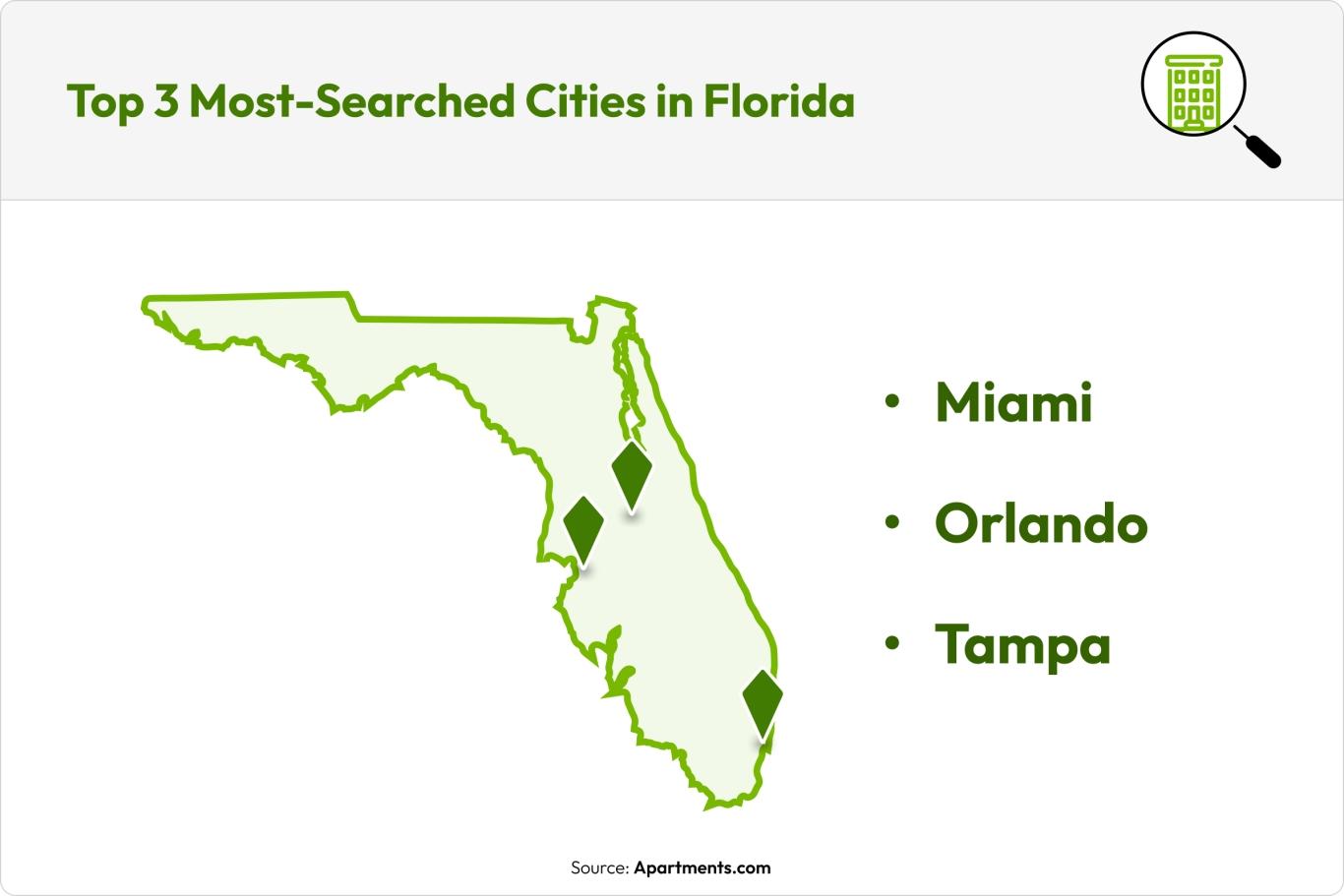
The best place to live in Florida depends on the setting you want, how close you want to be to the coast, and whether you prefer a large metro, a tourism hub, a college town, or a quieter Gulf Coast area. Nonetheless, Florida is packed with incredible cities to call home. Some of the best cities in Florida include:
Metro Area |
Average 1-Bedroom Rent |
|
Miami |
$2,215/month |
|
Orlando |
$1,578/month |
|
Tampa |
$1,640/month |
|
Jacksonville |
$1,305/month |
|
Fort Lauderdale |
$2,278/month |
|
St. Petersburg |
$1,754/month |
|
West Palm Beach |
$2,127/month |
|
Fort Myers |
$1,525/month |
|
Gainesville |
$1,270/month |
So many cities, so little time! Regardless of price point and lifestyle, Florida has a city for you. See below to determine what kind of city vibe might match your needs.
For beaches, nightlife, and dense city living: Miami, Fort Lauderdale, and West Palm Beach
-
Miami is one of Florida’s best-known cities, with apartment communities near beaches, arts districts, high-rise corridors, and neighborhoods shaped by Cuban, Caribbean, and Latin American influences. Renters often look to Miami for access to nightlife, restaurants, international business districts, and coastal living.
-
Fort Lauderdale offers canals, beaches, marinas, and a downtown area with apartments near Las Olas Boulevard, Flagler Village, and the New River. It has a slightly smaller-city feel than Miami while still keeping renters close to South Florida’s major highways, beaches, and airport access.
-
West Palm Beach has a more polished coastal feel, with apartments near The Square, Clematis Street, the waterfront, and nearby beach towns. It’s one of the more expensive areas in the state, but it appeals to renters who want coastal access with shopping, restaurants, and cultural venues nearby.
For theme parks, lakes, and Central Florida access: Orlando and Tampa
-
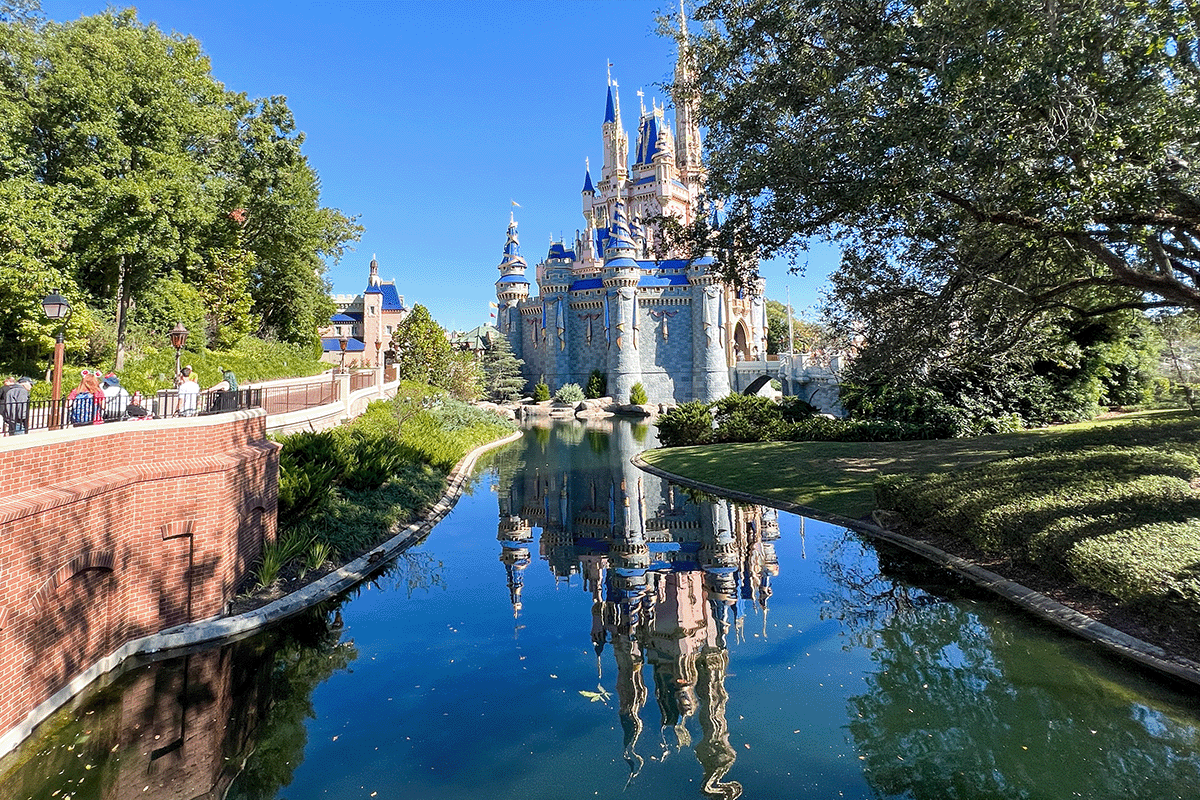
Orlando is closely tied to tourism, theme parks, and entertainment, but daily life extends well beyond the parks. Renters will find apartment communities near downtown Orlando, Winter Park, Lake Eola, International Drive, and major highways like I-4. The city is also known for lakes, food halls, sports venues, and an airport with many domestic and international connections.
-
Tampa offers a mix of waterfront districts, historic areas, and newer development around downtown and Water Street. Ybor City, Hyde Park, Seminole Heights, and Bayshore Boulevard each bring a different local feel. Tampa also puts renters within reach of Gulf Coast beaches without living directly on the sand.
For lower average rent in a large metro: Jacksonville and Gainesville
-
Jacksonville has one of the lower average rents among Florida’s major cities on this list at $1,305/month. The city covers a large area, so apartment searches can look very different depending on whether you’re focused on downtown, Riverside, San Marco, Southside, the Beaches, or areas near the St. Johns River. Jacksonville can be a strong fit for renters who want a large metro with more room to compare neighborhoods.
-
Gainesville is also a great option for renters looking to call Florida home without breaking the bank. With an average rent of $1,270/month, Gainesville is shaped by the University of Florida, which gives the city a steady calendar of sports, events, student activity, and research-related growth.
For Gulf Coast access and a slower pace: St. Petersburg and Fort Myers
-
St. Petersburg has a coastal setting, a walkable downtown waterfront, museums, murals, restaurants, and easy access to beaches like St. Pete Beach and Treasure Island. Apartment communities near downtown often place renters close to the pier, Vinoy Park, and Central Avenue.
-
Fort Myers sits along the Caloosahatchee River and is close to Gulf Coast beaches, barrier islands, and boating areas. It tends to offer a more relaxed pace than Florida’s largest metros, with apartment options near downtown Fort Myers, Daniels Parkway, and nearby Cape Coral.
What to Expect from Florida Weather
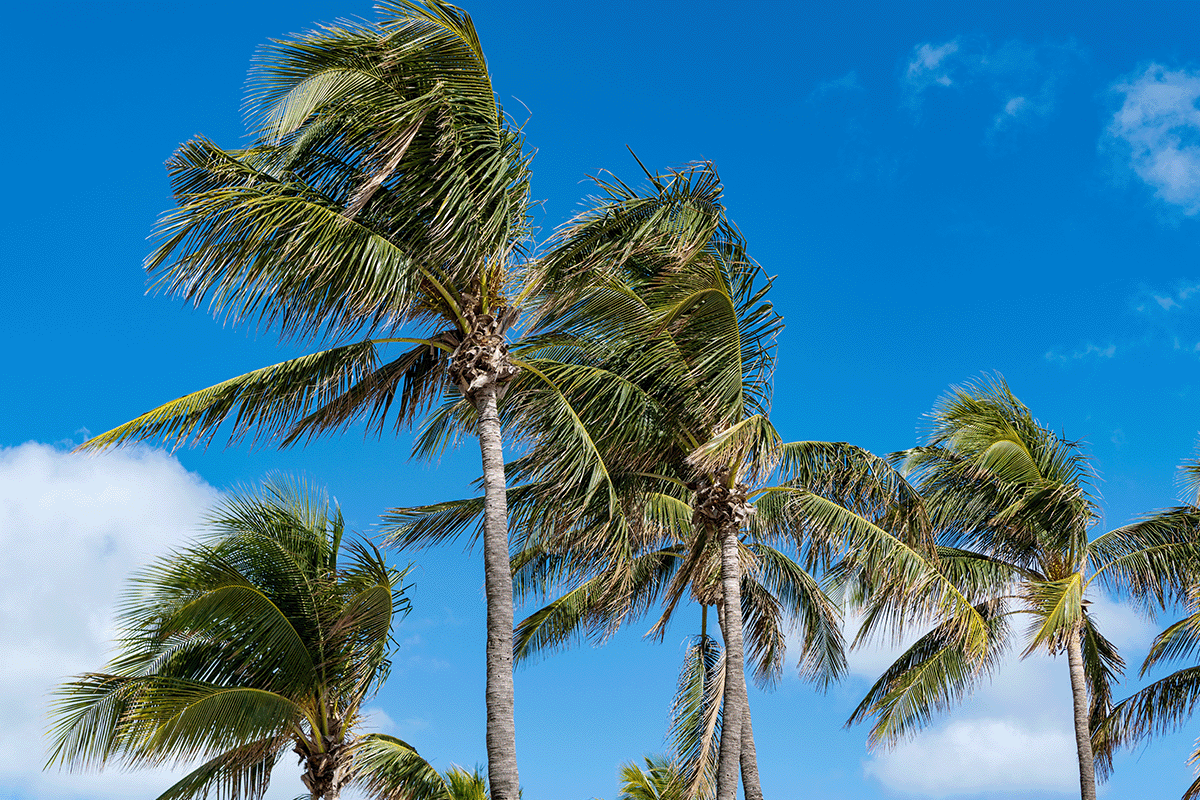
Florida’s weather is one of the biggest reasons people consider moving to the state. Here are some quick Florida weather data points:
- The average temperature is 72.8 degrees, with average precipitation of 54.64 inches.
- Based on 2025 averages, July temperatures ranged from 74.4 to 93.1 degrees.
- January 2026 temperatures ranged from 45.5 to 70.3 degrees.
Florida winters are generally mild, especially compared to states farther north. In many areas, January can still bring comfortable afternoons, though North Florida can see cooler mornings. Summers are hot, humid, and stormy, with frequent afternoon rain. In coastal areas, sea breezes can help, but humidity is still part of daily life.
Hurricane season is an important factor renters should not take lightly — no matter if they live inland or in a coastal city. Renters should learn about their nearest evacuation zones, parking rules during storms, flood risk, renter’s insurance options, and how their apartment community or landlord handles storm preparation.
What Are the Pros and Cons of Living in Florida?

Florida has plenty of everyday advantages, but it also comes with some trade-offs renters should keep in mind. Here are a few key benefits and drawbacks to consider before choosing where to rent.
Pro: Mild winters make outdoor time easier year-round
Florida’s winter weather is a major draw. With January temperatures ranging from 45.5 to 70.3 degrees, renters can often keep patios, parks, beaches, trails, and outdoor dining in regular rotation during months when much of the country is dealing with ice and snow.
Con: Summers are hot, humid, and storm-prone
Florida summers can feel intense, even for renters who hail from more tropical and humid parts of the country. July temperatures range from 74.4 to 93.1 degrees, and the humidity often makes the heat feel heavier. Afternoon thunderstorms are common, and hurricane season can affect travel, insurance needs, and day-to-day planning.
Pro: Renters can choose from many different city types
Florida offers major metros, beach towns, college towns, inland cities, and quieter Gulf Coast areas. Every major city has different rental markets and local rhythms. That variety can make it easier to compare apartment communities based on commute routes, coastal access, walkability, nightlife, campus access, or quieter residential areas.
Con: Coastal and South Florida markets can be expensive
Living near Florida’s party central might come with a bigger price tag. The most expensive rental areas are concentrated in South Florida. Fort Lauderdale averages $2,292/month, Miami averages $2,215/month, and West Palm Beach averages $2,141/month. Renters searching near beaches, downtown districts, or major employment corridors should expect higher prices than in many inland or North Florida metros.
Pro: Beaches, parks, springs, and waterfronts are part of everyday life
Florida has an unusually wide range of outdoor settings, from Atlantic beaches and Gulf Coast sunsets to freshwater springs, rivers, lakes, and Everglades landscapes. Renters can look for apartment communities near boat ramps, bike trails, beach bridges, state parks, or walkable waterfront districts, depending on the region. And even if you live in an inland city like Orlando, an oasis like Clearwater Beach is only an hour’s drive away.
Con: Weather risks and insurance costs require extra planning
Living in Florida means paying attention to flood zones, hurricane preparation, severe rain, and insurance coverage. Renters should ask apartment communities about storm procedures, parking during severe weather, package delivery during storms, power backup policies, and whether renter’s insurance is required.
Find a Good Place to Live in Florida on Apartments.com
Florida offers warm weather, beach access, major metro areas, and plenty of variety, from South Florida’s coastal cities to Central Florida’s entertainment hubs and North and Central Florida’s college towns. The right fit depends on what matters most to you, whether that’s rent, commute, weather, or proximity to the water.
Ready to find your place in the Sunshine State? Explore apartments for rent in Florida on Apartments.com and start comparing apartment communities, neighborhoods, and cities today.
Methodology
Average rent data comes from CoStar Group’s May 2026 reports. Weather information is based on data from the National Centers for Environmental Information and the National Oceanic and Atmospheric Administration.
FAQs
Is Florida a good state to live?
Florida can be a great state to live in for renters who want warm weather, mild winters, beaches, major airports, and a wide range of metro areas. It may be less ideal for renters who dislike humidity, heavy summer rain, or hurricane-season planning.
What are the benefits of living in Florida?
Some of the biggest benefits of living in Florida include mild winters, access to beaches and waterfront parks, no snowy season, large metro areas, and a wide mix of rental markets. Renters can choose from coastal cities like Miami and Fort Lauderdale, Central Florida hubs like Orlando and Tampa, and lower-rent areas like Lehigh Acres, Tallahassee, and Gainesville.
What is the cost of living in Florida?
The average rent in Florida is $1,683/month. For one-bedroom rentals, apartments average $1,892/month, houses average $1,404/month, townhomes average $1,529/month, and condos average $2,635/month. Rent varies widely by location, with Lehigh Acres averaging $744/month and Fort Lauderdale averaging $2,292/month in the provided metro data.
What are the best places to live in Florida?
Some of the best-known places to live in Florida include Miami, Orlando, Tampa, Jacksonville, Fort Lauderdale, St. Petersburg, West Palm Beach, Fort Myers, and Gainesville. Miami and Fort Lauderdale are strong options for coastal city living, Orlando is known for theme parks and lakes, Tampa offers waterfront districts and Gulf Coast access, Jacksonville has lower average rent among major metros, and Gainesville has a college-town setting.


