

Grand Rapids has become one of the Midwest's most compelling cities for renters. Situated along the Grand River about 25 miles east of Lake Michigan, Michigan's second-largest city has evolved from its industrial "Furniture City" roots into a creative hub recognized nationally for its craft beer scene, public art, and a revitalized downtown.
Whether you're drawn to walkable urban living, riverside trails, or quiet tree-lined streets close to local shops, there's a corner of Grand Rapids worth exploring. We've rounded up five of the best neighborhoods for renters based on the following factors:
- Rental availability
- Average rent relative to other neighborhoods in the city
- Proximity to points of interest like work hubs, universities, downtown areas, shopping centers, or major parks
- Niche.com’s neighborhood report cards
The five best neighborhoods in Grand Rapids for renters are:
Creston
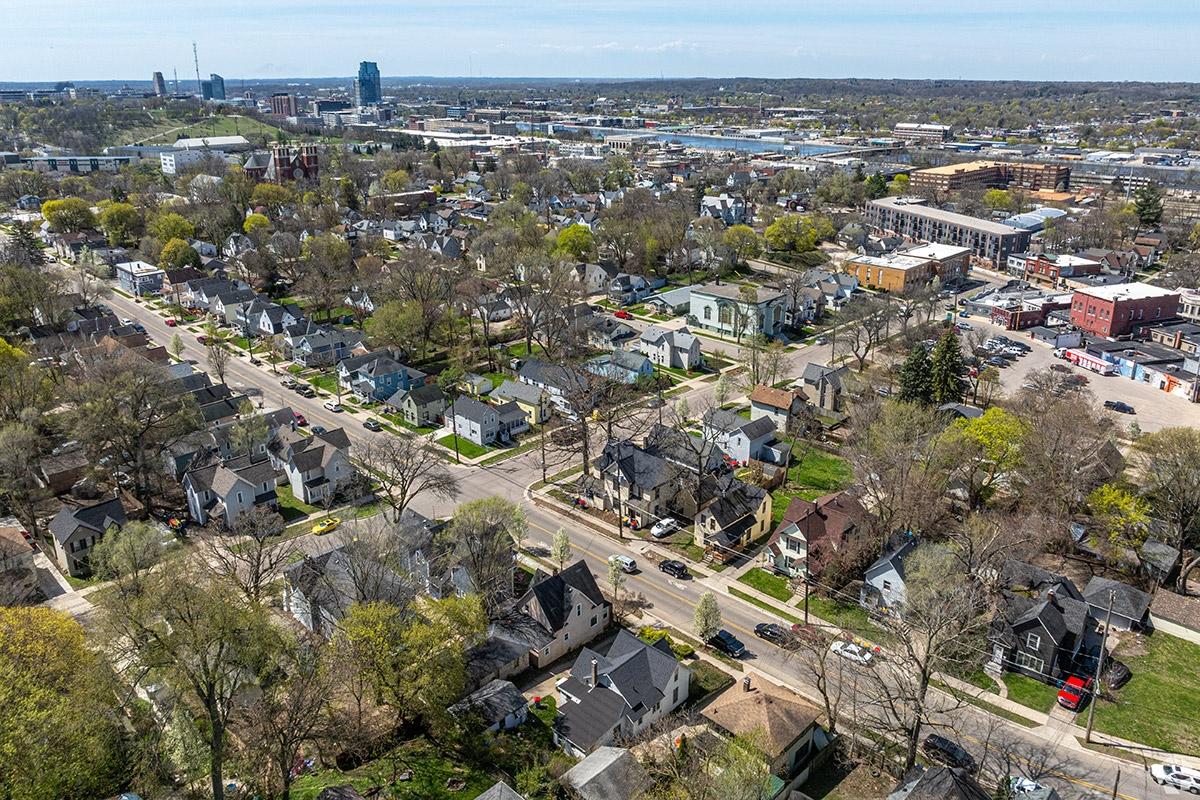
- Average 1-bedroom rent in Grand Rapids: $1,380/month
- Average 1-bedroom rent in Creston: $1,342/month
- Average 1-bedroom size in Creston: 699 sq. ft.
Why Creston is good for renters
Creston sits on the north side of Grand Rapids and offers some of the most approachable rents in the city, coming in just below the citywide average for a one-bedroom. The neighborhood has a tight-knit feel anchored by locally owned shops, diners, and small businesses along Plainfield Avenue. Riverside Park, one of the largest parks in Grand Rapids, is right in the neighborhood's backyard, giving renters easy access to trails, open green space, and the Grand River without leaving the area.
|
Fairly Walkable |
Limited Public Transit |
Exceptionally Drivable |
Fairly Bikeable |
40Creston has a walkability score of 40 out of 100. |
30Creston has a transit score of 30 out of 100. |
90Creston has a drivability score of 90 out of 100. |
50Creston has a bikeability score of 50 out of 100. |
Keep in mind
Creston is a primarily residential neighborhood, so renters who rely on public transit or prefer to walk to a wide variety of dining and nightlife options may want to keep a car handy for trips to other parts of the city.
Northeast Grand Rapids
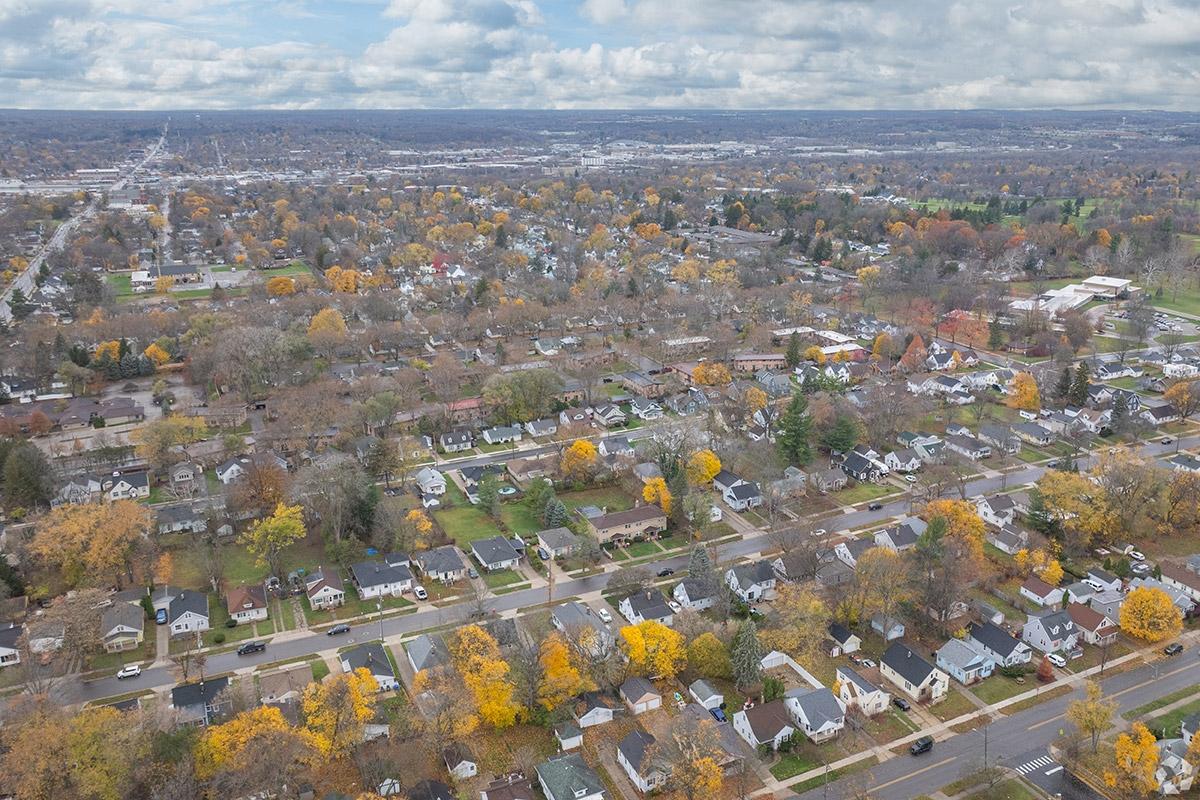
- Average 1-bedroom rent in Grand Rapids: $1,380/month
- Average 1-bedroom rent in Northeast Grand Rapids: $1,368/month
- Average 1-bedroom size in Northeast Grand Rapids: 694 sq. ft.
Why Northeast Grand Rapids is good for renters
Northeast Grand Rapids offers a quieter, more spread-out living experience while staying connected to the rest of the city via major routes like M-37, I-196, and East Beltline Avenue. The area is close to Knapp's Corner, a well-established commercial hub with grocery stores, restaurants, and retail that makes everyday errands straightforward. Renters here tend to find more square footage for their dollar compared to neighborhoods closer to downtown, and the area's proximity to Blythefield Country Club and major green spaces, like Grand Rapids Township Park and Frederik Meijer Gardens & Sculpture Park, makes it appealing for those who spend time outdoors.
|
Fairly Walkable |
Limited Public Transit |
Exceptionally Drivable |
Fairly Bikeable |
40Northeast Grand Rapids has a walkability score of 40 out of 100. |
20Northeast Grand Rapids has a transit score of 20 out of 100. |
100Northeast Grand Rapids has a drivability score of 100 out of 100. |
50Northeast Grand Rapids has a bikeability score of 50 out of 100. |
Keep in mind
Northeast Grand Rapids is one of the more car-dependent parts of the city, so having reliable transportation is important for those commuting to downtown or accessing entertainment and cultural amenities in other neighborhoods.
West Grand
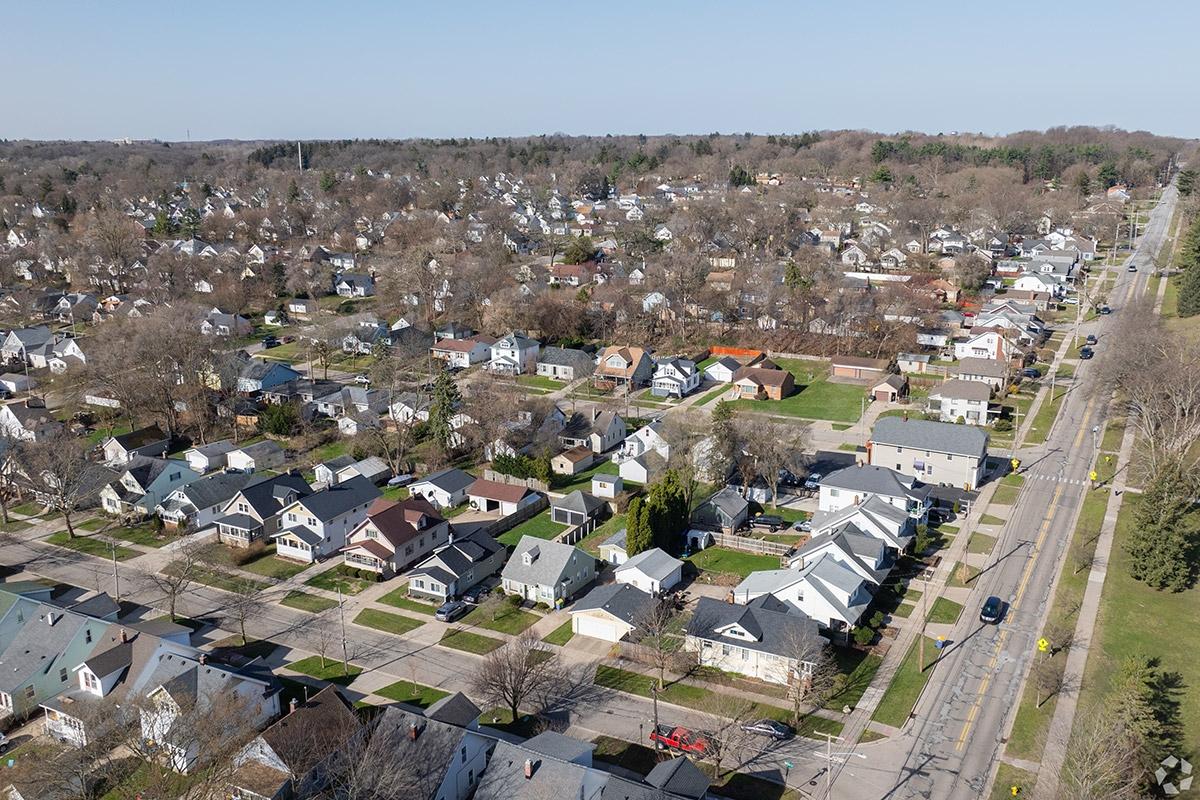
- Average 1-bedroom rent in Grand Rapids: $1,380/month
- Average 1-bedroom rent in West Grand: $1,426/month
- Average 1-bedroom size in West Grand: 606 sq. ft.
Why West Grand is good for renters
West Grand sits on the west side of the Grand River and has developed into one of the city's most interesting neighborhoods for renters who want both nature and a growing local food and retail scene. Bridge Street is the neighborhood's main corridor, home to Bridge Street Market, along with additional coffee shops, restaurants, and local businesses on Leonard Street. John Ball Zoo is within a short drive, and the neighborhood's riverside location puts trails and green space close to home.
|
Moderately Walkable |
Some Public Transit |
Moderately Drivable |
Moderately Bikeable |
60West Grand has a walkability score of 60 out of 100. |
40West Grand has a transit score of 40 out of 100. |
70West Grand has a drivability score of 70 out of 100. |
60West Grand has a bikeability score of 60 out of 100. |
Keep in mind
Parts of West Grand are still in the middle of ongoing development, so the density of walkable amenities can vary depending on exactly where you land in the neighborhood.
Midtown Grand Rapids
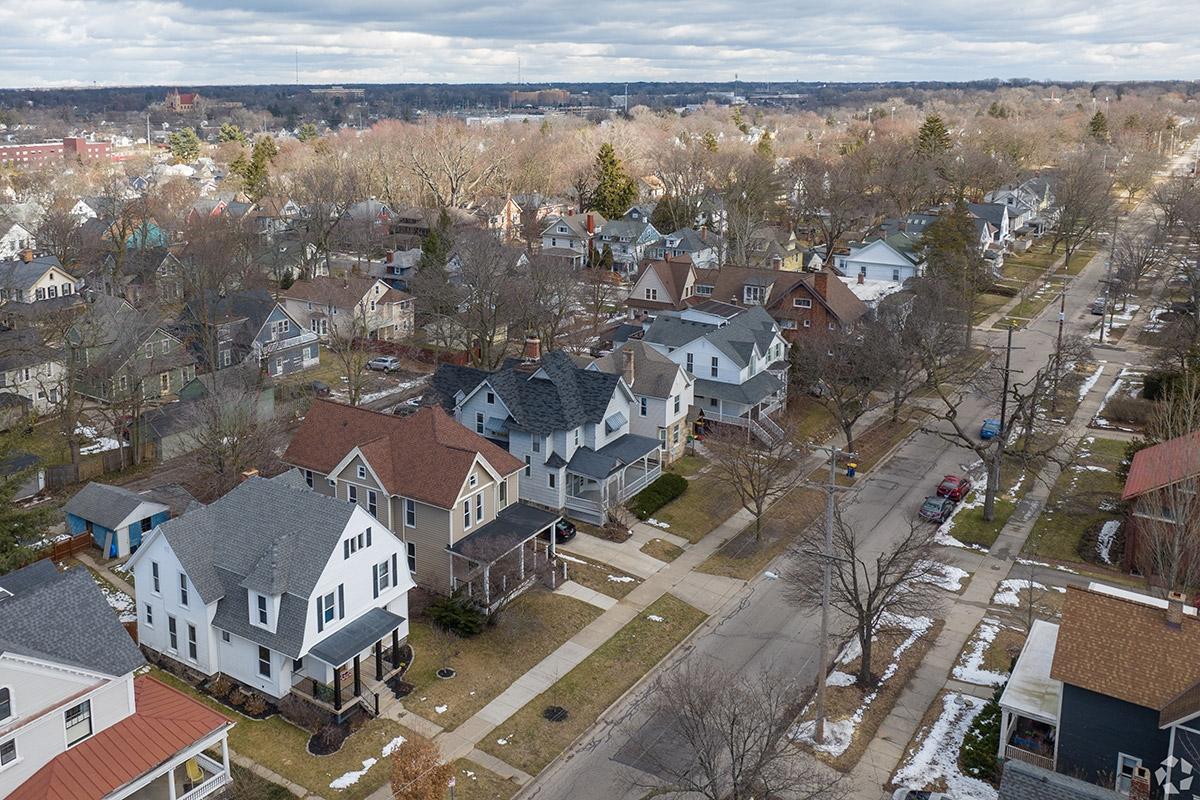
- Average 1-bedroom rent in Grand Rapids: $1,380/month
- Average 1-bedroom rent in Midtown Grand Rapids: $1,570/month
- Average 1-bedroom size in Midtown Grand Rapids: 685 sq. ft.
Why Midtown Grand Rapids is good for renters
Midtown Grand Rapids sits between Downtown and the Eastown corridor, making it one of the better-positioned neighborhoods for renters who want walkable access to multiple parts of the city without paying downtown prices. The area is close to the Medical Mile, a stretch of healthcare and research institutions along Michigan Street that represents one of the city's largest employment centers, and Aquinas College is also nearby. Renters will find a mix of older apartment buildings, converted homes, and newer apartment communities, giving the neighborhood a range of housing options.
|
Moderately Walkable |
Some Public Transit |
Moderately Drivable |
Fairly Bikeable |
70Midtown Grand Rapids has a walkability score of 70 out of 100. |
40Midtown Grand Rapids has a transit score of 40 out of 100. |
70Midtown Grand Rapids has a drivability score of 70 out of 100. |
50Midtown Grand Rapids has a bikeability score of 50 out of 100. |
Keep in mind
Traffic along Michigan Street and other main corridors can be busy during peak hours, and street parking in the denser blocks can be competitive, so it's worth confirming parking options before signing a lease.
Downtown Grand Rapids
- Average 1-bedroom rent in Grand Rapids: $1,380/month
- Average 1-bedroom rent in Downtown Grand Rapids: $1,632/month
- Average 1-bedroom size in Downtown Grand Rapids: 601 sq. ft.
Why Downtown Grand Rapids is good for renters
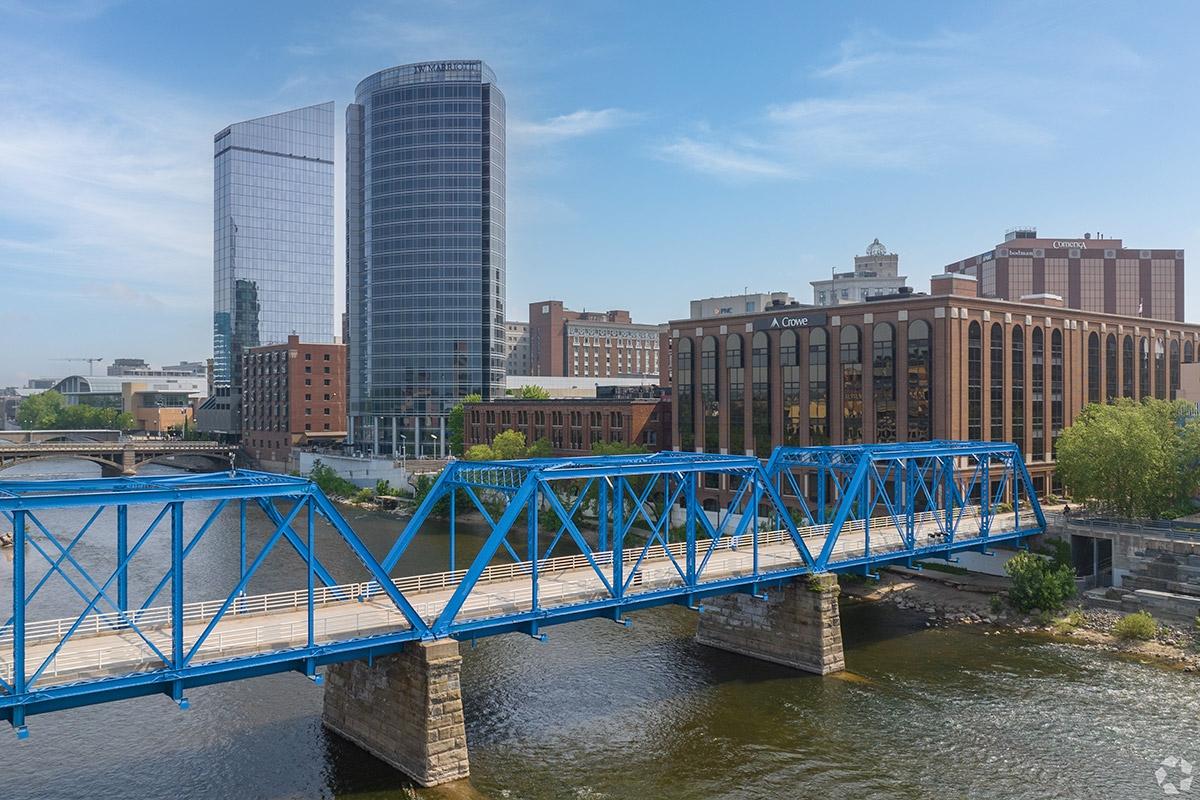
Downtown Grand Rapids puts renters at the center of everything the city has to offer. Van Andel Arena hosts packed concerts and sporting events, the Grand Rapids Downtown Market is a year-round destination for local food vendors and events, and the riverwalk connects the core to green space along the city’s namesake river. The Gerald R. Ford Presidential Museum, the Grand Rapids Art Museum, and dozens of restaurants and craft breweries are all within walking distance.
Each fall, the neighborhood becomes the epicenter of ArtPrize, the massive public art competition that fills downtown venues, sidewalks, and parks with hundreds of installations and draws visitors from across the country. The Rapid's bus network, including Rapid Central Station, makes it possible to get around the city without a car, which is relatively uncommon for a Michigan city of this size.
|
Very Walkable |
Strong Public Transit |
Exceptionally Drivable |
Moderately Bikeable |
80Downtown Grand Rapids has a walkability score of 80 out of 100. |
80Downtown Grand Rapids has a transit score of 80 out of 100. |
90Downtown Grand Rapids has a drivability score of 90 out of 100. |
60Downtown Grand Rapids has a bikeability score of 60 out of 100. |
Keep in mind
Downtown living typically comes with higher rents in newer high-rise and loft-style apartment communities, and street parking is limited. Most communities offer structured parking at an additional monthly cost.
Ready to Make the Move?
Grand Rapids has a lot going for it, and finding the right neighborhood comes down to matching your lifestyle with the right location. Whether you're looking for a walkable spot near downtown breweries and art venues, a quieter street close to riverside trails, or easy access to major employers along the Medical Mile, Apartments.com makes it simple to filter listings by neighborhood, price, amenities, and more.
Browse current listings across all five of these neighborhoods on Apartments.com and use our map search, commute-time filters, and photo tours to find an apartment community that fits your life in Grand Rapids.
Methodology
Rent and cost of living data are sourced from the Apartments.com Rent Trends pages and Cost of Living Calculator. Walkability, transit, drivability, and bikeability ratings are sourced from the Apartments.com Area Guides, courtesy of Local Logic.
FAQs
Is Grand Rapids a good place to live?
Yes, Grand Rapids is a good choice for renters who value a thriving arts and culture scene, craft breweries, and easy access to outdoor recreation, all paired with a lower cost of living than many major U.S. cities. Renters can also expect a walkable downtown, a growing job market, and a mix of historic and modern neighborhoods to choose from, making it a solid option whether you're drawn to city energy or a quieter, more residential feel.
Is Grand Rapids an expensive place to live?
The cost of living in Grand Rapids is 3.7% higher than the national average, making it a bit pricier than the typical U.S. city, though still more affordable than many major metros. On average, rentals in Grand Rapids run 17% lower than the national average, and residents also pay less for groceries, utilities, and transportation than the national average.
What’s the average rent in Grand Rapids?
The average rent in Grand Rapids is $1,378/month, as of July 2026. This is 17% lower than the national average rent of $1,663/month.
What salary do you need to live in Grand Rapids?
According to Grand Rapids' Cost of Living data, a comfortable salary for a single adult with no dependents to cover housing, utilities, groceries, and goods and services would be around $73,000 before tax. That breaks down to roughly $24,720/year for housing, $8,196/year for groceries, and $12,564/year for goods and services, though actual needs will vary by lifestyle and family size.


